
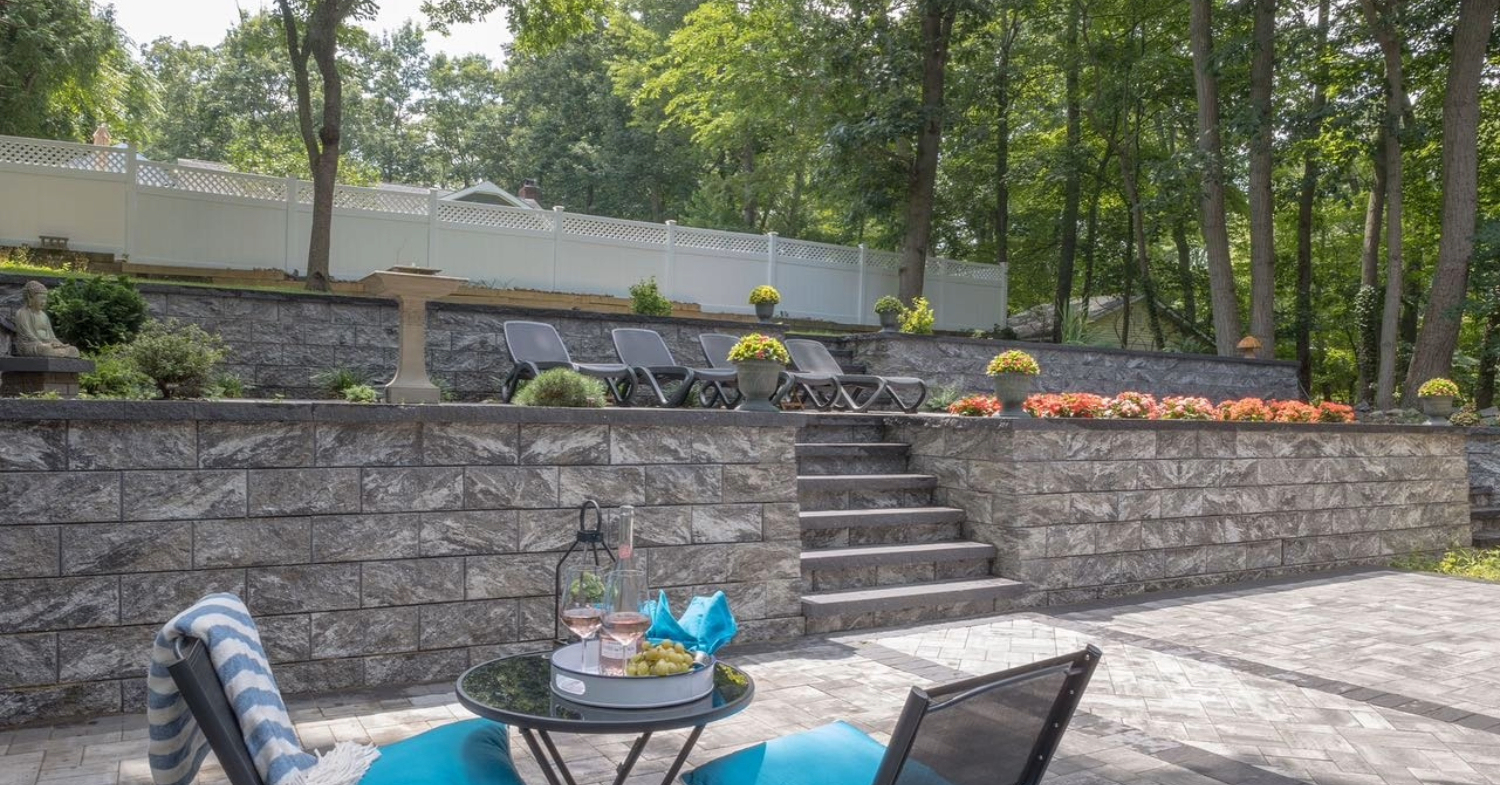
A retaining wall is one of those projects where the homeowner often does not realize they need one until a problem is already visible. A slope that has been eroding. A yard that cannot be used because of grade. A garden bed that collapses every spring. Or simply a property where the difference in elevation between the yard and a neighbor’s lot or a road has created a condition that requires a structured solution. Whatever brings you to the decision, understanding retaining wall cost in Nassau County before you start talking to contractors is the most useful preparation you can do.
At Affordable Patio, we install retaining walls throughout Nassau County as part of our full-service masonry operation. We have built walls of all types and sizes across the county, and we approach every project with the same commitment to honest pricing and quality construction. This guide covers the cost factors that matter, what different materials actually cost installed, what permits apply in Nassau County, and how to evaluate what you are told by any contractor you speak with.
What a Retaining Wall Does and Why It Matters
A retaining wall holds back soil or fill on one side of a grade change, creating a stable, level surface on the other side. Without a wall, the natural angle of repose of the soil determines how steep a slope can be before it begins to erode or slide. On most residential properties, this natural limit creates conditions where yards cannot be used functionally, soil erodes into drainage systems and neighboring properties, and slopes require constant remediation after heavy rain events.
A properly engineered and constructed retaining wall solves all of these problems permanently. It establishes a stable vertical or near-vertical face at the grade change, holds the retained soil securely, manages the water pressure that builds up behind the wall through an engineered drainage system, and creates level usable space on one or both sides of the wall. In Nassau County, where many lots have meaningful grade changes and where usable outdoor space is at a premium, a retaining wall is frequently both a functional necessity and a significant quality-of-life improvement.
Whether you need to manage a slope or add tiered planting beds, our retaining wall services provide both strength and style.
Key Cost Factors for Retaining Walls in Nassau County
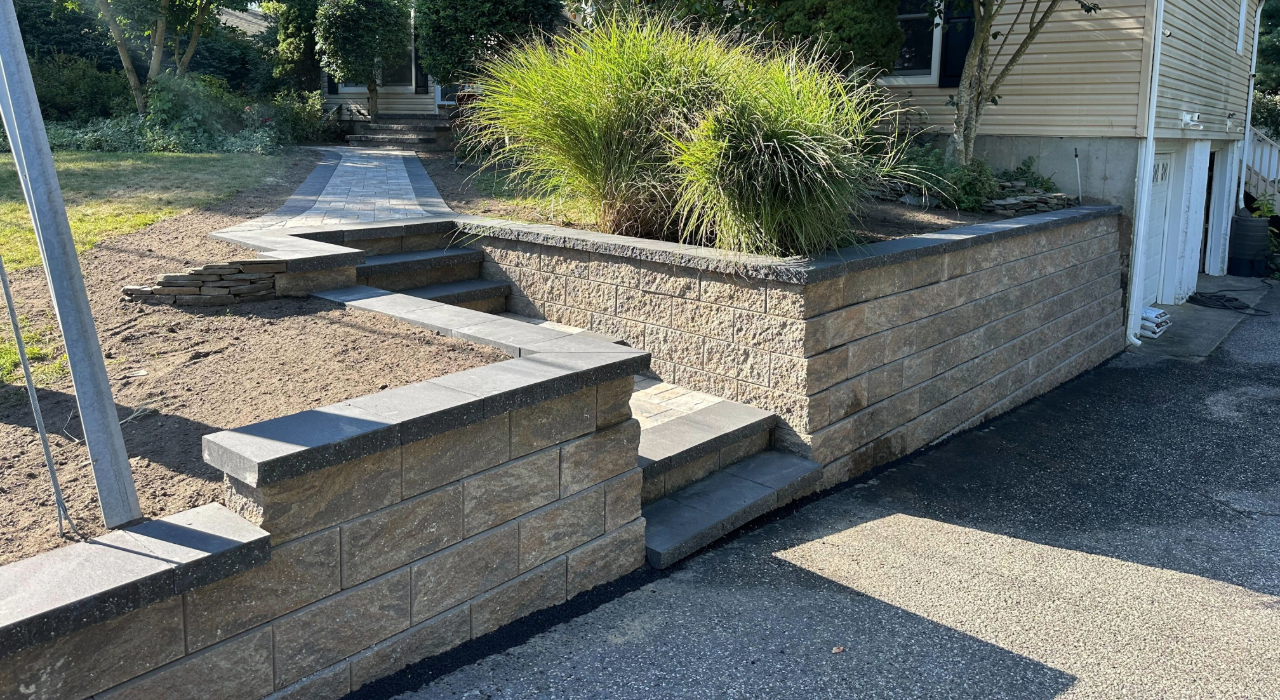
Retaining wall cost in Nassau County homeowners encounter is shaped by several variables that interact significantly with each other. Understanding these factors prevents the confusion that arises when comparing quotes that appear to cover similar work but are actually specifying very different structures.
Wall height is the most significant structural and cost driver. Taller walls retain more soil load, require more material, demand deeper and more substantial base footings, and typically require engineering and permitting that lower walls do not. The relationship between height and cost is not linear because the structural requirements escalate as height increases, meaning a wall that is twice as tall often costs significantly more than twice as much.
Wall length is the most direct total cost multiplier. Once the structural specification is established, each additional linear foot of wall adds material cost, labor, and drainage infrastructure at a roughly consistent per-foot rate.
Soil conditions behind the wall affect the drainage and base requirements significantly. Sandy, well-draining soils create less hydrostatic pressure than heavy clay soils, which retain water and create substantial lateral pressure on the wall structure. Clay soil conditions require more robust drainage systems and may affect the wall’s footing specification.
Retaining Wall Cost by Material
The three primary retaining wall materials in use for residential projects in Nassau County are segmental concrete block, natural stone, and poured concrete with masonry veneer. Each has different cost profiles, aesthetic characteristics, and structural performance attributes.
Segmental Retaining Wall Block
Segmental retaining wall block, manufactured products like Belgard’s Cambridge line, are the most common residential retaining wall material in Nassau County. They are engineered specifically for retaining wall applications, with interlocking geometry that creates a stable battered wall face and consistent dimensions that allow efficient installation. Retaining wall cost in Nassau County projects using segmental block typically runs $45 to $75 per square foot of wall face, including excavation, base preparation, drainage installation, block installation, and backfill.
The aesthetic range within segmental block is significant. Entry-level segmental block products have a uniform, manufactured appearance. Premium products with tumbled faces, natural stone textures, and varied color blending produce results that are difficult to distinguish from natural stone at viewing distance. Choosing within the segmental block category involves balancing aesthetic priorities with budget.
Poured Concrete Retaining Walls
Poured concrete retaining walls are most appropriate for commercial applications and for residential projects where very high retained soil loads require maximum structural performance. They are rarely the right specification for standard residential retaining wall applications in Nassau County, where segmental block or natural stone provides adequate structural performance with superior aesthetics at lower cost.
Stone Retaining Wall Price: Natural and Manufactured Options
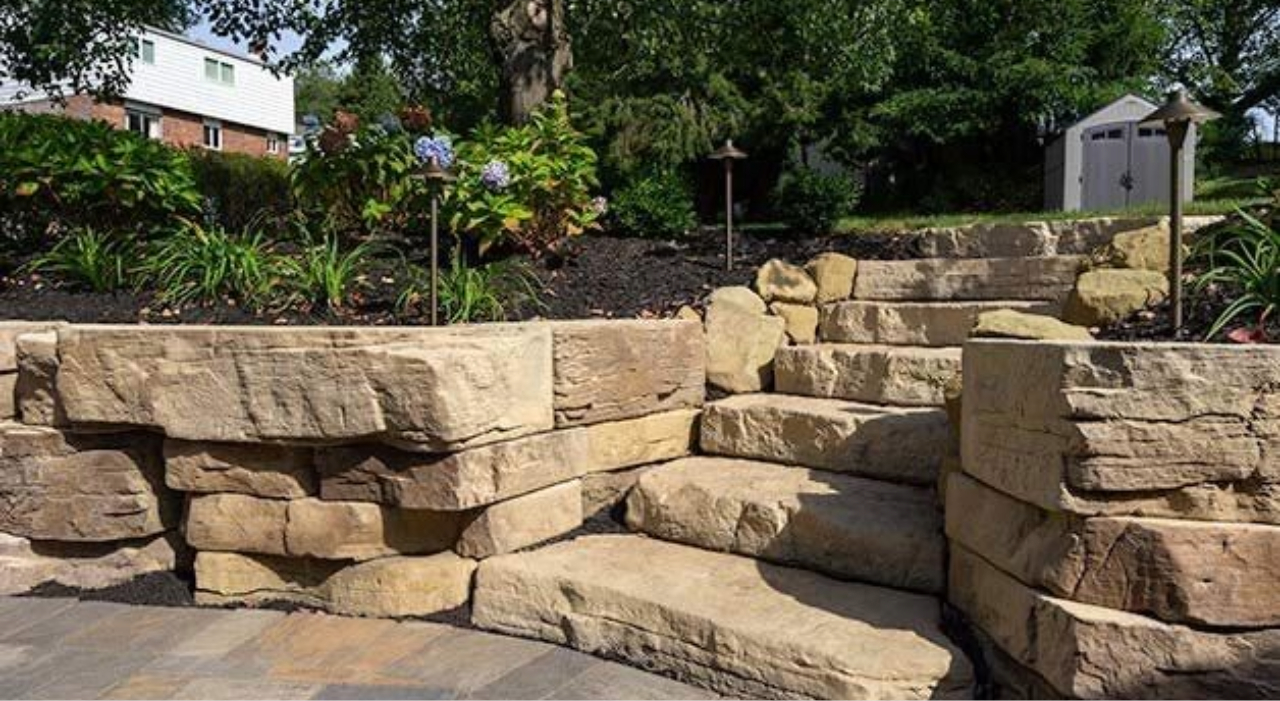
Stone retaining walls are the premium tier of residential retaining wall construction and the material choice that produces the most authentic, character-rich aesthetic results. Stone retaining wall price installed in Nassau County typically ranges from $65 to $120 per square foot of wall face depending on the stone species, the pattern, and the installation complexity.
Dry-stacked natural stone walls, in which stone pieces are carefully fitted together without mortar using their weight and interlocking shapes to create stability, produce the most natural and traditional appearance. They require significant skill to execute correctly and are slower to build than either mortared stone or segmental block, which is reflected in their labor cost. Mortared natural stone walls are faster to build but require proper mortar joint work to look authentic rather than manufactured.
Manufactured stone veneers applied over a structural segmental block or concrete wall core can approximate the appearance of natural stone at a lower total cost than full natural stone construction, though the result is visually distinguishable to a practiced eye at close inspection. For projects where the natural stone aesthetic is important but the stone retaining wall price at full natural stone specification is outside the budget, veneer applications offer a middle path.
The retaining wall installation cost for natural stone also reflects the material sourcing. Locally available stone like fieldstone and Long Island blue rock are priced differently than imported stone, and the variation in thickness and dimension of natural stone requires more skilled fitting and more time-intensive installation than the consistent dimensions of manufactured block.
How Wall Height Affects Cost and Structural Requirements
Wall height is the factor that most dramatically changes both the structural engineering requirements and the cost of a retaining wall project. Understanding how height thresholds affect what is required structurally and from a permitting perspective helps you understand why two walls of the same length but different heights can carry very different cost estimates.
Walls up to approximately three feet in height are typically within the range that experienced masonry contractors can design and build using standard industry practices for base depth, batter, and drainage without requiring formal structural engineering. These walls represent the most common residential retaining wall application in Nassau County and encompass the great majority of garden terrace walls, driveway-edge walls, and yard-leveling structures homeowners install.
Walls between three and four feet require more robust base preparation, more substantial drainage systems, and in most Nassau County municipalities, a building permit application. Walls above four feet require structural engineering review in virtually all Nassau County jurisdictions, as the lateral soil loads at these heights can produce structural failure if the wall is not designed to specific load calculations.
Per-linear-foot retaining wall cost escalates significantly as height increases. A two-foot-tall garden wall of modest length might cost $150 to $250 per linear foot installed. The same wall at four feet of retained height might cost $350 to $500 per linear foot once the deeper footing, heavier drainage system, and increased material quantity are accounted for.
You can easily calculate the price of your masonry project to ensure it fits perfectly within your landscaping budget.
Drainage: The Non-Negotiable Element of Every Retaining Wall
Every retaining wall, regardless of material or height, requires a drainage system behind it. This is not an optional enhancement or an upgrade. It is a fundamental structural requirement that, when omitted or inadequately executed, produces wall failures that typically begin within the first few winters of the wall’s existence.
Water that accumulates in the retained soil behind a wall creates hydrostatic pressure that pushes on the wall from behind. Over time, this pressure exceeds the structural capacity of a wall that was not designed to manage it, causing the wall to bow, lean, or in severe cases, overturn. The drainage system, which consists of a gravel drainage layer immediately behind the wall face and a perforated pipe at the base of the wall that carries water away from the base footing, relieves this pressure before it accumulates to dangerous levels.
When evaluating retaining wall installation cost quotes, drainage is one of the first things to confirm is included. Contractors who omit drainage infrastructure from their scope to produce a lower number are not offering a lower-cost wall. They are offering a wall that will fail prematurely. A properly drained wall built on an adequate footing in appropriate material will hold its position and structural integrity for 20 to 50 years. An undrained wall of similar material and height can begin showing distress within five years.
Permits for Retaining Walls in Nassau County
Nassau County is a complex permitting environment because it contains multiple incorporated cities, towns, and villages, each with their own building department and permit requirements. Permit requirements for retaining walls are not uniform across the county and vary meaningfully between municipalities.
As a general guideline, walls below three feet in height do not require permits in most Nassau County municipalities. Walls between three and four feet require permits in many but not all jurisdictions. Walls above four feet require permits with structural engineering documentation in virtually all Nassau County communities. Walls located near property lines, within drainage easements, or adjacent to public rights-of-way may have additional requirements regardless of height.
At Affordable Patio, we are familiar with retaining wall permit requirements across Nassau County municipalities and address this question directly during the estimate process. We do not present a project scope that is non-compliant with local requirements, and we handle permit coordination for projects where permits are required. This is a practical service that saves you the time and frustration of navigating municipal building departments independently.
Sample Retaining Wall Installation Costs in Nassau County
To give the cost guide concrete reference points, here are realistic scenarios for Nassau County homeowners in 2026.
A homeowner in Garden City needs a 24-foot-long, 2.5-foot-tall segmental block garden terrace wall to create a level planting bed from a sloped side yard. No permit required. Estimated installed cost: $5,500 to $9,000 including base, drainage, block, and backfill.
A homeowner in Massapequa needs a 40-foot-long, 3.5-foot-tall segmental block retaining wall with Belgard premium block to create a usable lower yard area from a significant slope. Permit required. Estimated installed cost: $18,000 to $28,000 including engineering, permit, excavation, drainage, and installation.
A homeowner in Oyster Bay wants a 30-foot-long natural stone retaining wall in fieldstone to complement a historic home aesthetic. Wall height is 3 feet. Permit likely required. Estimated installed cost: $24,000 to $40,000 reflecting natural stone material costs and the skill-intensive installation the material requires.
Our skilled masons are the best in the business; meet the team responsible for building lasting structures across Nassau County.
Frequently Asked Questions
How long does a properly built retaining wall last in Nassau County?
A retaining wall built on a proper footing with adequate drainage and appropriate material selection will last 20 to 50 years or more depending on the material. Dry-stacked natural stone walls have lifespans measured in generations when the individual stones are sound and the drainage behind them is maintained. Segmental block walls from quality manufacturers like Belgard carry material warranties of 10 to 15 years and commonly last 25 to 40 years in practice. Poured concrete walls are structurally durable but can develop cracking from freeze-thaw cycling over time. The most common cause of premature retaining wall failure across all material types is inadequate drainage, not material failure.
What is the difference between a retaining wall and a sitting wall?
A sitting wall is a decorative and functional wall built at seating height, typically 18 to 24 inches, that borders a patio, terrace, or outdoor living space. It may retain a small amount of soil on one side but is primarily designed for the seating surface it provides and the visual definition it creates. A retaining wall is a structural element designed to hold back significant soil loads and manage the hydrostatic pressure of the retained material. A sitting wall is a finish detail in an outdoor living space. A retaining wall is an engineering solution to a grade management problem. The two are often installed in combination, with a retaining wall creating the level surface and a sitting wall finishing the edge of the patio or terrace above it.
Can I build a retaining wall myself to save money?
For walls below two feet in height using segmental block on well-draining soil with no significant load above the retained area, a capable homeowner with appropriate equipment access can build an acceptable wall. Above that scope, the structural requirements, drainage engineering, and permit implications make professional installation the appropriate choice. Retaining walls that fail can cause significant property damage, both to the homeowner’s property and to neighboring properties if retained soil slides. The cost savings of a DIY approach are rarely sufficient to justify the risk on walls with meaningful retained soil loads, and the permit requirement for walls above three feet mandates a licensed contractor in most Nassau County jurisdictions.
Does a retaining wall add value to a Nassau County home?
A properly built retaining wall adds value in two ways. First, it creates usable land from unusable slope, which directly increases the functional square footage of the outdoor space. Second, it eliminates the ongoing cost and maintenance burden of erosion management, drainage issues, and slope instability that the unaddressed grade condition was creating. Both of these improvements are recognized by real estate appraisers and buyers in Nassau County’s market, where usable outdoor space is a meaningful value driver. A retaining wall that is visually attractive, in good structural condition, and part of a well-designed outdoor living space is a genuine asset at resale.
How do I know if my retaining wall is failing?
The most common early warning signs of a retaining wall under distress include visible bowing or leaning of the wall face away from the retained soil, cracking in the wall material that runs horizontally rather than vertically, soil appearing at the base or between blocks that was not present before, and water seeping through the wall face during or after rain events. Any of these signs warrants immediate professional assessment. A wall that is showing distress is experiencing structural stress that will not resolve on its own and typically accelerates if not addressed. Early intervention, which may involve drainage improvement, partial reconstruction, or regrading, is almost always less expensive than addressing a wall that has fully failed.
Build a Retaining Wall That Holds for Decades
Retaining wall cost in Nassau County homeowners pay is determined by material selection, wall height and length, drainage requirements, and whether permits and engineering are needed for the specific project. The ranges in this guide give you a realistic framework, but the number that matters for your property is the one that comes from a contractor who has seen the site, assessed the soil and drainage conditions, and delivered a written estimate covering every component of the work.
Affordable Patio builds retaining walls across Nassau County with the base preparation, drainage engineering, and material quality that produce structures lasting decades rather than seasons. We navigate local permit requirements, coordinate inspections where needed, and back our work with a 3-year workmanship warranty. Financing through HFS is available for projects where spreading the cost over manageable payments makes sense.
Contact Affordable Patio at 631-881-4748 or visit affordablepatio.com to schedule your free assessment. We will evaluate your site, identify the right wall specification for your specific conditions, and give you an honest written estimate within 24 hours of the visit.