
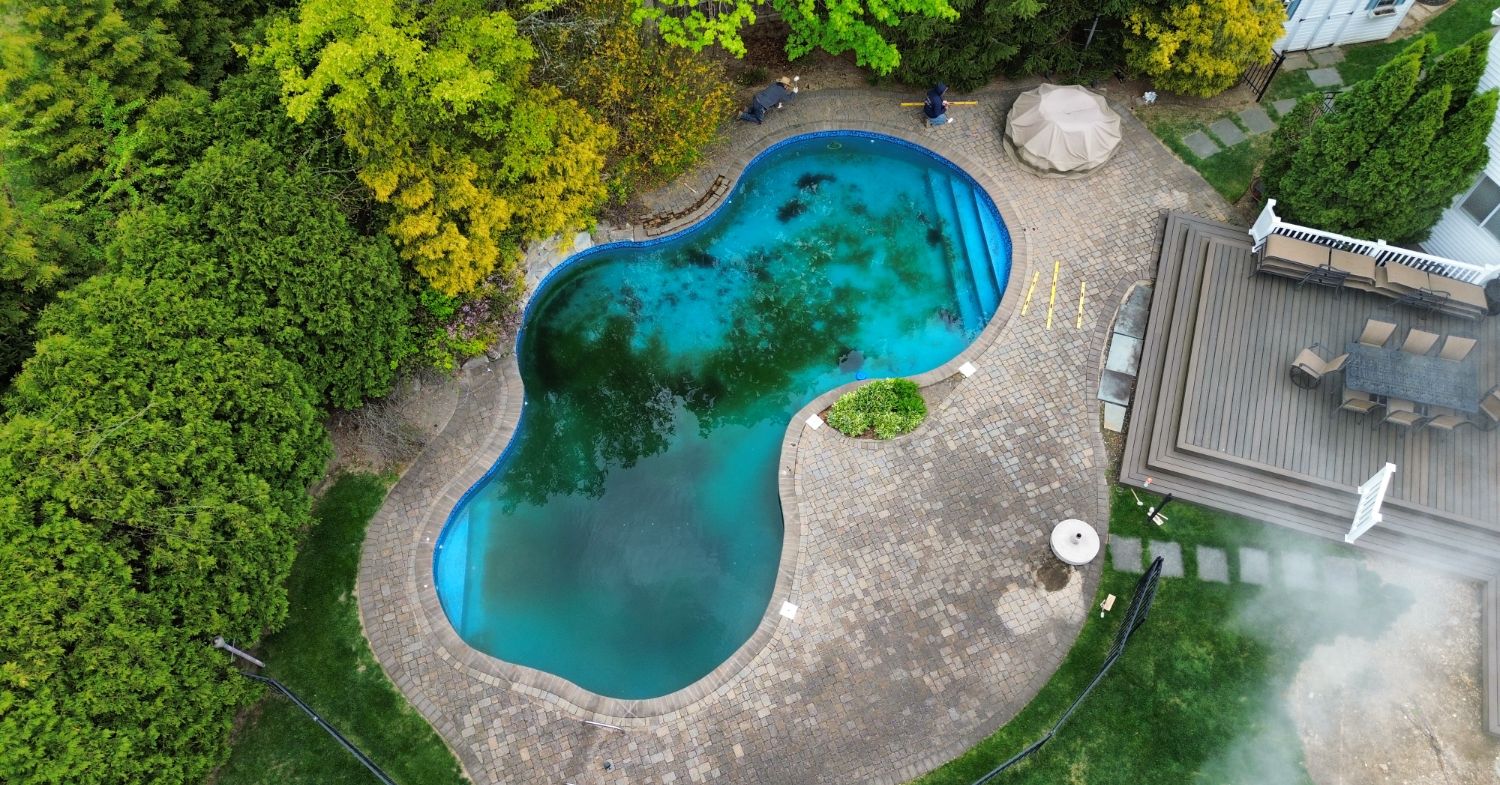
Pavers around above ground pool areas can make a backyard look cleaner, safer, and easier to maintain, but the installation needs the right base, slope, spacing, and water management. An above ground pool with pavers should not be treated like a basic patio because pool walls, ladder areas, splash water, drainage, and soil movement all affect the finished surface. With 15+ years of experience and more than 2,000 completed patios, we know the strongest results come from proper planning before the first paver is set. This guide explains how pavers around above ground pool areas are installed, what base layers matter, and how to use stone around pool spaces without creating drainage or settling problems.
Pavers around above ground pool areas need excavation, compacted base material, proper pitch, edge restraint, and careful spacing near the pool wall. Most projects use a compacted stone or RCA base, a thin bedding sand layer, and pavers installed to move water away from the pool and nearby structures.
Table of Contents
Can You Install Pavers Around an Above Ground Pool?
Pavers around above ground pool areas are a smart upgrade when they are installed with the right preparation. Pavers can create a clean walking surface, reduce mud around the pool, improve drainage, and make the space feel more finished. They also give homeowners a better place for lounge chairs, towels, steps, and pool storage.
The key is understanding that an above ground pool with pavers has different needs than a standard backyard patio. The paver surface may sit near a pool wall, ladder, deck, filter system, or retaining edge. That means spacing and drainage need to be planned carefully.
Stone around pool areas should support everyday use without trapping water against the pool structure. If the pavers are too flat, too high, or poorly compacted, water can collect, joints can wash out, and the surface can settle unevenly.
Why the Base Matters Around a Pool
Pavers around above ground pool areas depend on the base underneath. The base carries the weight of the pavers, handles foot traffic, and helps manage splash water and rainfall. A weak base can lead to sinking, uneven edges, and loose pavers near the pool.
A typical installation includes compacted soil, 4-6 inches of crushed concrete, RCA, or similar base material, a thin bedding sand layer, pavers, edge restraint, and polymeric sand. The base may need extra attention near steps, ladders, or seating areas because these spots get more concentrated traffic.
The best base is installed in compacted layers. A thick pile of loose stone or sand is not enough. Compaction helps lock the base together and lowers the chance of settling after rain or pool use.
Affordable Patio’s paver patio installation service explains how proper excavation, base preparation, bedding sand, edge restraint, and polymeric sand support a durable paver surface.
Step-by-Step Installation Process
Pavers around above ground pool areas should be planned before digging begins. The installer needs to check the pool wall, existing grade, ladder placement, equipment location, and where water should exit. This prevents the paver surface from directing water toward the pool or creating a trip hazard.
- Plan the layout: Measure the pool edge, access areas, steps, and walking space.
- Check elevations: Confirm finished paver height near the pool wall, lawn, and nearby structures.
- Excavate carefully: Remove grass, soft soil, roots, and loose fill.
- Compact the subgrade: Prepare stable soil before adding base material.
- Install the base: Add crushed concrete or stone in compacted layers.
- Screed bedding sand: Use a thin layer to level the pavers.
- Set pavers: Place pavers with consistent joints and clean transitions.
- Secure edges: Add edge restraint to prevent spreading.
- Finish joints: Sweep and activate polymeric sand as directed.
Homeowners can also review Affordable Patio’s step-by-step process to understand how planning, estimates, installation, and final walkthroughs are handled.
Before approving a project, ask how pavers around above ground pool areas will be graded, compacted, restrained, and drained.
Drainage and Water Runoff Around the Pool
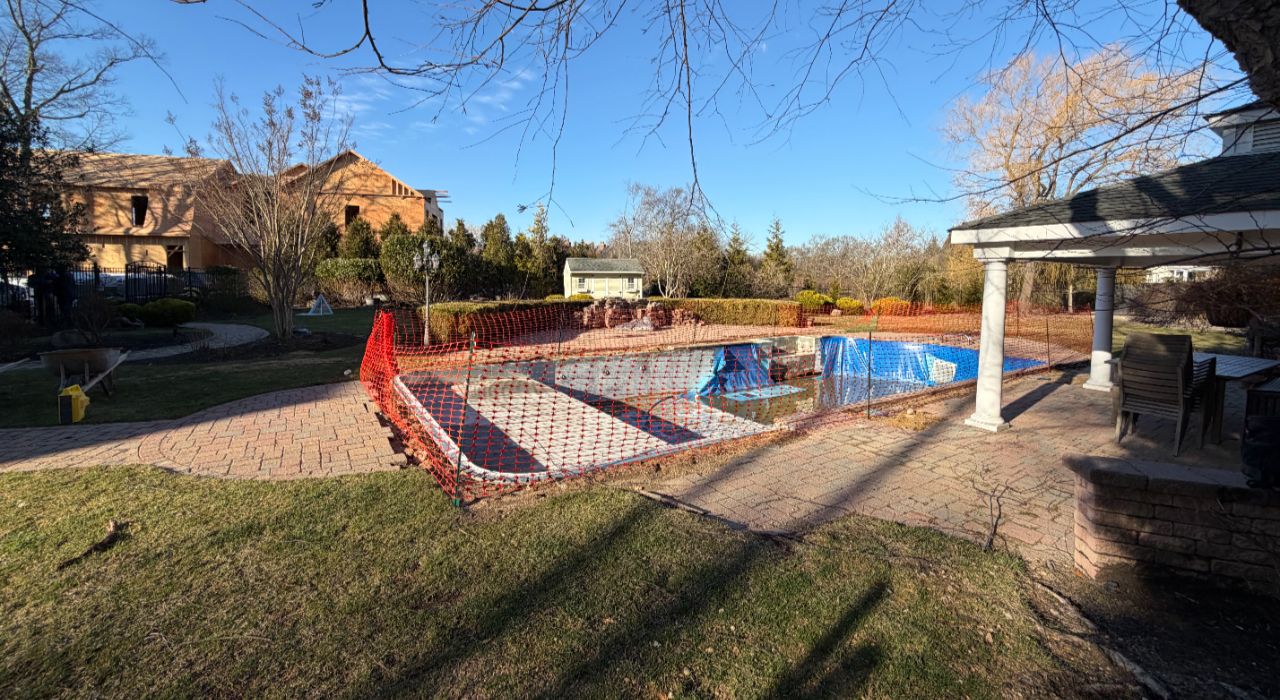
Pavers around above ground pool areas need drainage because water comes from several directions. Rain falls onto the patio surface, swimmers splash water over the edge, and pool equipment may create wet zones near the filter or ladder. Without pitch, water can sit against the pool wall or soften the soil below the pavers.
A common patio slope is about 1/8 inch per foot. Some layouts may need a stronger pitch depending on the yard. The goal is to move water away from the pool wall, house, shed, and low lawn areas.
Stone around pool spaces should not trap water in a ring. If the pavers are installed too tight or the grade is wrong, runoff can stay near the pool base. That can create messy joints, algae, settlement, or freeze-thaw movement during colder seasons.
| Project Detail | Best Practice | Why It Matters | Common Mistake |
|---|---|---|---|
| Base depth | Use 4-6 inches of compacted base for many residential applications | Helps prevent sinking and movement | Installing pavers over loose soil |
| Surface pitch | Move water away from the pool and nearby structures | Reduces puddles and base washout | Building the surface too flat |
| Pool wall spacing | Allow careful transitions near the pool edge | Protects the pool structure and surface fit | Forcing pavers too tightly against the wall |
| Ladder area | Reinforce high-traffic zones with stable base prep | Prevents rocking and dips | Ignoring concentrated foot traffic |
| Joint finish | Use properly installed polymeric sand | Helps reduce washout and loose joints | Underfilling or overwatering joints |
Best Design Options for Stone Around Pool Areas
Pavers around above ground pool areas can be installed as a full patio, a walking border, a landing by the ladder, or a larger entertainment area connected to a deck. The best layout depends on how the family uses the pool.
An above ground pool with pavers often works best when the paver area connects to seating, grilling, or walkway zones. This keeps wet feet off the grass and creates a more finished outdoor living space. It also helps organize pool traffic so people do not cut through muddy lawn areas.
Stone around pool areas should use textures and colors that match the home, fence, deck, and landscaping. Lighter paver tones may feel cooler in direct sun, while darker borders can define the pool edge. Smooth transitions are important around ladders, gates, and storage boxes.
For homeowners comparing patios, walkways, driveways, fire pits, steps, sitting walls, BBQ areas, and pool patios, the Nassau County hardscape services page gives a broader view of available outdoor living options.
Common Mistakes to Avoid
Pavers around above ground pool areas fail most often when drainage, base depth, and edge restraint are treated as minor details. A pool area gets more water exposure than a regular patio, so shortcuts can show up quickly.
- Installing pavers directly over grass or loose soil.
- Using too much bedding sand instead of compacted base material.
- Pitching water toward the pool wall.
- Ignoring runoff from nearby roofs, decks, or slopes.
- Skipping edge restraint near open borders.
- Creating uneven transitions around ladders or steps.
- Forgetting local pool safety and barrier requirements.
Safety should also be part of the planning. The U.S. Consumer Product Safety Commission provides residential pool barrier guidance for in-ground and above-ground pools. Homeowners should also confirm local code, fencing, gate, and access requirements before building around a pool.
If you are planning an above ground pool with pavers, build the drainage, walking paths, and safety access into the design before installation starts.
Frequently Asked Questions
Can You Put Pavers Around an Above Ground Pool?
Yes. Pavers around above ground pool areas can create a clean, durable walking surface when installed over a compacted base with proper drainage and edge restraint.
What Should Go Under Pavers Around a Pool?
Pavers around above ground pool areas usually need compacted soil, crushed concrete or stone base, bedding sand, pavers, edge restraint, and polymeric sand. The exact base depends on soil, slope, and use.
Is an Above Ground Pool With Pavers Better Than Grass?
An above ground pool with pavers can be cleaner and easier to maintain than grass because it reduces mud, improves walking areas, and helps manage water near the pool.
What Is the Best Stone Around Pool Areas?
The best stone around pool areas is durable, slip-resistant, comfortable for walking, and installed with proper base prep. Pavers are popular because they offer many colors, borders, and layout options.
How Do You Drain Water Around an Above Ground Pool Patio?
Drainage should use proper pitch, stable base layers, controlled runoff, and safe discharge areas. Pavers around above ground pool spaces should move water away from the pool wall and nearby structures.
Conclusion
Pavers around above ground pool areas can make a backyard more useful, cleaner, and more comfortable, but the installation must be built around drainage, base strength, pool access, and safe transitions. The right plan includes excavation, compacted base material, bedding sand, edge restraint, polymeric sand, and a surface pitch that controls water.
With 15+ years of experience and more than 2,000 completed patios, Affordable Patio understands how important proper base prep is for poolside hardscapes. If you are in Nassau County and want help planning stone around pool areas, request an estimate through the Nassau County contact page. Ready to create a cleaner, safer poolside surface? Contact Affordable Patio today to plan pavers around above ground pool areas the right way.