
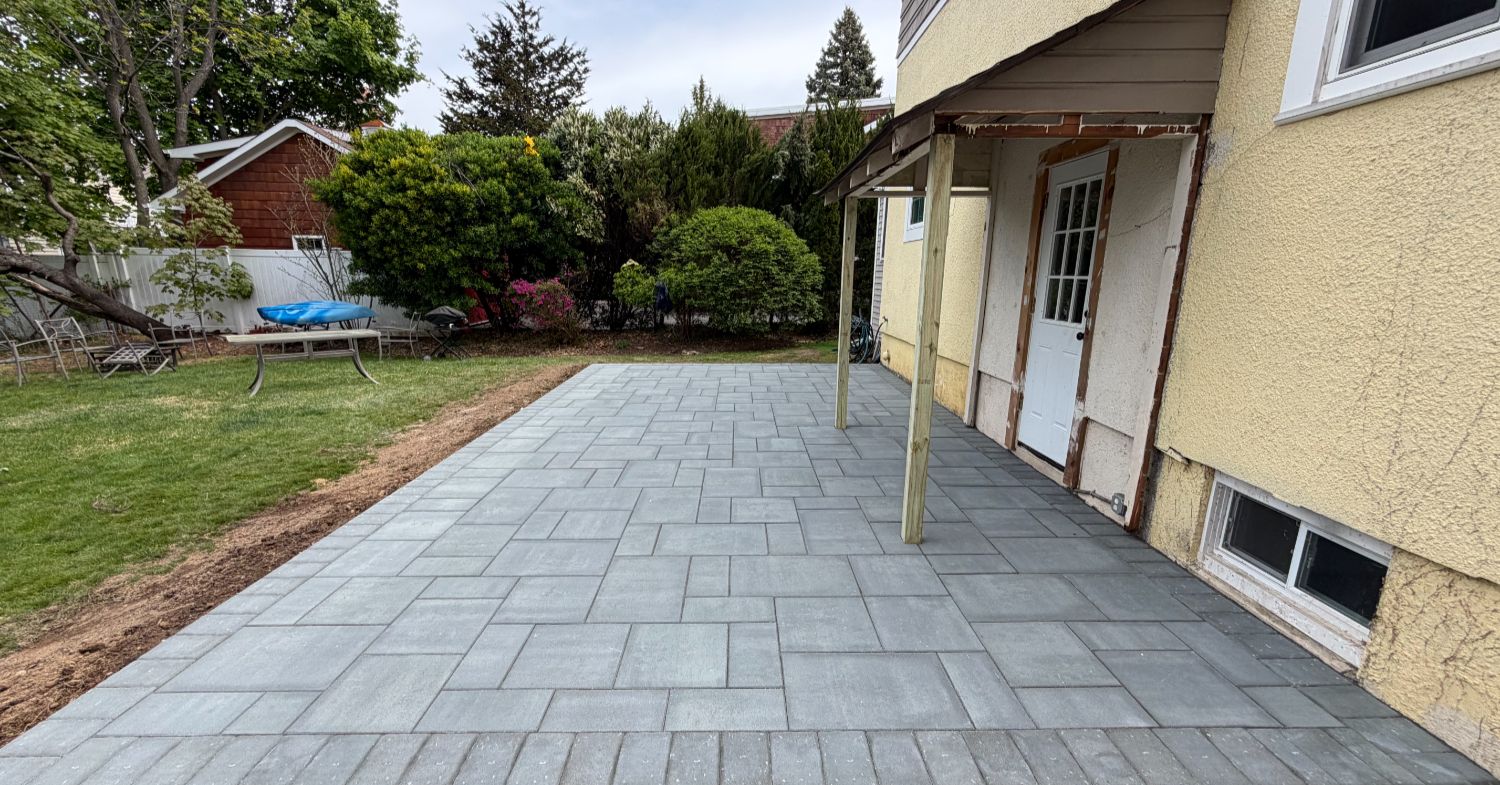
Paver patio patterns affect more than the way your patio looks. The right layout can make a small space feel wider, guide foot traffic, support heavy-use areas, and help the patio feel connected to your home. Patterns like the herringbone pattern, running bond, basket weave, and modular layouts each create a different look and level of stability. With 15+ years of experience and more than 2,000 completed patios, we know homeowners often choose pavers by color first, then realize the layout matters just as much. This guide explains paver patio patterns, practical paver layout ideas, and how to choose a design that fits your patio size, shape, and everyday use.
Paver patio patterns should be chosen based on patio size, shape, traffic level, furniture layout, and design style. A herringbone pattern is strong and classic, running bond is clean and simple, basket weave adds traditional detail, and modular layouts work well for larger patio areas.
Table of Contents
Why Paver Patio Patterns Matter
Paver patio patterns influence the visual flow, strength, and layout of the finished patio. A pattern can make a patio feel formal, relaxed, modern, traditional, wide, narrow, simple, or detailed. It can also help direct the eye toward a door, fire pit, pool, grill area, or seating wall.
The pattern should match how the patio will be used. A small dining patio may need a simple layout that does not feel busy under furniture. A large entertainment patio may look better with a modular pattern, border, or accent section to break up the space.
Good paver layout ideas also consider the house. The paver lines can run parallel to the home, angle away from it, or create contrast with a border. If the patio has curves, steps, or multiple areas, the layout may need more planning so cuts look clean and natural.
Affordable Patio’s paver patio installation service explains how patio design, base preparation, paver placement, borders, and polymeric sand all work together for a finished outdoor space.
Best Paver Patio Patterns for Common Patio Styles
Paver patio patterns should support the style of the patio, not fight it. A clean rectangular patio often works well with running bond, herringbone, or a modular pattern. A curved patio may need a more flexible layout with border cuts that follow the shape.
For a traditional home, a herringbone pattern, basket weave, or running bond can feel classic. For a more modern backyard, larger pavers, clean lines, and simple paver layout ideas often work better. For a patio with a fire pit or sitting wall, the pattern can help define the gathering area.
The paver size also matters. Small rectangular pavers can create tight, detailed patterns. Larger slabs create a calmer surface but may need more careful planning around curves and borders. Multi-size paver sets can make large patios feel less plain because the pieces vary naturally.
| Pattern | Best For | Pros | Possible Drawback |
|---|---|---|---|
| Herringbone pattern | High-traffic patios, walkways, classic designs | Strong interlock, timeless look, good movement control | More cuts along borders and edges |
| Running bond | Small patios, narrow spaces, clean layouts | Simple, neat, easy to read visually | Can look plain without a border or accent |
| Basket weave | Traditional homes and vintage-style patios | Adds texture and old-world detail | May feel busy in very small spaces |
| Stack bond | Modern patios and low-traffic areas | Clean grid, simple layout, modern feel | Less interlock than angled patterns |
| Modular layout | Large patios and open entertainment areas | Breaks up big spaces and adds natural variation | Needs careful planning to avoid random-looking joints |
Before choosing a color, ask your contractor to review paver patio patterns with your furniture layout, traffic flow, and patio shape in mind.
Herringbone Pattern Pros and Cons
Paver patio patterns that use angled joints often feel more active and structured. The herringbone pattern is one of the most popular because it creates a strong interlock and a classic look. It can be installed at a 45-degree or 90-degree angle, depending on the patio shape and design goal.
A herringbone pattern is a good option for patios that connect to walkways, steps, grilling areas, or other high-traffic zones. The angled layout helps distribute movement across the surface. It also gives the patio a professional, finished look without needing a complicated shape.
The main drawback is cutting. A herringbone pattern often needs more cuts around borders, curves, and edges. That can affect labor and material waste. Still, for many homeowners, the balance of strength and style makes it worth considering.
CMHA’s guidance on interlocking concrete pavement explains that concrete pavers are used in applications such as patios, driveways, pool decks, sidewalks, plazas, and streets, which is one reason proper layout and installation standards matter. You can review the CMHA application guide for interlocking concrete pavements for more technical context.
Running Bond and Simple Linear Layouts
Paver patio patterns do not always need to be complex. Running bond is one of the cleanest and easiest patterns to understand. In a running bond layout, each row is offset, similar to brickwork. This creates a neat, linear look that works well for patios, walkways, and narrow spaces.
Running bond can make a patio feel longer or wider depending on the direction of the lines. If the rows run away from the house, the patio may feel deeper. If the rows run across the patio, the space may feel wider. This makes running bond one of the most useful paver layout ideas for small patios.
The downside is that running bond can look too simple on a large patio if there is no border, accent band, or pattern change. That does not mean it is a bad choice. It simply means the design may need a detail that gives the eye a stopping point.
Homeowners who are still comparing project size and layout can use Affordable Patio’s Build & Price tool to start planning patio shape, size, and features before requesting a detailed estimate.
Paver Layout Ideas for Small and Large Patios
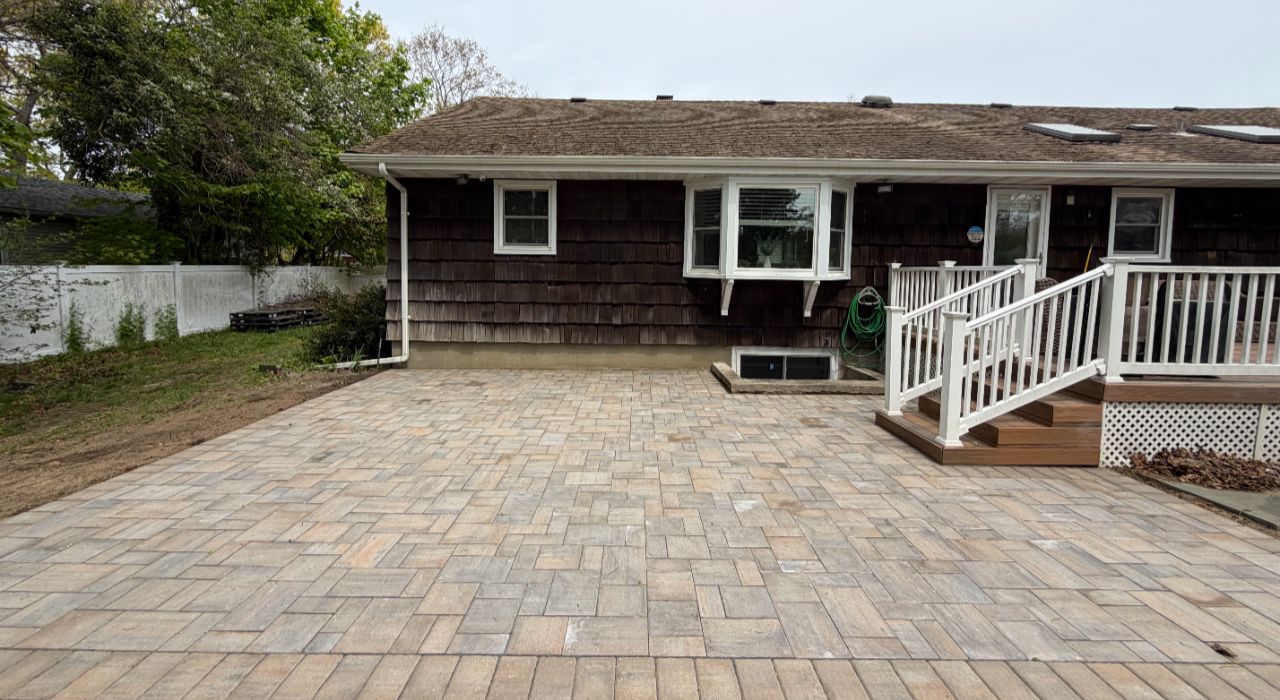
Paver patio patterns should be selected differently for small and large spaces. A small patio can feel crowded if the pattern has too many cuts, colors, or directional changes. A larger patio can feel empty if the layout is too plain.
For small patios, running bond, a simple herringbone pattern, or a clean modular layout can work well. The goal is to keep the surface organized so furniture, planters, and steps do not compete with the pattern. A single border can add detail without making the patio feel busy.
For large patios, paver layout ideas can include a picture-frame border, double border, accent band, or separate pattern zones. A dining section, fire pit area, or walkway connection can each have subtle design cues while still using the same paver family.
- Small patios: Keep lines clean and avoid too many colors.
- Large patios: Use borders or modular patterns to break up the space.
- Curved patios: Plan cuts and border pieces carefully.
- Patios with steps: Align pattern lines with entry points when possible.
- Patios with fire pits: Use the layout to define the gathering zone.
For a clearer sense of the full project sequence, homeowners can review Affordable Patio’s step-by-step process.
How Borders Change the Finished Look
Paver patio patterns often look more complete when paired with the right border. A border frames the patio, hides cut edges, and creates a clean transition to grass, planting beds, steps, or walkways. It can match the main paver color or use a contrasting tone for more definition.
A single border gives the patio a simple finished edge. A double border adds more detail and can make a larger patio feel more custom. Border direction also matters. If the main field uses running bond, the border can create contrast. If the field uses a herringbone pattern, the border can calm the edge visually.
Borders also have a practical role. They work with edge restraint to help keep the patio from spreading. Affordable Patio’s installation process includes proper edge support and polymeric sand to help pavers stay locked in place over time.
If you are choosing between several paver layout ideas, ask for one version with a matching border and one with a contrasting border before making the final decision.
Frequently Asked Questions
What Is the Most Popular Paver Patio Pattern?
The herringbone pattern is one of the most popular paver patio patterns because it offers strong interlock and a classic look. Running bond is also popular for simple patios and walkway-style layouts.
Is Running Bond Good for Patios?
Yes. Running bond is a good patio pattern when you want a clean, simple layout. It works especially well for narrow patios, small seating areas, walkways, and designs that need straight visual lines.
Which Paver Pattern Is Best for a Small Patio?
The best small patio options are usually running bond, a simple herringbone pattern, or a clean modular layout. These paver layout ideas keep the space organized without making it feel crowded.
Do Paver Patio Patterns Affect Strength?
Yes. Paver patio patterns can affect how the surface handles movement and traffic. Angled patterns like herringbone usually create stronger interlock than simple grid layouts, especially in high-use areas.
Should My Patio Have a Border?
Most patios look more finished with a border. A border frames the surface, helps organize the design, supports clean cuts, and works with edge restraint to help keep the pavers in place.
Conclusion
Paver patio patterns should be chosen with both design and function in mind. The herringbone pattern adds strength and classic detail, running bond gives a clean and simple look, and modular layouts offer flexible paver layout ideas for larger patios. Borders, paver size, patio shape, and traffic flow all affect the final decision.
With 15+ years of experience and more than 2,000 completed patios, Affordable Patio helps homeowners choose layouts that match the home, the yard, and the way the patio will be used. If you are planning a paver patio in Nassau County, request help through the Nassau County contact page. Ready to compare paver patio patterns for your backyard? Contact Affordable Patio today and start planning a patio layout that looks right and works for daily use.