
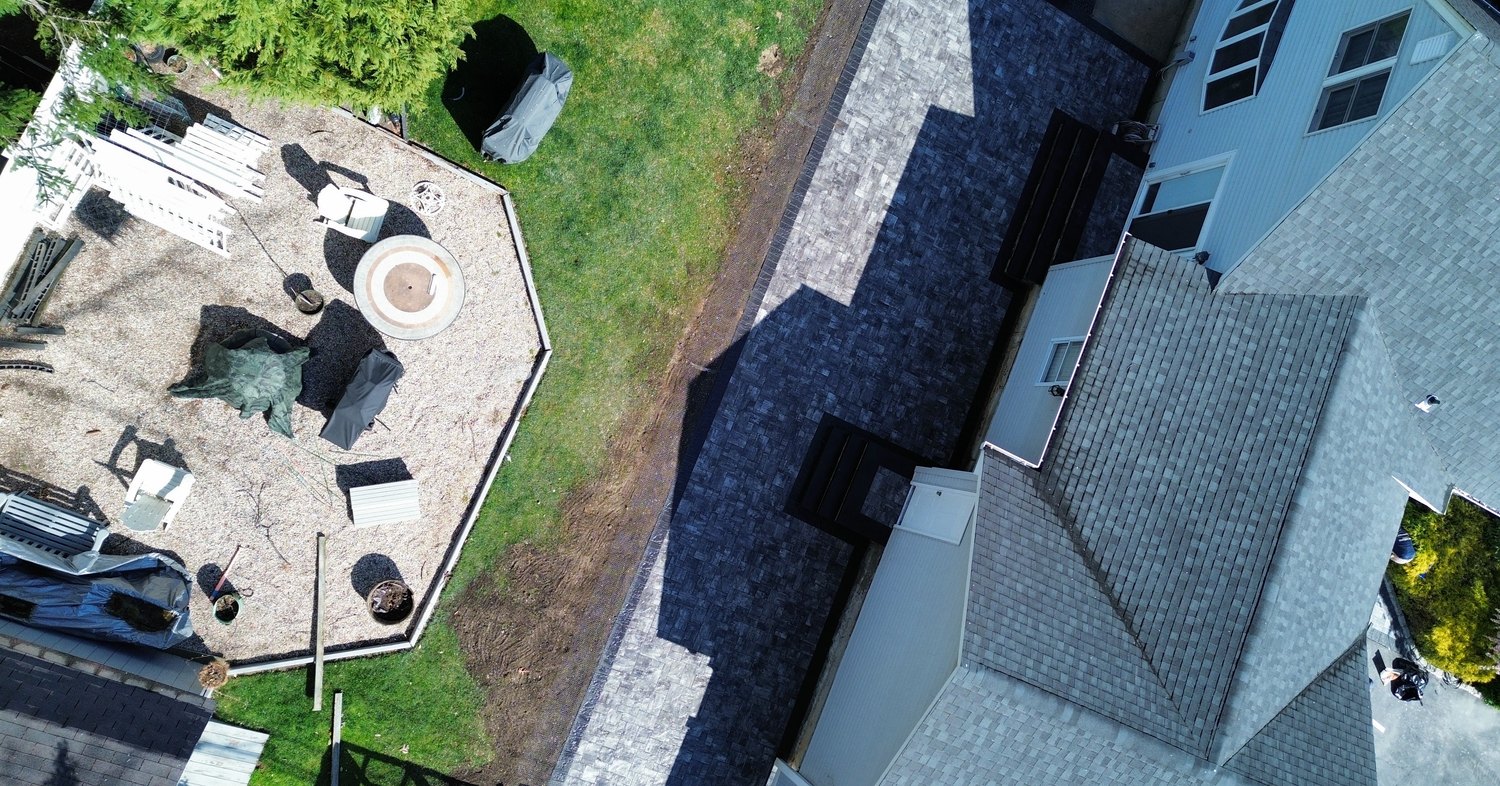
Fire pit setbacks decide where a fire can legally sit in a Long Island backyard, and the numbers behind them are not suggestions. A recreational fire has to stay at least 25 feet from any structure or combustible material under the Town of Islip Code, Chapter 19, Article IV, which adopts the Fire Code of New York State word for word.
We build fire pits across Suffolk County, and fire pit setbacks are the question that stops a project cold at the design stage. Below are the distances the state and the towns actually publish, what changes when the fuel is propane instead of wood, and which towns want paperwork first.
Quick answer: Fire pit setbacks in Islip start at 25 feet between a recreational fire and any structure or combustible material. A portable outdoor fireplace is held to 15 feet, with a one and two family exception. A bonfire needs a permit and 50 feet. Every fire stays attended until it is out, with a 4-A rated extinguisher or equivalent immediately available.
Table of Contents
What Fire Pit Setbacks Mean in a Suffolk County Backyard
A setback is the clear space between the flame and anything that can catch. Fire pit setbacks are measured from the fire itself, not from the edge of your patio, and what you measure toward is broader than most expect. The code names structures and combustible material in the same breath, so backyard fire pit safety starts with an inventory of what sits nearby.
- House walls, garages, sheds and other structures
- Wood fences, pergolas, decks and deck framing
- Stacked firewood, mulch beds and dry grasses
- Overhanging limbs, awnings and retractable shade
- Propane cylinders, gas grills and fuel containers
That is why a pit that looks safe on paper often is not. Clearing the back wall means little if a neighbor’s garage sits close to the property line. We measure in every direction from the center of the pit, then look up.
The 25 Foot Rule Behind Long Island Fire Pit Setbacks
The 25 foot figure comes from the Fire Code of New York State, which the Town of Islip adopted into its own code at Chapter 19, Article IV. A recreational fire cannot be conducted within 25 feet of a structure or combustible material. That is the fire pit clearance distance homeowners here meet first, and on a typical suburban lot it is a real constraint.
Measure the fire pit distance from house walls first, then repeat toward the fence, the shed and the property line. Twenty five feet of clear radius needs roughly 50 feet of open ground, which plenty of Long Island properties do not have. When the geometry refuses to work, the answer is a different appliance, not a shorter tape measure.
Portable Fireplaces, Bonfires and Approved Burners
A portable outdoor fireplace is treated separately. Under the same Islip article it cannot be operated within 15 feet of structures, and the code writes in an exception for one and two family dwellings. That exception is narrow. It changes the fire pit clearance distance for a chiminea on a private patio, and it changes nothing about the attendance rule or the extinguisher.
A bonfire is a different animal. It requires a permit and has to sit at least 50 feet from structures, or 15 feet when it burns inside an approved burner. Those larger fire pit setbacks are why a backyard bonfire is rarely realistic on a residential lot. Our comparison of an outdoor fireplace against a fire pit covers the trade-offs.
Gas Fire Pit Code and Propane Clearances
Propane changes the rulebook. Gas fire pit code clearances come from NFPA 58 rather than from the recreational fire language, and fire pit setbacks for a gas burner are written around the relief valve instead of the flame. For cylinders that get exchanged, keep at least 3 feet horizontally between the relief valve discharge and any building opening below it, and 5 feet from exterior ignition sources.
That discharge can never terminate inside or beneath a building, which rules out hiding a cylinder under a deck or bench. ASME tanks under 125 gallons may sit at 0 feet from a building when the conditions in the standard are met, while tanks of 125 to 250 gallons need 10 feet. Our guide to wood against gas fire pits covers the rest.
Permits and Fire Pit Setbacks Change Town by Town
Permits on Long Island are issued by towns, not by the county, so the answer changes with your address. Islip and Huntington are the two towns whose permit lists we verified for this guide. Islip handles a gas fire pit as a plumbing and HVAC permit, filed as a Gas BBQ or Fire Pit application. Huntington does not list fire pits on its published permit schedule.
Brookhaven does not require a permit for a recreational fire on residential property that meets the state Fire Code. None of that removes your own homework. Fire pit setbacks and permit thresholds are set town by town across Suffolk County, so confirm both with your own building and fire officials first. Our fire pit installation guide covers the sequence.
What You Can Burn, and the Spring Ban
New York limits a cooking or recreational fire to less than 3 feet high and less than 4 feet in length, width or diameter, burning only charcoal or dry, clean, untreated and unpainted wood. The state’s open burning rules from the Department of Environmental Conservation set those limits, and a statewide brush burning ban runs from March 16 through May 14 every year.
Burning grass, brush, leaves, trash and construction material is prohibited outright. Two habits carry most of the weight in backyard fire pit safety. The fire must never be left unattended until it is out, and at least one extinguisher rated 4-A, or an equivalent means of extinguishment, has to be immediately available. Neither one is optional.
| Type of fire | Minimum distance | Permit | Attendance rule |
|---|---|---|---|
| Recreational fire in a pit | 25 feet from a structure or combustible material | None in Brookhaven; confirm your town | Attended until out, 4-A extinguisher ready |
| Portable outdoor fireplace | 15 feet, one and two family exception | Not listed by Islip or Huntington | Attended until out, 4-A extinguisher ready |
| Bonfire | 50 feet, or 15 feet in an approved burner | Permit required | Attended until out, 4-A extinguisher ready |
| Gas pit on exchangeable cylinders | 3 feet to openings below the relief valve, 5 feet to ignition sources | Islip files it under plumbing and HVAC | Never left burning unattended |
Not sure which line applies to your yard? Send us the dimensions and we will map the fire pit setbacks against your house, fence and property lines before we quote. Call (631) 275-3142 and we will walk the numbers with you.
Ready to place yours properly? We have built outdoor living across Suffolk County and Nassau County for more than 15 years, and every estimate is free and back within 12 to 24 hours. Tell us about your yard.
Frequently Asked Questions
What is the right fire pit distance from house walls in New York?
A recreational fire has to sit at least 25 feet from a structure or combustible material under the Town of Islip Code, Chapter 19, Article IV, which adopts the Fire Code of New York State. Other towns publish their own figures.
How big can a backyard recreational fire be?
New York’s open burning rules allow a cooking or recreational fire under 3 feet high and under 4 feet in length, width or diameter. The fuel is limited to charcoal or dry, clean, untreated and unpainted wood. Anything larger reads as a bonfire.
Do I need a permit for a fire pit in Suffolk County?
Permits are issued by towns, not by Suffolk County. Brookhaven does not require one for a residential recreational fire that meets the state Fire Code. Islip treats a gas fire pit as a plumbing and HVAC permit. Confirm with your own town first.
What does gas fire pit code say about propane cylinder placement?
Under NFPA 58, an exchangeable cylinder sits at least 3 feet horizontally from any building opening below the relief valve discharge, and 5 feet from exterior ignition sources. The relief valve discharge can never terminate inside or beneath a building.
When is open burning banned in New York?
New York bans brush burning statewide from March 16 through May 14 every year. Burning grass, brush, leaves, trash and construction material is prohibited at any time, and any legal fire has to be attended until it is completely out.
Getting Fire Pit Setbacks Right the First Time
Placement is the cheapest decision in the project and the most expensive one to fix. Working out the fire pit clearance distance during design costs an afternoon with a tape measure. Finding it after the pavers are set means lifting a finished patio.
Backyard fire pit safety is not complicated once the distances are written down. Confirm your town’s permit position, keep the fire attended until it is out, keep a 4-A rated extinguisher within reach, and burn only what the state allows. Our fire pit design page shows what we build across Suffolk County.
Let’s find the right spot in your yard. Call (631) 275-3142 or use our Build and Price tool for an instant estimate, and we will confirm the fire pit setbacks for your property before a single paver moves.