
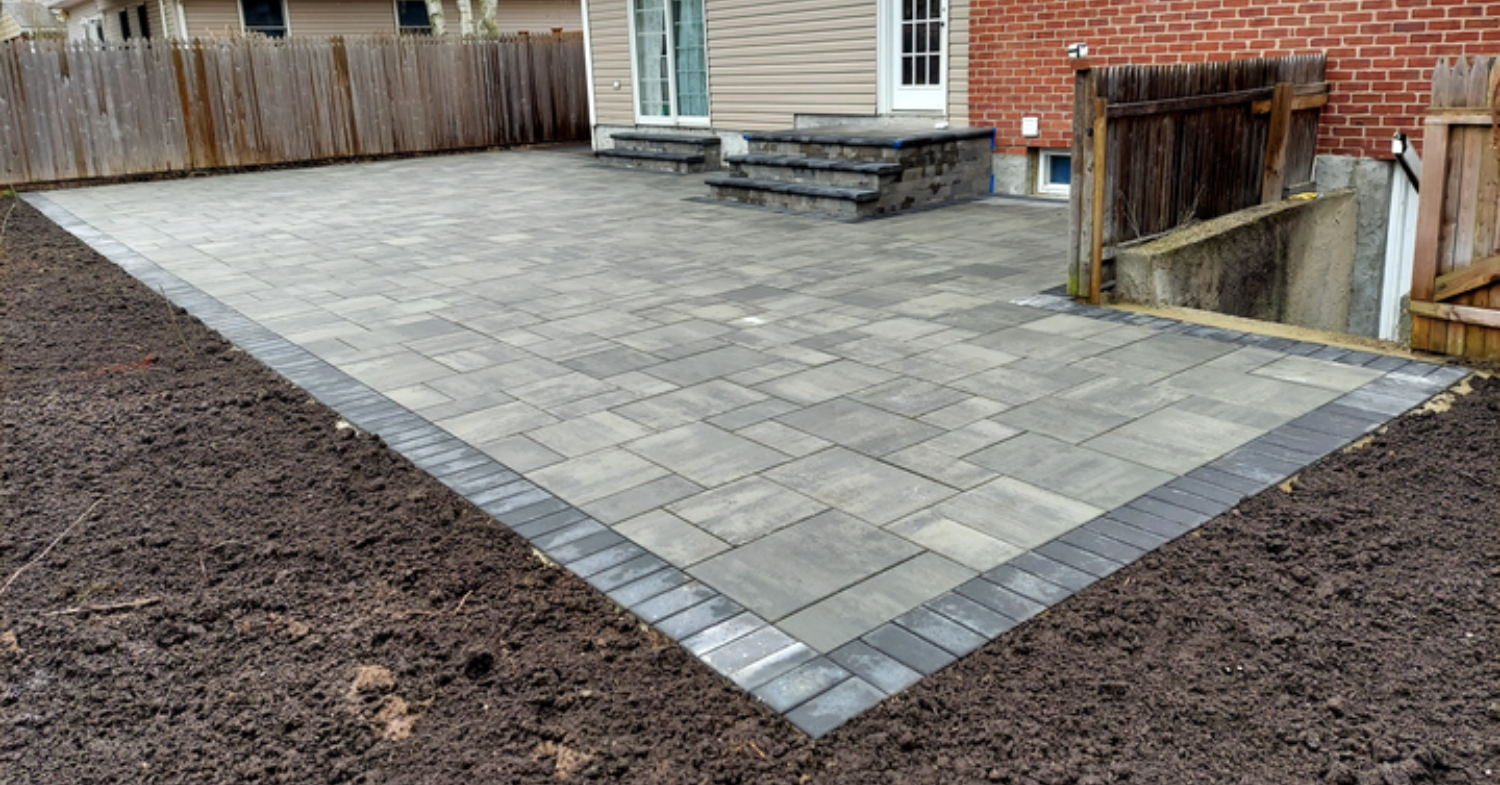
Pavers vs concrete patio is one of the biggest decisions Nassau County homeowners make when planning a new outdoor living space. Both options can create a usable patio, but they perform very differently over time. Concrete usually costs less upfront, while pavers often provide better repairability, design options, and long-term value. This guide compares cost, durability, maintenance, appearance, resale value, and the local Nassau County factors that matter before you choose your patio material.
Quick Answer
Pavers vs concrete patio comes down to upfront cost versus long-term performance. Concrete is usually cheaper at first, but pavers often last longer, handle freeze-thaw movement better, offer more design options, and can be repaired in sections without visible patch marks.
Why Nassau County Conditions Matter
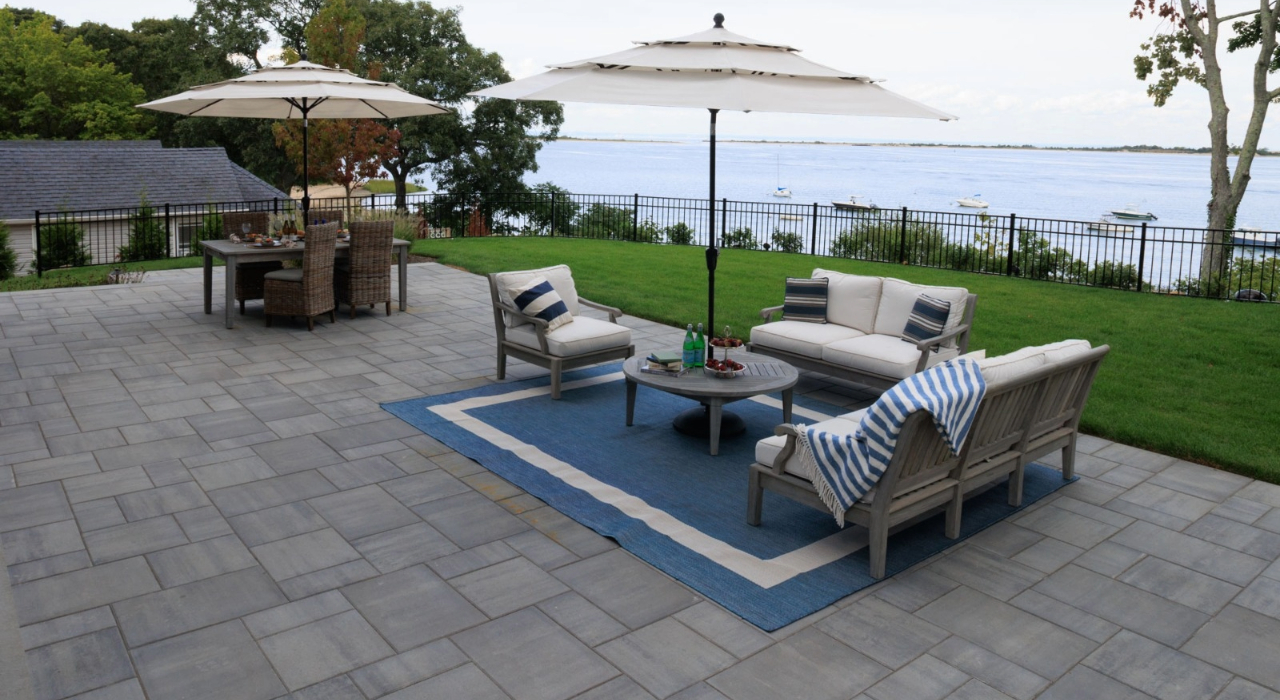
Pavers vs concrete patio decisions should account for Nassau County’s weather and residential layouts. Long Island has freeze-thaw cycles, summer heat, moisture, and tight property access in many neighborhoods. These conditions can affect how patios are installed and how they age.
Concrete is a single slab, so ground movement, frost heave, and water intrusion can lead to cracks. Pavers are individual units that can move slightly with seasonal changes. That flexibility is one reason pavers often perform better for long-term patio projects in Nassau County.
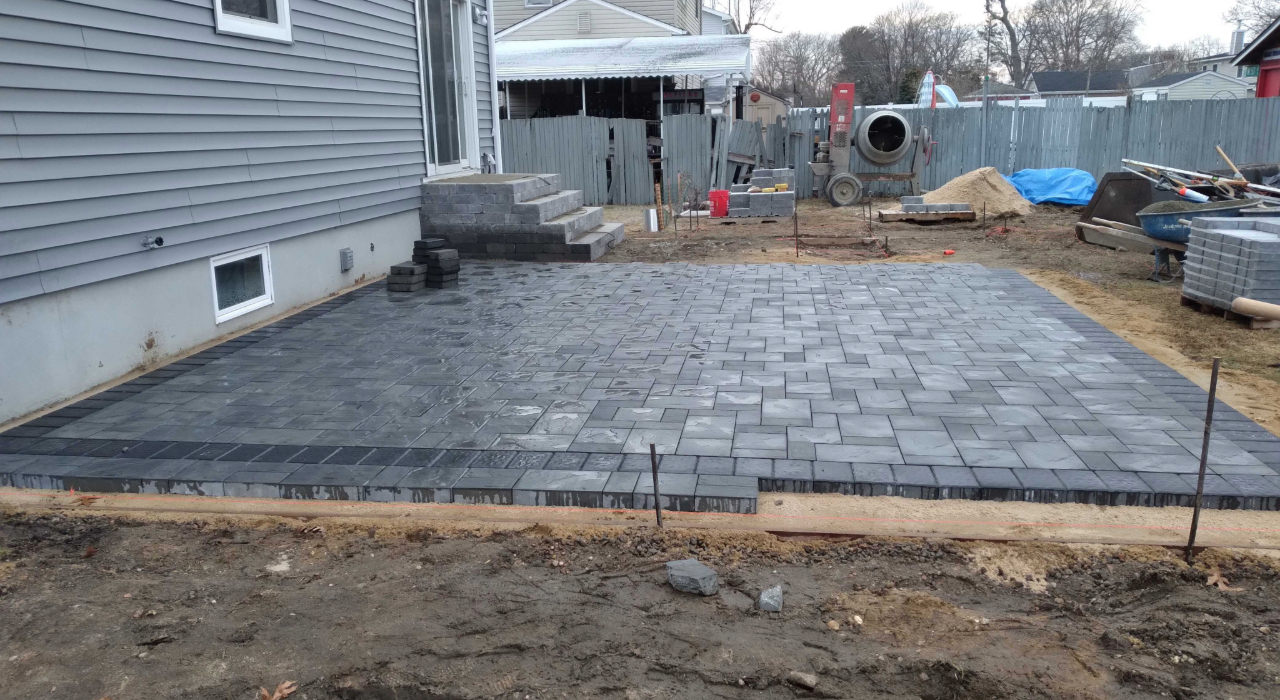
Affordable Patio provides paver patio installation in Nassau County using proper base preparation, Cambridge pavers, concrete edging, and polymeric sand.
Paver Patio vs Concrete Cost
Pavers vs concrete patio pricing usually starts with concrete as the lower upfront option. A basic concrete patio may cost less per square foot, especially when the design is simple. However, decorative concrete, stamped concrete, color work, and edge details can narrow the gap.
Pavers usually cost more upfront because the installation includes excavation, compacted base, bedding sand, paver placement, cutting, borders, edge restraints, and polymeric sand. Over time, that higher upfront cost can be balanced by fewer visible repairs and longer useful life.
| Factor | Paver Patio | Concrete Patio |
|---|---|---|
| Upfront cost | Higher | Lower |
| Design options | Wide range of colors, shapes, borders, and patterns | Limited unless stamped or colored |
| Repair appearance | Section repairs can blend well | Patch repairs often show |
| Lifespan | Often 30 to 50+ years with proper installation | Often 15 to 25 years depending on conditions |
Durability and Longevity
Pavers vs concrete patio durability strongly favors pavers when the installation is done correctly. Pavers are made as individual units, so the surface can flex slightly with movement below. Concrete is monolithic, meaning the whole slab must absorb movement as one piece.
In freeze-thaw climates, water can enter small surface openings, freeze, expand, and widen cracks. This is one reason concrete patios often develop cracking over time. Pavers are not immune to movement, but if one area settles, that section can usually be lifted and reset.
Homeowners can review Cambridge Pavingstones products to compare paver options for patios, pool decks, walkways, and driveways.
Maintenance Needs
Pavers vs concrete patio maintenance is different. Concrete may need sealing, crack monitoring, and eventual patching. Stamped concrete may need more frequent sealing to preserve color and surface finish.
Paver patios need sweeping, occasional joint sand maintenance, and optional sealing after the pavers have had time to release efflorescence. Polymeric sand helps lock joints and reduce weed growth when installed properly.
For homeowners who want lower visible repair risk, pavers are often the better long-term choice.
Design Options
Pavers vs concrete patio design is another major difference. Concrete can be broom-finished, colored, or stamped. Stamped concrete can look attractive when new, but the surface can fade and resealing may be needed to maintain the look.
Pavers offer real material patterns, color blends, border options, accent colors, and size choices. Homeowners can create a patio that matches the home, pool area, walkway, steps, or driveway. Borders can define the space and make the patio feel more finished.
Affordable Patio’s Nassau County patio team installs Cambridge Pavingstones with multiple color and border options, giving homeowners more design flexibility than basic concrete.
Repairability
Repairability is one of the most important differences in the pavers vs concrete patio comparison. When concrete cracks, the repair usually leaves a visible patch. Matching the original color, texture, and finish is difficult.
When a paver section settles, the affected pavers can be removed, the base can be corrected, and the same pavers can often be reset. The repair can blend into the surrounding surface with little visible difference.
Resale Value in Nassau County
A well-installed paver patio can be a strong visual feature for Nassau County homes. Outdoor spaces matter to buyers, especially when the patio looks clean, level, and long-lasting.
A cracked concrete patio can have the opposite effect. Instead of feeling like an upgrade, it may look like a future repair project. That can affect the way buyers view the property during showings.
Which Should You Choose?
Concrete can make sense for very tight budgets or short-term needs. It provides a usable patio surface at a lower starting cost. However, for Nassau County homeowners planning a long-term outdoor living project, pavers are often the stronger choice.
Pavers offer better repairability, more design options, strong freeze-thaw performance, and a more premium finished look. The higher upfront cost can make sense when the patio is expected to serve the home for many years.
To compare patio options, visit the Affordable Patio Nassau County contact page or call 631-275-3142.
Frequently Asked Questions
How much more expensive are pavers than concrete?
Paver installation often costs more upfront than basic concrete, but the difference depends on design, materials, local labor, and whether the concrete is stamped or decorative.
Does a paver patio add more resale value than concrete?
A well-installed paver patio can create a stronger buyer impression because it looks more finished and is easier to repair than cracked concrete.
How long does poured concrete last before cracking?
Concrete can last many years, but cracking is common over time in freeze-thaw climates, especially when drainage or subbase conditions are not ideal.
Can stamped concrete look as good as real pavers?
Stamped concrete can look attractive when new, but pavers usually offer better material depth, border options, and long-term repairability.
What happens if part of a paver patio sinks?
The affected pavers can be lifted, the base can be corrected, and the same pavers can often be reset so the repair blends with the patio.
Conclusion
Pavers vs concrete patio is really a choice between lower upfront cost and stronger long-term flexibility. Concrete can work for basic projects, but pavers are often better for Nassau County homeowners who want durability, repairability, design options, and long-term value.
Affordable Patio helps Nassau County homeowners plan paver patios with transparent pricing, Cambridge materials, proper base preparation, and a 3-year workmanship warranty. To request your estimate, visit the Nassau County contact page.