
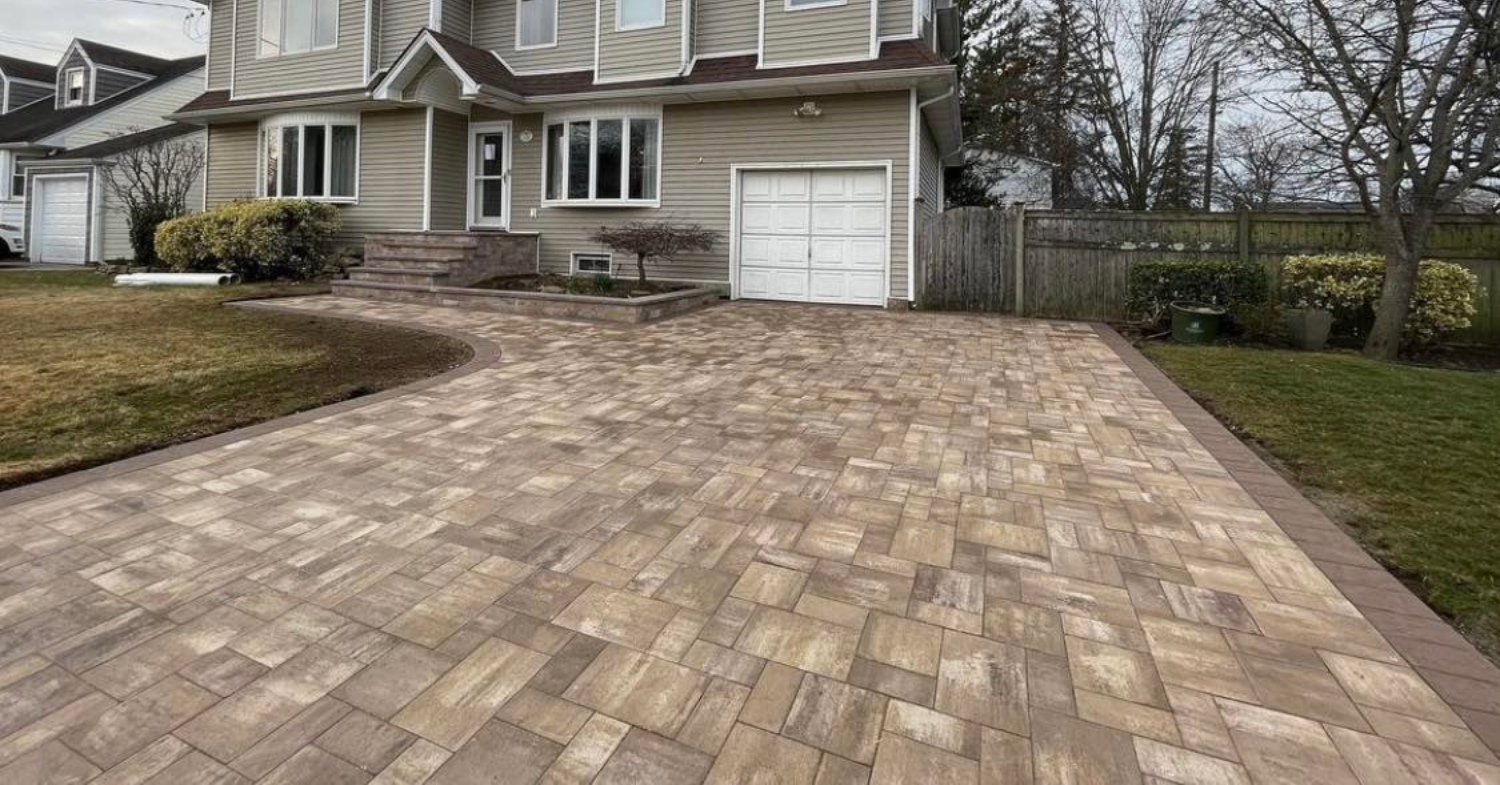
A paver driveway is one of the most visible and highest-impact improvements a Long Island homeowner can make to their property. It is the first thing guests see, the surface your cars roll across every day, and a feature that directly affects your home’s curb appeal and market value. It is also a significant investment, which is why understanding driveway paver cost on Long Island before you start collecting estimates is one of the most useful things you can do as a homeowner.
At Affordable Patio, we have been installing paver driveways across Long Island, including throughout Nassau County, for years. We have seen the full spectrum of project types from single-car driveways in smaller lots to sweeping multi-car installations on larger properties, and across all of them the fundamentals of honest, accurate pricing work the same way. This guide compares brick, concrete, and stone pavers, breaks down what drives driveway paver cost on Long Island in 2026, and gives you the framework you need to evaluate any estimate you receive.
Why Paver Driveways Outperform Asphalt and Concrete on Long Island
Long Island’s climate puts outdoor surfaces through a demanding annual cycle. Winter freeze-thaw events expand and contract surface materials, causing rigid surfaces like poured concrete to crack progressively over time. Summer heat softens asphalt, creating surface depressions under parked vehicles. Spring and fall precipitation test drainage and edge integrity in ways that reveal the quality of the base preparation beneath any surface.
Paver driveways handle this cycle better than the alternatives for a fundamental reason: they are not rigid. The modular unit construction allows individual pavers to flex slightly under load and temperature change without distributing stress across a continuous slab that must crack to accommodate movement. When a paver unit does settle or shift, it can be reset or replaced individually without disturbing the surrounding surface. A cracked concrete driveway, by contrast, can only be patched with visible repairs that compound over time until full replacement is the only option. The driveway pavers Nassau County homeowners are installing today are designed to last 25 to 50 years with proper base preparation and basic maintenance.
A durable, stylish entrance starts here, explore our specialized driveway installation services in Nassau County.
Driveway Paver Cost on Long Island: The Overview
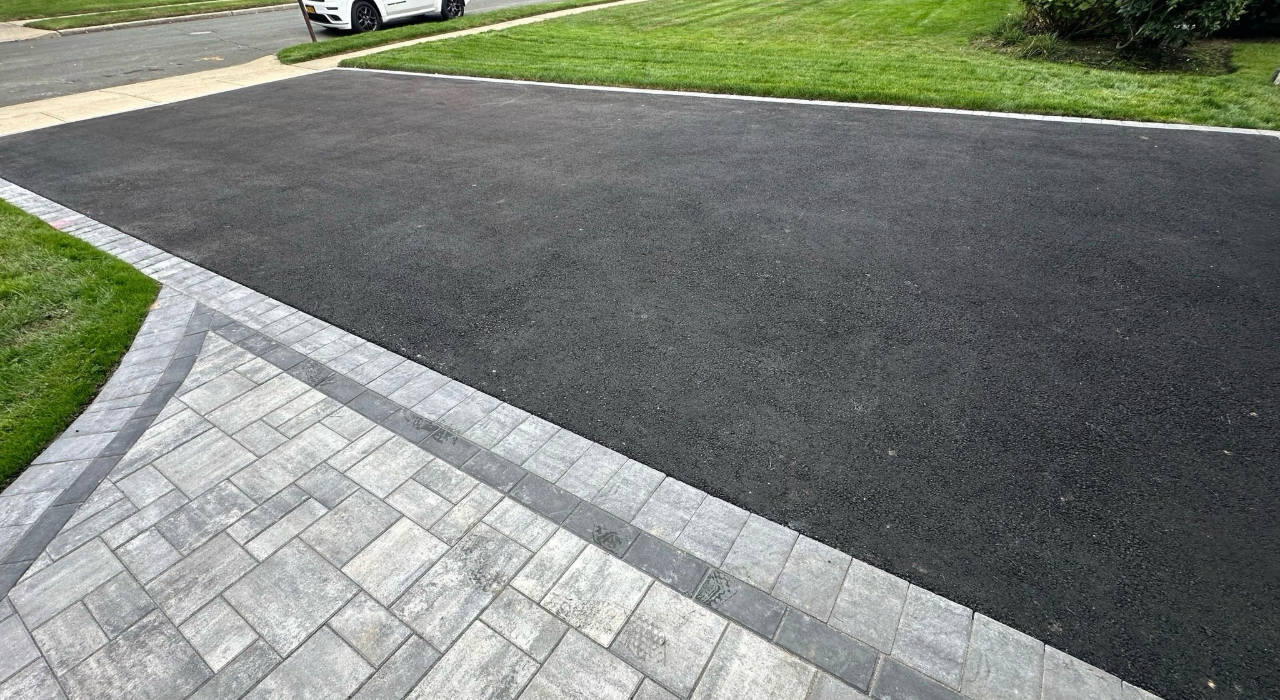
Driveway paver cost on Long Island ranges from approximately $20 to $55 per square foot installed depending on the specific material chosen, the size and configuration of the driveway, and the site conditions affecting base preparation and demolition. A standard two-car driveway in Nassau County, typically 18 by 36 feet or approximately 650 square feet, falls in the range of $13,000 to $35,000 total installed cost depending on material selection.
This range is wide because the choices within it are genuinely different products with different performance profiles, aesthetics, and installation requirements. Understanding what each category delivers and at what price point is what allows you to match your investment to your priorities.
Brick Driveway Cost: Traditional Curb Appeal
Brick pavers bring a timeless residential aesthetic that works particularly well with colonial, cape, and traditional home styles common throughout Nassau County. Clay brick pavers are fired at high temperatures that produce exceptional hardness and color that is embedded throughout the material rather than applied as a surface coating. Brick driveway cost installed on Long Island typically runs $28 to $40 per square foot, occupying the middle-to-upper range of the paver driveway market.
The durability of clay brick is exceptional. Properly installed clay brick driveways have functional lifespans measured in decades, and the color does not fade the way some concrete paver colors do over many years of UV exposure. The trade-off is cost and a somewhat more demanding installation process because brick dimensional consistency, while good, requires careful adjustment during laying to maintain consistent joint width and level surface.
For Nassau County homeowners with traditional architecture who want a driveway surface that adds genuine character and holds its appearance for the life of the home, brick is a strong choice despite its higher upfront cost. The paver driveway cost per square foot for brick is higher than concrete pavers, but the premium buys a material that many homeowners find more attractive and that holds its value well in a resale context.
Concrete Paver Driveway Cost: The Value Leader
Concrete pavers are the dominant driveway paver material in Nassau County and across Long Island for practical reasons. They are manufactured to consistent specifications, available in an extensive range of colors, sizes, and surface textures, and delivered at a price point that makes high-quality paver driveways accessible to most homeowners who prioritize performance and aesthetics over the lowest possible number.
Concrete paver driveway cost installed on Long Island typically ranges from $20 to $32 per square foot, making them the most accessible entry point into the paver driveway category while still delivering performance that far exceeds asphalt and approaches brick in real-world durability. Belgard, the brand we work with extensively at Affordable Patio, offers products ranging from value-oriented catalog pavers to premium architectural products that closely replicate the appearance of natural stone.
The paver driveway cost per square foot for concrete pavers varies within this range based on the specific product selected, with standard catalog colors and sizes at the lower end and premium products at the higher end. For most Nassau County homeowners who want a quality driveway at an honest price, concrete pavers represent the best value proposition in the category.
Stone Paver Driveway Cost: Premium Performance
Natural stone driveways using bluestone, granite, or travertine represent the premium tier of the driveway paver market. Stone paver driveway cost installed on Long Island typically ranges from $35 to $55 per square foot, reflecting higher material costs and the more skilled installation labor that natural stone requires. Each stone piece varies in dimension and thickness, requiring more precise base preparation and more time-intensive fitting during installation.
The visual result of a natural stone driveway is distinctive in ways that manufactured materials cannot fully replicate. The variation in color, texture, and surface character within a single stone species gives natural stone installations a depth and uniqueness that concrete products approach but do not match. For homes where the driveway is a significant architectural statement and where material authenticity matters, natural stone is the appropriate specification despite its premium cost.
Granite is particularly relevant to Long Island driveways because of its exceptional hardness and freeze-thaw resistance. Bluestone is another popular local choice with a slate-blue to gray color range that complements many home exteriors. Travertine has a warmer, more European aesthetic that works well with Mediterranean and contemporary architectural styles.
How Size and Scope Affect Total Cost
Driveway size is the most direct total cost driver, but the relationship between size and cost is not perfectly linear. Certain fixed costs, including mobilization, equipment delivery, and setup, are similar regardless of driveway size. A small single-car driveway carries these fixed costs across fewer square feet, producing a higher per-square-foot rate. A large multi-car driveway distributes them more efficiently.
Standard Long Island residential driveways range from approximately 300 to 800 square feet for single and two-car configurations. Larger properties with extended driveways or circular configurations can exceed 1,000 square feet. At the upper end of this range, both the total project cost and the per-square-foot efficiency gain are significant.
Scope additions beyond the basic driveway surface also affect total cost. Apron work at the street connection, curb cut modifications if needed, transition paving between the driveway and a garage threshold, and decorative borders or accent patterns all add to the project cost. These additions are worth discussing during the estimate process so they are captured in your written quote rather than discovered as surprises after the project begins.
Estimating your project costs is simple with our online build and price feature for custom driveways.
Base Preparation: Why It Drives Cost and Determines Longevity
The base preparation beneath a paver driveway is more critical than for a patio because driveways bear substantially heavier loads from vehicle traffic. A driveway paver installation requires a deeper, stronger base than a pedestrian patio surface, and shortcuts in the base specification produce failures under vehicle loading that appear much faster than similar shortcuts in a patio base.
A quality driveway base installation begins with excavation to 8 to 12 inches below the finished grade, deeper than the 5 to 7 inches typically required for a patio. Poured concrete base is used in specific driveway applications, particularly where the soil subgrade is unstable or where heavy vehicle loads are anticipated. For most standard residential driveways, a dense-graded recycled concrete aggregate base installed in compacted lifts provides adequate structural support. The aggregate base is topped with a fine sand bedding layer, and concrete edge restraints are installed at all exposed perimeters before paver installation begins.
Contractors who price significantly below market rates are almost always compressing this base specification. Thinner base, fewer compacted lifts, and inadequate edge restraints produce driveways that begin settling, migrating, and cracking within a few seasons under vehicle loads. The difference in cost between adequate and inadequate base preparation is a few dollars per square foot, but the difference in performance over a 20-year driveway lifespan is enormous.
Demolition and Removal of Existing Driveway
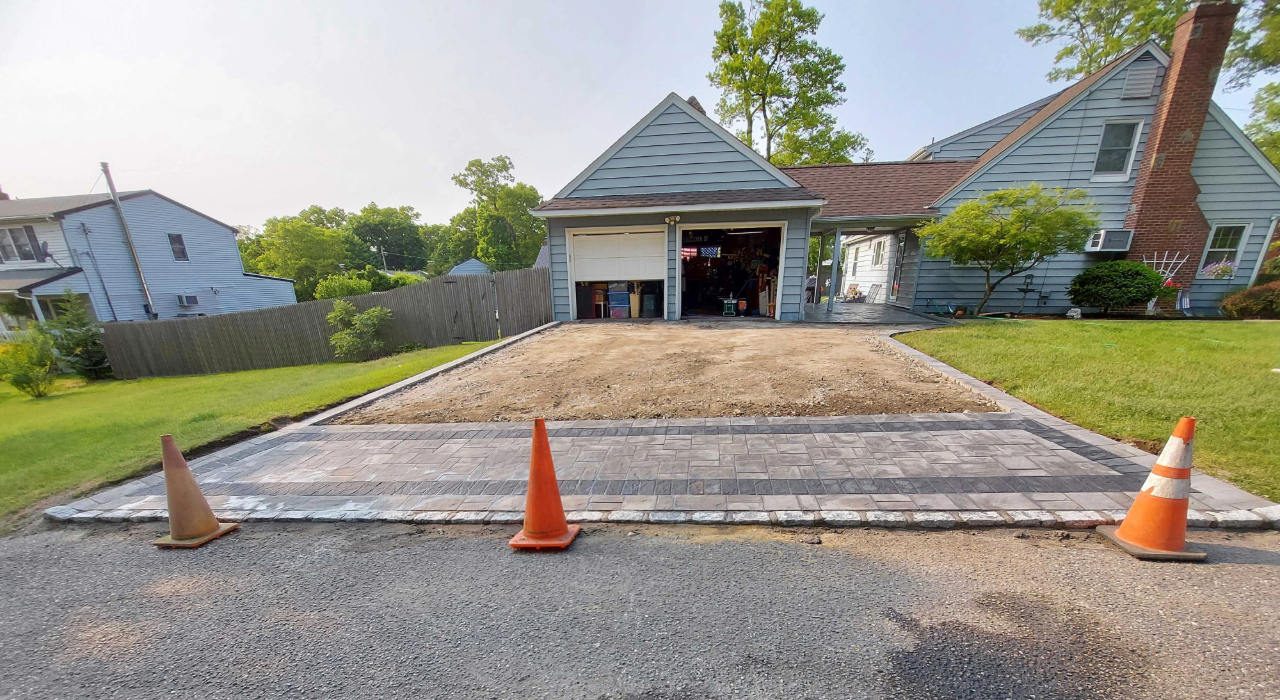
Most Nassau County driveway replacement projects involve removing an existing asphalt or concrete surface before the new paver installation can begin. This demolition and removal work adds cost that is sometimes omitted from initial quotes or presented as an unexpected additional charge after the project has been committed to.
Asphalt removal on a standard two-car driveway typically adds $1,500 to $4,000 to the project cost depending on thickness and the disposal logistics. Concrete removal is more labor-intensive and typically runs $2,000 to $5,000 for a similar-sized driveway. At Affordable Patio, our estimates include removal costs explicitly so you understand the full project cost before committing, not after. Ask any contractor you are considering whether their quoted price includes demolition and debris removal, and get that answer in writing.
Trust your home’s first impression to the pros; meet the team that brings years of local paving experience to your driveway.
Frequently Asked Questions
How long does a paver driveway last compared to asphalt?
A properly installed paver driveway using quality materials and a correctly specified base typically lasts 25 to 50 years with basic maintenance. Standard asphalt driveways typically require resurfacing every 15 to 20 years and full replacement every 20 to 30 years depending on traffic and climate exposure. Beyond lifespan, paver driveways offer repairability advantages that asphalt does not. Individual pavers that shift or crack can be reset or replaced without affecting the surrounding surface, keeping the driveway looking consistent throughout its life. Asphalt repairs are always visible and tend to accumulate over time.
Do paver driveways require sealing on Long Island?
Sealing paver driveways is optional rather than required, and the right answer depends on the specific paver material and the homeowner’s priorities. Concrete pavers benefit from sealing primarily for stain resistance and enhanced color vibrancy, as the sealer creates a barrier against oil, gasoline, and other staining agents. Natural stone sealing helps protect porous stone like travertine from staining and from water infiltration that accelerates freeze-thaw stress. Sealer should be reapplied every two to five years as it weathers. On a driveway surface subject to vehicle traffic and weather exposure, an unsealed paver will age naturally to a somewhat more weathered appearance, which some homeowners prefer while others find it less appealing than the fresh-installed look that sealing maintains.
What is the best paver pattern for a Long Island driveway?
The herringbone pattern, in which rectangular pavers are laid at 45 or 90-degree angles to the direction of traffic, is the industry-preferred choice for driveways because the interlocking geometry distributes vehicle loads more effectively across multiple pavers rather than concentrating stress along straight joint lines. Running bond patterns, in which pavers are offset like brickwork, are also used and provide good performance. Basketweave and decorative patterns are best reserved for pedestrian areas or accent elements at the driveway perimeter rather than the main vehicle traffic path. Borders in a contrasting color or paver size are a popular design element that adds visual definition without affecting structural performance.
How is driveway paver pricing different from patio pricing?
Driveway paver installations are generally priced higher per square foot than patio installations of the same material for three reasons. First, the base depth and specification required for vehicle loads is greater than for pedestrian patios, meaning more material and more compaction passes. Second, concrete base may be required in specific driveway applications where it is not used for patios. Third, the tolerances for level and drainage in a driveway are tighter because vehicle traffic amplifies any settlement or unevenness that foot traffic in a patio would not reveal as dramatically. The price premium for a driveway versus a patio of the same size and material typically runs 15 to 30 percent.
How do I maintain a paver driveway through Nassau County winters?
Winter maintenance for paver driveways on Long Island involves a few important practices that extend the surface life. Avoid using rock salt as a de-icing agent, as it accelerates surface degradation in both concrete and natural stone pavers and contributes to joint sand erosion. Calcium chloride or sand are preferable de-icing alternatives. Snow blowers are safe to use on paver surfaces but should have their blade height set to avoid catching on paver edges. Manual shoveling is also effective. Keeping the polymeric joint sand intact through winter protects the surface from paver migration as the ground freezes and thaws, and damaged joint sand should be replenished each spring as part of routine maintenance.
Plan Your Long Island Paver Driveway With Confidence
Driveway paver cost on Long Island is determined by material selection, project size, base specification, and demolition requirements, and the only honest number for your specific project is one produced by a contractor who has seen the property and delivered a written, itemized estimate covering all components. The ranges in this guide give you the context to evaluate what you hear, but the specific numbers for your driveway require a site visit and a real assessment of your property’s conditions.
Affordable Patio serves Nassau County homeowners with the transparent pricing, quality base preparation, and workmanship warranty that make a paver driveway investment one you can feel confident about for decades. We offer financing through HFS for homeowners who want to move forward with the full project, and we back all our work with a 3-year warranty on materials and installation. Our estimates arrive within 24 hours of the site visit.
Contact Affordable Patio at 631-881-4748 or visit affordablepatio.com to schedule your free estimate. We are ready to help you make the right material choice and build it correctly from the ground up.