
Paver sealing in Nassau County is one of the simplest ways to protect a patio that cost thousands of dollars to install. Unsealed pavers fade in two to three summers, grow weeds between the joints, and lose the color that made you pick them. A single coat of sealant stops all three.
We have sealed and maintained more than 2,000 paver patios across Long Island over the past 15 years, and this guide covers everything a Nassau County homeowner needs to know. You will learn the benefits of sealing pavers, how often to seal pavers in this climate, what the paver sealing cost looks like, and how to avoid the mistakes that waste money.
Quick answer: Paver sealing in Nassau County should happen 12 to 18 months after installation and then every 3 to 5 years after that. A professional application costs $1.50 to $3.00 per square foot, and the benefits of sealing pavers include UV protection, weed prevention, stain resistance, and color preservation that lasts for years.
Table of Contents
- Why seal your pavers
- How often to seal pavers on Long Island
- Types of paver sealant
- The sealing process step by step
- Paver sealing cost in Nassau County
- DIY vs professional paver sealing
- Common mistakes that shorten sealant life
- Best season to schedule paver sealing
- Frequently asked questions
- Protect your investment
Why Seal Your Pavers in Nassau County
The benefits of sealing pavers go beyond appearance. Long Island’s climate delivers freeze-thaw cycles from November through March, salt exposure from road treatments, and intense summer UV. Each one chips away at unprotected concrete pavers. Here is what a quality sealant actually does for your patio.
First, it blocks UV radiation. Cambridge Pavingstones with ArmorTec already resist fading better than standard concrete pavers, but a sealant adds a second layer of UV defense that keeps colors rich for years instead of seasons. The difference shows up clearly on patios that get direct afternoon sun.
Second, sealant locks polymeric sand in the joints. Without it, rain washes sand out over time, and weeds and ants move in. Re-sanding a 300 square foot patio costs $150 to $300 every year if the joints keep failing. Sealing prevents that cycle.
Third, the benefits of sealing pavers include stain resistance. Oil from a grill, rust from patio furniture, and leaf tannins all sit on the sealed surface instead of soaking in. You wipe them off instead of pressure washing them out. That matters on a patio where you cook and entertain.
Fourth, a sealed surface resists efflorescence. That white powdery film that appears on new concrete pavers is calcium hydroxide migrating to the surface. Sealant slows moisture movement through the paver and reduces the problem significantly. The Interlocking Concrete Pavement Institute recommends sealing as the primary solution for recurring efflorescence.
How Often to Seal Pavers on Long Island
How often to seal pavers depends on the sealant type, the traffic the patio gets, and Long Island’s weather. The general rule is every 3 to 5 years for a solvent-based sealant and every 2 to 3 years for a water-based one. High-traffic areas like pool decks and walkways wear faster and may need reapplication on the shorter end.
The first application is the most important. New pavers need 12 to 18 months to cure and release any residual efflorescence before you seal them. Sealing too early traps moisture and creates a cloudy, blotchy finish that is expensive to strip and redo.
How often to seal pavers also depends on how well the surface was cleaned before the previous coat. Dirt trapped under sealant breaks the bond, and the coating peels in patches within a year. A proper cleaning with a surface cleaner, not just a garden hose, is what makes a sealant application last the full 3 to 5 years.
You will know it is time to reseal when water stops beading on the surface and instead darkens the paver. That bead test takes five seconds and tells you more than any calendar. If water soaks in within a few seconds, the sealant has worn through and the paver is exposed.
Types of Paver Sealant and Which Works Best Here
Paver sealing in Nassau County involves choosing between two main finishes: wet look and natural look. Each has trade-offs that matter in this climate.
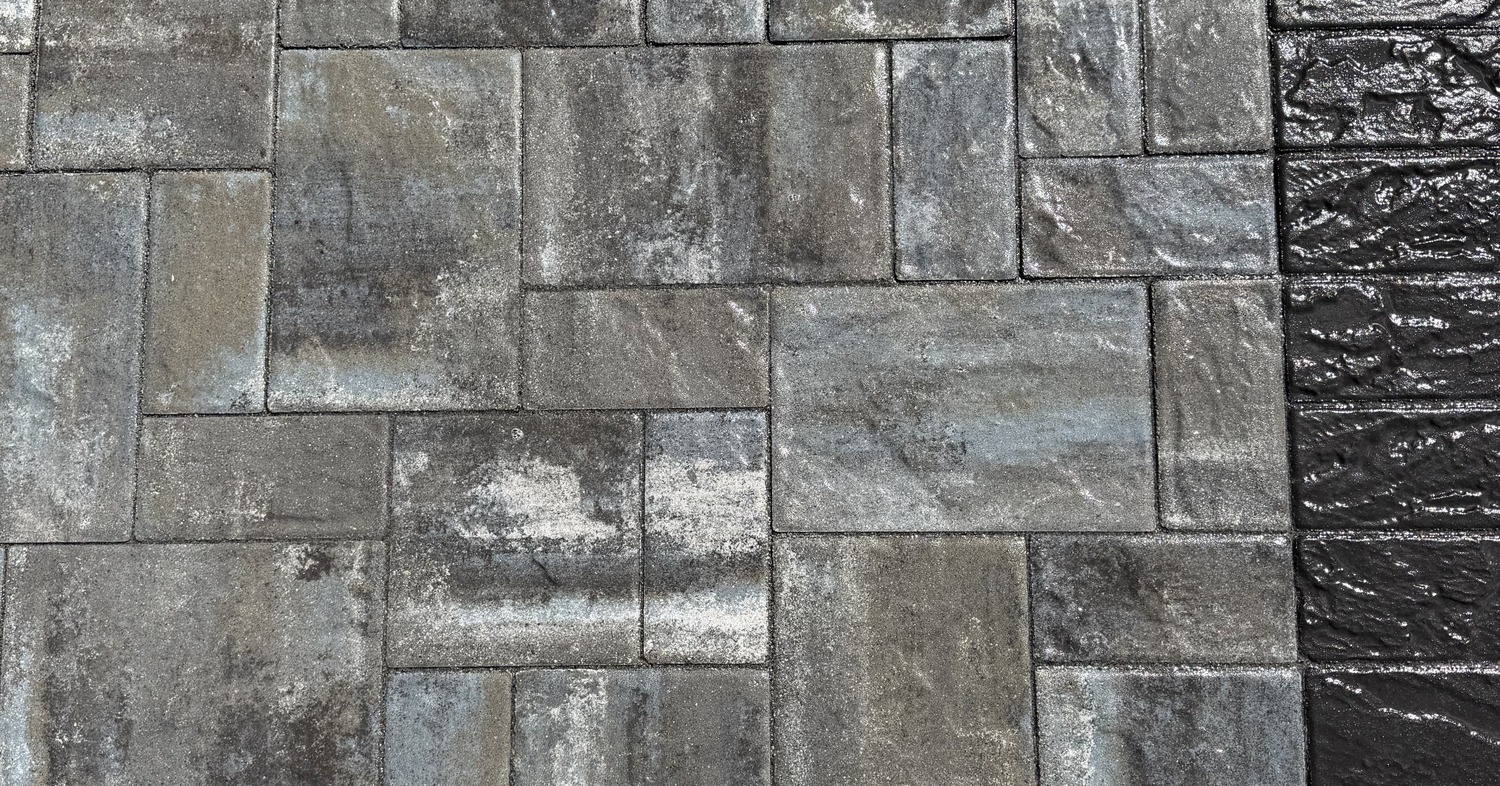
A wet look sealant is a solvent-based or high-solids product that deepens the color of the paver and adds a glossy or semi-glossy sheen. It makes grays look darker, reds richer, and browns warmer. Most homeowners who pick this finish want their patio to look freshly rained on. Wet look sealants last 3 to 5 years and handle freeze-thaw well because they are flexible enough to expand with the paver.
A natural look sealant is a water-based product that protects without changing the appearance. The paver looks the same as the day it was installed, just cleaner. This finish works best when the paver color already matches the house and landscape and you do not want to shift the tone. Natural look sealants last 2 to 3 years and need more frequent reapplication.
There is also a joint-stabilizing sealant that combines surface protection with polymeric sand hardening. This type penetrates into the joints and locks the sand solid while coating the paver face. It is the most popular choice for paver sealing in Nassau County because it solves two problems at once.
| Sealant type | Finish | Lifespan | Best for |
|---|---|---|---|
| Solvent-based wet look | Glossy, color-enhanced | 3 to 5 years | Patios with neutral-tone pavers |
| Water-based natural | Matte, no color change | 2 to 3 years | Color-matched patios |
| Joint-stabilizing | Semi-gloss, locks sand | 3 to 5 years | Patios with weed or ant issues |
| Penetrating sealant | Invisible, no sheen | 5 to 7 years | Driveways and high-traffic areas |
The Paver Sealing Process Step by Step
Professional paver sealing in Nassau County follows the same sequence every time, and skipping a step is how coatings fail early. Here is what a proper job looks like from start to finish.
Step one is weed removal and joint cleaning. Every weed, every blade of grass growing between pavers comes out. The joints get blown clean with a commercial blower. Any moss or algae on the surface gets treated with a paver-safe cleaner, not bleach, which can discolor concrete pavers.
Step two is pressure washing. A surface cleaner attachment keeps the pressure even and prevents the rotary lines that a bare wand leaves. The pressure stays between 2,500 and 3,000 PSI for concrete pavers. Higher pressures erode the surface aggregate and weaken the paver face.
Step three is drying. The pavers need 24 to 48 hours of dry weather to release all moisture. Sealing a damp paver traps water, and the sealant turns white or cloudy within weeks. This step is where most DIY jobs go wrong because a surface that looks dry can still hold moisture inside.
Step four is re-sanding. If the joints lost sand during cleaning, new polymeric sand goes in and gets compacted with a plate compactor. The sand has to be dry when it goes in, and excess gets swept off the paver face completely. Sand left on the surface bonds to the sealant and creates a rough, gritty texture.
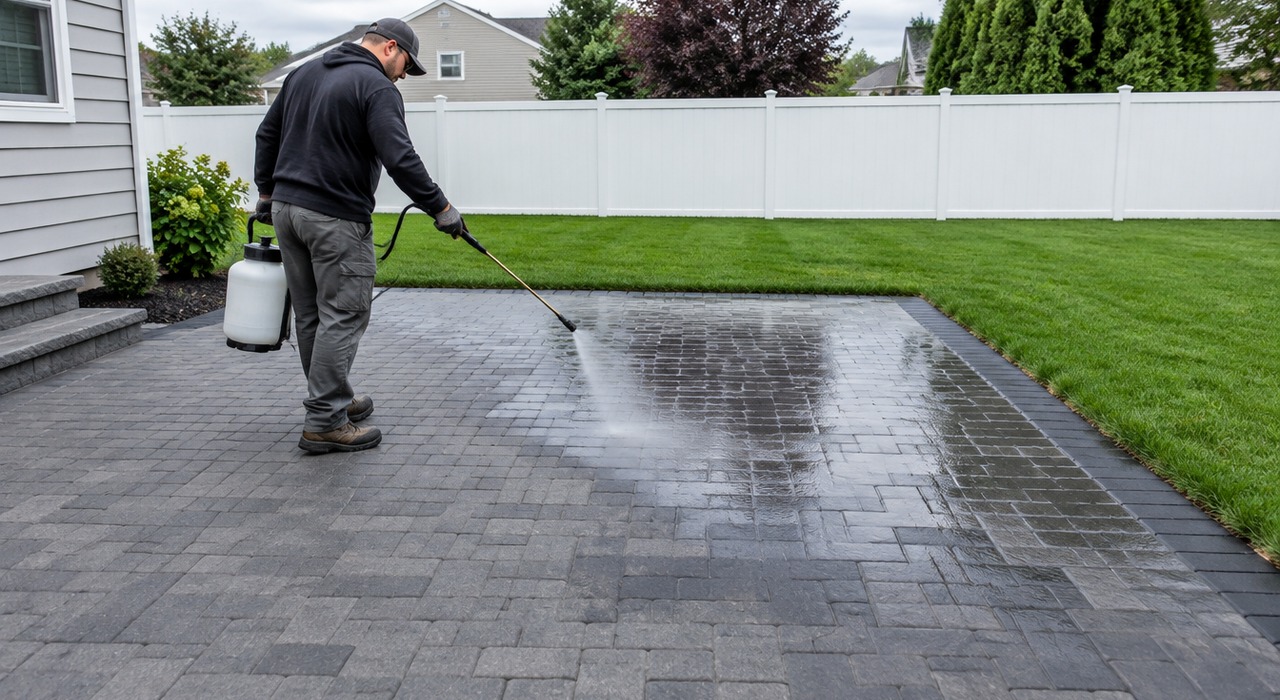
Step five is application. The sealant goes on with a pump sprayer for even coverage, followed by a roller or microfiber pad to spread it uniformly. Two thin coats are better than one thick coat. The first coat penetrates, the second coat builds the film. Each coat needs 2 to 4 hours between applications depending on temperature and humidity.
Step six is curing. The sealed surface needs 24 hours before foot traffic and 72 hours before placing furniture or heavy objects. Rain within the first 12 hours can ruin the finish entirely, which is why weather forecasting matters as much as technique.
Paver Sealing Cost in Nassau County
The paver sealing cost for a professional application in Nassau County runs $1.50 to $3.00 per square foot. A standard 300 square foot patio costs $450 to $900 for a full service job that includes cleaning, sanding, and two coats of sealant. A 500 square foot patio runs $750 to $1,500.
Several factors push the paver sealing cost toward the higher end. Heavy weed growth means more labor for joint cleaning. Oil stains need a degreaser treatment before the surface cleaner can do its job. Patios with complex borders, curves, or multiple colors take longer to mask and apply evenly.
The paver sealing cost for a DIY approach is lower on materials but comes with risks. A five-gallon pail of quality sealant covers 500 to 750 square feet and costs $120 to $200. You still need a pump sprayer at $80 to $150, polymeric sand at $25 to $40 per bag, and a surface cleaner rental at $75 to $100 per day. The total DIY cost for a 300 square foot patio is $200 to $350.
When you compare the DIY paver sealing cost against professional, the gap narrows once you factor in the risk of a failed application. Stripping and redoing sealant costs $3.00 to $5.00 per square foot, which means a botched DIY job on a 300 square foot patio adds $900 to $1,500 in corrective work.
DIY vs Professional Paver Sealing
DIY paver sealing works for small walkways and areas under 100 square feet where the stakes are low. You can practice your technique, control your pace, and fix mistakes without ruining a large surface. The savings are real, and the learning curve is manageable on a short path.
Professional paver sealing in Nassau County makes more sense for patios, driveways, and pool decks. The equipment is commercial grade, the crew has done hundreds of applications, and the sealant goes on in consistent coats that last the full 3 to 5 years. A professional also carries liability insurance, which matters when pressure washing near the house, windows, and landscaping.
The biggest advantage of hiring a professional is timing. They watch the weather, know the humidity thresholds, and schedule the job during the right window. A homeowner who picks a random weekend risks rain, dew, or temperatures below 50 degrees, any of which can ruin the application.
We handle paver sealing in Nassau County as part of our maintenance services. Every job includes joint repair, surface cleaning, and two coats of commercial-grade sealant. Estimates arrive within 12 to 24 hours, and you can request one through our contact page or by calling (631) 275-3142.
Common Mistakes That Shorten Sealant Life
The most common mistake is sealing too soon after installation. New concrete pavers need 12 to 18 months to cure and release efflorescence. Sealing before that window closes traps moisture and minerals under the coating, creating white patches that only chemical stripping can fix.
The second mistake is skipping the cleaning step. Dirt, pollen, and organic stains on the surface bond to the sealant permanently. What looks like a dirty paver is actually a dirty sealant, and no amount of scrubbing removes embedded grime from a cured film. Proper cleaning before application is the single biggest factor in how long the finish lasts.
The third mistake is applying too thick a coat. More sealant does not mean more protection. A thick coat bubbles, peels, and turns white as trapped solvents try to escape. Two thin coats at the manufacturer’s recommended spread rate outperform one heavy coat every time.
The fourth mistake is ignoring the weather. Temperatures below 50 degrees slow the curing process and can leave the sealant tacky for days. Humidity above 80 percent traps moisture in the film. Direct sunlight above 90 degrees causes the sealant to dry too fast, leaving streaks and lap marks. The ideal window is 60 to 80 degrees with low humidity and overcast skies.
The fifth mistake is using the wrong sealant for the paver type. Not every sealant works on every paver. Natural stone, concrete, and clay pavers each need a compatible formula. Using a concrete sealant on natural stone can darken it permanently or block its ability to breathe. Always confirm compatibility before you buy.
Best Season to Schedule Paver Sealing in Nassau County
The best months for paver sealing in Nassau County are late April through June and September through mid-October. These windows offer the right combination of temperature, humidity, and daylight hours for the sealant to cure properly.
Spring sealing catches the patio before summer entertaining season. The pavers are clean from winter, weed growth is minimal, and the sealant has time to cure before the first barbecue. Late April works once overnight temperatures stay above 50 degrees consistently.
Fall sealing protects the patio before freeze-thaw season. September and early October give you warm days, lower humidity than summer, and enough dry weather windows to complete the 48-hour curing process. A fall application means the sealant is fully hardened before the first frost, and the patio goes into winter with maximum protection.
Summer sealing in July and August is possible but harder. Nassau County humidity regularly hits 80 percent or higher, and afternoon temperatures can push past 90 degrees. Both conditions force the crew to work in narrow morning windows, which extends the project timeline and limits scheduling flexibility.
Winter sealing is not possible on Long Island. Temperatures drop below the 50-degree minimum for most sealants, and frost or snow can damage an uncured surface within hours. If you missed the fall window, wait for late April and plan ahead. We book paver sealing in Nassau County jobs starting in March for spring application.
Frequently Asked Questions
How long does paver sealant last in Nassau County?
A solvent-based wet look sealant lasts 3 to 5 years on a Nassau County patio. A water-based natural sealant lasts 2 to 3 years. The actual lifespan depends on sun exposure, foot traffic, and whether the surface was cleaned properly before application. Pool decks and driveways wear faster than covered patios.
Can you seal pavers yourself?
Yes, but DIY sealing works best on small areas under 100 square feet. The paver sealing cost for materials is $200 to $350 for a 300 square foot patio, compared to $450 to $900 for professional service. The risk is a failed application that costs $900 to $1,500 to strip and redo, which eliminates any savings.
What happens if you never seal your pavers?
Unsealed pavers lose color within 2 to 3 years of UV exposure. Weeds and ants colonize the joints as polymeric sand washes out. Stains from grills, rust, and leaves become permanent. The pavers themselves will survive, but the patio will look worn and require more maintenance to keep presentable. The benefits of sealing pavers are most visible when you compare a sealed patio against an unsealed one after three summers.
How often to seal pavers on Long Island?
How often to seal pavers depends on the sealant type and traffic level. Solvent-based sealants need reapplication every 3 to 5 years. Water-based sealants need it every 2 to 3 years. The bead test is the simplest check. Pour a small amount of water on the paver. If it beads up, the sealant is still working. If it soaks in immediately, it is time to reseal.
Does sealing pavers make them slippery?
A properly applied sealant does not create a dangerously slippery surface. Most modern paver sealants include anti-slip additives that maintain traction even when wet. If you have a pool patio or an area that stays wet, ask for a sealant with extra anti-slip grit. The ASTM testing standards for slip resistance help manufacturers formulate products that meet safety thresholds for residential use.
Is paver sealing worth the money?
Yes. The benefits of sealing pavers include color preservation, weed prevention, stain resistance, and extended paver life. A $600 sealing job every 4 years on a patio that cost $8,000 to $15,000 to install is a fraction of the replacement cost. Over 20 years, unsealed pavers may need $3,000 to $5,000 in joint repairs, cleaning, and color restoration that sealing would have prevented.
Protect Your Investment
Paver sealing in Nassau County is not a luxury. It is the maintenance step that keeps a patio looking the way it did the week it was finished. The cost is small compared to the patio itself, the process takes a day, and the results last for years.
We are a Preferred and Certified Cambridge installer with more than 15 years of experience across Nassau County and Suffolk County. Every paver sealing job includes a full cleaning, joint repair, and two coats of commercial-grade sealant backed by our 3-year workmanship warranty.
Ready to protect your patio? Call (631) 275-3142 for a free estimate, or reach us through our contact page. Estimates arrive in 12 to 24 hours, and we offer financing through Lyon Financial for larger projects. Visit our Nassau County service page to see more of our work across the area.