
The brick vs paver driveway on Long Island debate comes up in almost every consultation our team has with Suffolk County and Nassau County homeowners. Both materials look great on day one. Both cost more than asphalt. But the real question is which one holds up after five, ten, and twenty Long Island winters. If you are spending $10,000 or more on a new driveway, you need to know which material gives you the best return on that investment over the full life of the project.
This guide breaks down every factor in the brick vs paver driveway on Long Island comparison. We cover the brick driveway cost vs paver cost, the paver driveway durability advantages in freeze-thaw climates, and the brick driveway maintenance requirements that most homeowners do not learn about until after installation. Affordable Patio has installed over 2,000 paver projects across Long Island, and our experience gives us a clear perspective on which material performs better here.
Quick answer: Concrete pavers outlast clay brick driveways on Long Island by a significant margin. Pavers last 30 to 50 years with minimal maintenance while brick driveways typically last 20 to 30 years and require more upkeep. The brick driveway cost runs 15 to 25 percent higher than concrete pavers for the same project. Concrete pavers also handle Long Island freeze-thaw cycles better because they are engineered with air entrainment and higher compressive strength than natural clay. Call Affordable Patio at (631) 275-3142 for a free driveway estimate.
Table of Contents
- Understanding the Difference Between Brick and Pavers
- Brick Driveway Cost vs. Paver Cost on Long Island
- Paver Driveway Durability in Long Island Weather
- Brick Driveway Maintenance vs. Paver Maintenance
- Freeze-Thaw Performance on Long Island
- Design Options and Curb Appeal
- Resale Value and Return on Investment
- Frequently Asked Questions
Understanding the Difference Between Brick and Pavers
Before diving into the brick vs paver driveway on Long Island comparison, it helps to understand what each material actually is. Many homeowners use the words “brick” and “paver” interchangeably, but they are two different products with different manufacturing processes, compositions, and performance characteristics.
Clay brick is made from natural clay that is shaped and fired in a kiln at temperatures above 2,000 degrees Fahrenheit. The firing process creates a dense, hard unit with a distinctive color that runs all the way through the material. Brick colors come from the minerals in the clay and the temperature of the kiln. Reds, browns, and tans are the most common shades. Brick has been used for construction for thousands of years, and it carries a classic aesthetic that appeals to many homeowners.
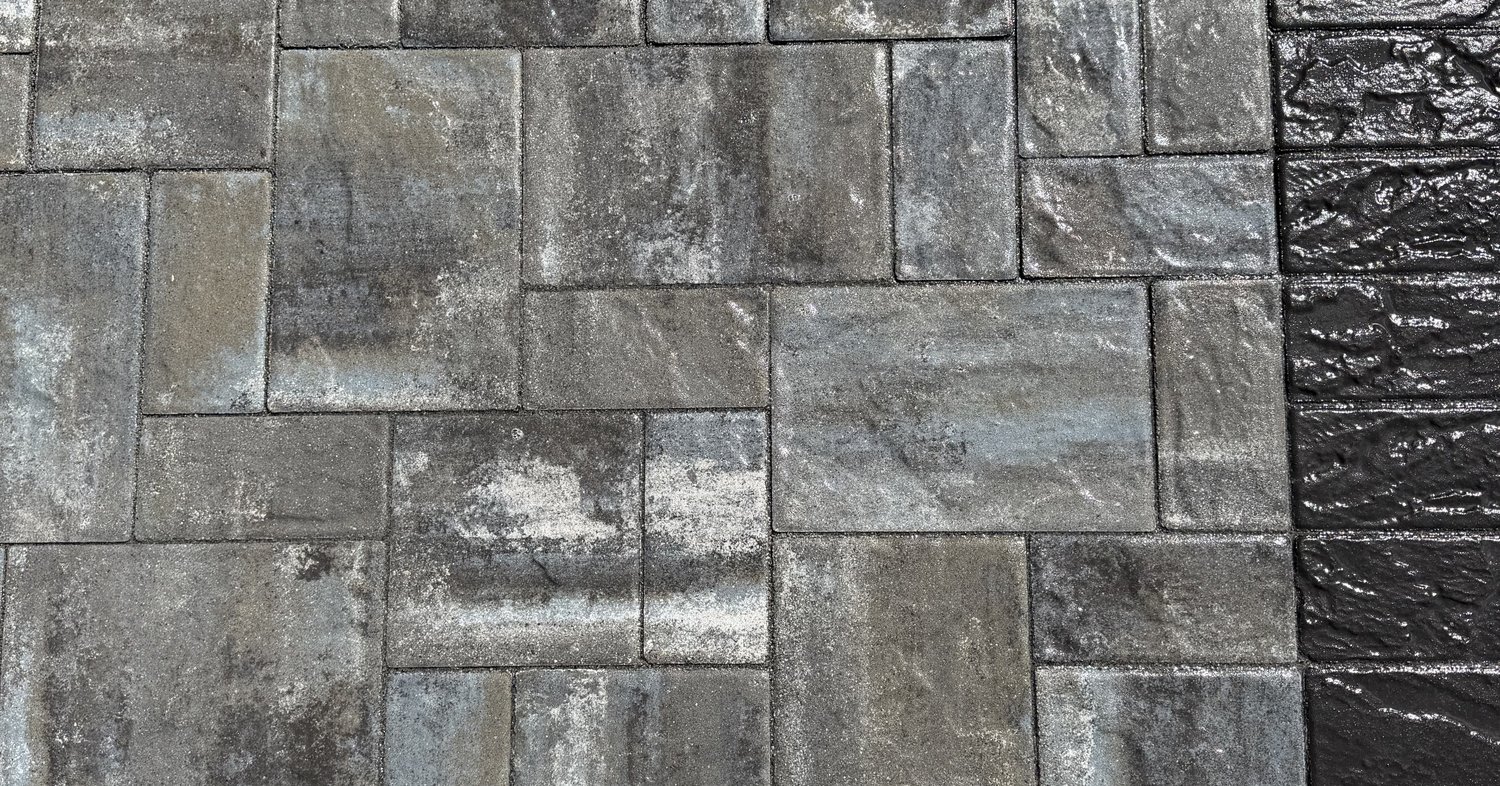
Concrete pavers are manufactured from a precisely engineered mix of Portland cement, aggregate, water, and pigments. The mix is poured into molds and compressed under thousands of pounds of pressure, then cured in a controlled environment. This manufacturing process produces units with consistent dimensions, uniform color, and predictable performance characteristics. Cambridge Pavingstones adds their ArmorTec surface coating during manufacturing, which creates an additional layer of protection against staining, fading, and wear.
The brick vs paver driveway on Long Island decision ultimately comes down to how each material handles our specific climate conditions. Both look attractive, but their performance under Long Island winters tells a very different story. Understanding the paver driveway durability advantage over brick in freeze-thaw climates is essential for making the right investment.
Brick Driveway Cost vs. Paver Cost on Long Island
Price is usually the first question homeowners ask when comparing the brick vs paver driveway on Long Island options. The brick driveway cost consistently runs higher than concrete pavers for the same project size and complexity.
| Cost Factor | Clay Brick Driveway | Concrete Paver Driveway |
|---|---|---|
| Material cost per sq ft | $8 to $25 | $4 to $20 |
| Installed cost per sq ft | $14 to $35 | $10 to $30 |
| Two-car driveway (600 sq ft) | $8,400 to $21,000 | $6,000 to $18,000 |
| Average lifespan | 20 to 30 years | 30 to 50 years |
| Annual maintenance cost | $200 to $500 | $50 to $150 |
The brick driveway cost premium comes from several factors. Clay brick is more expensive to manufacture than concrete pavers because of the kiln firing process and the energy it requires. Brick units also tend to have slightly more dimensional variation, which means installers spend more time fitting and adjusting each piece. Labor costs for brick installation on Long Island run 10 to 20 percent higher than for concrete pavers because the process is more hands-on.
The brick driveway cost does not stop at installation. Over a 30-year period, the total cost of owning a brick driveway is substantially higher than a concrete paver driveway. Brick requires more frequent sealing, more careful cleaning, and more individual unit replacements due to cracking and chipping from freeze-thaw damage. When you factor in these ongoing expenses, the brick driveway cost advantage completely disappears.
Affordable Patio provides free detailed estimates that break down every cost for your specific project. We install Cambridge Pavingstones with ArmorTec, which offer exceptional value at a competitive price point. Call (631) 275-3142 for your free estimate within 12 to 24 hours.
Paver Driveway Durability in Long Island Weather
Paver driveway durability is where concrete pavers pull far ahead of clay brick on Long Island. The difference comes down to engineering. Concrete pavers are manufactured to meet specific compressive strength, absorption, and freeze-thaw resistance standards that natural clay brick simply cannot match.
Concrete pavers achieve compressive strengths of 8,000 to 12,000 PSI. That is the pressure they can withstand before failing. Clay brick typically falls in the 3,000 to 8,000 PSI range, with many residential-grade bricks at the lower end. For a driveway that supports 3,000 to 5,000 pound vehicles every day, the higher compressive strength of concrete pavers provides a significant safety margin that contributes to paver driveway durability over decades of use.
Water absorption is another critical metric. Concrete pavers engineered for Northeast climates absorb less than 5 percent of their weight in water. Clay brick absorbs 5 to 20 percent depending on the grade. Higher absorption means more water inside the unit during winter, which means more internal pressure during freeze-thaw cycles. Lower absorption is better for paver driveway durability in any cold climate, but especially on Long Island where we get 40 to 60 freeze-thaw cycles per year.
Cambridge Pavingstones with ArmorTec add another layer of protection that standard concrete pavers do not offer. The ArmorTec surface coating reduces water penetration, resists staining from oil and road salt, and maintains color vibrancy for decades. This is a meaningful advantage for paver driveway durability when comparing the brick vs paver driveway on Long Island options.
Brick Driveway Maintenance vs. Paver Maintenance
Brick driveway maintenance demands more time and money than most homeowners expect. Understanding the brick driveway maintenance schedule before you commit to the material can save you from a frustrating and expensive ownership experience.
Clay brick should be sealed every one to two years with a penetrating sealer that blocks moisture absorption. Sealing a 600-square-foot brick driveway costs $300 to $600 per application, depending on the sealer type and whether you hire a professional or do it yourself. Skipping the sealer allows water to penetrate the brick, which accelerates freeze-thaw damage and leads to spalling, cracking, and chipping. This ongoing brick driveway maintenance cost adds $3,000 to $6,000 over a 20-year period.
Efflorescence is a common brick driveway maintenance issue that rarely affects concrete pavers. Efflorescence appears as a white, powdery deposit on the surface of the brick. It happens when moisture inside the brick draws soluble salts to the surface as it evaporates. While efflorescence is not structurally harmful, it looks terrible and requires periodic cleaning with acid-based solutions or pressure washing. This is a recurring brick driveway maintenance task that concrete paver owners rarely deal with.
Concrete paver maintenance is straightforward by comparison. Sweep or blow off debris a few times per year. Pressure wash once a year if needed. Re-apply polymeric sand to the joints every five to eight years at a cost of $100 to $200 in materials. That is essentially the entire maintenance schedule. No sealing is required on Cambridge Pavingstones with ArmorTec because the factory-applied coating handles moisture and stain protection from day one.
Individual unit replacement is easier with concrete pavers than with brick. If a concrete paver cracks or stains, you can pop it out with a flat tool, set a new one in its place, and the color match is exact because the manufacturer maintains consistent production runs. Brick colors vary by batch and by kiln temperature, so finding an exact match for a brick replacement can be difficult or impossible. That makes brick driveway maintenance more complicated and more visible when repairs are needed.
Freeze-Thaw Performance on Long Island
Freeze-thaw resistance is the single most important factor in the brick vs paver driveway on Long Island decision. Long Island experiences 40 to 60 freeze-thaw cycles per year, and every cycle tests the structural integrity of your driveway surface.
Here is what happens during a freeze-thaw cycle. Water enters the pores and cracks of the driveway surface material. When the temperature drops below 32 degrees, that water freezes and expands by approximately 9 percent. The expansion creates internal pressure that can fracture the material from the inside. When the temperature rises, the ice melts and the water seeps deeper into the newly created cracks. The next freeze creates even more damage. This cycle repeats dozens of times every Long Island winter.
Concrete pavers are engineered to handle this cycle. The manufacturing process includes air entrainment, which creates microscopic air bubbles throughout the concrete matrix. These bubbles act as relief valves, giving the expanding ice somewhere to go without fracturing the surrounding material. The ASTM C936 standard for concrete pavers requires that units pass a minimum of 50 freeze-thaw cycles in laboratory testing without significant deterioration.
Clay brick is inherently more vulnerable to freeze-thaw damage. While some brick grades are rated for severe weather exposure (ASTM C902 SX grade), many residential brick products sold at home improvement stores are not rated for the level of freeze-thaw exposure that Long Island driveways experience. The higher water absorption rate of brick means more water enters the material, and the lack of air entrainment means there is no internal relief system. This is why paver driveway durability in cold climates consistently outperforms brick.
Road salt and deicing chemicals compound the problem. Salt creates additional crystallization pressure inside the pores of the material. Cambridge Pavingstones with ArmorTec resist salt penetration far better than bare clay brick. The ArmorTec coating creates a barrier that prevents salt crystals from entering the paver surface, which is a major factor in paver driveway durability on Long Island where homeowners and municipal plows spread salt throughout the winter months.
Design Options and Curb Appeal
Design flexibility is one area where the brick vs paver driveway on Long Island comparison produces a clear winner. Concrete pavers offer dramatically more options than clay brick when it comes to color, shape, texture, and pattern.
Clay brick is limited to the natural colors that come from kiln-fired clay. Reds, oranges, browns, and tans cover the available range. Shapes are primarily rectangular, with a few modular variations. While brick has a timeless, classic appearance, your design options are constrained by what nature and the firing process produce.
Concrete pavers come in over 30 color blends from manufacturers like Cambridge Pavingstones. Colors range from warm earth tones to cool grays and charcoal. Shapes include traditional rectangles, squares, hexagons, and large-format planks. Textures range from smooth and modern to tumbled and rustic. You can mix colors and shapes to create borders, accents, medallions, and focal points that are impossible to achieve with brick alone.
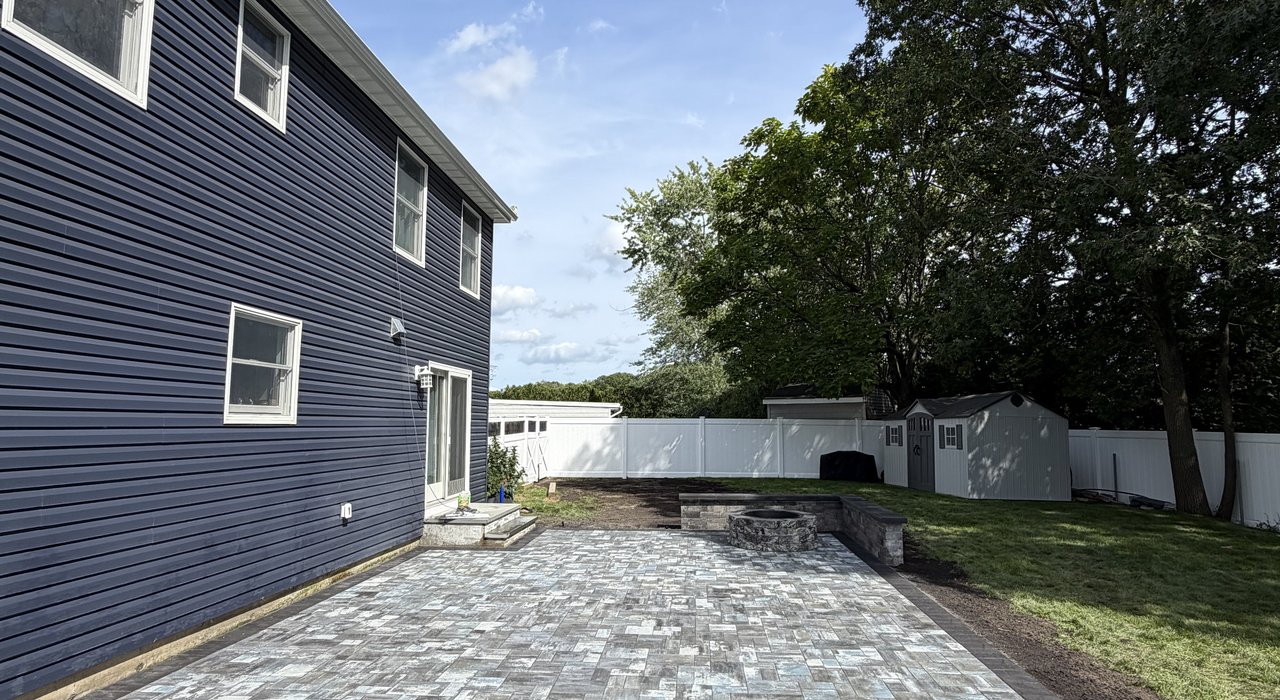
For Long Island neighborhoods where curb appeal matters, the design range of concrete pavers gives homeowners a significant advantage. A well-designed paver driveway can complement any architectural style, from classic Colonial to contemporary modern. Affordable Patio has designed and installed over 2,000 projects across Suffolk County and Nassau County, and our portfolio shows just how many different looks are possible with Cambridge Pavingstones.
Resale Value and Return on Investment
The brick vs paver driveway on Long Island investment pays off differently depending on which material you choose. Both materials add value to your property compared to a basic asphalt driveway, but the returns differ based on durability and buyer perception.
A paver driveway can boost a home’s perceived value by 5 to 10 percent of the project cost. On Long Island, where median home prices exceed $600,000, that translates to a meaningful return. Real estate agents consistently report that homes with quality hardscaping sell faster and attract higher offers. The paver driveway durability factor plays into this. Buyers recognize that a concrete paver driveway that is 10 years old still looks and performs like new, while a brick driveway of the same age may show visible wear, efflorescence, and freeze-thaw damage.
A brick driveway also adds value, but the ongoing brick driveway maintenance requirements can work against you at resale time. A home inspector will note any spalling, cracking, or settling in a brick driveway, and buyers may use that as a negotiation point. A well-maintained concrete paver driveway rarely gives inspectors anything to flag, which keeps your sale process clean and straightforward.
For homeowners planning to stay in their home long term, the calculation is even clearer. The brick driveway cost over 30 years, including installation and maintenance, exceeds the cost of a concrete paver driveway that will still be performing at year 30 with minimal upkeep. When evaluating the brick vs paver driveway on Long Island from a pure financial standpoint, concrete pavers deliver the better return.
Frequently Asked Questions
Are brick driveways more expensive than paver driveways on Long Island?
Yes. The brick driveway cost runs 15 to 25 percent higher than a comparable concrete paver driveway on Long Island. Material costs are higher because clay brick requires energy-intensive kiln firing, and installation labor takes longer due to the dimensional variations in natural clay units. Over the full life of the driveway, the brick driveway cost gap widens further because of higher maintenance expenses.
How long does a concrete paver driveway last on Long Island?
A properly installed concrete paver driveway on Long Island lasts 30 to 50 years. The paver driveway durability advantage comes from higher compressive strength, lower water absorption, and air entrainment that protects against freeze-thaw damage. Cambridge Pavingstones carry a lifetime structural warranty. By comparison, a clay brick driveway typically lasts 20 to 30 years on Long Island before needing major repairs or replacement.
Do brick driveways crack in cold weather?
Yes. Brick driveways are more prone to cracking, spalling, and chipping in cold weather than concrete pavers. Clay brick absorbs more water than engineered concrete pavers, and that absorbed water expands during freezing. Long Island experiences 40 to 60 freeze-thaw cycles per winter, which is a severe environment for any material with high water absorption. Ongoing brick driveway maintenance including sealing can slow this process but not eliminate it.
What is the best driveway material for Long Island?
For Long Island’s climate, concrete pavers are the best overall driveway material. They handle freeze-thaw cycles better than clay brick, cost less upfront and over time, require less maintenance, and offer more design flexibility. Cambridge Pavingstones with ArmorTec are specifically engineered for the Northeast climate and provide the best combination of paver driveway durability, aesthetics, and long-term value.
How often do brick driveways need to be sealed?
Brick driveways should be sealed every one to two years with a penetrating masonry sealer. This brick driveway maintenance step is essential for reducing water absorption and protecting against freeze-thaw damage. Sealing a 600-square-foot driveway costs $300 to $600 per application. Concrete pavers with factory-applied coatings like Cambridge ArmorTec do not require periodic sealing, which eliminates this ongoing maintenance cost entirely.
Can I replace a brick driveway with pavers without full excavation?
In most cases, a full removal and re-excavation is recommended when replacing a brick driveway with concrete pavers. The existing base under the brick may not meet the depth and compaction standards required for a new paver installation, especially if the brick driveway was failing due to base problems. Affordable Patio always removes the old surface and installs a properly compacted gravel base to ensure paver driveway durability for decades. Call (631) 275-3142 for a free assessment of your existing driveway.
Conclusion
The brick vs paver driveway on Long Island comparison comes down to performance in our climate. Concrete pavers last longer, cost less to install and maintain, handle freeze-thaw cycles better, and offer more design options than clay brick. The brick driveway cost is higher upfront, and the brick driveway maintenance requirements add thousands more over the life of the project. For Long Island homeowners who want a driveway that looks great and performs for decades, concrete pavers are the clear winner in every category.
Affordable Patio installs Cambridge Pavingstones with ArmorTec across Suffolk County and Nassau County. Every project includes proper base preparation, professional installation, and a 3-year workmanship warranty. We have completed over 2,000 projects on Long Island, and paver driveway durability is something our clients see firsthand year after year. Call (631) 275-3142 for a free estimate, or visit our Build and Price page to start planning your new driveway today.