
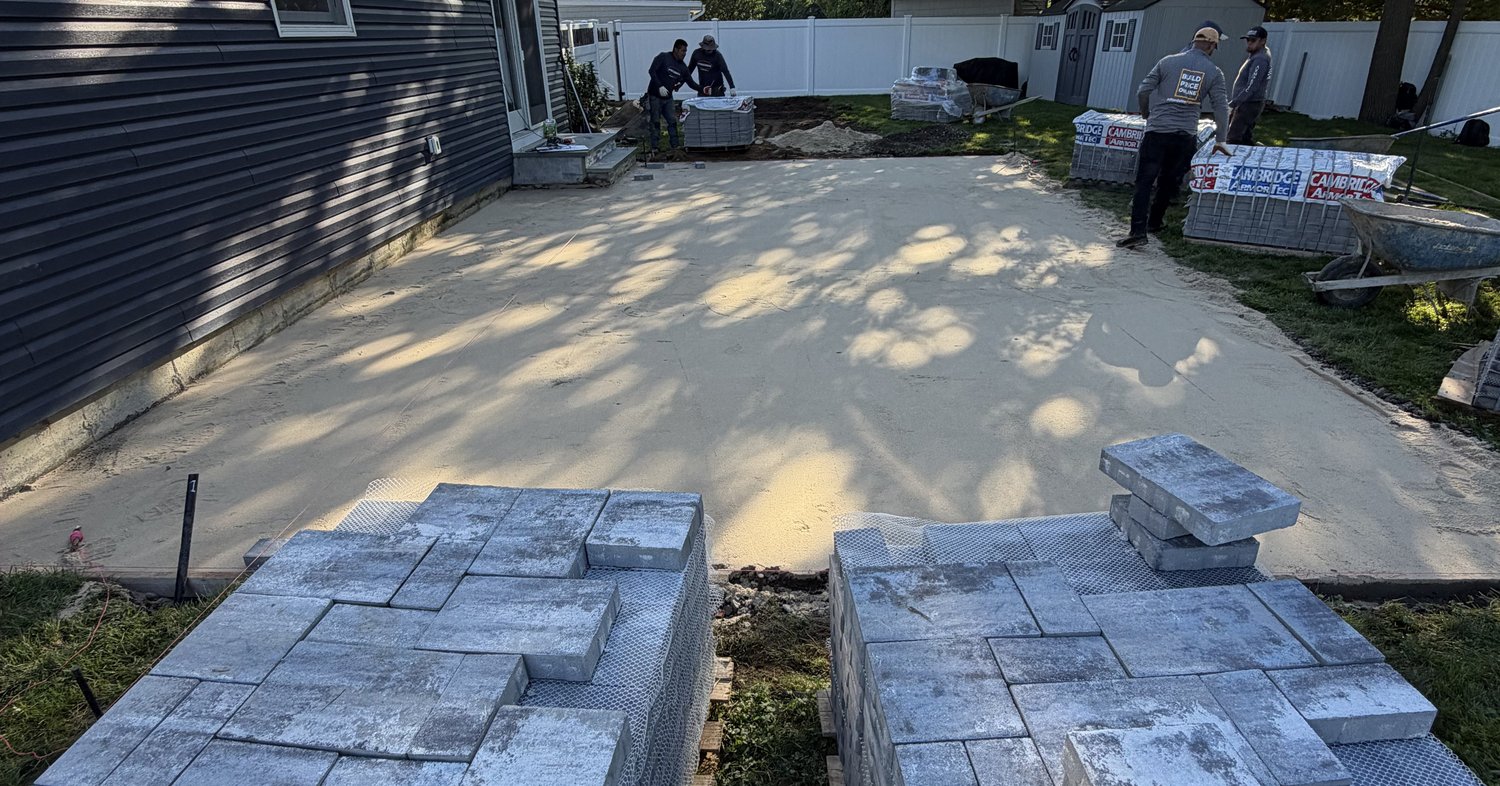
Your driveway takes up a huge share of your front yard. It is the first thing visitors notice and one of the biggest factors in your home’s curb appeal. For Long Island homeowners weighing an asphalt vs paver driveway, the decision comes down to cost, durability, maintenance, and how well each material holds up through our coastal winters and humid summers. The asphalt vs paver driveway on Long Island debate is one of the most common questions our team hears from Suffolk County and Nassau County homeowners.
Both options have loyal fans, and both have real trade-offs when comparing an asphalt vs paver driveway on Long Island. Asphalt keeps your upfront budget low. Pavers give you decades of performance and a finished look that stands apart from every other house on the block. This guide walks through the seven factors that matter most so you can pick the right driveway for your property, your lifestyle, and your budget.
Quick answer: Asphalt driveways cost less upfront at $7 to $13 per square foot, while paver driveways run $10 to $30 per square foot installed. Pavers last 25 to 50 years with almost no maintenance, and asphalt lasts 15 to 20 years but needs sealing every three to five years. For Long Island homeowners who plan to stay in their home long term, a paver driveway delivers better value over its lifetime. Call Affordable Patio at (631) 275-3142 for a free driveway estimate.
Table of Contents
- Understanding the Asphalt vs Paver Driveway on Long Island
- Cost Comparison for Long Island Homeowners
- Durability and Lifespan
- Maintenance Requirements
- Curb Appeal and Design Options
- Climate Performance on Long Island
- Resale Value and Return on Investment
- Frequently Asked Questions
- Making the Right Choice for Your Long Island Home
Understanding the Asphalt vs Paver Driveway on Long Island
Asphalt is a mix of aggregate stone and liquid bitumen that gets poured, spread, and compacted into a solid surface. It cures quickly and can handle traffic within 24 to 48 hours. Most asphalt driveways on Long Island are two to three inches thick over a compacted gravel base. The lower asphalt driveway cost is one reason it remains popular across Suffolk County neighborhoods.
Paver driveways use individual interlocking units made from concrete, brick, or natural stone. Each paver is set on a prepared base of compacted gravel and bedding sand. The joints are filled with polymeric sand that locks everything together and prevents weed growth. The paver driveway cost is higher upfront, but the material itself is built to last far longer.
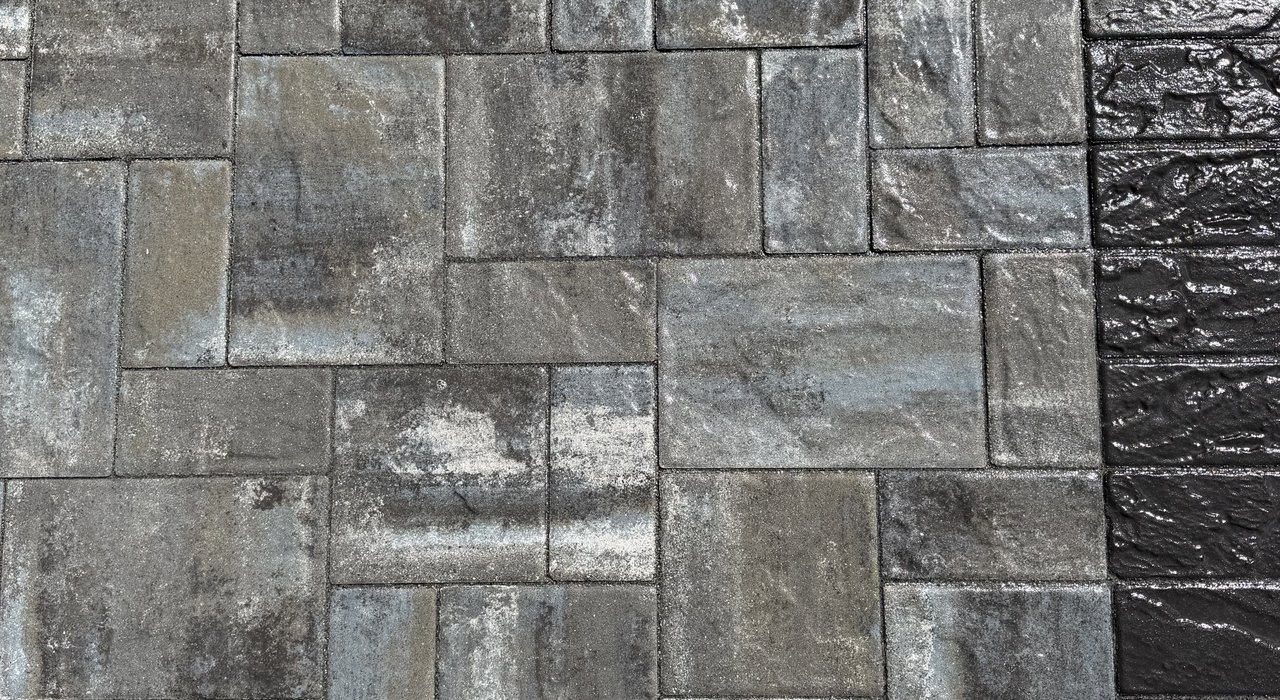
When choosing an asphalt vs paver driveway on Long Island, the material quality matters. Cambridge Pavingstones with ArmorTec technology are one of the most popular choices among Long Island contractors. Their surface coating resists staining, fading, and wear far better than standard concrete pavers. Affordable Patio installs Cambridge pavers across Suffolk County and Nassau County, and the results speak for themselves after 15 years of completed projects.
Cost Comparison for Long Island Homeowners
Price is where most homeowners start the asphalt vs paver driveway on Long Island conversation. Asphalt driveway cost and paver driveway cost look different depending on whether you focus on the upfront bill or the total you spend over 20 to 30 years.
Upfront Installation Costs
A standard two-car driveway on Long Island covers roughly 600 to 700 square feet. Here is how the costs break down for each material at current 2026 rates.
| Cost Factor | Asphalt Driveway | Paver Driveway |
|---|---|---|
| Cost per sq ft (installed) | $7 to $13 | $10 to $30 |
| Two-car driveway total | $4,200 to $8,400 | $6,000 to $19,200 |
| Material only (per sq ft) | $2 to $5 | $4 to $20 |
| Labor (per sq ft) | $5 to $8 | $6 to $15 |
| Average lifespan | 15 to 20 years | 25 to 50 years |
The asphalt vs paver driveway on Long Island cost gap narrows when you factor in local labor. Long Island labor rates tend to run 10 to 20 percent higher than the national average because of our cost of living. Factor that into any estimate you get from a contractor. Affordable Patio offers free estimates within 12 to 24 hours and financing options for homeowners who want pavers without paying the full cost upfront. Call (631) 275-3142 to schedule yours.
Long-Term Cost of Ownership
The asphalt driveway cost looks cheaper on day one, but the savings shrink over time. You need to seal an asphalt driveway every three to five years at $200 to $400 each time. After 15 years, you have spent $600 to $2,000 on sealing alone, and the driveway likely needs full resurfacing at that point.
Driveway resurfacing on Long Island runs $3 to $7 per square foot for asphalt. That adds $1,800 to $4,200 for a 600-square-foot driveway. Driveway resurfacing Long Island contractors charge premium rates because of our higher labor costs and material delivery expenses. Over 30 years, you could easily spend $10,000 to $15,000 maintaining and replacing an asphalt driveway.
A paver driveway installed with proper base preparation costs almost nothing to maintain over the same period. If a single paver cracks, you pull it out and drop in a replacement. No patching, no resurfacing, no sealing. The 30-year paver driveway cost is essentially the same as the day-one installation price.
Durability and Lifespan
Asphalt driveways last 15 to 20 years with regular maintenance. Without sealing, that number drops to 10 to 12 years. Cracks develop from tree roots, heavy vehicles, and freeze-thaw cycles. Once water gets into those cracks, the damage accelerates quickly. That ongoing asphalt driveway cost for repairs adds up fast.
Durability is where the asphalt vs paver driveway on Long Island gap really shows. Paver driveways last 25 to 50 years depending on the material and installation quality. The interlocking design gives pavers a major structural advantage. Each unit can flex independently, which means the surface absorbs ground movement without cracking. When the soil shifts underneath, pavers adjust. Asphalt just cracks.
Cambridge Pavingstones carry a lifetime guarantee on structural integrity. That kind of warranty does not exist in the asphalt world. A properly installed paver driveway on Long Island should outlast most homeowners, and it will still look great when you pass the house on to the next family.
Load-bearing capacity is another consideration. Pavers rated for vehicular traffic handle 8,000 to 10,000 PSI of compressive strength. Asphalt handles around 2,500 PSI. For homeowners with heavy trucks, boats on trailers, or RVs, pavers are the safer bet for avoiding ruts and depressions.
Maintenance Requirements
The maintenance gap is one of the biggest deciding factors in the asphalt vs paver driveway on Long Island comparison.
Asphalt Maintenance Schedule
Sealcoating every three to five years is not optional. Without it, UV exposure breaks down the binder, the surface turns gray and brittle, and cracks form. You also need to fill cracks as soon as they appear. Cold-patch asphalt repair kits cost $10 to $25 per bag, but they are a temporary fix. Professional crack filling runs $1 to $3 per linear foot. These recurring expenses are easy to overlook when comparing the asphalt vs paver driveway on Long Island numbers.
Oil stains are permanent on asphalt. Gasoline and motor oil dissolve the binder and create soft spots that turn into potholes. If you work on cars in your driveway or park a vehicle that drips oil, asphalt will show the damage within months.
Paver Maintenance Schedule
Paver driveways need very little ongoing care. Sweep or blow off debris a few times a year. Rinse with a garden hose or pressure wash once a year if you want to keep the surface looking fresh. Re-apply polymeric sand to the joints every five to eight years, which costs about $100 to $200 for materials.
Stains on pavers can usually be cleaned with a degreaser and a stiff brush. If a paver does stain beyond repair, you can pop it out and replace it with a new one. Try doing that with asphalt.
Weed control is simple with polymeric sand in the joints. The sand hardens when wet and blocks seeds from germinating. If any weeds do push through, pull them and add more sand. No herbicides needed. The low paver driveway cost for maintenance is one of the strongest selling points for Long Island homeowners.
Curb Appeal and Design Options
Curb appeal is another key factor in the asphalt vs paver driveway on Long Island decision. Asphalt gives you one look. It is black when new and fades to gray over time. There are no color options, no patterns, and no way to customize the appearance. Every asphalt driveway on your street looks the same.
Pavers open up dozens of design possibilities. Choose from herringbone, basketweave, running bond, circular, and fan patterns. Mix colors to create borders, accents, and focal points. Coordinate your driveway with your walkway, patio, and front steps for a unified look across your entire property.
Cambridge Pavingstones offer over 30 color blends and multiple shapes including Ledgestone XL, RoundTable, and Sherwood Collection. Affordable Patio has installed over 2,000 projects across Long Island, and each one reflects the homeowner’s personal style. You can view project photos at AffordablePatio.com to see what is possible with creative paver design.
Adding landscape lighting along a paver driveway takes the look even further. Pavers give you clean edges and level surfaces that make light placement simple. You can recess low-voltage LED fixtures right into the border pavers for a polished nighttime appearance. The paver driveway cost for adding lighting is modest compared to the visual impact it creates.
Climate Performance on Long Island
Climate performance plays a major role in the asphalt vs paver driveway on Long Island debate. Long Island weather puts driveways through serious stress. Winter temperatures drop below freezing regularly, and the freeze-thaw cycle is one of the top causes of driveway failure across Suffolk and Nassau Counties.
How Asphalt Handles Long Island Weather
Asphalt absorbs heat, which helps melt snow faster in the winter. That is one genuine advantage. However, that same heat absorption makes the surface soft during summer. Heavy vehicles can leave tire marks and ruts on hot asphalt, especially in direct sunlight during July and August on Long Island.
Freeze-thaw damage is the biggest enemy of asphalt on Long Island. Water seeps into small cracks, freezes overnight, and expands. The expansion forces the cracks wider. After a few winters, you are dealing with crumbling edges, potholes, and an uneven surface. Road salt also accelerates the breakdown of asphalt binder. That is why driveway resurfacing Long Island homeowners face is almost always an asphalt problem, not a paver problem.
How Pavers Handle Long Island Weather
Pavers handle freeze-thaw cycles far better because of the flexible joint system. When the ground expands in freezing weather, the joints between pavers absorb the movement. There is no rigid surface to crack. When the ground thaws and settles, the pavers settle right with it.
The Cambridge Pavingstones ArmorTec finish resists salt damage, UV fading, and moisture penetration. That matters on Long Island where we get 30 to 40 inches of rain per year plus winter ice and snow. Pavers also dry faster than asphalt after rain because the sand joints allow some drainage between units.
For homeowners in flood-prone areas of Long Island, permeable pavers are worth considering. They allow water to drain through the surface and into the ground below, reducing runoff and helping you comply with local stormwater regulations. The New York State Department of Environmental Conservation encourages permeable surfaces for residential properties in coastal areas.
Resale Value and Return on Investment
Resale value is the final piece of the asphalt vs paver driveway on Long Island puzzle. A new driveway adds real value to your home, but the amount depends on the material. According to multiple real estate industry studies, a paver driveway can boost a home’s resale value by 5 to 10 percent of the driveway project cost. On Long Island, where the median home price sits above $600,000, that translates to a meaningful return.
Asphalt driveways are considered standard. Buyers expect them, and a new one does not create a “wow” factor. A paver driveway does. Real estate agents on Long Island consistently report that homes with paver driveways, walkways, and patios sell faster and attract higher offers than comparable homes with basic asphalt.
Any homeowner researching an asphalt vs paver driveway on Long Island should consider resale timing. If you plan to sell within the next five years, a paver driveway gives you curb appeal that photographs well for listings and makes a strong first impression at showings. Asphalt does not photograph well, and it certainly does not make buyers stop their car for a second look.
For homeowners planning to stay long term, the calculation is even simpler. A paver driveway lasts 25 to 50 years with minimal cost. An asphalt driveway needs replacement once or twice in the same span. When you compare total asphalt driveway cost over decades against the one-time paver investment, the paver driveway pays for itself whether you sell or stay.
Frequently Asked Questions
How long does it take to install a paver driveway on Long Island?
A standard two-car paver driveway takes three to five days to install, including excavation, base preparation, paver placement, and joint filling. Asphalt driveways install faster at one to two days, but they need 24 to 48 hours of curing time before you can drive on them. Paver driveways are ready for traffic immediately after installation.
Can I install a paver driveway over my existing asphalt?
It is possible in some cases, but it is not recommended. The best results come from removing the old asphalt, re-grading the sub-base, and installing pavers on a properly compacted foundation. Laying pavers over old asphalt can lead to settling, drainage issues, and a shorter lifespan. Affordable Patio always removes old surfaces to ensure a solid base for every project.
Do I need a permit for a new driveway on Long Island?
Most towns in Suffolk County and Nassau County require a permit for new driveway construction or major resurfacing. The permit process typically takes one to two weeks and costs $50 to $200 depending on your municipality. Your contractor should handle the permit application as part of the project. Affordable Patio manages all permitting for our clients.
What is the best paver material for a driveway on Long Island?
Concrete pavers are the best value for residential driveways. They offer excellent durability at a moderate price point. Cambridge Pavingstones with ArmorTec coating are specifically engineered for the Northeast climate. They resist freeze-thaw damage, salt exposure, and UV fading. Brick pavers are another solid option, though they cost 15 to 20 percent more than concrete pavers.
How much does driveway resurfacing cost on Long Island?
Asphalt driveway resurfacing on Long Island costs $3 to $7 per square foot, or $1,800 to $4,200 for a 600-square-foot driveway. Paver driveways rarely need resurfacing. If individual pavers settle or shift, a contractor can lift, re-level, and reset them for a fraction of the resurfacing cost. Call Affordable Patio at (631) 275-3142 for a free assessment of your current driveway.
Are paver driveways slippery in the rain or snow?
Paver driveways actually provide better traction than asphalt in wet conditions. The textured surface of concrete and stone pavers creates natural grip. The joints between pavers also channel water away from the surface, reducing puddles and standing water. Asphalt becomes slick when wet because it has no texture or drainage channels. For Long Island winters, pavers are the safer surface for walking and driving. Safety is one more reason the asphalt vs paver driveway on Long Island conversation keeps tilting toward pavers.
Making the Right Choice for Your Long Island Home
The asphalt vs paver driveway on Long Island decision comes down to your priorities. If your budget is tight and you need a functional driveway installed quickly, asphalt gets the job done at a lower upfront cost. If you want a driveway that lasts decades, requires almost no maintenance, looks beautiful from day one, and adds real value to your home, pavers are the clear winner.
When you weigh every factor in the asphalt vs paver driveway on Long Island comparison, pavers come out ahead. Long Island homeowners deal with harsh winters, humid summers, and salt-heavy roads. Pavers handle all of that better than asphalt. They also give you complete control over the design, from color and pattern to borders and accents. That kind of flexibility simply does not exist with asphalt.
Affordable Patio has been helping Long Island homeowners upgrade their driveways, patios, walkways, and outdoor spaces for over 15 years. Our team installs Cambridge Pavingstones with a 3-year workmanship warranty, and we handle everything from design to permitting to final cleanup. Call (631) 275-3142 for a free estimate, or visit our Build and Price tool to start planning your new driveway today.