
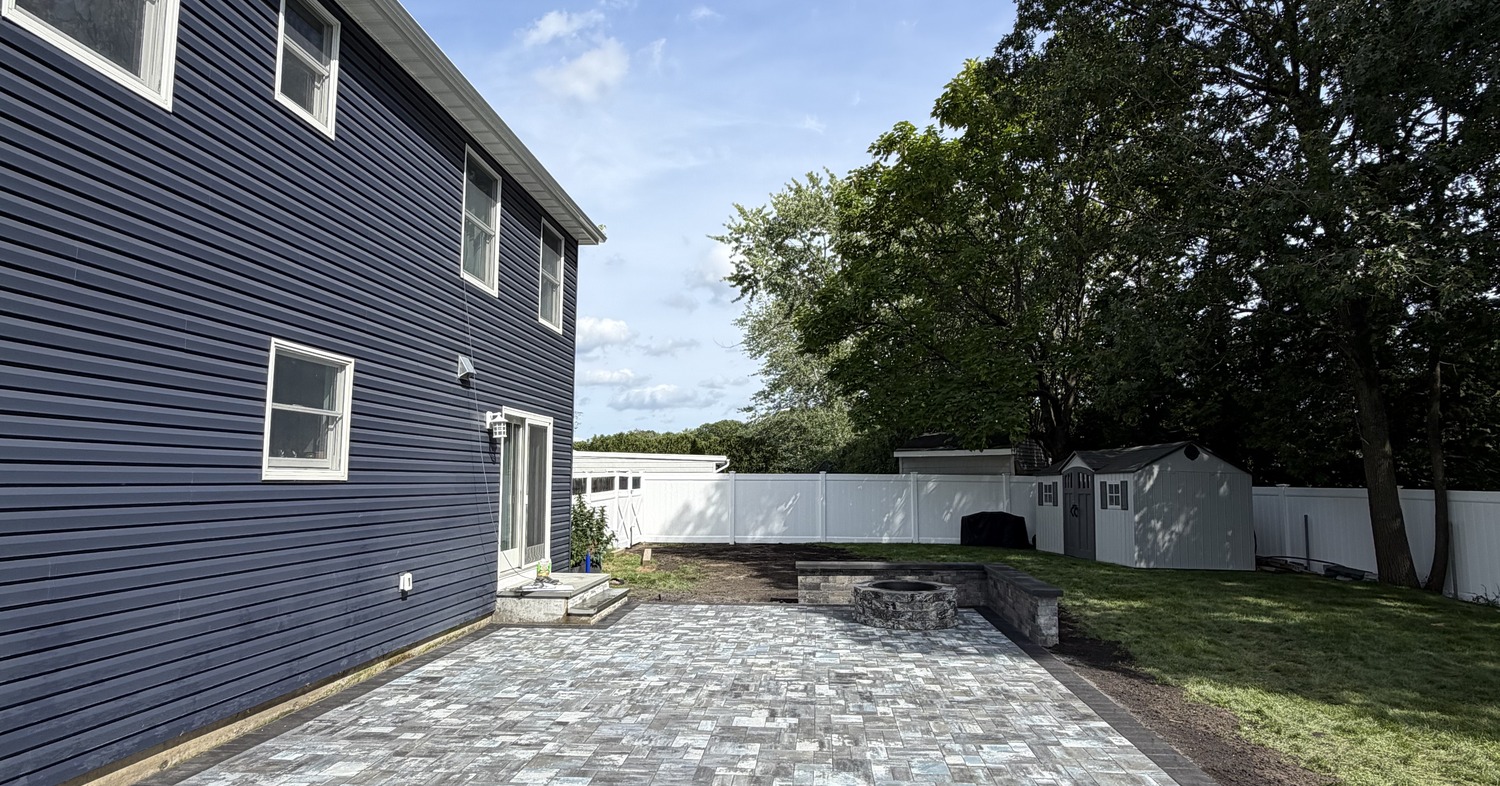
Searching for the best patio installers on Long Island means sorting through dozens of contractors who all claim to deliver quality work. Long Island stretches over 100 miles across Nassau County and Suffolk County, and the number of hardscape contractors working the area keeps growing. The challenge is not finding a contractor. The challenge is finding one who will handle your Long Island patio installation the right way so it still looks perfect 20 years from now.
We have installed over 2,000 patios across Long Island in the past 15 years. This guide focuses on the technical side of vetting an installer across both Nassau and Suffolk counties: credentials, base preparation standards, how to compare quotes line by line, and the regulations that apply island-wide. If you are specifically in the Farmingdale area, see our Farmingdale patio contractor guide for town-specific permit and soil details. For a shorter general checklist, see our 10 ways to choose a patio installer guide.
Quick answer: The best patio installers on Long Island hold a valid home improvement license for the county they work in, carry general liability and workers compensation insurance, specialize in interlocking pavers, and have a verifiable track record of completed projects. Ask for references from recent jobs, compare at least 3 detailed written estimates, and verify every credential before signing a contract. The right paver patio contractor makes the difference between a patio that lasts 5 years and one that lasts 50.
Table of Contents
- Why the installer matters more than the paver
- Credentials every installer should have
- Signs of real experience
- Why base preparation separates good from great
- Comparing quotes the right way
- Contract essentials to protect yourself
- What to expect after installation
- Local regulations on Long Island
- Frequently asked questions
- Conclusion
Why the Installer Matters More Than the Paver
A premium paver installed on a poorly prepared base will fail within 3 to 5 years. A mid-range paver installed on a properly built base will last 25 to 50 years. This is why the best patio installers on Long Island focus on what goes under the pavers, not just on top.
The base is the foundation of every patio. It determines whether the surface stays level, drains properly, and resists the freeze-thaw cycles that Long Island experiences from November through March. An installer who skimps on excavation depth, uses the wrong aggregate, or skips compaction steps is building a patio that will settle, shift, and crack.
Material selection matters, but it is secondary to installation quality. A certified Cambridge Pavingstones installer uses the same pavers as any other contractor who buys Cambridge products. The difference is in the technique, the base depth, the compaction method, and the attention to drainage. When you hire patio contractors who prioritize base work, the surface material performs to its full potential. This is why Long Island patio installation quality depends more on the crew than the catalog.
Credentials Every Installer Should Have
Long Island spans two counties with separate licensing requirements. Nassau County requires a Home Improvement License from the Office of Consumer Affairs. Suffolk County requires a Home Improvement License from the Suffolk County Department of Consumer Affairs. Any contractor working across both counties needs both licenses.
Insurance is non-negotiable. The best patio installers on Long Island carry general liability insurance of at least $1 million and workers compensation insurance that covers every crew member on the job. Request a certificate of insurance and call the insurance company to verify the policy is active. A contractor without workers comp puts you at legal and financial risk if a worker is injured on your property.
Manufacturer certifications add credibility but should not replace your own due diligence. A contractor who is certified by Cambridge Pavingstones, Unilock, or Belgard has completed factory training on proper installation methods. Certification means the manufacturer trusts the installer to represent their products correctly. It does not guarantee that every individual project will be perfect, which is why references and portfolio reviews still matter when choosing a paver patio contractor.
Bonding is another layer of protection. A surety bond, required for the home improvement license in both Nassau and Suffolk counties, provides a financial guarantee that the contractor will complete the work as agreed. If the contractor abandons the project or fails to meet the terms of the contract, the bond provides a path to recover some or all of your deposit.
Signs of Real Experience
Years in business is a starting point, but it does not tell the whole story. A contractor in business for 20 years who builds a handful of patios a year has less hands-on recent experience than a busier contractor with fewer years in business. Ask how many patio projects the installer completes annually. The exact number varies by company size, but the best patio installers on Long Island typically run a full, consistent schedule because demand for quality work sustains it.
Portfolio depth matters. Look for variety in the portfolio: different paver patterns, colors, property sizes, and feature types. A contractor who shows 50 nearly identical rectangle patios may not have the skill to handle a curved design with integrated steps, a seat wall, and a fire pit. You want to hire patio contractors whose portfolio includes projects that match your vision in scale and complexity.
Crew stability is an underrated indicator of quality. Contractors who keep the same crew members year after year produce more consistent work than those who cycle through temporary labor each season. Ask the contractor whether their crew is permanent or seasonal. A permanent crew knows the contractor’s standards and methods, which translates to fewer mistakes and a cleaner finished product.
Supplier relationships also reveal something about the installer. A contractor who buys directly from the manufacturer or an authorized distributor gets consistent quality and faster access to replacement materials if needed. A contractor who buys from wherever the price is lowest may get inconsistent color lots, which creates visible differences across the finished patio. Checking supplier relationships is one more way to verify that a paver patio contractor delivers consistent results.
Why Base Preparation Separates Good From Great
The base is everything. Long Island’s soil varies from sandy on the South Shore to clay-heavy in many inland areas of Nassau County. Each soil type requires a different approach to excavation, drainage, and compaction. The best patio installers on Long Island test the soil conditions before writing a proposal so the base design matches the actual site.
Standard base preparation for a residential patio on Long Island includes 6 to 8 inches of compacted processed gravel (also called quarry process or Item 4), topped with 1 inch of concrete sand or ASTM C33 bedding sand. The gravel must be installed and compacted in lifts of no more than 2 to 3 inches at a time. Each lift is compacted with a plate compactor until the material stops moving. Skipping this step or compacting the full depth in one pass leads to uneven settling.
Drainage design is equally important. Every patio must slope away from the house at a minimum grade of 1 percent, which is approximately 1/8 inch per foot. On properties with poor drainage or high water tables, a perforated drain pipe wrapped in filter fabric should be installed at the low edge of the patio to capture and redirect runoff. Hire patio contractors who include drainage in their proposal, not as an afterthought.
Edge restraint keeps the pavers from spreading outward over time. The industry standard is a heavy-duty plastic or aluminum edge restraint anchored into the compacted base with 10-inch galvanized spikes every 12 inches. Concrete edging is another option for permanent installations. Without proper edge restraint, the patio perimeter will slowly push outward, opening gaps between pavers and creating trip hazards. A quality Long Island patio installation always includes commercial-grade edge restraint as part of the standard scope.
Comparing Quotes the Right Way
Get written estimates from at least 3 patio contractors before making a decision. A proper estimate breaks down every component: excavation, gravel base, sand, pavers, edge restraint, polymeric sand, compaction, and cleanup. If the estimate is a single line item with a total, ask for a detailed breakdown.
The lowest price is almost never the best value. When one estimate is 30 to 40 percent below the others, something is missing. The most common cuts are base depth (4 inches instead of 8), inferior aggregate, no edge restraint, and regular sand instead of polymeric joint sand. These shortcuts save the contractor $500 to $2,000 on materials and labor, but they cost you $5,000 to $10,000 in repairs within 5 years.
Compare the paver specifications across estimates. Not all pavers are equal. Thickness matters: a 60mm paver handles residential foot traffic, but a 80mm paver provides better structural integrity for areas that may see occasional vehicle weight. The best patio installers on Long Island recommend the right paver thickness based on how the space will be used, not just on keeping the price low.
Ask about polymeric sand. Standard joint sand washes out and allows weeds to grow between pavers. Polymeric sand hardens when activated with water, locking the pavers together and preventing weed growth, insect intrusion, and sand washout. Any estimate that does not include polymeric sand is cutting a corner that will cost you ongoing maintenance. Every Long Island patio installation from a reputable installer includes polymeric sand as standard.
Contract Essentials to Protect Yourself
A written contract is your only real protection in a patio project. Verbal agreements are unenforceable in practice, even if they are technically binding. The contract should spell out every detail of the project in plain language.
The scope of work section should list every step: demolition (if applicable), excavation depth and area, base material type and depth, bedding sand type and depth, paver brand and product name, paver color and pattern, edge restraint type, joint sand type, and final compaction method. If it is not in the contract, it is not guaranteed.
The payment schedule should protect both sides. A deposit of 10 to 33 percent is standard for patio projects on Long Island. The remaining balance should be split into progress payments tied to project milestones. Never pay the full amount upfront. The best patio installers on Long Island structure payments so that the final 10 to 20 percent is due only after you inspect and approve the finished work.
Warranty terms must be in writing. A verbal promise of “we will fix anything that goes wrong” is meaningless without documentation. The contract should specify the warranty duration (2 to 3 years is standard for workmanship), what the warranty covers (settling, shifting, drainage issues), and what it does not cover (cosmetic discoloration from normal use, damage from snow plows).
Timeline and weather contingencies should be addressed. A professional contractor gives you a start date, an estimated completion date, and a process for handling weather delays. Long Island weather can delay outdoor projects at any time of year. The contract should state how delays are communicated and whether the timeline adjusts automatically or requires written amendment. A paver patio contractor who includes weather contingencies in their contract is showing you the professionalism you should expect.
What to Expect After Installation
A completed patio needs time to settle. The polymeric sand requires 24 hours to fully cure after activation. During this period, avoid walking on the patio, placing furniture, or running water across the surface. The best patio installers on Long Island explain these curing requirements before they leave the job site.
Minor settling is normal during the first year. As the base compacts under the weight of the pavers and normal use, small areas may shift by 1/8 to 1/4 inch. This is not a defect. Most settling stops after the first full freeze-thaw cycle. If settling exceeds 1/4 inch or creates ponding water, contact your installer for a warranty adjustment.
Sealing is optional but recommended. A paver sealant protects the color from UV fading, makes the surface easier to clean, and locks the joint sand in place. Most sealants should be applied 90 days after installation to allow the pavers to fully cure and any efflorescence (white mineral deposits) to dissipate naturally. Hire patio contractors who can recommend the right sealant for your paver type and usage.
Annual maintenance is simple. Sweep the surface regularly, pull any weeds that appear at the perimeter, and rinse with a garden hose as needed. Power washing should be done carefully and infrequently, as excessive pressure can dislodge polymeric sand and damage paver surfaces. Refilling joints with fresh polymeric sand every 3 to 5 years keeps the installation performing at its best.
Local Regulations on Long Island
Building permit requirements vary significantly by town on Long Island, and whether a specific project needs one depends on the size of the patio, whether it is attached to the home, and whether it affects impervious surface coverage under local zoning rules. In many cases, a standard sand-set paver patio without concrete footings does not require a permit, but features like retaining walls, significant grade changes, or additions near setback lines commonly do. Always verify with your specific town rather than assuming based on a general rule, since the answer differs between towns and even between projects in the same town.
Setback requirements determine how close a patio can be to property lines, easements, and structures. These vary by municipality and zoning district. In many Long Island towns, hardscape structures must be at least 3 to 5 feet from the property line. The best patio installers on Long Island check setback requirements during the site visit so the design stays within code.
Stormwater regulations are becoming stricter across Long Island. Some towns now require permeable paving or retention systems for large hardscape areas because impervious surfaces increase runoff that can overwhelm storm drains and contribute to flooding. If your property already has significant paved area (driveway, existing patio, walkways), the town may require a drainage plan with your permit application.
Underground utility marking is required before any excavation. Call 811 at least 3 business days before the project start date to have gas, electric, water, cable, and telephone lines marked. A reputable installer will not begin digging until utilities are marked. Hitting an unmarked utility line is the utility company’s liability, but hitting a marked line is the excavator’s responsibility. This step protects everyone on the job site. The best patio installers on Long Island coordinate utility marking as part of their project management process so you do not have to track it yourself.
Frequently Asked Questions
How much do patio installers charge on Long Island?
The best patio installers on Long Island charge $18 to $30 per square foot for a standard paver patio, depending on the paver type, base requirements, and project complexity. A 400 square foot patio typically costs $7,200 to $12,000. Projects with fire pits, seat walls, outdoor kitchens, or custom patterns cost more. Always get at least 3 detailed estimates to compare pricing and scope.
How long does a patio installation take?
A standard 400 to 600 square foot patio takes 3 to 5 working days from excavation to final compaction. Larger projects or projects with multiple features (fire pit, steps, seat walls) may take 7 to 14 working days. Weather delays can extend the timeline. The best patio installers on Long Island provide a realistic schedule that accounts for potential delays.
Do I need a permit to build a patio on Long Island?
It depends on your town and the specifics of your project, including size, whether the patio is attached to the home, and whether it affects impervious surface coverage. A standard sand-set paver patio often does not require a permit, but retaining walls, grade changes, or work near setback lines commonly do. Contact your town’s building department or ask your contractor to handle the permit process. A licensed contractor who works regularly in your area will know how to navigate this and will include any needed permit fees and processing in their proposal.
What is the best time of year to install a patio on Long Island?
Spring through early fall (April through November) is the optimal installation season. Ground temperatures need to stay above freezing for proper base compaction and polymeric sand activation. Many homeowners hire patio contractors in the fall when scheduling is easier and some installers offer off-season pricing. Winter installation is possible but not recommended because frozen ground complicates excavation and compaction.
Should I choose pavers or stamped concrete?
Pavers outperform stamped concrete in Long Island’s climate. Individual pavers flex with freeze-thaw cycles instead of cracking like a solid slab. Pavers are also easier to repair because a single damaged unit can be replaced in minutes without affecting the surrounding surface. The best patio installers on Long Island recommend interlocking pavers for durability, design flexibility, and long-term value.
What warranty should I expect from a patio installer?
A reputable patio installer offers a 2 to 3 year workmanship warranty covering settling, shifting, and drainage issues caused by improper installation. The paver manufacturer typically provides a separate lifetime or 25-year product warranty against structural defects. Hire patio contractors who put their warranty terms in writing as part of the contract, not just a verbal promise.
Conclusion
Finding the best patio installers on Long Island requires research, patience, and the right questions. Verify licenses, confirm insurance, review portfolios, check references, and compare detailed written estimates from at least three contractors. The time you invest upfront saves thousands in repairs and replacement costs over the life of your patio.
We are a Preferred and Certified Cambridge installer with more than 15 years of experience and over 2,000 completed projects across Nassau County and Suffolk County. Every patio we build includes a full compacted gravel base, Cambridge Pavingstones with ArmorTec, polymeric joint sand, and a 3-year workmanship warranty. We also offer financing through Lyon Financial with terms up to 30 years.
Ready to start your patio project? Call (631) 275-3142 for a free estimate, or visit our contact page. Check our Nassau County service page to see completed projects near you, or use our Build and Price tool to get a quick online estimate.