
Adding a fire pit to a paver patio is one of the most popular upgrades for Nassau County homeowners. A well-designed fire pits on Long Island setup extends your outdoor season from April through November and creates a natural gathering spot for family and friends.
We have built more than 2,000 patios across Long Island in the past 15 years, and fire pit and patio combo ideas are part of nearly half of our projects. This guide covers the best styles, materials, placement rules, and design tips for pairing a fire pit with your new or existing paver patio.
Quick answer: The most popular fire pits on Long Island are built-in stone or paver fire pits set into the patio surface with a matching seat wall. Gas-burning fire pit tables are the fastest-growing option because they light instantly and produce no smoke. Wood-burning fire pits cost less but require more clearance and maintenance. The best fire pit and patio combo ideas integrate the pit into the patio layout from the start rather than adding it as an afterthought.
Table of Contents
Why Fire Pits on Long Island Are So Popular
Long Island’s outdoor season runs from late March through early November. That gives homeowners roughly 7 months of usable patio time. A fire pit extends that window by keeping the seating area comfortable on cool spring and fall evenings when temperatures drop into the 50s and 60s.
Fire pits on Long Island also tend to add appeal for buyers if you sell down the road. Outdoor living features like fire pits are frequently cited by real estate professionals as amenities that make a home more marketable, though the specific return varies by market and property and we cannot cite a guaranteed percentage. Buyers in Nassau County generally expect outdoor spaces to be fully finished, and a fire pit signals that the patio was designed as a complete living area rather than just a concrete slab. We are not real estate professionals, so for a specific resale estimate, talk to a local agent.
The social appeal is the biggest driver. A fire pit creates a focal point that draws people together. Unlike a grill or a dining table, a fire pit encourages conversation because everyone faces the center. The warmth and light create an atmosphere that keeps guests outside long after dinner is over. Fire pit tables specifically have become a staple in outdoor entertaining because they combine the warmth of a fire with a functional table surface.
Built-In Paver Fire Pits
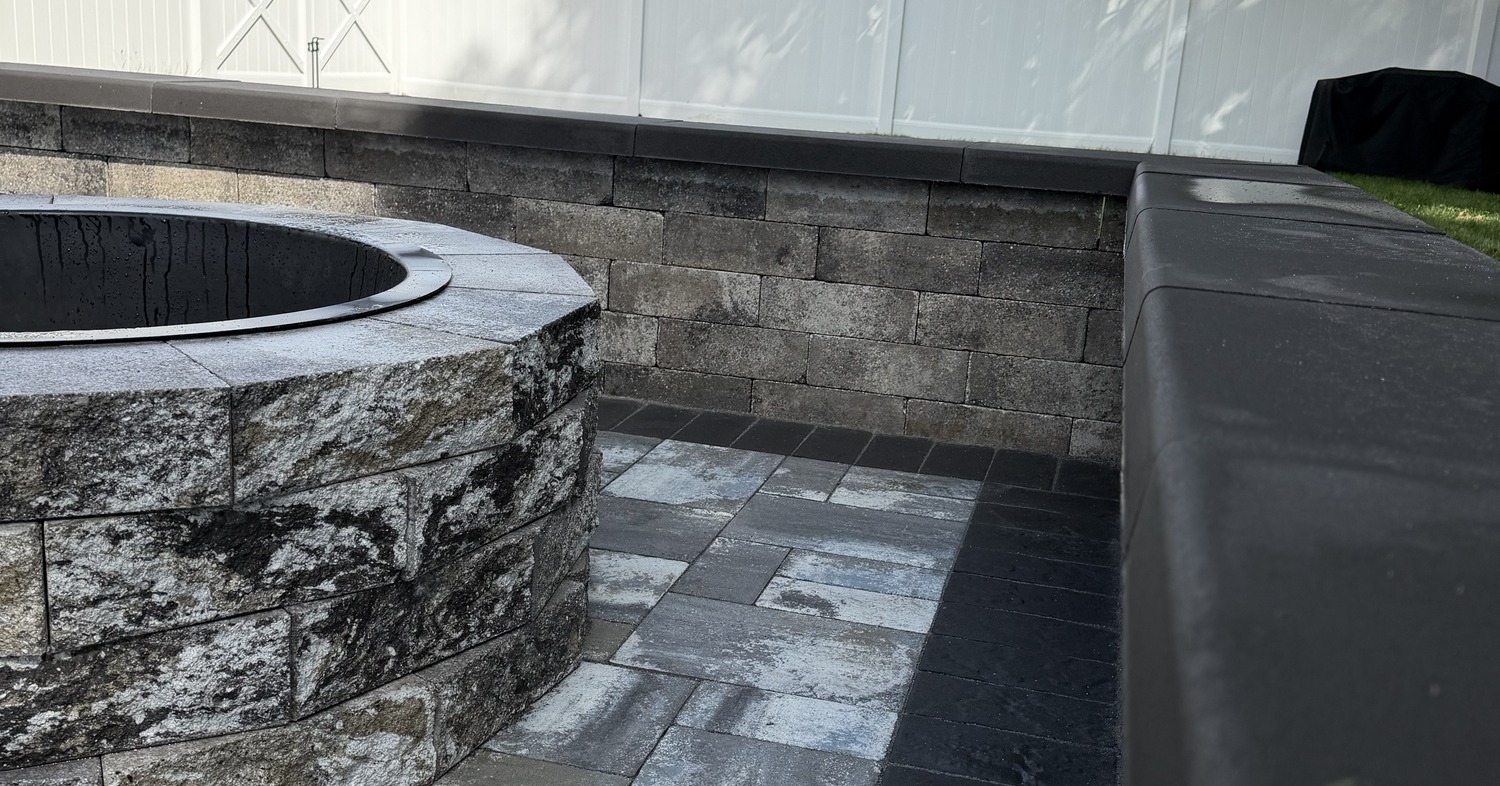
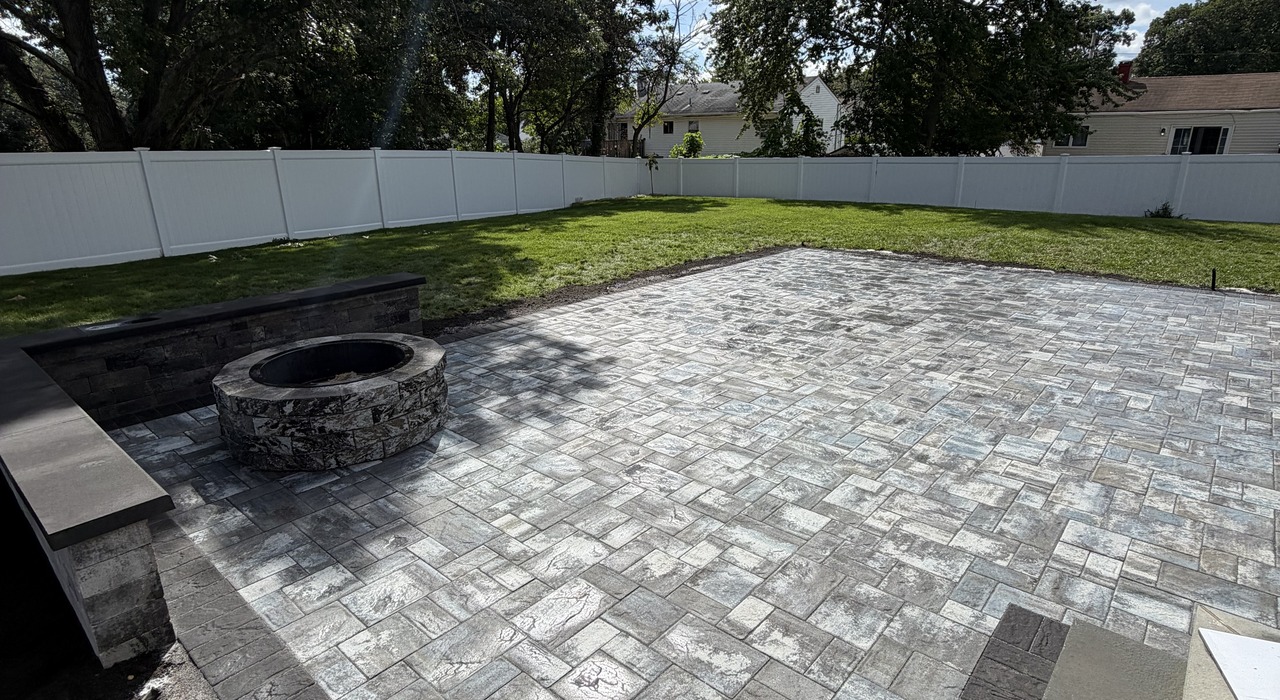
A built-in fire pit is constructed directly into the patio using the same pavers or stone as the surrounding surface. This creates a seamless look where the fire pit feels like a natural part of the patio rather than an accessory placed on top. Built-in fire pits are the most popular choice among our Nassau County customers.
The typical built-in fire pit is 36 to 48 inches in diameter and uses a steel fire ring insert surrounded by a paver or stone wall. The wall is usually 12 to 18 inches tall, which is the right height for sitting on the edge or resting your feet. Cambridge Pavingstones offers fire pit kits that match their paver lines, so the fire pit blends perfectly with the patio surface.
Built-in outdoor fire pits can be wood-burning or gas. Wood-burning versions use a simple steel bowl insert and require no utility connections. Gas versions connect to a natural gas line or a propane tank hidden inside the base. Gas fire pits cost more to install but are easier to use and produce no smoke, ash, or sparks.
The main advantage of a built-in fire pit is durability. Because it is constructed from the same materials as the patio, it handles Long Island weather just as well. There is nothing to blow over in a storm, nothing to rust, and nothing to store for winter. A well-built paver fire pit will last as long as the patio itself.
Fire Pit Tables
Fire pit tables combine a gas fire feature with a functional table surface. They are typically rectangular or square, with a burner tray running down the center and a flat ledge around the edges for drinks and plates. Fire pit tables have become one of the fastest-growing fire pits on Long Island trends.
The burner tray sits below the table surface and is filled with fire glass, lava rock, or ceramic logs. A propane tank fits inside the base, or the table can be plumbed to a natural gas line for permanent installation. Most fire pit tables produce 40,000 to 60,000 BTU, which is enough to warm a 10-foot radius comfortably.
Fire pit tables work especially well on patios where space is limited. Instead of needing a separate fire pit area and a separate dining or conversation area, a fire pit table serves both purposes. You can eat dinner around it, then clear the plates and enjoy the fire. This dual function makes fire pit tables one of the smartest fire pit and patio combo ideas for smaller yards.
Quality matters with fire pit tables. Cheaper models from big box stores use thin aluminum frames that corrode in salt air within 2 to 3 years. Commercial-grade fire pit tables from brands like The Outdoor GreatRoom Company use powder-coated steel or cast aluminum frames rated for coastal environments. Investing in a quality fire pit table saves money over 5 to 10 years because you avoid replacement.
Portable Outdoor Fire Pits
Portable outdoor fire pits are freestanding units that sit on top of the patio surface. They range from simple steel bowls to elaborate copper or cast iron designs. Portable fire pits are the least expensive option and require no installation, but they have limitations on a paver patio.
The main concern with portable outdoor fire pits on pavers is heat damage. A wood-burning fire pit can reach temperatures above 1,000 degrees at the base. Without a heat shield or fire-rated pad underneath, that heat can discolor pavers, melt polymeric sand, and damage the surface coating. Always use a fire pit pad rated for at least 1,200 degrees under any portable fire pit on a paver surface.
Portable fire pits also require more clearance than built-in versions. Most manufacturers recommend 10 feet of clearance from any structure, and local fire codes in Nassau County towns may require even more. On a typical 300 to 400 square foot patio, a portable fire pit with proper clearance can dominate the usable space.
That said, portable outdoor fire pits are a good starting point for homeowners who want to test whether a fire pit fits their lifestyle before committing to a permanent installation. If you find that you use it regularly, upgrading to a built-in fire pit or a fire pit table is a worthwhile investment.
Fire Pit Placement and Safety Rules
Proper placement is critical for safety and enjoyment, and the required clearance from structures, fences, and property lines varies significantly by town and by whether the fire pit is wood-burning, gas, or portable. The Town of Oyster Bay, for example, lists fire pits as their own permit category separate from general outdoor gas fixtures, which means clearance and approval requirements can differ even within Nassau County. Always check with your specific town’s building department before finalizing placement rather than relying on a general distance.
Wind direction matters on Long Island. Prevailing winds come from the southwest in summer and the northwest in winter. Position the fire pit so that smoke from a wood-burning pit blows away from the house and the primary seating area. Gas fire pits produce no smoke, so wind direction is less critical but still affects heat distribution.
Overhead clearance is another consideration. Fire pits on Long Island should never be placed under a pergola, awning, or tree canopy unless they are gas-burning and specifically rated for covered use. Even then, most manufacturers require at least 8 feet of overhead clearance. Wood-burning fire pits should always be completely open to the sky.
Seating distance from the fire pit affects comfort. The ideal distance is 3 to 5 feet from the edge of the fire to the front of the seat. Closer than 3 feet feels too hot on the legs. Farther than 5 feet and you lose the warmth benefit. A circular seat wall at 4 feet from the fire ring is the sweet spot for most fire pit and patio combo ideas.
Fire Pit and Patio Combo Ideas That Work
The best fire pit and patio combo ideas integrate the fire pit into the overall patio design from the planning stage. Here are the layouts we build most often for Nassau County homeowners.
The circular fire pit with a seat wall is the most requested design. The fire pit sits at the center of a circular paver pad, surrounded by a curved seat wall 18 inches tall and 12 inches deep. The seat wall provides built-in seating for 6 to 8 people without any furniture. This layout works best on patios of 400 square feet or more where the fire pit area can be slightly separated from the dining area.
The sunken fire pit creates a dramatic effect by lowering the fire pit area 6 to 12 inches below the main patio level. Steps lead down to the sunken area, which feels like a private retreat within the larger patio. This design works well on sloped yards where the grade change creates a natural transition. Sunken fire pits on Long Island require proper drainage to prevent water from pooling in the lower area.
The fire pit table with a conversation set is the most versatile layout. A rectangular fire pit table sits at the center of a grouping of deep-seating outdoor furniture. This setup works on patios as small as 200 square feet and doubles as both a fire feature and a dining or entertaining area. It is one of the most practical fire pit and patio combo ideas for homeowners who want maximum function from a compact space.
The two-zone patio separates the fire pit area from the dining and grilling area. A low seat wall or a change in paver pattern marks the transition between zones. This layout works well for families who entertain frequently because the fire pit zone stays active in the evening while the dining zone serves its purpose earlier in the day. Fire pit tables can also work in the dining zone for year-round outdoor meals.
Choosing the Right Materials
The fire pit material should complement the patio pavers. Cambridge Pavingstones offers fire pit kits in colors and textures that match their paver lines, which makes coordination simple. Using the same manufacturer for both the patio and the fire pit ensures the colors stay consistent over time as both materials age at the same rate.
For the fire pit interior, a steel fire ring insert is standard. The insert protects the surrounding pavers from direct heat and contains the fire safely. Stainless steel inserts last longer than carbon steel but cost 2 to 3 times more. For most residential fire pits on Long Island, a heavy-gauge carbon steel insert with a 10-year lifespan is the practical choice.
Fire glass is the most popular fill material for gas fire pits. It comes in dozens of colors, from clear to cobalt blue to amber. Fire glass does not produce smoke, ash, or soot, and it reflects the flames for a more dramatic look. Lava rock is a less expensive alternative that works well but lacks the visual impact of fire glass.
The cap stones on top of the fire pit wall should be a natural stone or a thick paver that can handle heat without cracking. Bluestone and granite are popular choices for cap stones because they are heat-resistant and provide a smooth sitting surface. Avoid thin concrete caps that can crack from thermal expansion over multiple heating cycles.
Cost to Add a Fire Pit to Your Patio
The cost of adding a fire pit depends on the type, size, fuel source, and whether it is part of a new patio or being added to an existing one. Here are typical ranges for Nassau County projects.
A built-in wood-burning fire pit with a paver surround costs $2,500 to $5,000 installed. This includes the fire ring insert, the paver wall, cap stones, and base preparation. Adding a matching seat wall around the fire pit adds $2,000 to $4,000 depending on the length and height.
A built-in gas fire pit costs $4,000 to $8,000 installed. The higher cost covers the gas burner assembly, the control valve, and the gas line connection. If natural gas is available at the house, running a line to the fire pit adds $500 to $1,500 depending on the distance. If propane is the fuel source, a tank compartment is built into the fire pit base.
A quality fire pit table costs $1,500 to $4,000 for the table itself, plus $200 to $500 for a propane tank setup or $800 to $1,500 for a natural gas connection. Fire pit tables do not require patio modifications, so the installation cost is minimal compared to built-in options. Outdoor fire pits in the portable category start at $200 for basic steel bowls and go up to $1,000 for decorative copper or cast iron models.
When the fire pit is part of a new patio project, the cost per square foot is lower because the base preparation and paver installation happen at the same time. Adding a fire pit to an existing patio costs 15 to 25 percent more because the crew needs to cut into the existing surface and match the materials.
Frequently Asked Questions
Do I need a permit for a fire pit in Nassau County?
It depends on the town, and the answer is not the same everywhere. The Town of Oyster Bay, for instance, lists “Fire Pits” as its own permit category in its building portal, separate from general outdoor gas fixtures, which suggests permit requirements can apply beyond just gas installations. The Town of Hempstead and North Hempstead each have their own rules as well. Do not assume a portable fire pit is permit-free. Check with your specific town’s building department before starting construction, and know that any fire pit connecting to a gas line will need a plumbing permit at minimum.
Can I put a fire pit on an existing paver patio?
Yes. A portable fire pit or a fire pit table can be placed on any paver patio with a heat-rated pad underneath. A built-in fire pit can be added to an existing patio by cutting into the surface, excavating the base area, and constructing the fire pit in place. The key is matching the paver color and pattern so the addition looks intentional.
What is the best fuel for a fire pit on Long Island?
Natural gas is the most convenient because it never runs out and costs less per hour than propane. Propane is the next best option because it burns clean and is easy to refill. Wood is the least expensive fuel but produces smoke, sparks, and ash. Most homeowners building new fire pits on Long Island choose gas for the convenience and cleanliness.
How far should a fire pit be from the house?
Required clearance from the house, garage, shed, fence, and any overhead structure like a pergola or awning varies by town and by fire pit type, so there is no single number that applies everywhere in Nassau County. Gas fire pit tables rated for covered use may have different clearance requirements per the manufacturer, but local codes still apply and should be confirmed with your town’s building department before you finalize placement.
Are fire pit tables worth the investment?
Yes, if you choose a quality model rated for outdoor use in coastal environments. Fire pit tables serve double duty as both a fire feature and a functional table, which makes them one of the best fire pit and patio combo ideas for smaller patios. A commercial-grade fire pit table lasts 10 to 15 years compared to 3 to 5 years for a budget model.
Can I use a fire pit year-round on Long Island?
Gas fire pits can be used year-round because they ignite instantly and produce consistent heat. Wood-burning outdoor fire pits are practical from March through November but become difficult to use in heavy snow or freezing rain. Most homeowners cover their fire pit or fire pit table during December through February to protect it from ice and salt.
Conclusion
A fire pit transforms a paver patio from a daytime space into an evening destination. Whether you choose a built-in paver fire pit, a versatile fire pit table, or a simple portable setup, the key is planning the placement and fuel source before construction begins. The best fire pit and patio combo ideas integrate both elements into a single cohesive design.
We are a Preferred and Certified Cambridge installer with more than 15 years of experience building fire pits on Long Island and across Nassau County. Every project comes with a 3-year workmanship warranty and free estimates within 12 to 24 hours. We also offer financing through Lyon Financial to help you build the complete outdoor living space you want.
Ready to add a fire pit to your patio? Call (631) 275-3142 for a free estimate, or reach us through our contact page. Visit our Nassau County service page to see completed fire pit projects, or use our Build and Price tool to start designing your patio and fire pit combination today.