
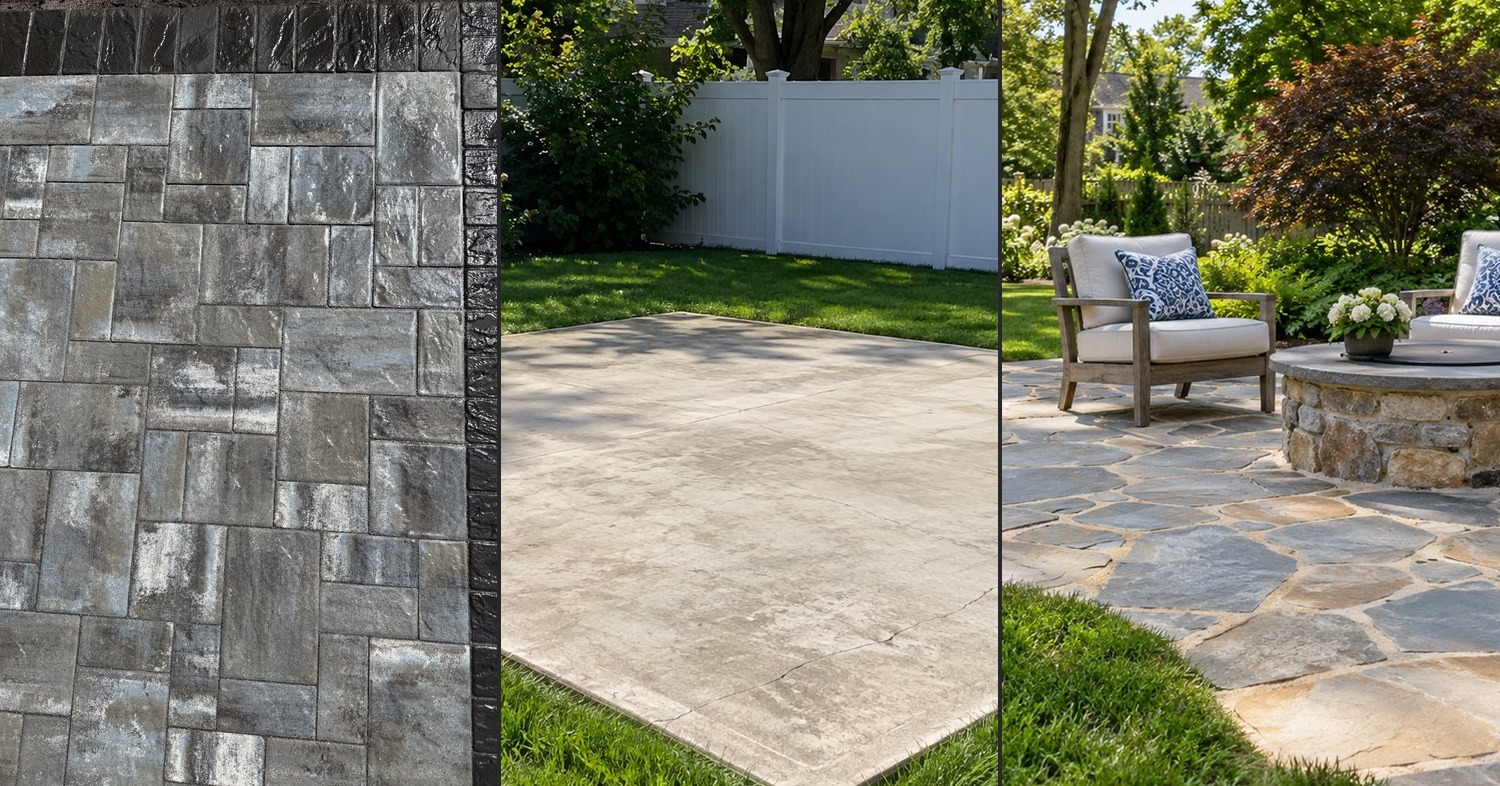
Choosing between a pavers vs concrete patio is one of the biggest decisions Nassau County homeowners face when planning an outdoor space. Each material handles Long Island’s freeze-thaw cycles, salt air, and summer heat differently, and the wrong choice can cost thousands in repairs within a few years.
We have installed more than 2,000 patios across Long Island over the past 15 years, working with all three materials. This guide compares pavers, concrete, and natural stone on the factors that matter most in our climate, so you can make the right call for your yard and budget.
Quick answer: Interlocking concrete pavers hold up best in Long Island weather because they flex with the ground instead of cracking. A pavers vs concrete patio comparison favors pavers for durability, repairability, and long-term value. Natural stone looks beautiful but costs 2 to 3 times more and requires more maintenance. Poured concrete is the cheapest upfront but cracks within 5 to 10 years in our freeze-thaw climate.
Table of Contents
How Long Island Weather Affects Patio Materials
Long Island experiences 80 to 100 freeze-thaw cycles per year. The ground freezes, expands, thaws, and contracts repeatedly from November through March. Any patio material that cannot handle this movement will crack, heave, or separate. This is the single biggest factor in the pavers vs concrete patio debate.
Salt air from the Atlantic and Long Island Sound adds another challenge. Salt accelerates the deterioration of certain materials, particularly poured concrete that has not been sealed properly. The combination of freeze-thaw and salt exposure is why some concrete patios in Nassau County start showing damage within 3 to 5 years.
Summer heat is a factor too. Dark materials absorb more heat and can become uncomfortable to walk on barefoot. Lighter colors and textured surfaces stay cooler. The best patio material for cold climate conditions also needs to perform well in summer, because Long Island gets both extremes.
Interlocking Concrete Pavers
Interlocking concrete pavers are individual units that lock together over a compacted gravel base. Each paver is its own piece, which means the surface can flex with the ground instead of fighting it. This is why pavers outperform poured concrete in freeze-thaw climates.
The best patio material for cold climate performance is a paver system with a proper base. A 6 to 8 inch compacted gravel base absorbs the frost heave, and the individual pavers move with it and settle back into place. Cambridge Pavingstones with ArmorTec add a surface coating that resists stains, fading, and efflorescence, which is the white chalky residue that appears on lower-quality pavers.
Strength is another advantage. A standard 2 3/8 inch thick paver has a compressive strength of 8,000 PSI or higher, compared to 3,000 to 4,000 PSI for a typical residential concrete slab. That means pavers can handle vehicle weight on driveways without cracking. The pavers vs concrete patio strength comparison is not even close when you factor in the independent movement of each unit.
Pavers come in dozens of colors, shapes, and textures. You can create patterns that mimic natural stone, brick, or modern geometric designs. The variety is one of the reasons pavers dominate the paver patio vs stone patio comparison for most homeowners. You get the look of natural stone at a fraction of the cost.
If a paver cracks or stains, you can remove that single unit and replace it. Try doing that with poured concrete. The repair is invisible because the replacement paver matches the originals. This repairability is a major advantage in the pavers vs concrete patio comparison, especially for driveways and high-traffic areas.
Poured Concrete Patios
Poured concrete is a single slab that covers the entire patio area. It is the cheapest option upfront, which is why some homeowners choose it. But the concrete vs pavers cost equation changes dramatically when you factor in the lifespan and repair costs.
The problem with poured concrete on Long Island is cracking. A concrete slab is rigid. When the ground moves, the concrete cannot flex. Instead, it cracks. Control joints help direct where the cracks form, but they do not prevent cracking entirely. On Long Island, most poured concrete patios develop visible cracks within 5 to 10 years.
Repairing a cracked concrete patio is expensive and often unsatisfying. Patching compounds rarely match the original color, so the repair is always visible. If the slab heaves or settles unevenly, the only real fix is demolition and replacement, which costs more than installing pavers from the start.
Stamped concrete is a popular upgrade that adds texture and color to a poured slab. It looks great when new, but stamped concrete is still a rigid slab subject to the same cracking issues. The colored surface coating also wears away over time and needs to be resealed every 2 to 3 years. The long-term concrete vs pavers cost comparison consistently favors pavers in our region.
Natural Stone Patios
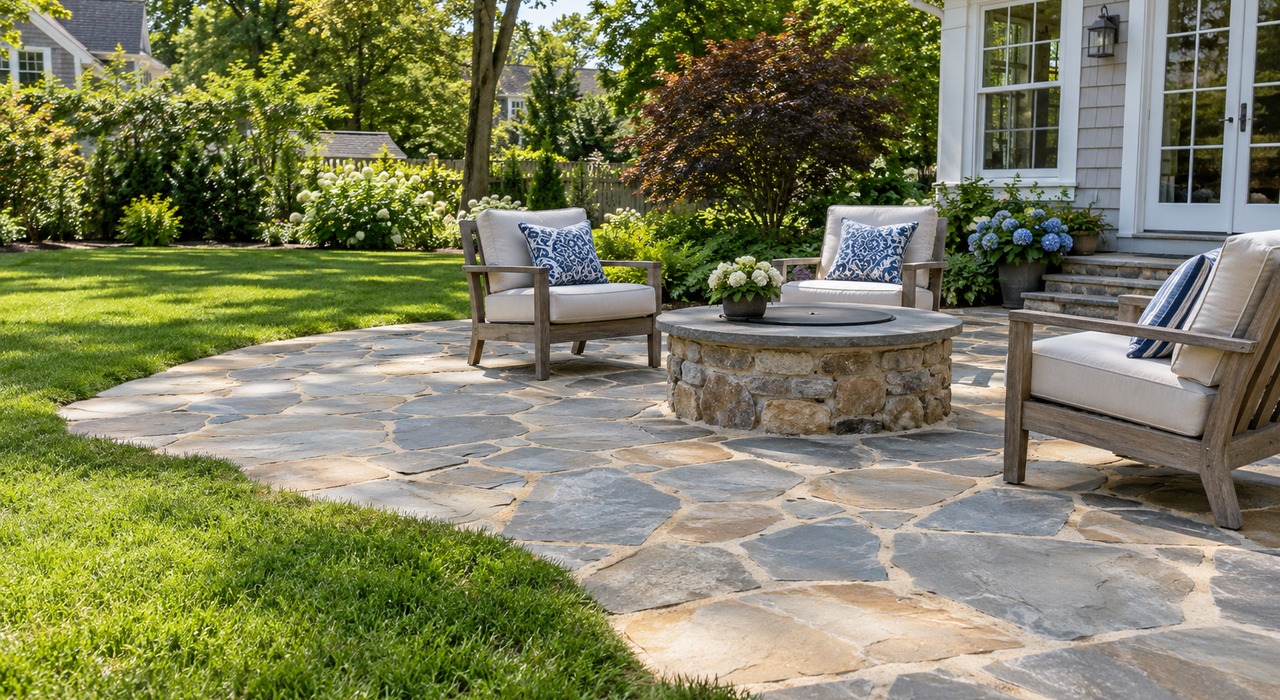
Natural stone includes flagstone, bluestone, travertine, slate, and granite. These materials are cut from quarried rock and each piece is unique. A paver patio vs stone patio comparison often starts with aesthetics because natural stone has a look that manufactured products cannot perfectly replicate.
Bluestone is the most common natural stone choice on Long Island. It handles freeze-thaw well when installed on a proper base with adequate drainage. The surface stays cool in summer and provides good traction when wet. A well-installed bluestone patio can last 30 or more years.
The downsides are cost and maintenance. Natural stone costs 2 to 3 times more than pavers per square foot, both for the material and the labor. Installation requires more skill because each piece is a different size and thickness. The joints between stones need regular maintenance to prevent weed growth and ant colonies.
Certain natural stones also stain more easily than pavers with a protective coating. Bluestone can develop iron stains from fertilizer runoff. Travertine is porous and absorbs liquids quickly. These maintenance requirements are important to understand before choosing natural stone over pavers in the paver patio vs stone patio decision.
Weight is another consideration. Natural stone is heavier than concrete pavers, which increases shipping costs and requires more labor during installation. A pallet of bluestone weighs roughly 3,000 pounds compared to 2,200 pounds for the same coverage in pavers. The paver patio vs stone patio weight difference means more equipment, more crew hours, and a higher installed price.
Side-by-Side Comparison
The pavers vs concrete patio debate is easier to settle when you see the numbers side by side. This table compares the three materials across the factors that matter most for Nassau County homeowners.
| Factor | Pavers | Poured concrete | Natural stone |
|---|---|---|---|
| Installed cost per sq ft | $18 to $28 | $8 to $15 | $35 to $60 |
| Lifespan | 25 to 50 years | 10 to 20 years | 30 to 75 years |
| Freeze-thaw resistance | Excellent | Poor to fair | Good to excellent |
| Repair difficulty | Easy, replace one paver | Difficult, patch visible | Moderate, matching hard |
| Maintenance | Low | Moderate (resealing) | Moderate to high |
| Design variety | High (colors, patterns) | Moderate (stamp options) | Natural variation |
| Resale value impact | 80 to 100% | 50 to 70% | 90 to 100% |
Cost Breakdown for Nassau County
The concrete vs pavers cost comparison is not as simple as looking at the price per square foot. You need to factor in the base preparation, the lifespan, the maintenance, and the repair costs over 20 years.
A 400 square foot poured concrete patio in Nassau County costs $3,200 to $6,000 installed. Add stamping and the range goes to $5,000 to $9,000. That concrete patio will likely need crack repairs by year 5, resealing every 2 to 3 years, and full replacement by year 15. Total 20-year cost including maintenance and replacement is $8,000 to $16,000.
A 400 square foot paver patio costs $7,200 to $11,200 installed. Over 20 years, the only maintenance cost is occasional joint sand replenishment and optional sealing every 3 to 5 years. Total 20-year cost is $8,200 to $13,200. The pavers vs concrete patio comparison shows that pavers cost about the same over two decades but look better the entire time.
A 400 square foot natural stone patio costs $14,000 to $24,000 installed. Annual maintenance runs $200 to $500 for joint repair and weed control. Total 20-year cost is $18,000 to $34,000. Natural stone is a premium choice for homeowners who want the highest-end look and can invest in long-term maintenance.
Repair and Maintenance Differences
Repair is where the pavers vs concrete patio comparison becomes most dramatic. A cracked concrete slab requires demolishing the damaged section, repacking the base, and pouring new concrete that will never perfectly match the original. Cost for a 20 square foot section is $400 to $800, and the patch is always visible.
A damaged paver is removed with a simple extraction tool. The base underneath is checked and releveled if needed. A new paver is set in place, joint sand is swept in, and the repair is done. Cost is $50 to $150 for a single paver, and the repair blends in completely because the replacement paver is identical to the originals.
Natural stone repairs fall in between. A cracked flagstone piece can be removed and replaced, but matching the color and thickness of natural stone is harder than matching a manufactured paver. The paver patio vs stone patio repair comparison favors pavers because manufacturers keep consistent product lines for years.
For maintenance, pavers with ArmorTec coating need the least attention. The coating resists stains, so spills wipe up instead of soaking in. Concrete needs resealing every 2 to 3 years to maintain its appearance and resistance. Natural stone needs annual joint maintenance and may need sealing depending on the stone type.
Drainage is another factor. Pavers with permeable joint sand allow water to filter between units and into the gravel base below. This reduces puddling and ice formation in winter. A poured concrete slab sheds water to its edges, which can cause erosion and pooling if the grading is not perfect. Natural stone with wide joints also drains well, but those joints need more frequent sand replenishment. The best patio material for cold climate drainage performance is the one that handles water before it can freeze on the surface.
Which Material Is the Best Patio Material for Your Project
The best patio material for cold climate conditions on Long Island depends on your priorities. Here is a simple decision framework based on what we see most often from our Nassau County customers.
Choose pavers if you want the best balance of durability, appearance, and value. Pavers handle freeze-thaw cycles without cracking, offer the most design options, and cost less than natural stone while lasting just as long with proper installation. This is why the pavers vs concrete patio debate consistently favors pavers for Long Island homes.
Choose natural stone if aesthetics are your top priority and you have the budget to invest in premium materials and ongoing maintenance. A well-installed bluestone patio is one of the most beautiful outdoor surfaces you can build. The paver patio vs stone patio choice comes down to whether the look of natural stone justifies the 2 to 3 times higher cost.
Choose poured concrete only if budget is your primary constraint and you understand that the patio will need replacement within 15 years. The concrete vs pavers cost difference upfront is real, but the long-term numbers tell a different story. Concrete makes sense for utility areas like shed pads or workshop floors where appearance is secondary.
If you are replacing an existing concrete patio, consider pavers as the upgrade. Many of our Nassau County customers come to us after their concrete slab has cracked beyond repair. The demolition and removal of the old slab adds $3 to $5 per square foot to the project, but the result is a surface that will not crack again. The concrete vs pavers cost for a replacement project is closer than you might expect because the base preparation work is similar.
Frequently Asked Questions
Do pavers crack in cold weather?
Individual pavers rarely crack from cold weather because each unit moves independently. The interlocking system allows the surface to flex with freeze-thaw cycles instead of fighting them. This is the main reason the pavers vs concrete patio comparison favors pavers in cold climates. If a paver does crack from impact damage, replacing one unit costs $50 to $150.
How long does a concrete patio last on Long Island?
A poured concrete patio on Long Island typically lasts 10 to 20 years before it needs replacement due to cracking and settlement. The exact lifespan depends on the thickness, the base preparation, the mix design, and whether the surface was sealed. The best patio material for cold climate longevity is not concrete.
Is natural stone worth the extra cost?
Natural stone is worth the extra cost if aesthetics are your primary goal and you can maintain the surface long-term. The paver patio vs stone patio value comparison is close because both last decades, but pavers cost significantly less and offer easier repairs. Natural stone makes sense for high-visibility areas where the look of real quarried rock matters most.
Can I install pavers over an existing concrete patio?
Yes, pavers can be installed over concrete if the slab is structurally sound, level, and drains properly. The pavers are set on a thin layer of bedding sand over the concrete. This method saves the cost of demolishing the existing slab. However, it raises the finished surface height by about 4 inches, which can affect door clearances and steps.
Which patio material has the best resale value?
Pavers and natural stone both return 80 to 100 percent of the installation cost at resale. Poured concrete returns 50 to 70 percent because buyers on Long Island know it will need replacement. The pavers vs concrete patio resale value difference alone can justify the higher upfront cost of pavers.
What is the best patio material for a pool deck?
Interlocking concrete pavers are the best choice for pool decks on Long Island. They provide excellent traction when wet, stay cooler than concrete, and handle the salt and chemicals from pool water without damage. The best patio material for cold climate pool areas needs to resist both freeze-thaw and constant moisture, which pavers do better than concrete.
Conclusion
The pavers vs concrete patio comparison comes down to this. Pavers cost more upfront but last longer, look better, and repair more easily than poured concrete. Natural stone is the premium choice for homeowners who want the highest-end look and can invest accordingly. Concrete is the budget option that works for utility spaces but is not the best patio material for cold climate living areas.
We are a Preferred and Certified Cambridge installer with more than 15 years of experience across Nassau County and Suffolk County. Every paver patio we build comes with a 3-year workmanship warranty, a full 6 to 8 inch compacted gravel base, and Cambridge Pavingstones with ArmorTec. We also offer financing through Lyon Financial to make the best material choice fit your budget.
Ready to compare materials for your project? Call (631) 275-3142 for a free estimate, or reach us through our contact page. Visit our Nassau County service page to see completed projects, or use our Build and Price tool to get a quick online estimate. Learn more about patio material selection at the Interlocking Concrete Pavement Institute.