
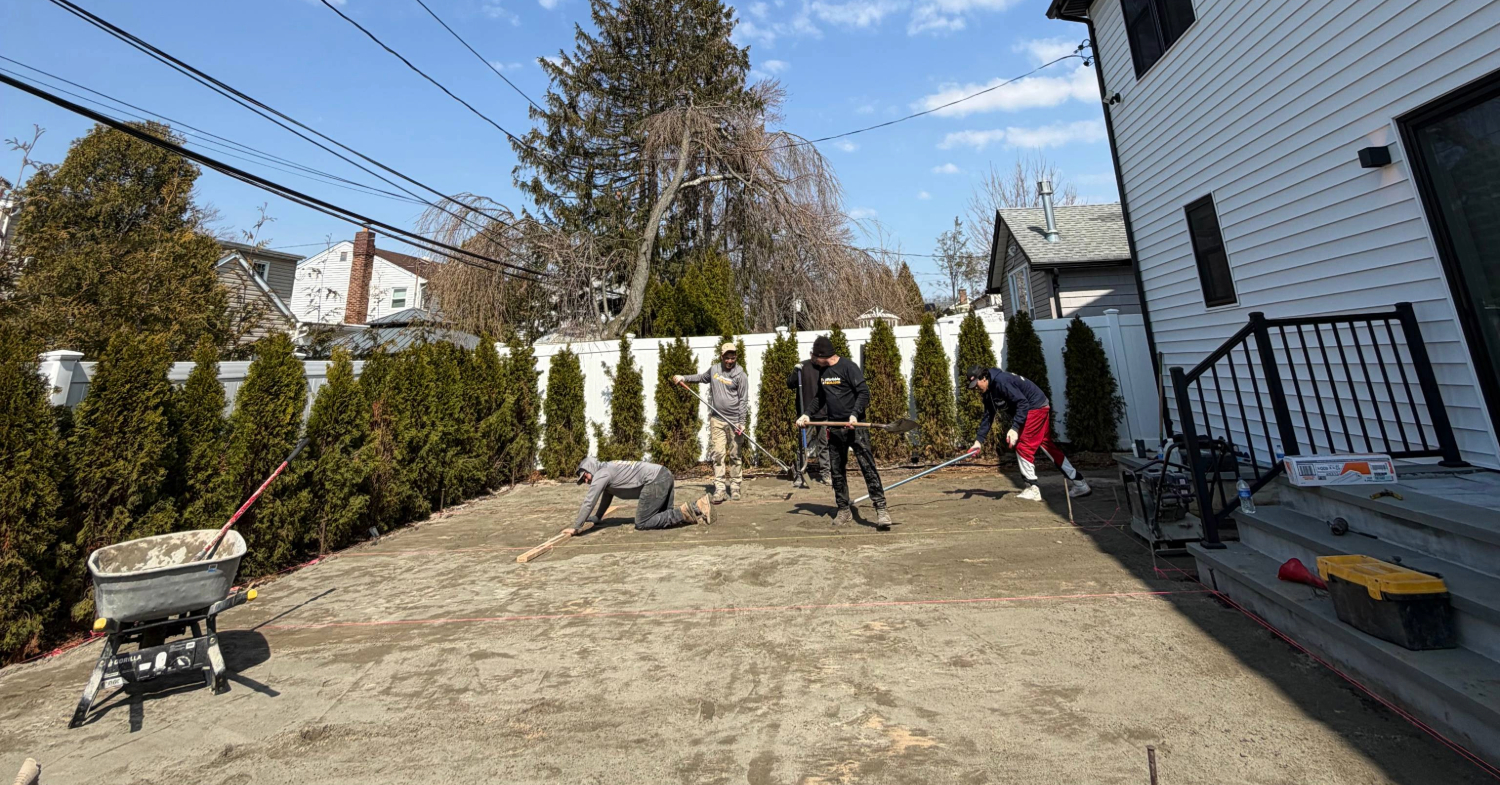
Nassau County patio permit rules can change by town, city, or village, so homeowners should check local requirements before building a new patio. With 15+ years of experience and more than 2,000 completed patios, we know this question should be asked early. This guide explains Nassau County patio permit basics, patio building codes Long Island homeowners should know, and how building permits can affect project planning.
Quick Answer
A Nassau County patio permit may be required depending on your municipality, patio size, height, location, drainage impact, and whether the project connects to other structures. Always confirm with your local town, city, or village building department before work begins because building permits and setback rules are handled locally.
Table of Contents
Who Approves Patio Permits in Nassau County?
Nassau County patio permit research should start with the local building department that controls your property. Nassau County has cities, towns, and many incorporated villages, and permit information is not always handled in one countywide process. Your property may fall under Hempstead, North Hempstead, Oyster Bay, a city, or a village.
Nassau County’s official building and zoning permit page directs homeowners to local cities, towns, and villages for building permit information. If your municipality is not listed, contact your city, town, or village directly through the Nassau County building and zoning permits directory.
This is why patio building codes Long Island homeowners hear about can feel confusing. One town may review a ground-level patio differently than another village. Building permits can also be affected by drainage, lot coverage, accessory structures, or work near streets and sidewalks.
When a Nassau County Patio Permit May Be Needed
A Nassau County patio permit may be needed when the patio changes drainage, increases impervious surface, sits near a property line, connects to steps, supports a structure, or ties into another improvement. A ground-level paver surface may have fewer requirements than a covered patio, raised patio, pool patio, or retaining wall.
Homeowners should not assume that “small” means permit-free. Some municipalities review lot coverage, setbacks, grading, and stormwater movement. Building permits may also be needed when electrical work, gas lines, outdoor kitchens, pergolas, steps, or structural walls are part of the design.
Affordable Patio’s patio construction Nassau County page explains how patio projects are planned and built once the scope is clear. If your project may need approval, it is better to ask early than redesign later.
Before you approve the final layout, ask your local building department whether a Nassau County patio permit, zoning review, or written approval is needed for your address.
Codes, Setbacks, and Lot Coverage
Nassau County patio permit requirements often depend on more than the patio surface. Local rules may look at setbacks, lot coverage, drainage, and safety near steps, pools, or retaining walls.
Setbacks matter because a patio near a fence, side yard, pool, or driveway may be reviewed differently. Patio building codes Long Island municipalities use can also consider height changes, railings, stairs, and access points. If the patio connects to a door, the finished height and step layout may need extra attention.
Lot coverage is another common issue. Pavers, concrete, decks, sheds, pools, and driveways may all count toward coverage limits in some local rules. Building permits help municipalities review whether the project fits zoning limits before work begins.
| Permit Factor | What to Check | Why It Matters | Who to Ask |
|---|---|---|---|
| Municipality | Town, city, or village authority | Rules can vary by local jurisdiction | Local building department |
| Setbacks | Distance from property lines | Patios may need to meet zoning rules | Building or zoning office |
| Lot coverage | Total hard surface on the property | Pavers may affect allowed coverage | Building or planning department |
| Drainage | Where water exits the patio | Runoff should not affect neighbors or structures | Building department or contractor |
| Added features | Steps, walls, pergola, gas, or electrical | Extra work may trigger building permits | Municipality and licensed trades |
Documents to Prepare Before Applying
A Nassau County patio permit review is easier when homeowners prepare details early. Your municipality may ask for a survey, site plan, patio dimensions, material description, drainage notes, contractor information, or layout drawings.
Even when building permits are not required, the same information helps you plan better. Measurements show where the patio will sit. A site plan shows property lines, structures, fences, and access points. Drainage notes show how water will move away from the home.
Affordable Patio’s on-site evaluation process explains how measurements, project goals, and estimate details are reviewed before moving forward.
- Recent property survey or site plan.
- Patio size, shape, and location.
- Photos of the existing yard.
- Material details, such as pavers and base preparation.
- Drainage direction and nearby downspouts.
- Contractor license and insurance details if requested.
Questions to Ask Your Patio Contractor
A Nassau County patio permit should be discussed before installation starts. A good contractor should not guess. Instead, the contractor should explain the patio scope and encourage the homeowner to confirm local requirements.
Ask how the patio will be excavated, how deep the base will be, how the surface will pitch, and whether any walls, steps, gas lines, lighting, or pool features are included. These details can affect building permits.
Nassau County Consumer Affairs licenses home improvement contractors, and the county lists masonry work, paving, retaining wall contractors, and swimming pool work among home improvement categories. That does not replace permit review, but it is part of smart contractor screening.
Homeowners can review Affordable Patio’s step-by-step patio process to understand how the project moves from estimate to final walkthrough.
If you are planning a patio this season, ask permit questions during the estimate so building permits, layout changes, and local approvals do not delay your start date.
Permit Mistakes to Avoid
Nassau County patio permit mistakes often happen when homeowners rely on old advice, neighbor stories, or online guesses. A neighbor may have built a similar patio under different rules or in a different village.
Another mistake is waiting until installation week to ask about building permits. If drawings, surveys, or approvals are needed, the project may need to pause. Check during planning while the design can still be adjusted.
Patio building codes Long Island homeowners deal with often focus on safety, structure, and zoning, but drainage still matters. Runoff toward a foundation or neighboring property can cause problems.
- Do not assume every patio is permit-free.
- Do not rely only on what a neighbor did.
- Do not ignore village rules if you live in an incorporated village.
- Do not add a pergola, kitchen, wall, or electrical work without asking.
- Do not start work before checking local building permits when required.
For material planning and early budgeting, Affordable Patio’s Build & Price tool can help you think through patio size and features before the permit conversation.
Frequently Asked Questions
Do I Need a Nassau County Patio Permit for Pavers?
You may need a Nassau County patio permit depending on your town, city, or village rules. Ground-level pavers may still be reviewed for setbacks, lot coverage, drainage, and building permits if other features are included.
Who Issues Patio Building Permits in Nassau County?
Building permits are usually handled by the local municipality that controls your property. Check your town, city, or village building department before work begins because rules can vary across Nassau County.
Do Patio Building Codes Long Island Rules Apply to Small Patios?
Patio building codes Long Island homeowners should check may still apply to small patios when the project affects setbacks, drainage, lot coverage, stairs, retaining walls, pools, gas lines, or electrical work.
Can a Contractor Pull a Nassau County Patio Permit for Me?
Some contractors can help with permit paperwork, but the process depends on the municipality and project type. Homeowners should still confirm who is responsible for building permits before signing the agreement.
What Happens If I Build Without a Required Permit?
If required building permits are skipped, the homeowner may face delays, correction notices, fines, resale issues, or forced changes. It is safer to confirm the Nassau County patio permit requirements before installation.
Conclusion
A Nassau County patio permit is not something homeowners should guess about. Requirements can depend on your municipality, patio size, setbacks, lot coverage, drainage, and added features.
With 15+ years of experience and more than 2,000 completed patios, Affordable Patio helps Nassau County homeowners plan outdoor projects with clearer expectations from the start. For help reviewing your patio size, layout, materials, and next steps, contact us through the Nassau County contact page.
Ready to plan your patio the right way? Contact Affordable Patio today and ask how your Nassau County patio permit questions should be handled before installation begins.