
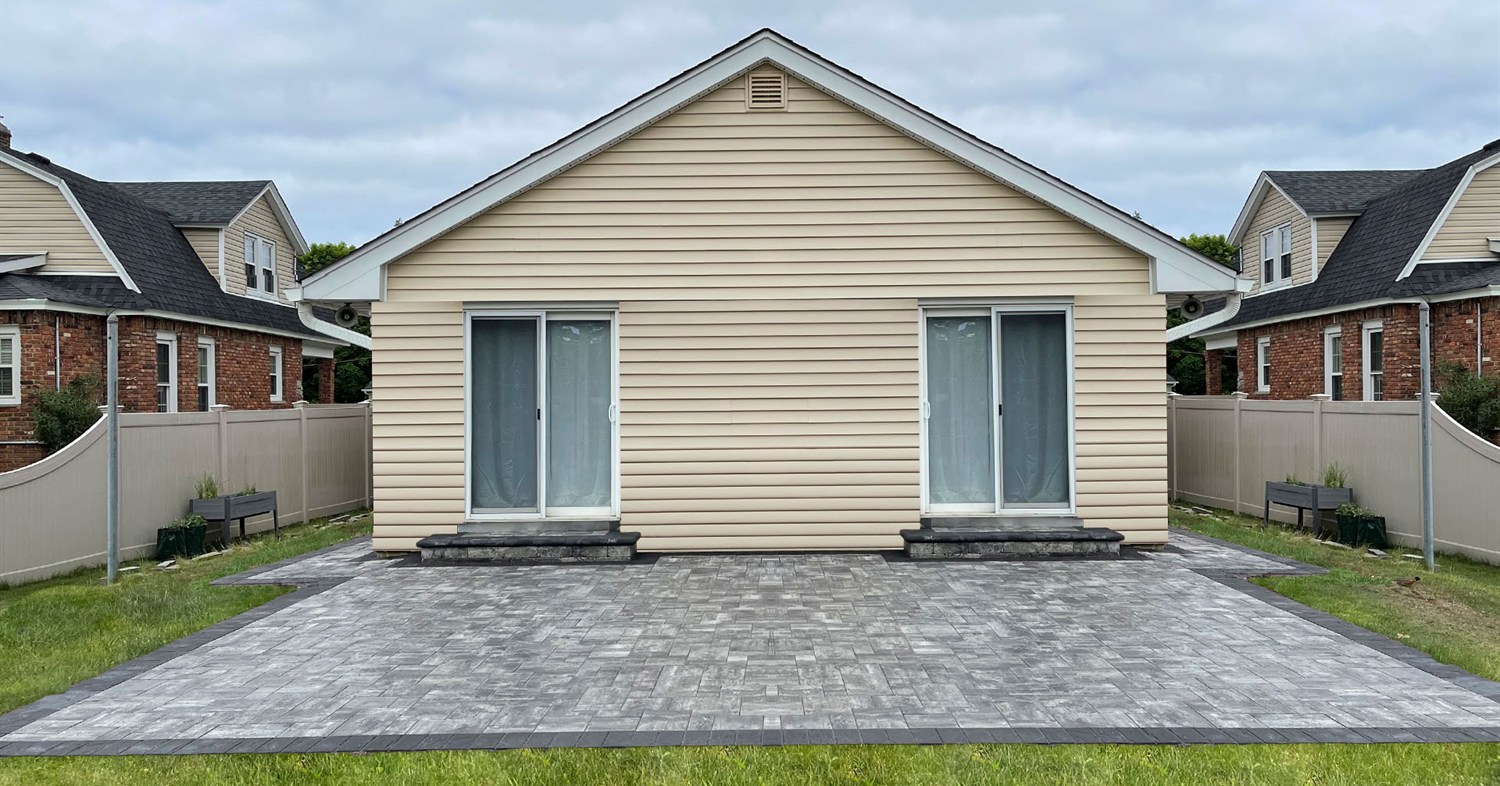
Why paver patios sink comes down to one root cause in nearly 90% of the Long Island repair calls we get: a base that was never compacted correctly in the first place. If your patio has developed a low spot, a puddle that never drains, or pavers that rock when you step on them, the fix usually isn’t cosmetic. This guide explains the real causes, how our crews diagnose them, and what a proper repair actually involves.
- The Real Reasons Paver Patios Sink
- Warning Signs of Sunken Pavers
- Why Settled Patio Pavers Get Worse Over Time
- Dealing With an Uneven Paver Patio
- How Releveling Pavers Actually Works
- Repair vs Full Rebuild: How Crews Decide
- Preventing It From Happening Again
- Frequently Asked Questions
- Conclusion
The Real Reasons Paver Patios Sink
Why paver patios sink is rarely a mystery once a crew digs into the affected area. Nine times out of ten, why paver patios sink comes down to what happened below the surface during the original installation, not anything visible from above. The base underneath every paver patio is supposed to be a compacted layer of crushed stone, typically 6 to 8 inches deep, that resists shifting under weight and moisture. When that base was rushed, undersized, or skipped, the pavers above it eventually follow gravity.
- Insufficient base depth or inadequate compaction during original install
- Erosion from downspouts or grading that channels water under the patio
- Tree roots disturbing the base years after installation
- Freeze-thaw cycles expanding and contracting an already weak base
On Long Island, the combination of sandy soil in some areas and heavy clay in others means base requirements vary block to block, which is exactly why paver patios sink at different rates even on similar-looking properties nearby. This local soil variation is one of the biggest reasons why paver patios sink more often here than in other parts of the state.
Warning Signs of Sunken Pavers
Sunken pavers rarely appear overnight. Most homeowners notice a slow progression of small issues before the problem becomes obvious enough to call a contractor.
- Standing water or puddles that take hours to drain
- Pavers that rock, wobble, or shift underfoot
- A visible dip or low spot compared to the surrounding surface
- Widening gaps between paver joints near the sunken area
Catching sunken pavers early, before the surrounding area starts to follow, keeps the repair contained to a smaller section instead of spreading across the whole patio. Recognizing these signs early is often the difference between a small spot fix and a much bigger reason why paver patios sink across an entire section.
Why Settled Patio Pavers Get Worse Over Time
Settled patio pavers rarely stay the same size problem for long. Once water finds a low spot, it keeps eroding the base underneath every time it rains, which widens the sunken area a little more each season.
- Water pooling accelerates base erosion in the same spot repeatedly
- Neighboring pavers lose support as the erosion spreads sideways
- What starts as a 2-foot dip can become an 8-foot problem within a year or two
This is why we rarely recommend just resetting a few settled patio pavers without also addressing the drainage issue that caused the settling in the first place. Skipping that step is one of the most common reasons why paver patios sink again just a season or two after a quick cosmetic fix.
Noticed a low spot in your patio and wondering why paver patios sink in your specific yard? Get a free ballpark repair estimate online before the problem spreads further into the surrounding pavers.
Dealing With an Uneven Paver Patio
An uneven paver patio is not just a cosmetic issue, it’s also a trip hazard, especially for older family members or young kids running across the yard. Height differences of even half an inch between adjacent pavers are enough to catch a toe or a chair leg.
- Trip hazards near steps, doorways, and high-traffic paths
- Furniture and grills that no longer sit level on the surface
- Water directed toward the house instead of away from it
An uneven paver patio caused by a small settling issue is usually a quick fix, but one caused by widespread base failure often signals it’s time for a larger repair or rebuild. Understanding why paver patios sink in the first place helps homeowners decide which category their situation falls into.
How Releveling Pavers Actually Works
Releveling pavers is a specific repair process, not just lifting and resetting stones by eye. Our crews excavate the affected pavers, remove the compromised base material, address the drainage issue causing the settling, then rebuild the crushed stone base to the correct depth before resetting the original pavers. Every step in this process directly targets the actual reason why paver patios sink, rather than just masking the symptom.
- Remove and set aside the affected pavers carefully
- Excavate and inspect the base for the true extent of the problem
- Rebuild the crushed stone base with proper compaction in lifts
- Reset pavers with fresh polymeric jointing sand
| Repair Type | Typical Cost | Best For |
|---|---|---|
| Spot releveling (10-30 sq ft) | $800 – $2,200 | Isolated sunken pavers |
| Partial section rebuild | $8 – $18 per sq ft | Uneven paver patio areas |
| Full patio rebuild | $18 – $30 per sq ft | Widespread base failure |
According to the National Association of Home Builders, proper base preparation remains one of the most critical, and most commonly overlooked, steps in any durable hardscape installation.
Repair vs Full Rebuild: How Crews Decide
Crews typically decide between a spot repair and a full rebuild by mapping the extent of the sunken or settled area before quoting anything. If the affected zone is under roughly 15% of the total patio, releveling pavers in that section usually solves the problem for years. Mapping the full extent of the damage first is the only reliable way to know why paver patios sink in one specific area and not another.
- Under 15% of patio affected: spot releveling usually sufficient
- 15-40% affected: partial section rebuild often more cost-effective
- Over 40% affected: full rebuild typically saves money long-term
Ready to stop stepping over a sunken paver every day and finally solve why paver patios sink on your property for good? Explore our patio repair and rebuild services and get your Long Island property back on schedule this season.
Preventing It From Happening Again
Once a section is repaired correctly, most homeowners never see the same spot sink again. Good drainage planning and proper compaction are the two habits that keep paver patios sink-free for decades instead of years, and they directly address why paver patios sink in the first place rather than just treating the surface.
- Confirm downspouts and grading direct water away from the patio
- Ask for compaction test results or documentation during original installation
- Re-sand joints every few years to keep the surface locked together
Frequently Asked Questions
Why do paver patios sink years after installation?
Why paver patios sink years later usually comes down to base erosion from water, tree root movement, or freeze-thaw cycles slowly weakening a base that looked fine at first.
Can sunken pavers be fixed without replacing the whole patio?
Yes, in most cases sunken pavers can be excavated, the base rebuilt, and the same pavers reset without touching the rest of the patio.
How do I know if my paver patio needs a full rebuild?
If more than about 40% of an uneven paver patio shows signs of settling, a full rebuild is usually more cost-effective than repeated spot repairs. At that point, why paver patios sink stops being a spot issue and becomes a whole-base problem.
Does homeowners insurance cover sunken pavers?
Most standard homeowners policies do not cover gradual settling or erosion, since it’s considered normal wear rather than a sudden, covered event. This is another reason it pays to understand why paver patios sink before damage spreads far enough to require a large claim-worthy repair.
How long does releveling pavers typically take?
A small spot repair of releveling pavers usually takes one to two days, while larger sections affecting drainage repairs can take three to five days.
Conclusion
Understanding why paver patios sink is the first step toward a repair that actually lasts instead of one that fails again in a year or two. With over 15 years of experience and more than 1,000 completed patio and hardscape projects across Suffolk and Nassau County, our crews have fixed sunken and settled pavers on nearly every type of Long Island property. Contact us today for a free on-site evaluation, and browse our recent jobs in progress to see completed repairs nearby. For more maintenance guides, visit our AP Learning Center.