
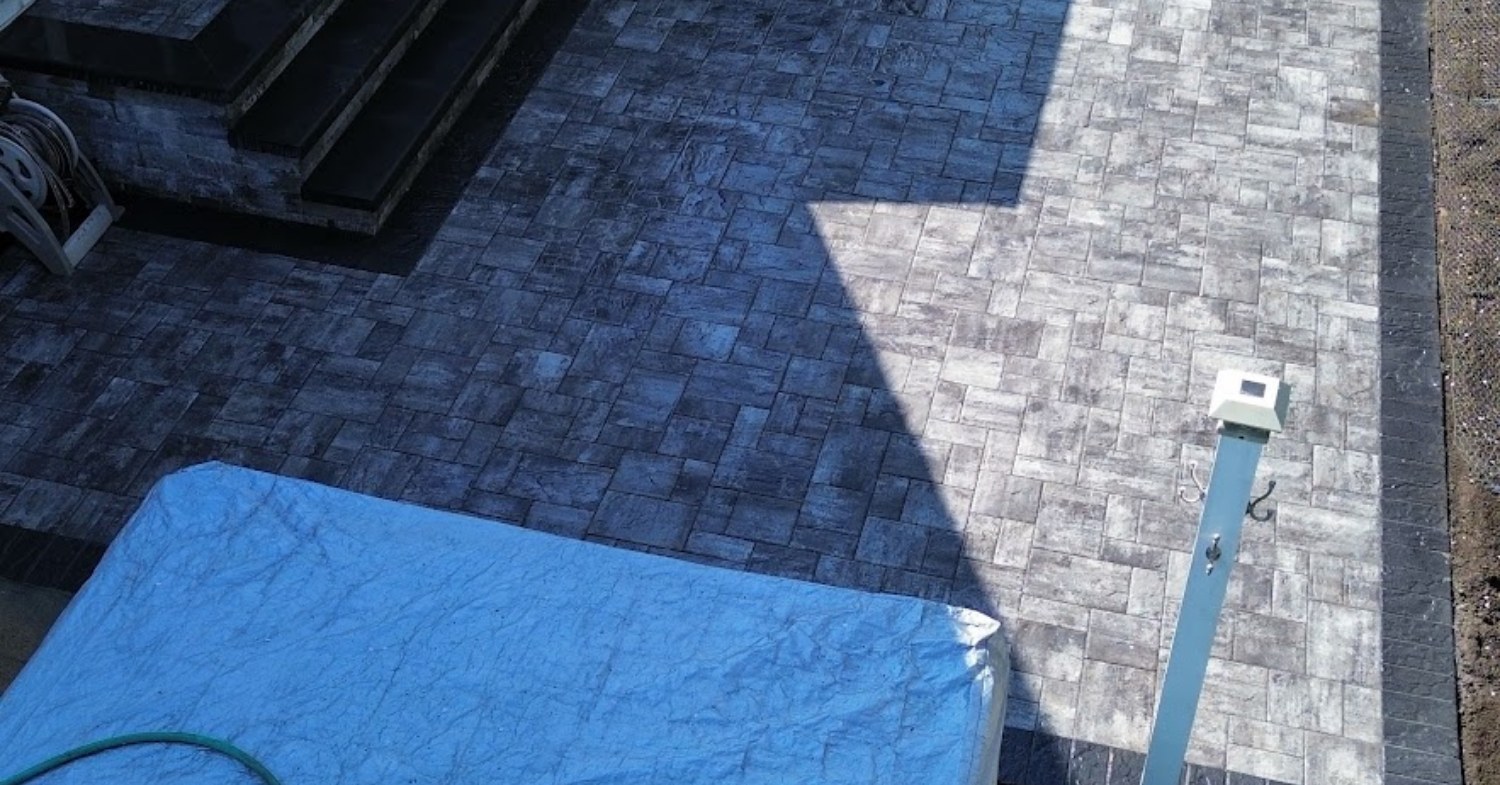
Every week, Long Island homeowners call Affordable Patio asking one foundational question: what sand goes under pavers? The answer matters more than most people expect. A patio built with the wrong sand will shift, sink, or sprout weeds within a season or two, while the correct materials keep the surface stable through decades of Suffolk County freeze-thaw cycles. Most home improvement stores carry several types of sand, and without knowing what sand goes under pavers before you buy, it is easy to select the wrong product entirely. This guide covers every layer, every material type, and every mistake to avoid so your installation goes right the first time.
Whether you are researching a DIY project or preparing to hire a Suffolk County patio contractor, this information applies to every residential paver installation on Long Island.
What Sand Goes Under Pavers: The Two-Layer System
The complete answer to what sand goes under pavers involves two separate materials, each serving a different structural function. The first is a bedding sand applied directly beneath the paver stones to create a smooth, compactable surface. The second is a joint sand swept into the gaps between pavers after they are placed and compacted. Using a single product for both layers is one of the most common installation errors that contractors encounter on callback jobs across Nassau and Suffolk Counties.
Paver manufacturers including Cambridge Pavingstones design their products around this two-layer expectation. Skipping either material, or substituting an incorrect product, compromises the stability of the entire installation from the ground up.
Bedding Sand: The Foundation Layer Explained
Bedding sand is the material placed directly under the paver stones and on top of a compacted gravel base. The correct product is coarse concrete sand, also called sharp sand or CSP8, which meets ASTM C33 standards. Its angular particles interlock tightly when compacted, resist movement under load, and allow water to drain downward through the base.
The target depth for bedding sand is exactly 1 inch. Applying more than 1 inch gives you too much compressible material beneath the pavers and leads to uneven settling over time. Applying less reduces your ability to fine-tune the finished surface grade during installation. Professionals use a screed board and two steel pipes set at the correct elevation to achieve a consistent, flat 1-inch layer across the entire project area.
What Not to Use as Bedding Sand
Mason sand, mortar sand, and play sand are too fine for the bedding layer. Their smooth, round particles do not compact properly and wash out during heavy rain. Many bags labeled “all-purpose sand” at big-box retailers fall into this category. Always check the particle size and grading before purchasing sand for a paver base.
Polymeric Sand: Locking the Joints
Once your pavers are set, leveled, and compacted, the joints between each stone need to be filled. Polymeric sand is the professional standard for this step. It contains polymer binding agents that activate when wet, bonding the particles into a semi-rigid fill inside each joint. The result resists weeds, blocks ant tunneling, and remains stable through wet winters and heavy foot traffic.
Apply polymeric sand in two or three sweeping passes with a push broom, compacting between passes to drive the material down into the joints. Once the surface is swept completely clean, apply a fine mist of water to activate the polymer. Allow the sand to cure fully per manufacturer instructions before allowing foot traffic on the surface.
Preventing Joint Sand Haze
Polymeric joint sand haze forms when sand residue remains on the paver surface during water activation, or when the pavers are damp at the time of application. Always use a leaf blower to remove every trace of sand from paver faces before misting. Any sand left on the stone surface when water is applied will bond to it and leave a chalky residue that requires acid washing to fully remove.
What Sand Goes Under Pavers on Long Island: Local Conditions Matter
Getting what sand goes under pavers exactly right is especially critical in Suffolk County. Long Island soil contains heavy clay in many areas, which drains slowly and expands and contracts significantly through winter. A paver installation sitting on fine sand over clay soil in Ronkonkoma, Centereach, or Bayport can become visibly unlevel after a single hard winter.
Every experienced paver installer on Long Island knows that what sand goes under pavers in our climate must be coarse enough to drain freely, angular enough to compact firmly, and compatible with a properly graded gravel base. Coarse concrete sand over a 4- to 6-inch compacted Item 4 gravel layer is the industry standard for residential projects across Nassau and Suffolk Counties. According to the Interlocking Concrete Pavement Institute, this base assembly provides the drainage and structural integrity required for paver installations in freeze-thaw climates.
Not Sure What Sand Goes Under Pavers for Your Specific Yard?
Affordable Patio has installed hundreds of patios across Long Island. Our team evaluates your soil type, drainage, and slope conditions before recommending any base materials. Call (631) 275-3142 for a free on-site estimate, or visit our Suffolk County patio page to get started.
Common Sand Mistakes to Avoid
The question of what sand goes under pavers may sound simple, but several mistakes regularly lead to paver failures on Long Island properties:
- Using mason sand as bedding: Fine sand particles shift under load and wash out in rain.
- Skipping the compacted gravel base: Bedding sand laid directly on soil allows pavers to sink and heave with ground movement.
- Applying bedding sand deeper than 1 inch: Excess depth creates an unstable foundation that compacts unevenly over time.
- Filling joints with regular sand: Plain joint sand washes out within a season and opens the surface to weed growth and ant colonization.
- Choosing sand based on price alone: The cheapest available sand is almost never the right product, and corrections cost far more than the savings.
Many homeowners also underestimate how much the drainage profile of their yard affects what sand goes under pavers in their specific situation. Properties with high water tables or slow-draining clay may require additional drainage features built into the base assembly before any sand layer is applied.
Sand Type Comparison Table
| Sand Type | Correct Layer | Depth | Recommended? | Notes |
|---|---|---|---|---|
| Coarse concrete sand (CSP8 / ASTM C33) | Bedding | 1 inch | Yes | Angular particles; compacts firmly; drains well |
| Polymeric sand | Joints | Fill joints only | Yes | Polymer binder activates with water; resists weeds and ants |
| Mason sand / mortar sand | Neither | N/A | No | Too fine; washes out; poor compaction performance |
| Play sand | Neither | N/A | No | Round particles; zero structural value under pavers |
| Fill sand (generic) | Neither | N/A | No | Inconsistent composition; use compacted gravel for base instead |
How Affordable Patio Handles What Sand Goes Under Pavers
When our crew installs a new patio in Suffolk County, here is how we address what sand goes under pavers from the first shovel to the final activation pass:
- Excavation: Dig to a total depth of 7 to 10 inches depending on project drainage requirements and local frost depth.
- Gravel base: Install and compact 4 to 6 inches of Item 4 crushed stone or recycled concrete aggregate in multiple lifts using a plate compactor.
- Bedding sand: Spread and screed exactly 1 inch of coarse concrete sand to a flat, consistently level surface using steel pipe guides.
- Paver installation: Set Cambridge Pavingstones with ArmorTec protection in the selected pattern and color combination.
- First compaction pass: Run a plate compactor over the full paver surface to seat the stones firmly into the bedding layer.
- Polymeric sand application: Sweep HP Polymeric Sand into joints in two passes, compacting lightly between each pass to fully seat the material.
- Activation: Mist the entire surface to cure and harden the polymeric joint sand per manufacturer specifications.
This disciplined process, and especially getting what sand goes under pavers correct at step three, is why Affordable Patio installations remain level and stable years after completion. Every job comes with a 3-year warranty and a complete material record. For information on our patio and walkway services across Long Island, visit our website or call our team directly.
Ready to Build Your Long Island Patio the Right Way?
Affordable Patio takes care of every layer from gravel base to final joint sand activation. We make sure what sand goes under pavers is exactly right every time, backed by a 3-year installation warranty. Call (631) 275-3142, email [email protected], or request your free estimate online.
Get Your Free Patio Estimate Today
From selecting the right materials for what sand goes under pavers to designing your ideal Cambridge Pavingstone layout, Affordable Patio handles every detail of your Long Island project. Call (631) 275-3142, email [email protected], or fill out our online estimate form. We serve all of Suffolk County, Nassau County, and surrounding Long Island communities.
Frequently Asked Questions
What is the difference between bedding sand and joint sand for pavers?
Bedding sand sits directly beneath the paver stones as a 1-inch compactable foundation layer. Joint sand fills the gaps between each paver after installation and compaction. They require different products because they serve different structural roles. When homeowners ask what sand goes under pavers, the complete answer covers both: coarse concrete sand below the stones and polymeric sand between them.
Can polymeric sand be used as the bedding layer under pavers?
No. Polymeric sand is formulated specifically for joints, not for the bedding layer. Using it as a base results in poor compaction, inconsistent depth, and unstable pavers. Coarse concrete sand meeting ASTM C33 standards is the correct material for the bedding layer in any professional paver installation.
What causes joint sand haze after paver installation?
Joint sand haze occurs when polymeric sand is activated before the paver surface is completely clear, or when pavers are damp during application. Always use a leaf blower to remove all sand from paver faces before misting the surface. Any residual sand on the stone when water is applied will bond to it and create a white or gray haze that requires acid washing to remove.
How deep should bedding sand be under pavers?
Exactly 1 inch. More than 1 inch creates an unstable base that compacts unevenly under load over time. Less than 1 inch reduces the installer’s ability to fine-tune the surface grade. This 1-inch bedding sand layer sits on top of a compacted gravel base that is typically 4 to 6 inches deep for residential patio applications in Suffolk County.
Does the soil type in Suffolk County affect which sand to use under pavers?
Yes, significantly. Many Suffolk County and Nassau County properties have clay-heavy soil with slow drainage. Clay expands and contracts with moisture and temperature changes throughout the year, which accelerates paver movement if the base is not built to handle it. Coarse concrete sand over a properly compacted, well-draining gravel base is essential for long-term paver stability on Long Island.
Conclusion: Build the Foundation Right
Knowing what sand goes under pavers is not a technical footnote. It is the foundation on which every other element of your patio depends. Use coarse concrete sand at exactly 1 inch for the bedding layer. Use polymeric sand to fill and lock the joints. Avoid mason sand, play sand, and any fine material that cannot handle Long Island’s freeze-thaw cycles and clay-rich soils.
If you are still uncertain about what sand goes under pavers for your specific yard conditions, drainage situation, or project scope, reach out to the Affordable Patio team. We have completed hundreds of paver installations across Suffolk County, Nassau County, Patchogue, Ronkonkoma, Bayport, Sayville, Hauppauge, and communities throughout Long Island. We know what these conditions demand, and we build accordingly.