
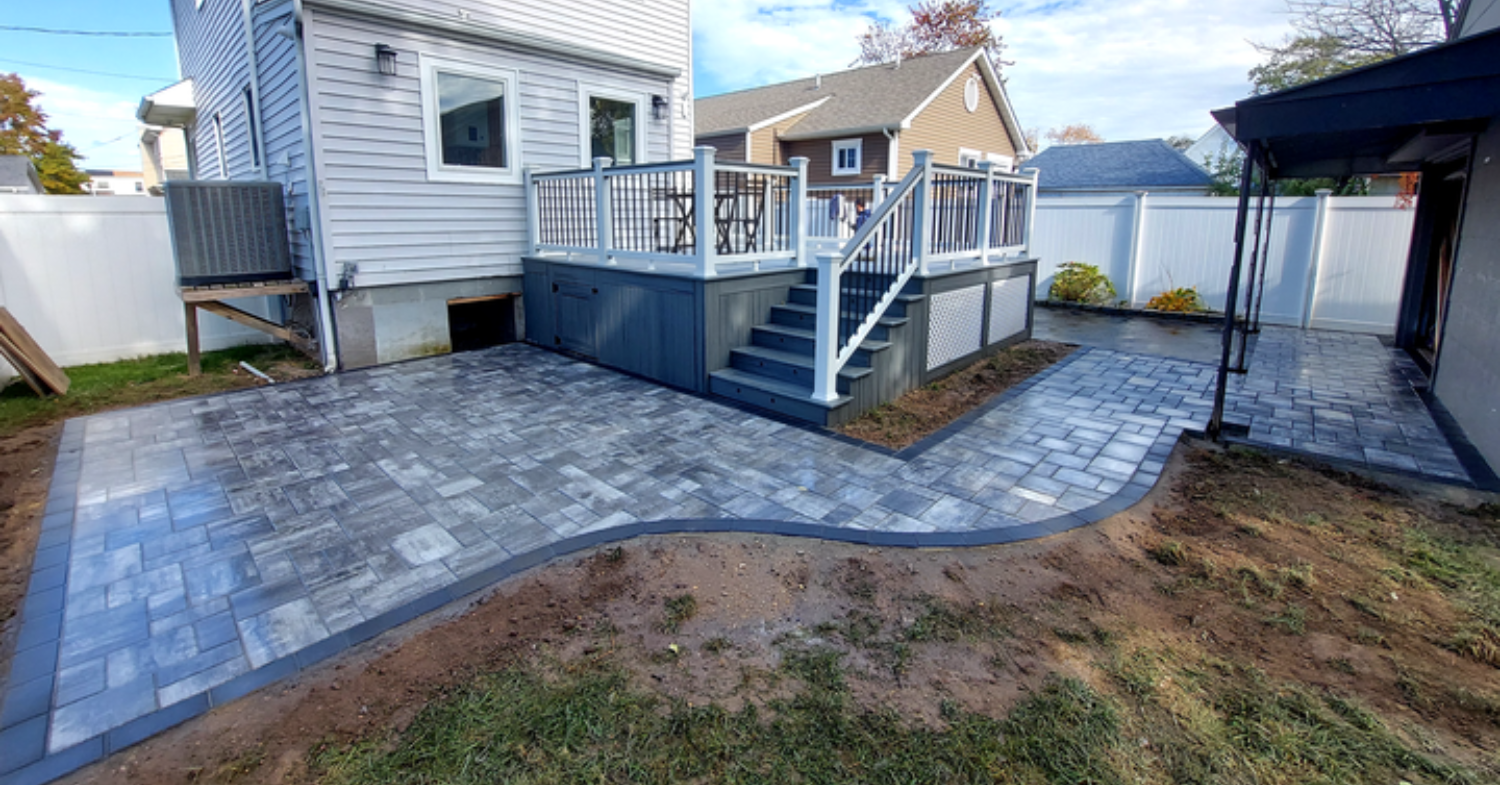
Not every New Hampshire backyard is a wide-open canvas. Many homes particularly in established neighborhoods throughout the Granite State have yards where space is limited, irregular, or divided by slopes, trees, or existing structures. That does not mean you cannot have a beautiful, functional outdoor living space. It means you need to be thoughtful about design. At Affordable Patio New Hampshire, we work with small and constrained spaces all the time, and the results often surprise homeowners who assumed there was not enough room to work with.
These small patio design ideas are built around what actually works in practice layouts, materials, and approaches that maximize usefulness and visual appeal without requiring a sprawling backyard.
Table of Contents
- Why Small Patios Deserve Serious Design Attention
- Start with a Clear Definition of the Space
- Choose Paver Sizes and Patterns Strategically
- Go Vertical to Add Depth Without Square Footage
- Built-In Features That Eliminate Clutter
- How Lighting Transforms a Small Patio
- Plant Integration Without Losing Ground
- What Affordable Patio New Hampshire Does Differently for Small Spaces
- FAQs: Small Patio Design Ideas
- Make Your Small Backyard Work Harder for You
Why Small Patios Deserve Serious Design Attention
Smaller outdoor spaces often get treated as afterthoughts, squeezed in with whatever fits and left at that. The reality is that a well-designed small patio can function just as well as a large one, sometimes better, because every element is intentional and nothing is wasted. Small patio design ideas that actually work share a common thread: they treat limitations as design parameters rather than obstacles.
At Affordable Patio New Hampshire, we work with backyards of all sizes across the region. Some of our most satisfying projects have been compact spaces that homeowners assumed could not amount to much. With the right approach to layout, materials, and features, a small patio becomes a genuinely functional and inviting outdoor room. Here is how to think about making it happen.
Avoid the heavy lifting and technical grading challenges by trusting our professional patio services for a flawless, level finish.
Start with a Clear Definition of the Space
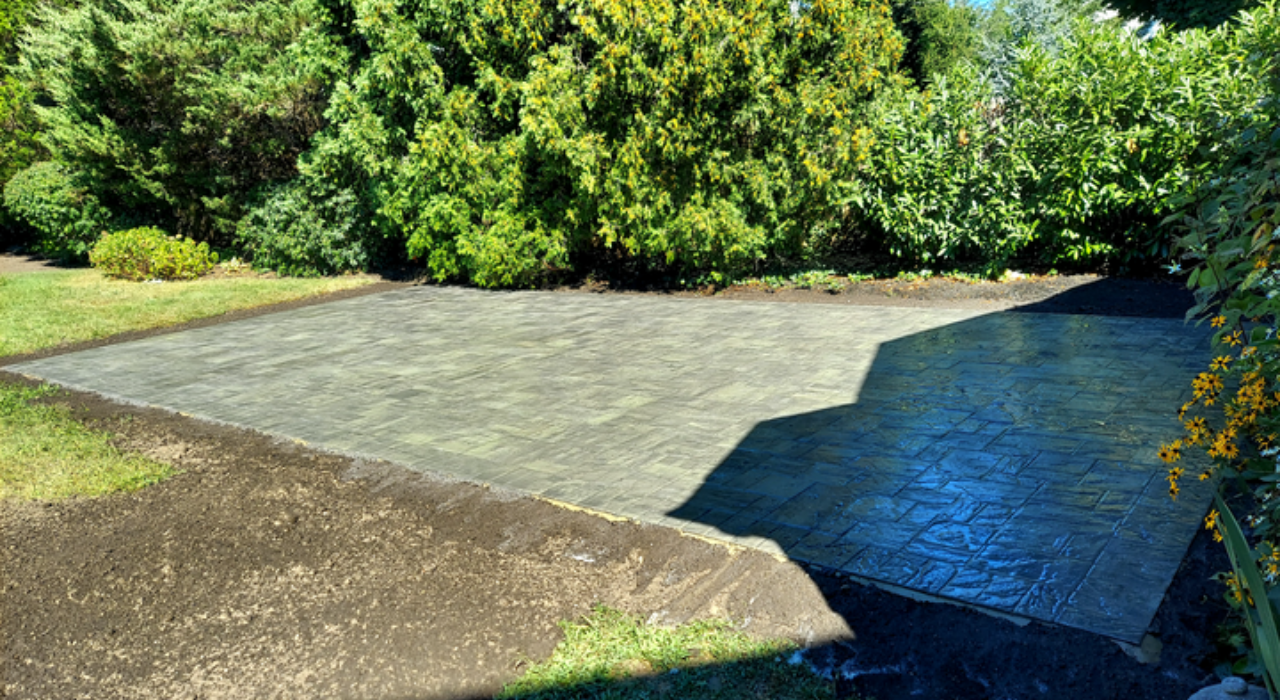
The first thing that distinguishes a well-designed small patio from a mediocre one is clarity. The patio needs defined edges that tell people visually where the outdoor room begins and ends. Without that definition, a small space just looks unfinished and incomplete.
A paver border in a contrasting color or pattern is one of the most effective ways to create this definition. It frames the space and gives it a finished quality that makes even a modest footprint feel intentional. Sitting walls along one or two sides serve a similar function while adding seating, which is especially valuable when floor space is limited.
Think of the small patio as a room with walls, even if those walls are just a low stone border, a change in paving material, or the transition between patio and lawn. That conceptual shift from outdoor area to outdoor room changes how you design everything within it.
Choose Paver Sizes and Patterns Strategically
Paver selection has a real impact on how large or small a space feels. Oversized pavers in a small area can feel heavy and make the space seem cramped. Very small pavers create a lot of busy visual texture that can be equally problematic. Medium-format pavers, roughly twelve by twelve or twelve by twenty-four, tend to work well in compact spaces because they provide visual rhythm without overwhelming the area.
Pattern matters just as much as size. Running bond patterns, where each row offsets the joints of the row above, create a sense of length and movement that can make a narrow patio feel wider. Herringbone patterns add visual complexity and interest to what might otherwise feel like a plain surface. Diagonal patterns, set at forty-five degrees to the house, visually expand the perceived width of a rectangular patio.
A contrasting border in a darker or lighter paver color pulls the eye outward to the edges of the space, which is a subtle but effective way to make a compact patio feel more expansive than it actually is.
Go Vertical to Add Depth Without Square Footage
When you cannot expand horizontally, going vertical opens new possibilities. This principle applies directly to small patio design ideas that need to pack a lot of function into a limited footprint.
A sitting wall built along one or two sides of the patio adds both definition and seating without taking up any usable floor space within the patio itself. A well-built sitting wall, typically twelve to eighteen inches tall, is comfortable to sit on with a flat capstone on top, and it creates a sense of enclosure that makes the space feel more intimate and protected.
Raised planters integrated into the patio border bring greenery into the space at eye level rather than at ground level, where it competes with usable floor area. A fire pit or fire feature built into a corner or integrated into a sitting wall brings a focal point and function to the space without consuming the center of the patio.
Built-In Features That Eliminate Clutter
One of the biggest enemies of a small patio is excess furniture and freestanding objects that take up floor space and make the area feel crowded. Built-in features solve this problem elegantly.
A built-in bench along one wall takes up far less visual space than movable chairs and provides seating for more people in a smaller footprint. A built-in grill station or outdoor kitchen area, sized appropriately for the space, eliminates the freestanding grill that often becomes the dominant object on a small patio. Even a simple built-in planter at the end of a sitting wall removes the need for potted plants on the patio floor.
Every freestanding object on a small patio competes for the limited floor area available. Every built-in feature provides function without consuming that space. This is the design logic that separates a small patio that works from one that always feels overcrowded.
See the professional difference in action from excavation to the final sweep, by checking out our jobs in progress.
How Lighting Transforms a Small Patio
Good lighting does more for a small outdoor space than almost any other single element. In daylight, a compact patio is what it is. At night, with thoughtful lighting, that same space becomes an atmospheric retreat that feels much more generous in scale.
Low-profile lights set into or along the face of sitting walls illuminate the patio without requiring overhead fixtures. String lights strung above the space create a ceiling effect that defines the outdoor room vertically and adds warmth. Path lighting along the edges helps define the patio perimeter and extends the feeling of the space into the surrounding yard.
The key is keeping the light sources low and numerous rather than high and harsh. A few strategically placed points of warm light do more for a small patio than a single overhead flood light that flattens everything it hits.
Plant Integration Without Losing Ground
Plants and greenery are almost always part of what makes an outdoor space feel like a retreat rather than just a hard surface. The challenge in a small patio is integrating them without losing the functional floor area you need.
Built-in planters at the perimeter, as mentioned earlier, are the most space-efficient solution. They bring plants into the space at a useful height and keep the patio floor clear. If built-in planters are not part of the plan, wall-mounted planters or tall narrow planters at the corners of the space bring greenery vertically without spreading onto the floor.
Planting beds directly adjacent to the patio, just outside its defined perimeter, create a lush border that frames and softens the hardscape without consuming any of it. This approach, sometimes called the borrowed landscape principle, lets you enjoy the visual benefit of surrounding greenery without giving up patio square footage to accommodate it.
What Affordable Patio New Hampshire Does Differently for Small Spaces
Small patio design ideas require more precision than large ones. There is less room for adjustment, and every decision has more impact. We approach compact installations with the same level of care and planning that larger projects receive, and often more, because the design work is more intensive.
Our team evaluates each property individually, considering the existing grade, how the space relates to the house, what access points exist, and how natural light moves through the area at different times of day. That information shapes the layout and material recommendations we make, and it is why our small patio installations consistently work well rather than just fitting in the available space.
We handle everything from base preparation through the final features like sitting walls, fire pits, and built-in planters, which means every element is designed as a system rather than assembled piecemeal. Affordable Patio New Hampshire serves homeowners across Strafford County, Rockingham County, and surrounding areas, and we offer a detailed project estimate within twelve to twenty-four hours of your property evaluation.
Get an accurate look at your project costs before you dig with our online patio builder.
FAQs: Small Patio Design Ideas
What is the smallest practical size for a functional patio?
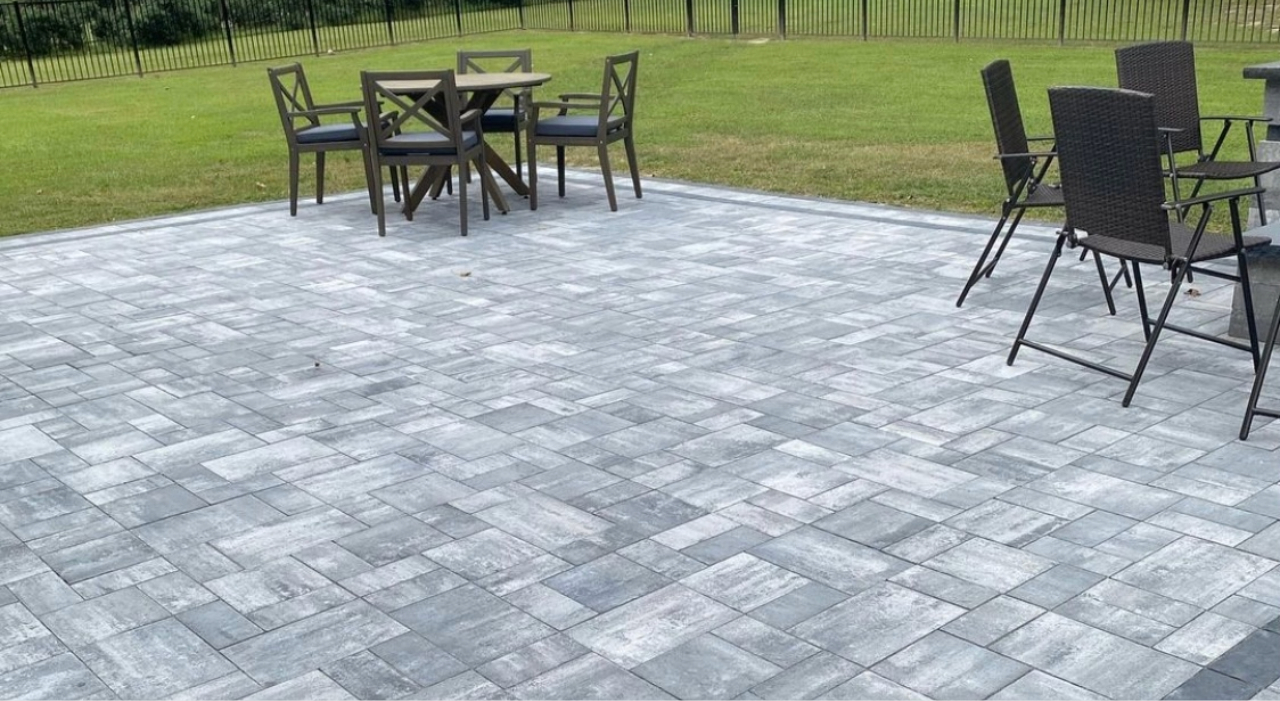
A ten-by-ten-foot patio, one hundred square feet, is generally considered the minimum for a genuinely functional outdoor seating area. It accommodates a small table with two to four chairs comfortably. Below that size, the space becomes more of a landing or transition area than a usable outdoor room. With built-in seating along the perimeter, a smaller footprint can work, but it requires careful planning to avoid feeling cramped.
Should a small patio use large or small pavers?
Medium-format pavers typically work best. Oversized pavers can make a small space feel heavy, and very small pavers create busy visual texture. A twelve-by-twenty-four-inch paver in a running bond pattern strikes a good balance in most compact spaces. A contrasting border in a complementary color adds definition without adding visual clutter.
How do I add privacy to a small patio without fencing?
Sitting walls along one or two sides of the patio create a sense of enclosure without the full visual weight of a fence. Planted borders immediately outside the patio perimeter, particularly with taller ornamental grasses or shrubs, add natural screening. Pergola structures and vertical planters can create partial overhead or lateral screening without requiring significant ground space.
What outdoor furniture works best for a small patio?
Furniture scaled to the space is essential. Oversized sectional sofas and large dining sets dominate compact patios and make them feel chaotic. Bistro sets, built-in benches with weather-resistant cushions, and folding or stackable chairs that can be stored when not in use give a small patio flexibility without permanent clutter. Round tables use interior space more efficiently than rectangular ones in tight areas.
Can I add a fire feature to a small patio?
Yes, with the right type and sizing. A built-in fire pit integrated into a sitting wall, or a compact freestanding fire bowl, brings the warmth and ambiance of a fire feature without consuming the floor area that a traditional ground-level fire pit requires. Gas or propane options give more placement flexibility since they do not require clearance for wood storage or ember management.
Make Your Small Backyard Work Harder for You
A small backyard is not a lesser backyard. With the right small patio design ideas and a team that knows how to execute them, a compact outdoor space can deliver every bit of the relaxation, entertainment, and visual appeal that a larger one can. The difference is in the planning and the craftsmanship that brings that plan to life.
At Affordable Patio New Hampshire, we genuinely enjoy these projects. There is something satisfying about taking a space that a homeowner had written off as too small and turning it into somewhere they actually want to spend time. If you have a compact backyard and are not sure what is possible, schedule a property evaluation with our team and let us show you what we can do with what you have. You might be surprised. Call us at (603) 999-9696 or visit our contact page at affordablepatio.com to get started today.