
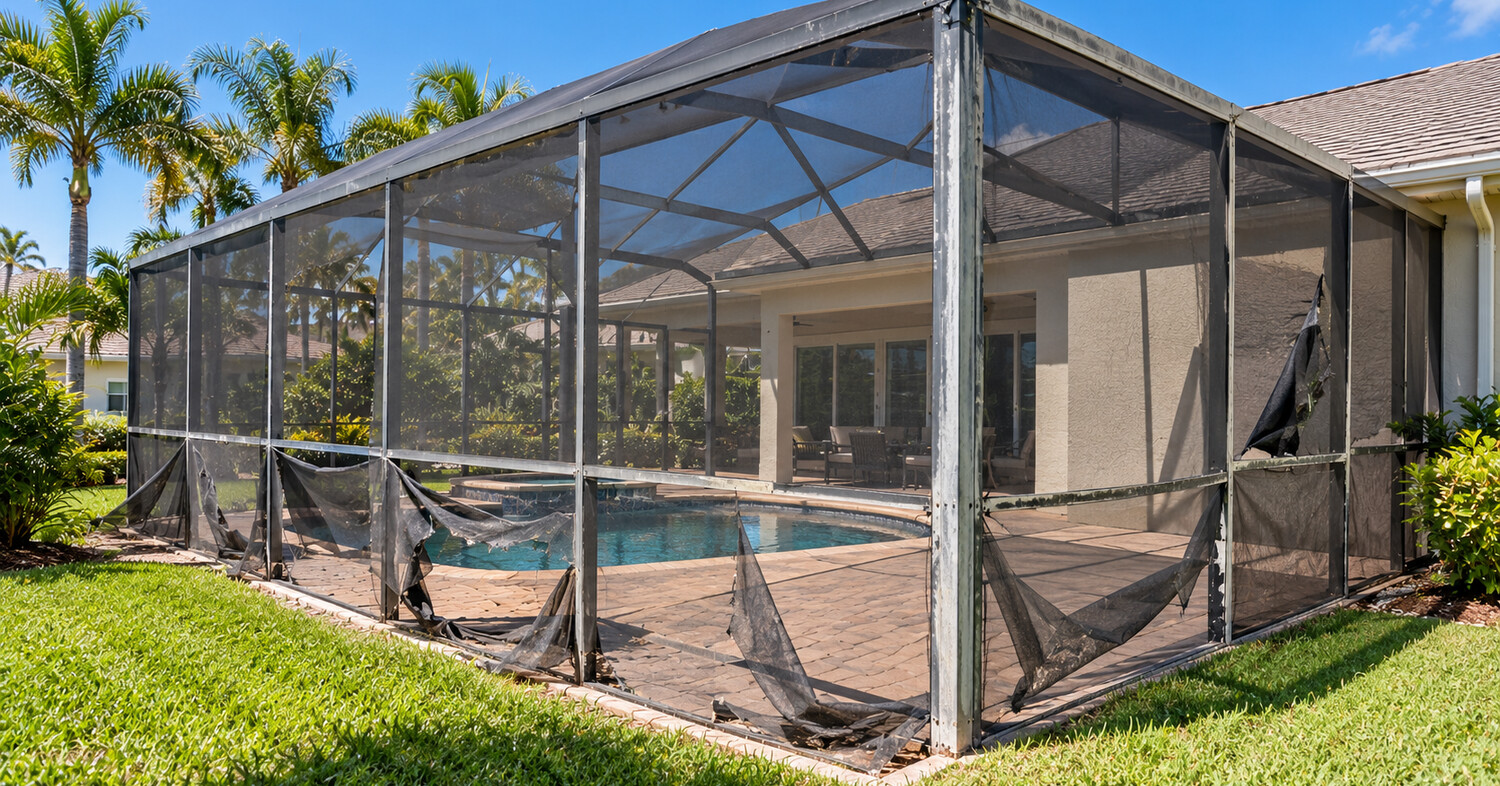
Every screen enclosure in Florida takes a beating. Between hurricanes, tropical storms, UV degradation, and the occasional fallen branch, the screens and frames on your lanai or pool cage will eventually need attention. The question most homeowners face is whether to invest in a screen enclosure repair vs replacement. Patching a few torn panels costs a fraction of what a full rebuild does, but a repair that does not address the real problem can leave you spending more in the long run.
This guide walks through the decision factors for screen enclosure repair vs replacement in the Tampa Bay area. We cover the signs that point to a repair, the signs that demand a full replacement, the cost differences between the two paths, and the structural red flags that only a qualified contractor can evaluate. By the end, you will have a clear framework for deciding which option makes sense for your screen enclosure.
Choose repair when the aluminum frame is structurally sound and the damage is limited to torn screen panels, failed spline, or minor surface corrosion on a few sections. Choose replacement when there is significant frame corrosion enclosure damage, bowing or leaning posts, cracked welds, or when the cost of multiple repairs approaches 50 percent or more of a new enclosure. A partial rescreen of selected panels is a middle option that extends the life of a solid frame without the cost of a full replacement.
Table of Contents
- When to Repair a Screen Enclosure. Signs the Frame Is Still Good
- When to Replace a Lanai. Signs the Structure Has Failed
- Frame Corrosion Enclosure. The Silent Dealbreaker
- Partial Rescreen. The Middle Ground Between Repair and Replacement
- Enclosure Replacement Cost. What to Budget in Tampa Bay
- Screen Enclosure Repair Costs. Panels, Spline, and Hardware
- How to Choose Between Screen Enclosure Repair vs Replacement Contractors
- Frequently Asked Questions
- Conclusion
When to Repair a Screen Enclosure. Signs the Frame Is Still Good
A screen enclosure repair vs replacement decision starts with the frame. If the aluminum frame is straight, the welds are intact, and the posts are plumb and firmly anchored to the bond beam, the enclosure is a candidate for repair rather than replacement. Most screen damage falls into the repair category when the underlying structure is sound.
Torn or punctured screen panels are the most common repair. A single torn panel from a fallen branch, a pet claw, or storm debris can be replaced individually without disturbing the adjacent panels. The screen is held in the frame channel by a rubber or vinyl spline that can be removed, the old screen pulled out, and a new panel rolled into place. This type of screen enclosure repair vs replacement decision is straightforward because the fix takes one to two hours per panel and costs a fraction of a new enclosure.
Faded or brittle screen mesh is another sign that repair is the right choice, as long as the frame is solid. Fiberglass screen mesh degrades under UV exposure over time, becoming brittle and prone to tearing. Replacing all the screen panels on a sound frame, a full rescreen, restores the enclosure to like-new condition at roughly 30 to 50 percent of the cost of a complete replacement. For this reason, a full rescreen on a solid frame is one of the easiest screen enclosure repair vs replacement decisions you will face.
Minor surface oxidation on the aluminum frame is normal and does not affect the structural integrity of the enclosure. Aluminum naturally forms a thin oxide layer that protects the metal beneath. Light surface chalking or discoloration can be cleaned with a non-abrasive aluminum cleaner. This type of cosmetic wear should not push you toward replacement when evaluating screen enclosure repair vs replacement options.
When to Replace a Lanai. Signs the Structure Has Failed
Knowing when to replace a lanai or pool cage saves you from pouring money into repairs that will not last. The screen enclosure repair vs replacement decision tips toward replacement when the frame itself is compromised and can no longer safely support the screen panels, the roof structure, or the wind loads required by the Florida Building Code.
Leaning or bowing vertical posts are the clearest sign that you need to replace the enclosure rather than repair it. If the posts are visibly out of plumb, the frame has shifted at its anchor points and the welds connecting the posts to the top beams and bottom channels are under stress. Straightening a leaning post is a temporary fix that does not address the root cause, which is usually corrosion at the base or a failed footer connection. In this scenario, the screen enclosure repair vs replacement verdict almost always points toward a new structure.
Cracked or broken welds at the joints where horizontal beams meet vertical posts indicate fatigue in the aluminum structure. These cracks propagate over time, especially under wind load during storms. A few cracked welds can sometimes be re-welded as a repair, but widespread cracking throughout the frame means the entire structure has reached the end of its useful life and the screen enclosure repair vs replacement answer is clear.
A roof structure that sags, bounces, or holds standing water after rain is another signal to consider when to replace a lanai. The screen roof panels are designed to shed water, not hold it. If water is pooling on the roof, the frame has deflected beyond its design limits and the load-bearing capacity is compromised. Repairing the screen on a sagging roof frame does not fix the structural issue and puts anyone under the enclosure at risk.
Frame Corrosion Enclosure. The Silent Dealbreaker
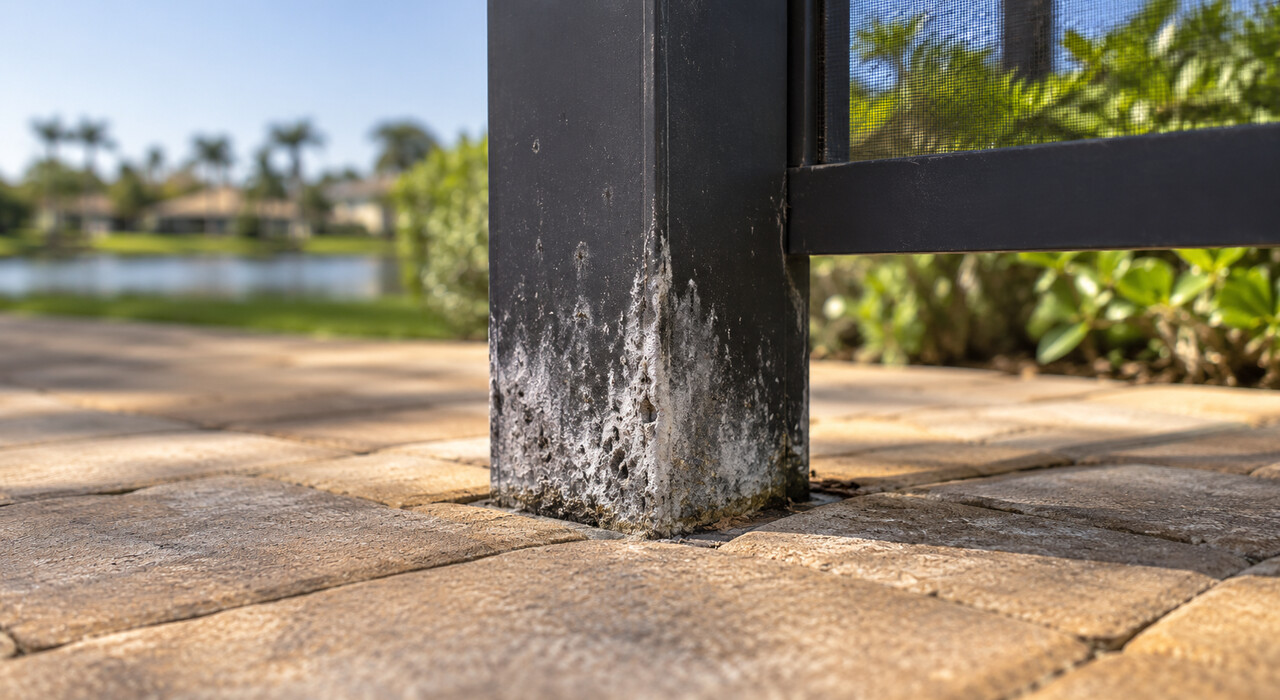
Frame corrosion enclosure damage is the single most important factor in the screen enclosure repair vs replacement decision. Aluminum does not rust like steel, but it does corrode when exposed to salt air, dissimilar metals, standing water, and certain chemical cleaners. In the Tampa Bay coastal environment, frame corrosion enclosure problems can develop silently inside the frame channels where they are not visible until the damage is advanced.
The most common type of frame corrosion enclosure damage is galvanic corrosion, which occurs when aluminum comes into contact with a dissimilar metal like steel or copper in the presence of moisture. This type of corrosion eats into the aluminum from the contact point outward, weakening the frame at exactly the spots where structural connections are made.
Stainless steel screws, copper flashing, and steel hardware installed in direct contact with the aluminum frame are the usual culprits. Galvanic corrosion at structural joints is one of the strongest indicators that the screen enclosure repair vs replacement question has tipped toward full replacement.
Pitting corrosion is another form of frame corrosion enclosure damage common in coastal Hillsborough and Manatee County properties. Salt air deposits on the aluminum surface create small pits that deepen over time. The pits weaken the wall thickness of the aluminum extrusion, reducing its load-carrying capacity. When pitting is widespread across multiple frame members, the screen enclosure repair vs replacement decision should lean toward replacement because the structural integrity of the entire frame is compromised.
To check for hidden frame corrosion enclosure damage, press firmly on the bottom channel of each vertical post where it meets the footer or the patio surface. If the aluminum feels soft, crumbles, or shows white powdery deposits, the corrosion has progressed into the structural section of the frame. This level of damage cannot be repaired and requires a full enclosure replacement. Visit our lanai and screen enclosures page to see examples of new enclosure installations.
Partial Rescreen. The Middle Ground Between Repair and Replacement
A partial rescreen is a cost-effective middle option in the screen enclosure repair vs replacement decision. Instead of replacing every screen panel on the enclosure, a partial rescreen targets only the sections with damaged, faded, or failing screen mesh. This approach works when the frame is structurally sound but the screen condition varies from section to section.
The most common partial rescreen scenario involves the lower wall panels, which take the most abuse from lawn equipment, pet traffic, and wind-blown debris. The upper wall panels and roof panels may still be in good condition. Rescreening just the lower sections restores the enclosure’s insect protection and appearance at a fraction of the cost of a full rescreen or a complete replacement. This targeted approach is a practical middle ground in the screen enclosure repair vs replacement analysis.
Another common partial rescreen situation is storm damage that affects one side of the enclosure. A hurricane or tropical storm may tear out the screen panels on the windward side while the leeward panels survive intact. A partial rescreen of the damaged side gets the enclosure back in service quickly without the expense of replacing screen that does not need it. Storm-related damage is a common trigger for the screen enclosure repair vs replacement conversation with a contractor.
The key to a successful partial rescreen is matching the new screen mesh to the existing panels. Fiberglass screen comes in different mesh densities, colors, and UV ratings. Installing a different mesh on the repaired sections creates a visible mismatch that looks patchy from inside and outside the enclosure. A qualified contractor will match the mesh type and color precisely so the partial rescreen blends with the original panels.
Enclosure Replacement Cost. What to Budget in Tampa Bay
The enclosure replacement cost in the Tampa Bay area ranges from 8 to 25 dollars per square foot of enclosed area, depending on the height, roof style, wind rating, and any structural upgrades required by current building codes. A standard flat-roof pool cage over a 15-by-30-foot pool with a 10-foot cage height typically costs between 6,000 and 15,000 dollars to replace. Having these numbers in hand makes the screen enclosure repair vs replacement comparison much easier.
A mansard-roof or peaked-roof enclosure replacement cost runs higher because the roof structure requires more aluminum extrusion and more complex engineering. Expect to pay 12,000 to 30,000 dollars for a mansard-roof enclosure that covers 800 to 1,200 square feet, including demolition and removal of the old structure. The enclosure replacement cost also includes the building permit, engineered drawings, and final inspection by the county building department.
The screen enclosure repair vs replacement cost comparison often surprises homeowners. A full rescreen of an existing enclosure might cost 2,000 to 5,000 dollars, while a complete replacement runs 8,000 to 25,000 dollars or more. But if the frame is corroded to the point where it needs replacement within a few years anyway, the rescreen money is wasted. Getting a professional assessment of the frame condition before committing to either option is the smartest move you can make.
To get a detailed estimate for your screen enclosure repair vs replacement project, visit our build and price page or call us directly at (813) 777-5665.
Screen Enclosure Repair Costs. Panels, Spline, and Hardware
Individual screen panel replacement costs between 50 and 200 dollars per panel in the Tampa Bay area, depending on the panel size and the type of screen mesh used. A standard wall panel on a pool cage or lanai runs about 75 to 125 dollars installed. Roof panels tend to cost more because of the access difficulty and the need for scaffolding or ladders.
Spline replacement is a low-cost repair that can dramatically improve the condition of a screen enclosure. The spline is the rubber or vinyl cord that holds the screen mesh in the frame channel. Over time, spline becomes hard, brittle, and shrinks, allowing the screen to pull loose from the frame. Replacing the spline on the entire enclosure typically costs 300 to 800 dollars, including labor and materials.
Hardware repairs include door closers, latches, hinges, and roller assemblies. Screen enclosure doors take the most wear because they are opened and closed daily and are exposed to wind load. A door closer replacement costs 75 to 150 dollars installed. A complete door rebuild with new rollers, track, closer, and latch runs 200 to 500 dollars per door. These smaller fixes rarely change the screen enclosure repair vs replacement outcome on their own.
When multiple repairs are needed on the same enclosure, the combined cost should be compared against the enclosure replacement cost to determine which option delivers better long-term value. If the total repair bill exceeds 40 to 50 percent of a new enclosure, the screen enclosure repair vs replacement math usually favors replacement because a new structure comes with fresh materials, updated wind ratings, and a warranty. Learn about our installation process on the step-by-step process page.
How to Choose Between Screen Enclosure Repair vs Replacement Contractors
Not every screen contractor does both repairs and full replacements. Some companies specialize in rescreening and minor repairs but do not have the engineering, permitting, or fabrication capabilities to handle a full enclosure replacement. Others focus on new construction and do not take on small repair jobs. Knowing the difference helps you find the right contractor for your screen enclosure repair vs replacement project.
For repairs and partial rescreens, look for a contractor who carries general liability insurance, has experience with your specific enclosure type (pool cage, lanai, or screen room), and can match the screen mesh to your existing panels. Ask for photos of previous repair work and check online reviews for comments about the quality of the screen installation and the cleanliness of the job site. A good repair contractor will also give you an honest screen enclosure repair vs replacement recommendation based on the frame condition.
For full replacements, the contractor must be licensed to perform structural aluminum work in your county, must pull building permits, and must provide engineered drawings stamped by a licensed Florida engineer. The Florida Building Commission sets the structural standards that screen enclosures must meet, and any replacement enclosure must be built to the current edition of the Florida Building Code, including the wind load requirements for your specific wind zone.
Affordable Patio handles both screen enclosure repair vs replacement projects across Hillsborough County, Manatee County, and the Tampa Bay area. Whether you need a partial rescreen, a frame assessment, or a complete new enclosure with a paver floor, call us at (813) 777-5665 or visit our contact page to schedule a free evaluation.
Frequently Asked Questions
How do I know if my screen enclosure frame is still good?
Check for three things. First, look at the vertical posts and confirm they are plumb and not leaning. Second, inspect the welds at every joint where beams meet posts for cracks or separation. Third, press on the bottom channel of each post where it meets the patio surface and check for soft, crumbling, or powdery aluminum. If all three checks pass, the frame is likely sound enough for a screen enclosure repair vs replacement decision that favors repair.
Is a full rescreen cheaper than a replacement?
Yes, significantly. A full rescreen on an existing frame costs 2,000 to 5,000 dollars in the Tampa Bay area, while a complete enclosure replacement cost ranges from 8,000 to 25,000 dollars or more. The rescreen makes sense when the frame is structurally sound and free of significant frame corrosion enclosure damage. If the frame is compromised, the rescreen money is better put toward a replacement.
How long does a screen enclosure last in Florida?
A well-built aluminum screen enclosure in the Tampa Bay area lasts 15 to 25 years, depending on the quality of the original materials, the exposure to salt air, and the maintenance history. Understanding the typical lifespan helps frame any screen enclosure repair vs replacement evaluation. The screen mesh typically needs replacement every 7 to 12 years due to UV degradation, while the aluminum frame can last the full 25 years if it is kept free of frame corrosion enclosure issues.
Can I do a partial rescreen myself?
A handy homeowner can replace individual wall panels on a screen enclosure with basic tools including a spline roller, a utility knife, and replacement screen mesh. Roof panels are more difficult because of the height and the need to work overhead on a ladder. For safety and quality reasons, most homeowners hire a contractor for anything above the wall line. The screen enclosure repair vs replacement decision should always involve a professional assessment of the frame condition before any work begins.
Does homeowners insurance cover screen enclosure replacement?
Most Florida homeowners insurance policies cover screen enclosure damage caused by named storms, hurricanes, and wind events. Coverage varies by policy, and many policies have a separate wind or hurricane deductible that is higher than the standard deductible. File a claim promptly after storm damage and document the damage with photos and a contractor estimate before making any temporary repairs. Having your screen enclosure repair vs replacement assessment in writing strengthens the claim. The enclosure replacement cost may be covered partially or fully depending on your coverage limits.
What is the best time of year to replace a screen enclosure in Florida?
The best time is during the dry season from November through May, when rain delays are less likely and contractors have more availability. The Hillsborough County permitting process also tends to move faster during the off-peak season. If you are planning a screen enclosure repair vs replacement project, getting the assessment done in the fall gives you time to budget and schedule the work for the winter months. Contact us at (813) 777-5665 or visit our contact page to start the process.
Conclusion
The screen enclosure repair vs replacement decision comes down to the condition of the aluminum frame. If the frame is straight, the welds are intact, and there is no significant frame corrosion enclosure damage, a repair or partial rescreen is the cost-effective choice. If the frame is leaning, cracked, or corroded at the base, a full replacement protects your investment and brings the enclosure up to current building codes. Getting a professional assessment before committing to either option is the most important step.
Affordable Patio evaluates and builds screen enclosures across Hillsborough County, Manatee County, and the Tampa Bay area. Call us at (813) 777-5665 or visit our contact page for a free assessment and estimate within 24 hours. We back every project with a 3-year workmanship warranty and over 15 years of experience in Florida outdoor construction.