
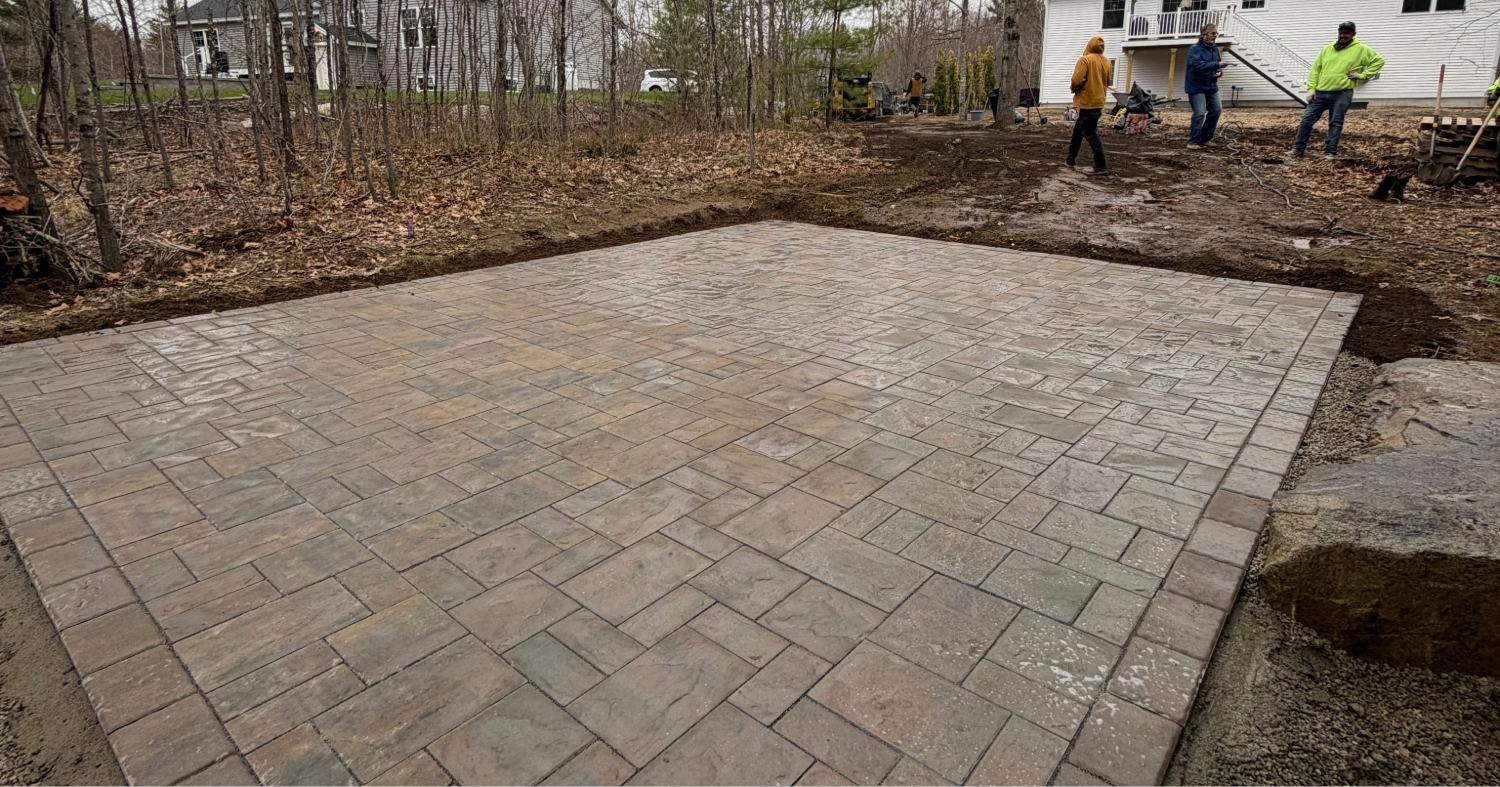
The paver patio vs concrete patio debate is the first major decision homeowners face when upgrading their backyards. With more than 10 years of experience and over 1,000 successful projects completed across Nashua and the greater New England area, our team understands how local weather drastically impacts outdoor surfaces. New Hampshire experiences intense freeze-thaw cycles, meaning the foundation you choose today will dictate your maintenance costs for the next decade. Up to 80% of structural surface failures in our region stem from choosing the wrong material for the underlying soil. We will explore the technical differences, price points, and long-term value to help you make an informed investment.
Table of Contents
- Quick Answer: The Bottom Line
- Understanding the paver patio vs concrete patio Choice in Nashua
- Analyzing Concrete Cracking Issues
- Visual Appeal and Stamped Concrete Alternatives
- Evaluating Hardscape Durability and Lifespan
- The Patio Installation Timeline
- Cost Comparison: paver patio vs concrete patio
- Frequently Asked Questions
- Final Decision: paver patio vs concrete patio
Understanding the paver patio vs concrete patio Choice in Nashua
Choosing between a paver patio vs concrete patio requires a clear understanding of our regional climate challenges. The ground in Nashua freezes completely during the winter months, expanding the moisture trapped within the soil. This expansion pushes upward with incredible force. A rigid poured slab attempts to resist this immense pressure, whereas a flexible interlocking system absorbs and distributes the movement seamlessly. Understanding this mechanical difference is the absolute core of the paver patio vs concrete patio discussion.
Many homeowners initially lean towards poured surfaces to save on initial labor costs. However, reviewing a paver patio vs concrete patio over a 10-year span reveals a completely different financial reality. The minor upfront savings of poured mixes are frequently erased by expensive patching and resurfacing requirements just three or four years down the line. Our professional installation teams at Affordable Patio always prioritize long-term structural integrity over cheap, temporary solutions.
When you sit down to compare a paver patio vs concrete patio, it helps to look at the engineering standards established for residential foundations. The National Association of Home Builders provides strict guidelines regarding aggregate base layers and moisture mitigation. A proper base limits frost heave, which is precisely why the paver patio vs concrete patio evaluation heavily favors modular stone units in northern states.
Analyzing Concrete Cracking Issues
There is a common saying among contractors: there are two types of poured slabs, those that have cracked, and those that are going to crack. Severe concrete cracking issues are practically unavoidable in environments where temperatures drop below zero. Once a solid slab fractures, water easily penetrates the fissure. When that trapped water freezes again, the crack widens aggressively, creating dangerous tripping hazards and unsightly aesthetic damage.
Repairing these concrete cracking issues is neither cheap nor visually appealing. Filling fissures with standard gray epoxy leaves permanent, noticeable scars across your entire entertaining space. By contrast, if an interlocking stone ever chips or settles, you simply lift that single block, add a handful of leveling sand, and drop it back into place. This massive advantage heavily influences the paver patio vs concrete patio decision for long-term homeowners. You can avoid catastrophic concrete cracking issues altogether by opting for modular masonry designs that breathe and flex with the surrounding landscape.
Visual Appeal and Stamped Concrete Alternatives
In the past, homeowners who wanted texture on a budget would pour a solid slab and stamp a pattern into the wet surface. Today, the demand for high-quality stamped concrete alternatives has skyrocketed as homeowners realize stamped surfaces still suffer from the exact same structural flaws as flat slabs. Stamped textures actually make repairs significantly harder, because matching a faded colored dye and a specific stamp pattern five years later is nearly impossible.
When looking at the visual aspect of a paver patio vs concrete patio, modern interlocking blocks offer incredible design flexibility. We utilize premium stamped concrete alternatives like large-format porcelain slabs and high-density architectural bricks. These materials provide the luxurious look of natural stone without the inevitable surface fracturing. As you evaluate your paver patio vs concrete patio options, remember that individual blocks allow for striking contrasting borders, unique inlay patterns, and seamless color blending that a solid poured slab simply cannot match.
Evaluating Hardscape Durability and Lifespan
The total hardscape durability of your installation is dictated by compressive strength. Standard poured mixes typically cure to a compressive strength of around 3,000 to 4,000 PSI (pounds per square inch). In contrast, high-quality manufactured interlocking stones are cured in controlled factory environments, consistently reaching 8,000 to 10,000 PSI. This incredible density makes them completely impervious to standard foot traffic, heavy outdoor furniture, and extreme weather.
When you measure the hardscape durability in a true paver patio vs concrete patio matchup, the factory-compressed stones win every single time. They do not flake or spall when exposed to typical winter de-icing salts. Maximizing your hardscape durability means investing in materials that do not degrade under UV sunlight or heavy rain runoff. This is why our 10+ years of local installation data strongly support modular stones over poured alternatives.
Every proper paver patio vs concrete patio assessment must factor in surface traction. Solid slabs become notoriously slick when wet. High-density blocks feature naturally textured surfaces that provide excellent slip resistance, making them infinitely safer around active children, elderly guests, or integrated swimming pool zones.
The Patio Installation Timeline
Understanding the standard patio installation timeline helps you plan your backyard renovations effectively. A poured slab project might seem faster because a cement truck simply dumps the wet mixture into a wooden frame in a single afternoon. However, that wet mix requires a minimum of 7 to 14 days of strict curing time before it can bear any significant weight or foot traffic without sustaining permanent indentations.
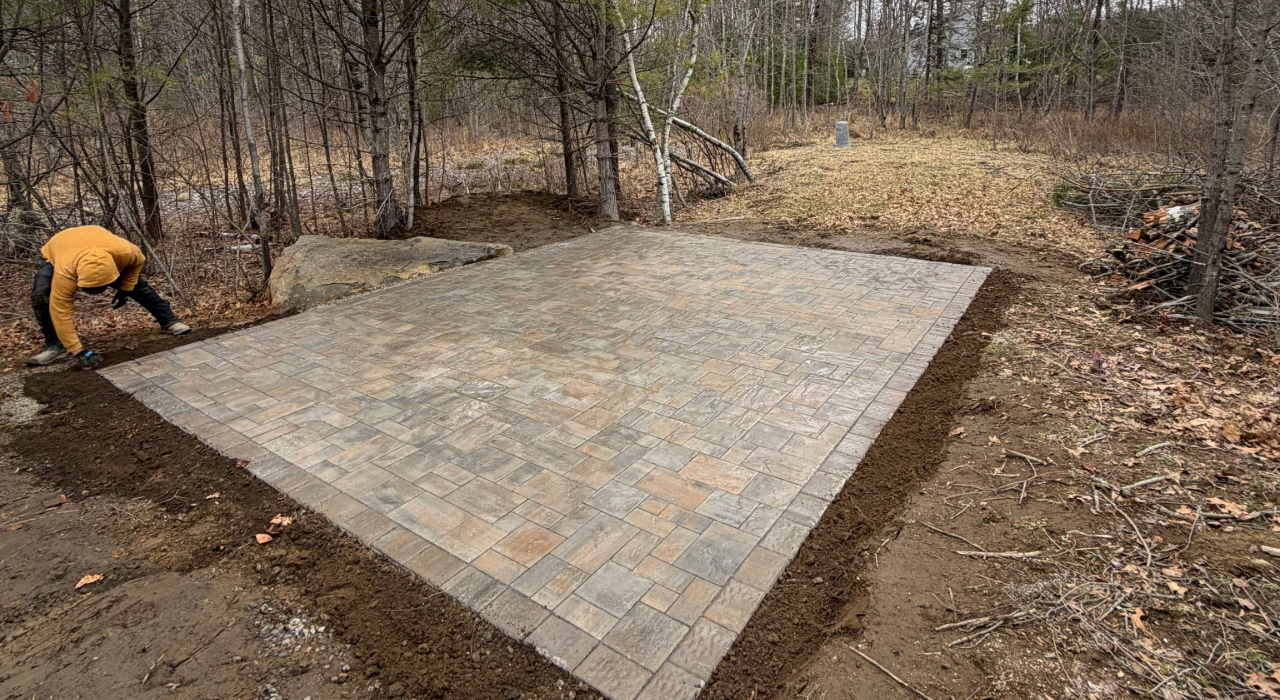
Conversely, the patio installation timeline for interlocking stones is slightly more labor-intensive upfront but offers immediate usability. Once our crew meticulously compacts the aggregate base, lays the individual blocks, and sweeps in the locking polymeric sand, the surface is 100% complete. There is zero waiting or curing period required. You can immediately place your heavy grill, arrange your heavy furniture, and host a dinner party that exact same evening.
This efficiency heavily impacts the paver patio vs concrete patio choice for homeowners who want to enjoy their summer without staring at yellow caution tape for two weeks. When reviewing the paver patio vs concrete patio timeline, the immediate return on investment provided by modular units is a massive convenience factor.
Cost Comparison: paver patio vs concrete patio
Let us look at the hard financial data. The upfront pricing of a paver patio vs concrete patio often dictates the initial direction of a project, but true value lies in the lifecycle cost. You must look at the next ten to twenty years of ownership.
| Feature Category | Standard Poured Slab | Interlocking Stone Units |
|---|---|---|
| Initial Installation Cost | $8 – $15 per sq. ft. | $15 – $35 per sq. ft. |
| Winter Freeze Resistance | Poor (High risk of fracture) | Excellent (Flexible joints) |
| Maintenance & Repair Costs | High (Resurfacing required) | Low (Easy individual replacement) |
| Return on Investment (ROI) | 30% – 40% | 60% – 70% |
As the table demonstrates, the paver patio vs concrete patio financial trajectory crosses paths quickly. The elevated repair bills associated with solid slabs eventually surpass the slightly higher initial investment of premium stones. In our professional experience, the paver patio vs concrete patio argument ends the moment a homeowner faces their first $1,500 bill just to patch a cracked poured slab.
Frequently Asked Questions
Do weeds grow between individual interlocking stones?
Modern installations utilize specialized polymeric sand that hardens like mortar when activated with water. This advanced bonding agent thoroughly seals the joints, preventing the vast majority of weed seeds from taking root and stopping ants from excavating the bedding sand.
Can a solid slab be poured over an existing damaged slab?
While technically possible, it is highly discouraged. Pouring a thin layer over a compromised foundation guarantees the new layer will fracture along the exact same stress lines within a single year.
Do I need to seal an interlocking stone surface?
Sealing is not strictly necessary for structural integrity, but applying a high-quality breathable sealer every 3 to 5 years helps enhance the original color pigments and provides an excellent barrier against accidental grease stains from outdoor grills.
How deep do you excavate for a standard backyard project?
For pedestrian areas, professional crews excavate approximately 7 to 9 inches down. This depth allows for 4 to 6 inches of compacted structural gravel, 1 inch of leveling sand, and the thickness of the stone unit itself.
Which option adds more resale value to a residential property?
Real estate data consistently shows that custom masonry and interlocking stones yield a much higher return on investment than standard poured slabs, as buyers strongly prefer the high-end aesthetic and low maintenance requirements.
Final Decision: paver patio vs concrete patio
Concluding the paver patio vs concrete patio discussion ultimately comes down to acknowledging the realities of the New England climate. Poured slabs fight the freezing ground and eventually lose, resulting in ugly fractures. Interlocking systems work with the natural earth, flexing slightly and remaining intact for decades. Our 10+ years of dedicated regional service clearly show that modular stones offer the best long-term value, safety, and visual appeal for your property.
Choosing exactly where to spend your renovation budget is a major decision. Our experts are here to ensure your paver patio vs concrete patio choice adds genuine equity to your home. Do not risk your backyard on a foundation that will crack next winter. If you are in Nashua, Affordable Patio can help you build it right the first time. Contact us to start your project today.