
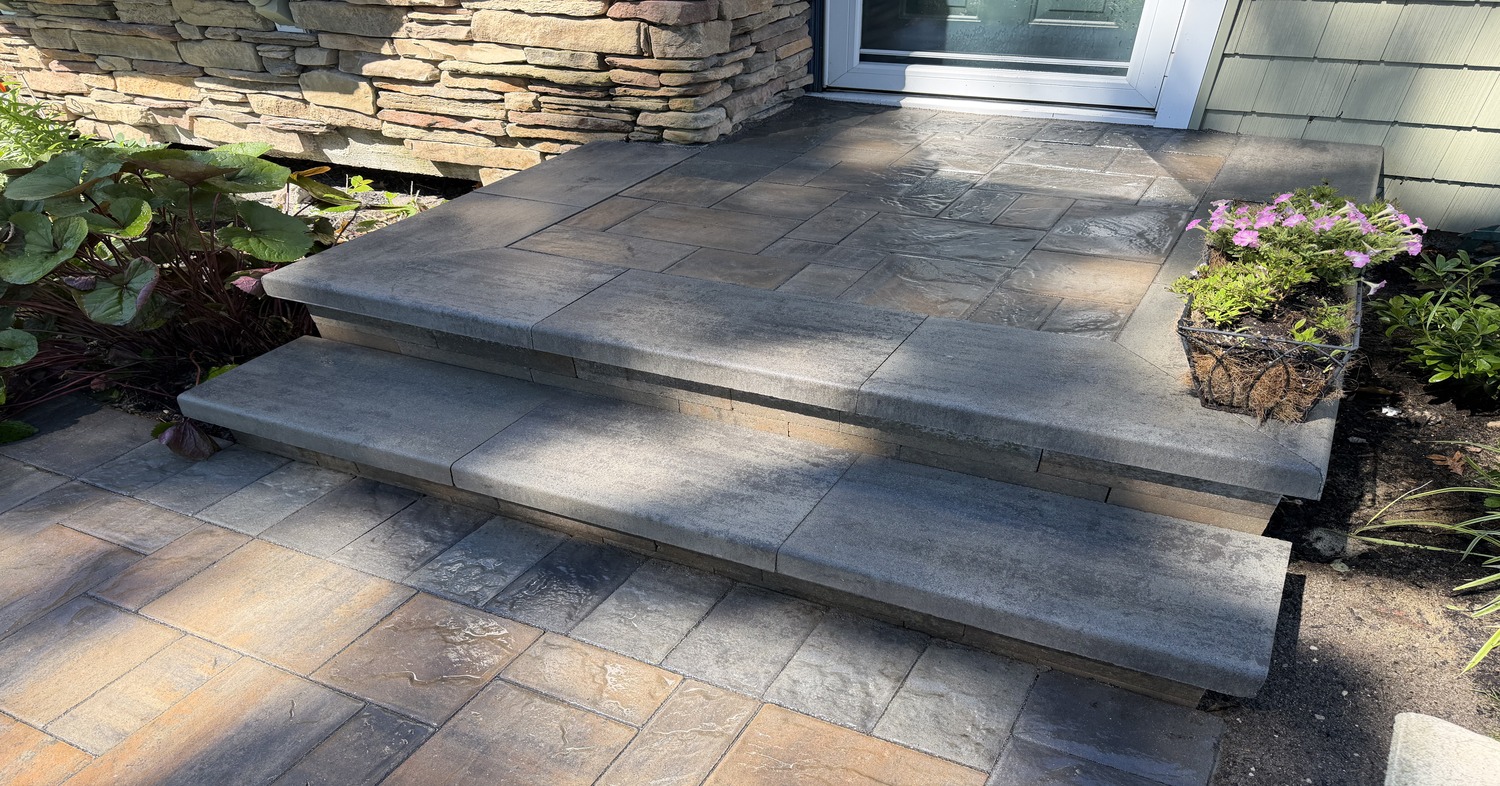
Granite steps vs bluestone steps in Dover is one of the most common decisions homeowners face once they move past pavers and start thinking about entry steps, walkway transitions, or a formal front stoop. Both are premium natural stone options that outperform poured concrete in our freeze-thaw climate, but they behave differently underfoot, age differently, and carry different price tags. After installing both materials across Strafford County for over a decade, we have a clear opinion on which one wins for most Dover properties.
Below we compare durability, cost, aesthetics, and winter performance so you can make a confident decision before requesting a quote.
Table of Contents
- Quick Answer
- Durability in Dover’s Climate
- Granite Steps vs Bluestone Steps in Dover: Cost Comparison
- Aesthetics and Curb Appeal
- Winter Performance
- Side-by-Side Comparison Table
- Maintenance: Granite Steps vs Bluestone Steps in Dover Homes
- Our Recommendation for Dover Homeowners
- What Dover’s Soil and Grade Mean for Your Steps
- Frequently Asked Questions
Quick Answer: When comparing granite steps vs bluestone steps in Dover, granite is the stronger choice for most homeowners because of its superior density, resistance to surface flaking, and lower long-term maintenance. Bluestone offers a softer, more traditional New England look at a slightly lower price, but granite steps typically outlast bluestone by 15 to 20 years in our freeze-thaw climate.
Durability in Dover’s Climate
The granite steps vs bluestone steps in Dover debate really starts with density. Granite is an igneous stone with extremely low water absorption, which means it resists the freeze-thaw cracking that damages softer stone over repeated winters. Bluestone is a sedimentary stone, and while still durable, it has slightly higher porosity that can lead to surface flaking after 15 to 25 years of harsh winters.
- Granite: water absorption under 0.4 percent, extremely resistant to freeze-thaw spalling
- Bluestone: water absorption around 1 to 4 percent, good but more prone to surface flaking over time
- Granite steps commonly last 50+ years with minimal wear
- Bluestone steps typically last 25 to 35 years before showing surface degradation
For a stone steps comparison Dover homeowners can trust long term, granite’s density advantage is the single biggest factor in our recommendation.
Granite Steps vs Bluestone Steps in Dover: Cost Comparison
Price is often the first question homeowners ask when weighing granite steps vs bluestone steps in Dover projects. Bluestone typically costs less upfront, while granite carries a premium that reflects its density and cutting difficulty.
- Bluestone steps: $65-$95 per linear foot installed
- Granite steps: $85-$140 per linear foot installed
- Cost over 40 years: granite often works out cheaper per year of service since it rarely needs replacement
When homeowners ask us what is the best steps material Dover NH properties should use for a long-term investment, we walk them through this lifetime cost math rather than just the sticker price.
Aesthetics and Curb Appeal
Both materials look excellent on a New England home, but they create a different feel. Bluestone has a blue-gray, slightly textured surface that reads as classic and traditional, which pairs beautifully with older colonial and cape-style homes common throughout Dover. Granite offers a more uniform, polished, or thermal finish that suits both traditional and modern facades.
In the granite steps vs bluestone steps in Dover aesthetics conversation, there is no wrong answer here. It comes down to whether you want the rustic, weathered character of bluestone or the clean, substantial presence of granite.
Winter Performance
New Hampshire winters put steps through more abuse than almost any other part of a property. Ice, snow shoveling, and repeated freeze-thaw cycles all factor into how granite steps vs bluestone steps in Dover perform once the temperature drops.
- Granite’s density resists chipping from snow shovels and ice chippers
- Bluestone can develop small surface pits over many winters of shoveling
- Both materials benefit from a textured or thermal finish to improve slip resistance on ice
- Proper drainage below the steps prevents ice buildup at the base regardless of material
Not sure which material fits your entryway? Request a free consultation and we will bring samples of both to your property.
Side-by-Side Comparison Table
| Factor | Granite | Bluestone |
|---|---|---|
| Cost per linear ft | $85-$140 | $65-$95 |
| Water Absorption | Under 0.4% | 1-4% |
| Expected Lifespan | 50+ years | 25-35 years |
| Look | Uniform, polished or thermal | Rustic, blue-gray, textured |
| Winter Durability | Excellent | Good |
Maintenance: Granite Steps vs Bluestone Steps in Dover Homes
Neither granite nor bluestone requires much upkeep compared to poured concrete or wood steps, but there are differences worth knowing before you decide between granite steps vs bluestone steps in Dover properties.
- Granite rarely needs sealing and resists staining from de-icing salt
- Bluestone benefits from an occasional sealer application to reduce staining and moss growth in shaded entries
- Both materials should be swept clear of standing snow rather than left to melt and refreeze on the tread surface
According to the National Association of Home Builders, durable, low-maintenance exterior materials remain a top priority for homeowners investing in long-term curb appeal, which lines up with what we see when Dover clients choose granite over softer alternatives.
Our Recommendation for Dover Homeowners
After weighing granite steps vs bluestone steps in Dover across durability, cost per year of service, and winter performance, granite is our recommendation for most homeowners in this climate. The higher upfront cost is offset by a lifespan that can outlast two or three bluestone replacements, and the resistance to flaking means your entry steps will look sharp decades from now.
If budget is the deciding factor and you love the traditional look, bluestone remains a solid choice, especially for lower-traffic secondary entries. But for a primary entrance that takes the brunt of New Hampshire winters, granite steps are the material our granite steps installer Dover teams recommend most often.
Ready to move forward with granite? View our Dover granite steps installation page and request your free quote today.
What Dover’s Soil and Grade Mean for Your Steps
Beyond the granite steps vs bluestone steps in Dover material debate itself, local soil conditions play a real role in how either option performs over time. Much of Strafford County sits on clay-heavy soil that holds water longer after spring thaw, which means the base beneath your steps matters just as much as the stone on top.
- A crushed stone base at least 8 inches deep prevents both granite and bluestone steps from shifting as the ground heaves
- Steps installed without a proper base are the leading cause of the settling and gapping we get called to repair
- Grade transitions from a driveway or walkway should be planned before choosing between granite steps vs bluestone steps in Dover properties, since tread depth requirements differ slightly by material thickness
For a full stone steps comparison Dover homeowners can rely on, we always start with a site evaluation before recommending a material, since soil and drainage conditions vary block by block across town.
Homeowners researching what is the best steps material Dover NH properties need should also compare finished examples in person. Our granite steps installer page includes recent project photos, and our related guide on granite steps installation in Nashua covers similar material questions for a nearby New Hampshire market.
If you would rather browse the full range of options first, our general steps installation page covers granite, bluestone, and poured concrete side by side.
Frequently Asked Questions
Which lasts longer, granite steps or bluestone steps?
Granite steps typically last 50 or more years, while bluestone steps last 25 to 35 years before showing surface wear, making granite the longer-lasting side of the granite steps vs bluestone steps in Dover comparison.
Is bluestone or granite better for icy New England winters?
Granite performs slightly better against chipping and surface pitting from ice removal tools, though both materials handle winter conditions well with proper drainage and a textured finish.
How much more does granite cost compared to bluestone?
Granite typically costs $20 to $45 more per linear foot than bluestone in the granite steps vs bluestone steps in Dover market, though the gap narrows once you factor in granite’s longer lifespan.
Can I mix granite steps with a bluestone patio?
Yes, many Dover homeowners pair granite entry steps with a bluestone patio or walkway for a cohesive but budget-conscious design, and a granite steps installer Dover crews recommend can advise on matching tones between the two materials.
Do I need a permit to replace steps in Dover, NH?
Most step replacement projects that do not change the footprint or grade do not require a permit. This is one of the last details we confirm before finalizing any granite steps vs bluestone steps in Dover proposal.
Conclusion
With 15+ years of experience and more than 1,000 completed masonry projects across New Hampshire, we have installed enough of both materials to say with confidence that granite steps vs bluestone steps in Dover is not a close call for most homeowners planning a primary entrance. Granite’s density, longevity, and low maintenance make it the stronger long-term investment, even at a higher upfront cost. Get your free quote today and let our team help you choose the right stone for your Dover home.