
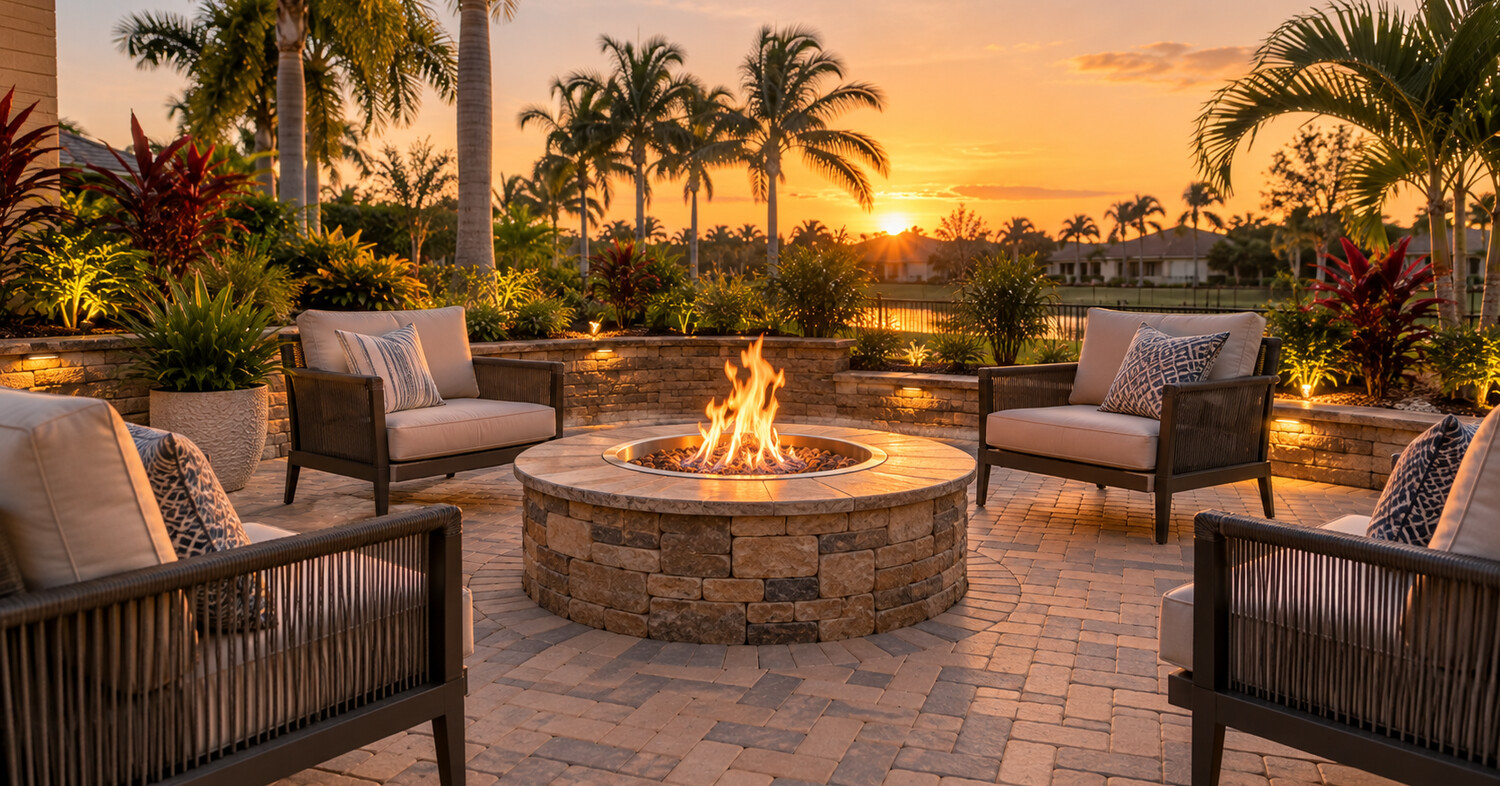
A backyard fire pit is one of the most popular outdoor living features in the Tampa Bay area. It creates a natural gathering spot, extends the usable hours of your patio, and adds a design element that ties the whole backyard together. But before you light the first flame, you need to understand the fire pit rules in Florida that govern where you can place a fire pit, what fuel you can burn, and how far the pit must sit from structures, property lines, and trees.
This guide covers the fire pit rules in Florida that apply to residential properties in Hillsborough County, Manatee County, and the surrounding Tampa Bay communities. Whether you are planning a permanent gas fire pit built into a paver patio or a portable wood-burning pit for occasional use, these code requirements and clearance standards will help you stay compliant and keep your backyard safe.
The fire pit rules in Florida require a minimum clearance of 10 feet from any structure, property line, or combustible material for recreational fire pits. The fire must be contained in a non-combustible enclosure, cannot exceed 3 feet in diameter, and must have a means of extinguishment nearby. Gas fire pits have additional code requirements for fuel lines, shutoff valves, and ventilation. Local burn ordinances may impose seasonal restrictions or total bans during drought conditions.
Table of Contents
- Florida Burn Ordinance. What the State Allows and Restricts
- Gas Fire Pit Clearance. Distances That Keep You Code-Compliant
- Fire Pit Under a Lanai. Can You Do It Safely?
- Backyard Fire Safety Florida. Beyond the Minimum Code
- Wood-Burning Fire Pit Rules in Florida Residential Areas
- Hillsborough County Fire Pit Permits and Local Amendments
- Building a Fire Pit on a Paver Patio. Base and Material Requirements
- Frequently Asked Questions
- Conclusion
Florida Burn Ordinance. What the State Allows and Restricts
The Florida burn ordinance is managed at the state level by the Florida Forest Service, which oversees open burning regulations across the state. For residential properties, the key distinction is between an open burn, which requires a permit from the Florida Forest Service, and a recreational fire, which is generally exempt from state-level permitting.
A recreational fire under the Florida burn ordinance is a fire that is set for cooking, warmth, or ceremonial purposes, is contained in a non-combustible fire pit or ring, does not exceed 3 feet in diameter and 2 feet in height, and is attended at all times. If your fire pit meets all four of these criteria, you do not need a state burning permit. However, the fire pit rules in Florida still require you to comply with local county and municipal regulations, which are often stricter.
The Florida burn ordinance also includes drought-related restrictions. During periods of high wildfire risk, the Florida Forest Service can issue burn bans that apply to all outdoor fires, including recreational fire pits. These bans are posted on the Florida Department of Agriculture and Consumer Services website and are enforceable by local fire departments. Violating a burn ban can result in fines and civil liability if the fire spreads.
Understanding the Florida burn ordinance is the first step in planning a fire pit project. The state sets the floor for fire pit rules in Florida, but your county, municipality, and HOA can all add restrictions on top of what the state allows.
Gas Fire Pit Clearance. Distances That Keep You Code-Compliant
Gas fire pit clearance requirements are more specific than those for wood-burning pits because gas fire pits involve a permanent fuel line, a burner assembly, and an ignition system that must all comply with the fuel gas section of the Florida Building Code. The fire pit rules in Florida for gas installations reference the International Fuel Gas Code as adopted with Florida amendments.
Under the fire pit rules in Florida, the standard gas fire pit clearance from a structure is 10 feet, measured from the nearest edge of the fire pit to the closest point of any building, fence, pergola, or other combustible structure. This 10-foot distance applies to the main house, the garage, sheds, wooden fences, and any overhead structure including a pergola or trellis.
The gas fire pit clearance to a property line is also 10 feet in most Hillsborough County jurisdictions. Some HOA covenants increase this distance to 15 or 20 feet, so you must check your community’s architectural guidelines before finalizing the fire pit location. The fire pit rules in Florida do not override more restrictive HOA requirements.
Vertical gas fire pit clearance is equally important. If there is any overhead structure above the fire pit, including tree branches, awnings, or patio umbrellas, the manufacturer’s listed clearance-to-combustibles rating must be met. For most gas fire pit tables, the minimum vertical clearance is 80 inches from the burner surface to the nearest overhead combustible material. A gas fire pit with a higher BTU output may require more vertical clearance per the manufacturer’s installation manual.
Fire Pit Under a Lanai. Can You Do It Safely?
The question of whether you can place a fire pit under a lanai comes up frequently in the Tampa Bay area, where lanais are a standard feature of most homes. The short answer depends on the type of fire pit and the construction of the lanai roof.
A wood-burning fire pit under a lanai is almost never permitted in Hillsborough County or Manatee County. Wood fires produce sparks, floating embers, and heavy smoke that cannot be safely contained under a covered, screened structure. The fire pit rules in Florida classify a wood fire under a covered structure as an open burn rather than a recreational fire, which brings it under the state permitting requirements and typically results in a denial for residential properties.
A gas fire pit under a lanai is possible under certain conditions. The lanai must have adequate ventilation to prevent the accumulation of combustion gases. The fire pit must meet all manufacturer-specified gas fire pit clearance requirements to the roof, walls, and screen panels. The roof directly above the fire pit should be non-combustible or lined with a non-combustible heat shield. A licensed gas fitter must install the fuel line with an accessible shutoff valve.
Even when a gas fire pit under a lanai is technically compliant with the fire pit rules in Florida, many contractors and fire marshals recommend against it. The confined space of a screened enclosure concentrates heat and can damage the screen mesh, the roof finish, and the ceiling fan if one is installed above the fire pit.
A better approach is to position the fire pit on the open patio just outside the lanai where it benefits from natural air circulation and meets all clearance requirements easily. Visit our fire pit page to see fire pit designs we have built in the Tampa Bay area.
Backyard Fire Safety Florida. Beyond the Minimum Code
Backyard fire safety Florida standards go beyond the minimum distances in the building code. The fire pit rules in Florida set the legal minimums, but experienced contractors and fire safety professionals recommend additional precautions that protect your property and your guests.
Keep a garden hose connected and within reach of the fire pit at all times. The fire pit rules in Florida require a means of extinguishment to be available, and a connected hose is the most effective option. A fire extinguisher rated for Class A fires (wood, paper, cloth) is a good secondary option for wood-burning pits, and a Class B extinguisher should be available for gas fire pit installations.
Never leave a fire pit unattended. The Florida burn ordinance explicitly requires that recreational fires be attended by a competent person at all times. Walking inside to get a drink or answering the phone counts as leaving the fire unattended. Backyard fire safety Florida guidelines also recommend designating one person as the fire tender for each gathering to ensure the fire is monitored continuously.
Clear all combustible materials from a 10-foot radius around the fire pit before lighting. This includes patio furniture cushions, outdoor rugs, mulch, dry leaves, paper plates, and hanging decorations. In Florida, landscape mulch is a particular concern because it dries out quickly and can ignite from a single ember. Replacing mulch within the clearance zone with gravel, decorative stone, or pavers eliminates this risk entirely.
Wood-Burning Fire Pit Rules in Florida Residential Areas
Wood-burning fire pits face additional fire pit rules in Florida compared to gas models. The fuel itself, firewood, produces sparks, floating embers, and unpredictable flames that require extra precautions in a residential setting.
Florida law requires that a wood-burning recreational fire be contained in a non-combustible enclosure with sides at least 12 inches high. The enclosure can be a metal fire ring, a masonry fire pit, or a concrete block structure. Digging a hole in the ground and burning in it does not qualify as a contained fire under the fire pit rules in Florida and can result in a code violation from the local fire department.
The fire pit rules in Florida do not require a spark screen for a recreational fire pit in most jurisdictions, but backyard fire safety Florida guidelines strongly recommend one. A spark screen is a mesh cover that sits on top of the fire pit and catches floating embers before they can land on the lawn, the patio furniture, or the neighbor’s property. For wood-burning fire pits near a paver patio, a spark screen also prevents hot embers from landing on the paver surface and leaving burn marks.
You cannot burn construction debris, treated lumber, plastic, or household trash in a residential fire pit. The fire pit rules in Florida limit fuel for recreational fires to clean, untreated firewood. Burning prohibited materials releases toxic fumes, violates the Florida burn ordinance, and can result in fines from the county code enforcement office.
Hillsborough County Fire Pit Permits and Local Amendments
Hillsborough County enforces its own local amendments on top of the state fire pit rules in Florida. A permanent fire pit built into a paver patio or a freestanding masonry structure typically requires a building permit. The permit application must include a site plan showing the fire pit location, dimensions, and distances to the property lines, the house, and any other structures on the lot.
Portable fire pits that sit on the ground and are not connected to a gas line do not usually require a permit in Hillsborough County. However, the Hillsborough County Development Services office recommends checking with your local fire district before using any fire pit, portable or permanent, to confirm that no local burn restrictions are in effect.
Gas fire pit installations in Hillsborough County require both a building permit and a plumbing or gas permit for the fuel line. The gas line must be installed by a licensed contractor, and the installation must pass a pressure test before the fire pit can be used. The fire pit rules in Florida for gas installations also require an accessible emergency shutoff valve located at least 6 feet from the fire pit.
If your property is in an HOA-governed community, the HOA architectural review committee must approve the fire pit design before you apply for a county permit. HOA restrictions can limit the size, fuel type, location, and hours of operation for fire pits. Some HOAs in the Tampa Bay area prohibit wood-burning fire pits entirely and only allow gas models.
Building a Fire Pit on a Paver Patio. Base and Material Requirements
A fire pit built on a paver patio needs a non-combustible base that can handle the heat transfer from the fire above. The fire pit rules in Florida require that the fire pit enclosure and the surface beneath it be made of non-combustible materials. Concrete pavers meet this requirement because they are rated for high temperatures and will not crack or ignite under normal fire pit use.
The paver base beneath the fire pit should be the same compacted crushed concrete base used for the rest of the patio, typically 2 to 4 inches deep. The fire pit rules in Florida do not require additional fire-rated underlayment for a gas fire pit sitting on concrete pavers. For a wood-burning fire pit, some contractors add a layer of fire brick or heat-resistant cement board beneath the pit as an extra precaution against heat transfer to the base material.
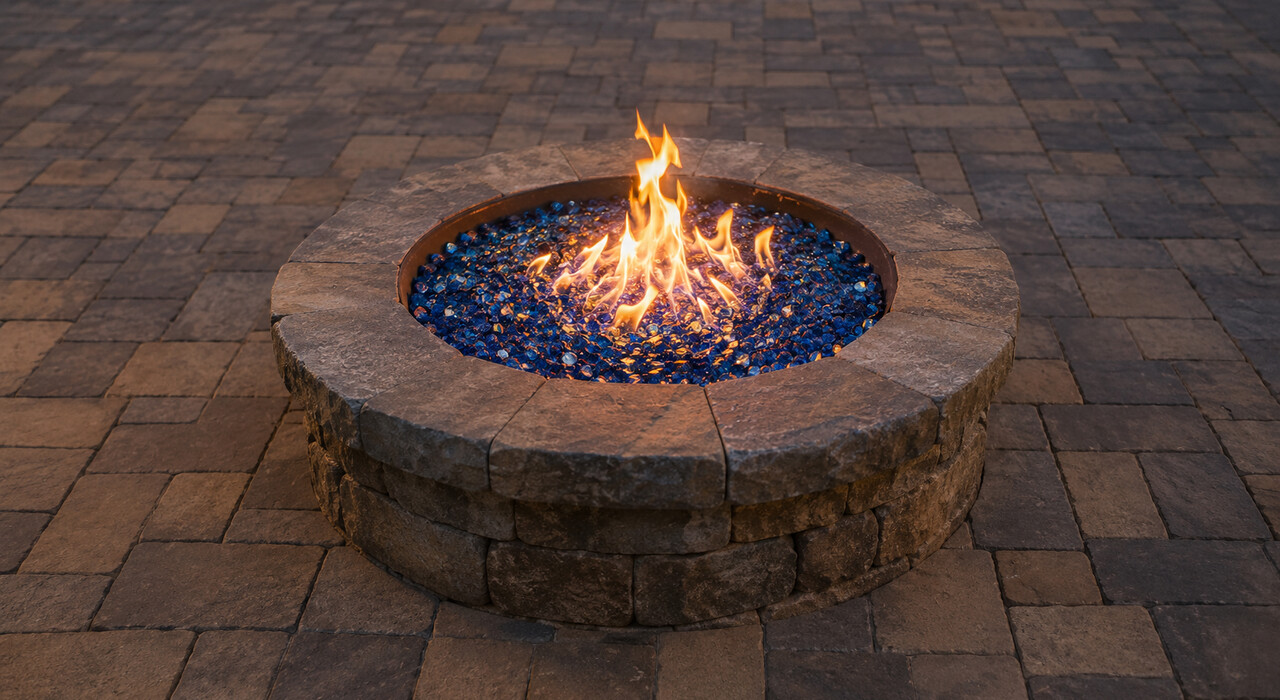
The fire pit enclosure itself can be built from concrete block, natural stone, or prefabricated fire pit kits made from heat-resistant concrete. Belgard offers fire pit kits that integrate with their paver systems, creating a finished look that matches the surrounding patio. Natural flagstone is another option for homeowners who want a rustic, organic appearance that blends with the Florida landscape.
Affordable Patio builds custom fire pit installations on paver patios throughout Hillsborough County and Manatee County. The fire pit, the paver patio, and the surrounding hardscape are designed as a single project so that drainage, gas line routing, and clearances are planned from the start. You can get a free estimate for your fire pit and patio project on our build and price page or learn about our full process on the step-by-step page.
Frequently Asked Questions
Do I need a permit for a fire pit in Hillsborough County?
A permanent fire pit built into a patio or connected to a gas line requires a building permit in Hillsborough County. Portable fire pits that sit on the ground and burn wood do not typically require a permit, but you must still follow all fire pit rules in Florida for recreational fires, including the 10-foot clearance from structures and the requirement to have a means of extinguishment nearby.
Can I have a fire pit if I live in an HOA community?
That depends on your HOA’s architectural guidelines. Some HOAs in the Tampa Bay area allow gas fire pits but prohibit wood-burning pits. Others restrict fire pit placement to specific areas of the yard or require prior approval from the architectural review committee. Check your HOA covenants before planning a fire pit project to avoid a denial after construction has started.
How far does a fire pit need to be from my house in Florida?
The standard gas fire pit clearance and wood fire pit clearance from a structure is 10 feet, measured from the nearest edge of the fire pit to the closest point of the house or any other combustible structure. Some manufacturers specify larger clearances for high-output gas fire pits, and those manufacturer ratings take priority under the fire pit rules in Florida.
Is it legal to burn wood in a fire pit in Florida?
Yes, as long as you follow the fire pit rules in Florida for recreational fires. The fire must be contained in a non-combustible enclosure, cannot exceed 3 feet in diameter, must burn only clean untreated firewood, and must be attended at all times. During burn bans issued by the Florida Forest Service, all outdoor fires are prohibited regardless of fuel type.
Can I put a gas fire pit under my screened lanai?
A gas fire pit under a lanai is technically possible if the installation meets all gas fire pit clearance requirements, the lanai has adequate ventilation, and the roof above the fire pit is non-combustible or protected with a heat shield. However, most fire safety professionals recommend placing the fire pit on an open patio outside the lanai for better air circulation and easier compliance with the fire pit rules in Florida.
What type of fire pit is best for a paver patio in Florida?
A gas fire pit is the most popular choice for paver patios in the Tampa Bay area. Gas fire pits produce no sparks or embers that could damage the paver surface, they turn on and off instantly, and they do not produce smoke that stains or discolors surrounding materials. A built-in gas fire pit with a matching paver enclosure creates a seamless look with the patio. Contact us at (813) 777-5665 or visit our contact page to discuss your fire pit project.
Conclusion
The fire pit rules in Florida cover everything from the state-level Florida burn ordinance to local Hillsborough County permits and HOA restrictions. Gas fire pit clearance requirements, backyard fire safety Florida guidelines, and the special considerations for placing a fire pit under a lanai all factor into where and how you build your fire feature. Following the fire pit rules in Florida from the planning stage keeps you compliant and protects your property.
Affordable Patio designs and builds custom fire pit installations on paver patios across Hillsborough County, Manatee County, and the Tampa Bay area. Call us at (813) 777-5665 or visit our contact page to get a free estimate within 24 hours. With over 15 years of experience and more than 2,000 completed projects, we handle the design, permitting, and construction so you can enjoy your fire pit without worrying about the codes.