
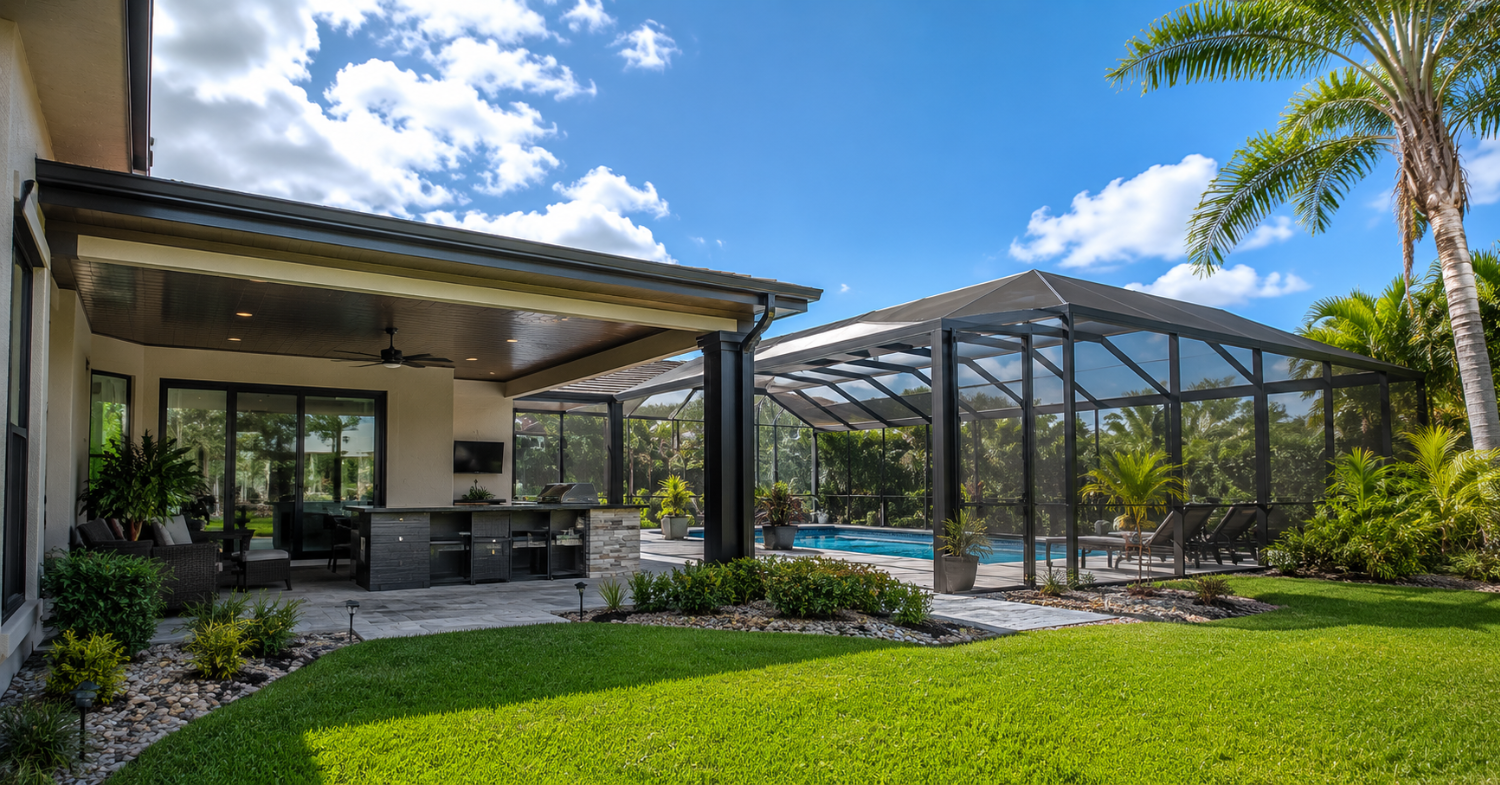
The covered lanai vs screened lanai question is one of the most common decisions Florida homeowners face when improving their outdoor space. Both options extend your living area, add value to your property, and give you a dedicated space to enjoy Florida’s outdoor lifestyle, but they serve different needs in different ways. In Tampa Bay and across Hillsborough and Manatee counties, the choice between a covered lanai and a screened lanai shapes how you use your backyard for years to come.
Understanding the differences in cost, comfort, permits, and long-term maintenance is essential before committing to either option. The covered lanai vs screened lanai comparison is not simply about aesthetics. It is a functional decision driven by your climate tolerance, your budget, and whether you plan to use the space primarily in the evening, during the summer rainy season, or year-round. This guide covers every factor so you can make the right call for your specific home and lifestyle.
What Each Option Actually Means
Before comparing the covered lanai vs screened lanai in terms of cost or comfort, it helps to be precise about what each structure actually is, because the terminology is used loosely across Florida.
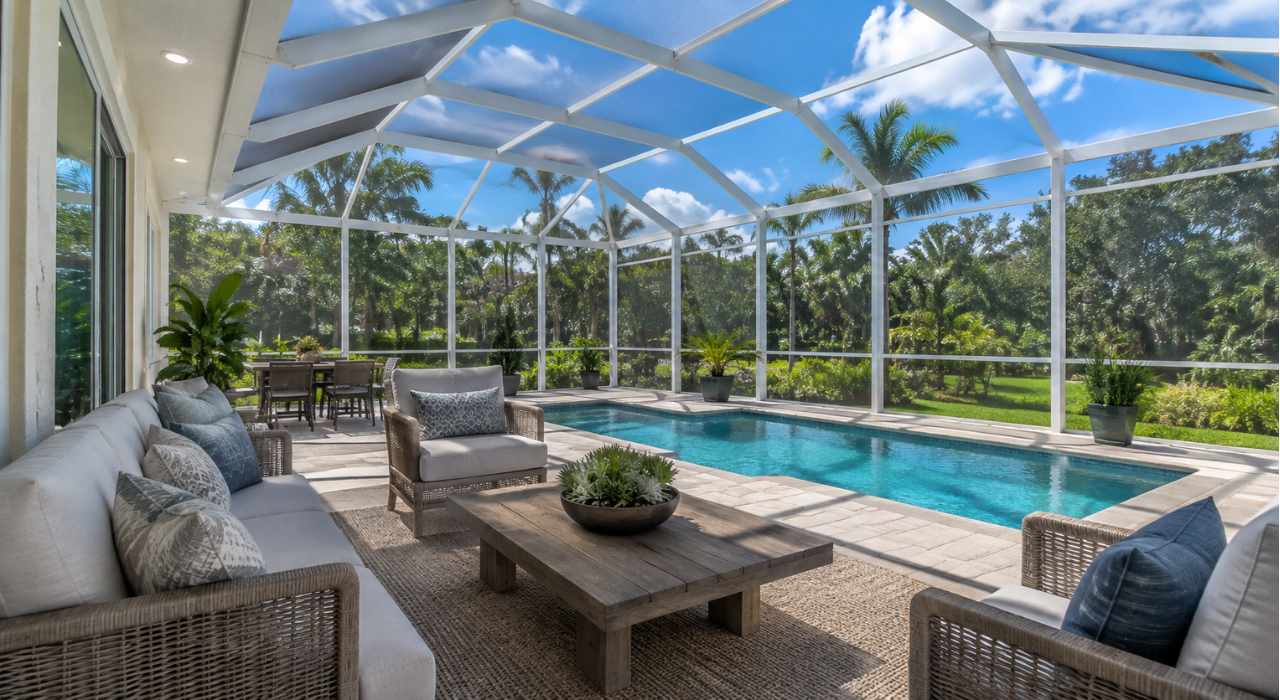
A screened lanai is an aluminum-framed enclosure attached to the rear of the home and covered with fiberglass or polyester mesh screen panels. The roof of a screened enclosure is typically a lightweight screen or a thin aluminum panel system that allows light through while blocking insects and providing minimal rain protection from direct downward rain. The defining characteristic of the screened lanai is airflow: it is an open-air structure designed to let breezes in while keeping mosquitoes, no-see-ums, and other Florida insects out.
A covered lanai is a structure with a solid, opaque roof attached to the home. Common covered lanai roof options include aluminum pan roofing (standard), insulated roof panels (higher performance), and tile or shingle extensions of the home’s existing roofline. A covered lanai blocks direct sunlight, stops rain completely, and creates a space that can be used comfortably even during Florida’s afternoon downpours. Some covered lanai additions include screen walls on the perimeter, making them a hybrid of both structures. According to the Florida Building Code, covered porch and lanai additions are classified as habitable or non-habitable accessory structures depending on their construction and HVAC connection.
Cost Comparison: Covered vs Screened
Cost is one of the clearest separators in the covered lanai vs screened lanai decision. Both structures require permits, a paver or concrete slab, and aluminum framing, but the roofing system is where costs diverge sharply.
In the Hillsborough and Manatee County market, a screened enclosure on an existing patio slab (with screen only, no new slab) typically runs $6,000 to $12,000 for a standard 12 by 20-foot enclosure. When a new paver patio base is required, the total rises to $10,000 to $18,000 depending on patio size and paver material. Aluminum frame quality, mesh type (standard vs no-see-um vs pet screen), and door configuration all affect final cost.
A covered lanai addition on the same footprint runs substantially higher. A basic aluminum pan-roofed covered lanai starts around $15,000 to $20,000. An insulated roof panel system that provides better temperature performance and a more finished ceiling appearance runs $20,000 to $35,000 for a mid-size addition. Tile or shingle extensions that match the home roofline are the most expensive lanai roof options, ranging from $25,000 to $45,000 or more depending on roofline complexity and whether structural permits require engineered drawings.
Get a Free Estimate on Your Lanai Project in Tampa Bay
Affordable Patio builds both screened and covered lanai additions across Hillsborough and Manatee counties. Call (813) 777-5665 or request your free estimate online to get started.
Comfort and Climate in Florida
The covered lanai vs screened lanai comfort difference becomes most apparent during Florida’s summer rainy season, which runs from June through September. Tampa Bay averages over 50 inches of rain per year, with most falling in intense afternoon and evening storms. A screened lanai provides essentially no rain protection: even moderate horizontal wind drives rain through the mesh and onto the patio surface and furniture. A covered lanai keeps the entire space dry regardless of rain intensity or wind direction.
In terms of temperature, the covered lanai with an insulated roof panel performs best. Standard aluminum pan roofing absorbs heat and can raise patio temperatures significantly on sunny afternoons. An insulated lanai roof with a dead-air cavity creates meaningful shading and temperature reduction compared to a screen-only structure. The screened lanai relies on airflow for cooling, which works well during Florida’s drier winter months but offers less comfort during summer afternoons when ambient temperatures exceed 90 degrees.
For evening use, the screened lanai has a clear advantage in ventilation and often feels more pleasant on mild Florida evenings when a solid roof would trap heat. Many Tampa Bay homeowners use a screened lanai as their primary outdoor living area from October through May and supplement with ceiling fans for summer comfort.
Permits and HOA in Florida
Both structures require building permits in Hillsborough and Manatee counties. The screened enclosure permit process is generally more straightforward: most municipalities have standardized screened enclosure permit packages that specify aluminum frame gauge, footer depth, and mesh specifications. Permit fees and timelines are typically shorter than for a covered addition.
The covered lanai triggers a more complex permitting process because it is considered a structural addition to the home. It requires engineered drawings in most cases, a separate electrical permit if lighting or fans are included, and inspection milestones during construction. HOA approvals, where applicable, also tend to require more detail for a covered addition than for a screened enclosure. The covered lanai vs screened lanai permit comparison is one reason some homeowners choose the screened option even when budget would allow a covered structure.
Side-by-Side Comparison Table
| Feature | Screened Lanai | Covered Lanai |
|---|---|---|
| Rain protection | Minimal (mesh only) | Complete (solid roof) |
| Sun/UV blocking | Partial (solar screen optional) | Full (all roof types) |
| Airflow | Excellent | Limited (ceiling fans recommended) |
| Installed cost (typical) | $6,000 to $18,000 | $15,000 to $45,000+ |
| Permit complexity | Standard | Higher (engineered drawings) |
| Insect control | Excellent (no-see-um mesh available) | Requires perimeter screening |
| Year-round usability (FL) | Good (Oct-May best) | Excellent (all seasons) |
| ROI / resale value | High | Very high |
Which One Is Right for Your Florida Home?
The covered lanai vs screened lanai decision typically comes down to three questions. First, how often do you want to use the space during Florida’s summer rainy season? If you entertain frequently from June through September, a covered lanai is the functional choice. Second, what is your budget? If $10,000 to $15,000 is the realistic range, a high-quality screened enclosure is a much better investment than a lower-quality covered structure. Third, what does your home’s current roofline and backyard orientation allow? Not every home can accommodate a covered lanai addition without architectural complications.
Many homeowners across Tampa, Brandon, Riverview, Ruskin, Apollo Beach, Bradenton, and Lakewood Ranch choose the covered lanai when they are building a complete outdoor living area that includes a summer kitchen, dining space, and TV wall, because these amenities require rain protection to function properly. The screened lanai is the better choice when the primary goal is a comfortable, insect-free space for relaxation and lighter entertaining in Florida’s mild months.
Not Sure Which Option Fits Your Home?
Affordable Patio’s Florida team evaluates your backyard, roofline, and HOA requirements before recommending either structure. Call (813) 777-5665, or explore our lanai screen enclosure services to see what’s possible for your property.
How Affordable Patio Handles Both
Affordable Patio’s Florida team has built both covered and screened lanai additions across Hillsborough and Manatee counties, which means we can give you a straight comparison specific to your home rather than a sales pitch for one product over the other. Our covered lanai vs screened lanai evaluation starts with a site visit: we measure the existing slab or proposed footprint, check the home’s roofline for structural compatibility, and review any HOA rules or municipality-specific permit requirements.
Every Affordable Patio lanai project, whether covered or screened, includes our 3-year warranty on materials and workmanship. We use commercial-grade aluminum framing, fiberglass mesh rated for Florida’s UV and humidity conditions, and paver base systems that handle Hillsborough and Manatee County’s drainage and soil conditions. Our lanai screen enclosure page includes examples of completed projects across the Tampa Bay service area.
If you are still weighing the covered lanai vs screened lanai options and want a concrete cost comparison for your specific backyard, the fastest path is a free on-site estimate. We can have a proposal in your inbox within 24 hours of the site visit.
Frequently Asked Questions
Is a covered lanai or screened lanai better for Florida summers?
For summer use in Florida, a covered lanai is the more functional choice. Florida’s summer rainy season runs June through September, with frequent afternoon and evening thunderstorms that make a screened lanai uncomfortable or unusable. A covered lanai with a solid roof keeps the space dry regardless of storm intensity. That said, the screened lanai is perfectly usable on non-rainy summer evenings when airflow is the priority. The covered lanai vs screened lanai summer comparison consistently favors the covered option for families who want uninterrupted outdoor use.
Can I convert a screened lanai into a covered lanai later?
In many cases, yes. The existing aluminum frame footings and concrete slab from a screened enclosure can sometimes be adapted for a covered roof addition, though the frame gauge and footer specifications for a covered lanai are typically heavier than for a screen-only structure. A structural assessment is required before converting. Affordable Patio evaluates existing screened enclosures across Hillsborough and Manatee counties and advises on whether conversion is cost-effective or whether a full replacement makes more sense.
Do both structures require permits in Hillsborough County?
Yes. Both screened enclosures and covered lanai additions require building permits in Hillsborough County and most Manatee County municipalities. Screened enclosures typically use a standardized permit package and process more quickly. Covered lanai additions require engineered structural drawings in most cases and go through a longer review cycle. HOA approval, where applicable, is separate from the municipal permit process and may require architectural review for covered structures.
What is the resale value impact of a covered lanai vs screened lanai?
Both structures add measurable resale value in the Florida market. A screened enclosure typically returns 50 to 75 percent of its cost in resale value in the Tampa Bay area. A covered lanai, particularly one with an insulated roof and high-quality finishes, can return 60 to 80 percent of cost and often accelerates a home’s time on market. Buyers in the Hillsborough and Manatee county markets consistently rank outdoor living structures highly in home searches, making either option a sound investment.
How long do screened lanais and covered lanais last in Florida’s climate?
A well-installed screened enclosure using commercial-grade aluminum frame and quality fiberglass mesh lasts 15 to 25 years in Florida’s climate before structural replacement is needed. Screen mesh typically requires replacement every 7 to 12 years depending on sun exposure, pet use, and storm activity. A covered lanai with an aluminum or insulated panel roof lasts 25 to 40 years with minimal maintenance. The covered structure generally has the longer service life because the roof panels are more resistant to UV degradation than fiberglass screen mesh.
Conclusion: Making the Right Lanai Choice for Florida
The covered lanai vs screened lanai decision is ultimately about how you live in Florida. If you want a space that works through rainstorms, hosts outdoor kitchens and TVs, and provides a true extension of your home’s interior, the covered lanai is the right investment. If you want an insect-free, open-air space that maximizes Florida’s natural breeze and light during the state’s long comfortable season, the screened lanai delivers excellent value at a lower cost.
Either way, the quality of the installation matters as much as the structure type. A poorly framed covered lanai or a loosely tensioned screen enclosure will underperform regardless of its category. Affordable Patio’s Florida team builds both to the same high standard, using materials rated for Hillsborough and Manatee county wind and humidity conditions.
Call (813) 777-5665, visit our contact page, or explore our Florida lanai work to schedule your free site evaluation. We will give you a clear covered lanai vs screened lanai recommendation specific to your home, your HOA, and your outdoor living goals.
Schedule Your Free Lanai Evaluation Across Tampa Bay
Affordable Patio serves Hillsborough and Manatee counties including Tampa, Brandon, Riverview, Ruskin, Apollo Beach, Bradenton, Lakewood Ranch, and Parrish. Call (813) 777-5665 or contact us online today.