
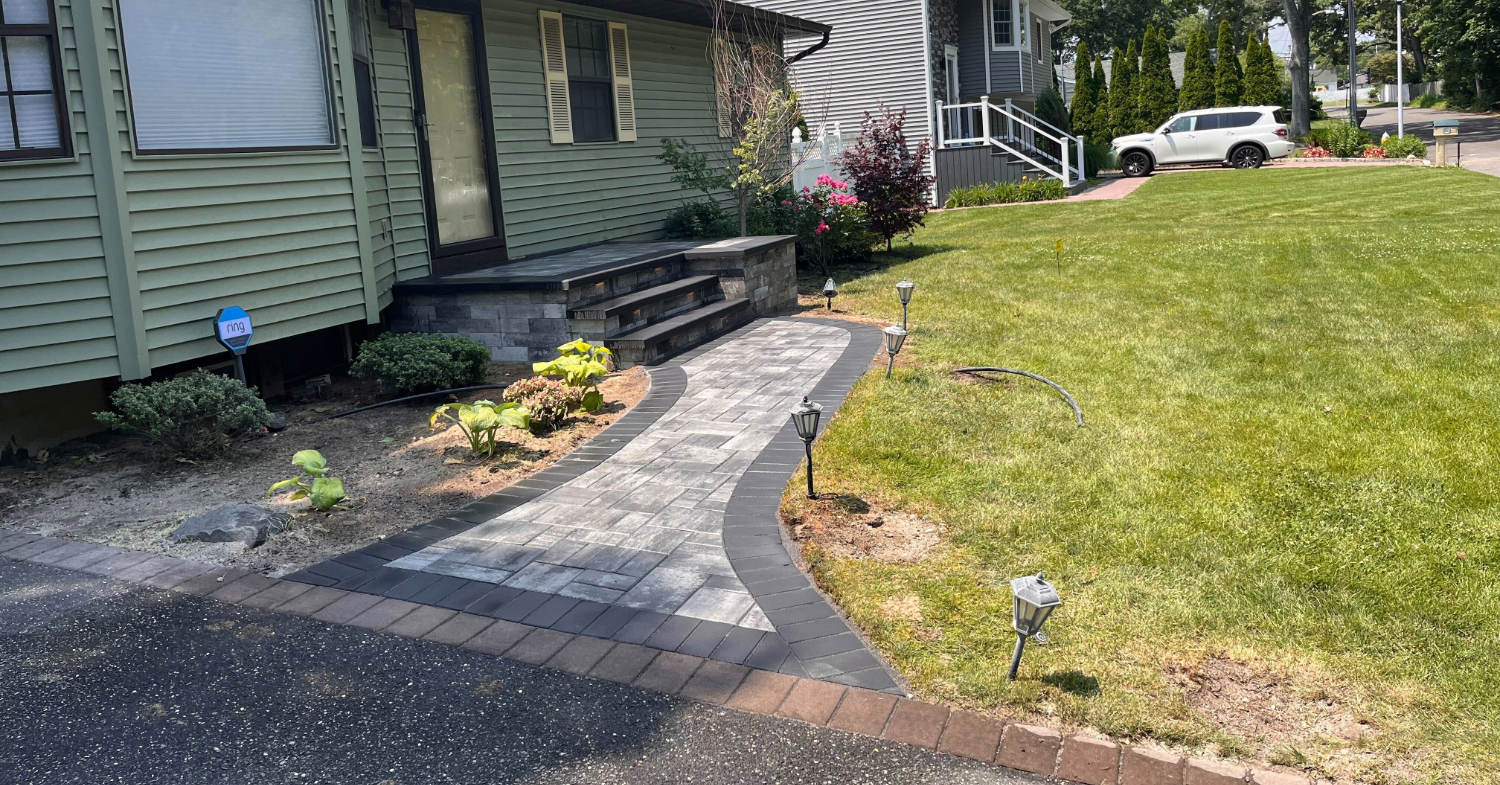
A paver walkway is one of the most practical and visually impactful improvements a Long Island homeowner can make to their property. It dresses up the approach to the home, creates a defined path that protects the lawn from foot traffic, and ties together the design language of any other hardscaping on the property. Despite being a relatively straightforward project compared to a full patio or driveway, the cost to install paver walkway in Suffolk County is influenced by more variables than most homeowners initially expect, and the range of quotes you might receive can vary considerably.
At Affordable Patio, we serve Suffolk County and Nassau County as a full-service masonry contractor, and walkways are one of our most frequently installed services. We built our business on transparency, which means we give homeowners a real picture of what projects cost before they commit to anything. This guide covers every factor that affects walkway pricing, what a quality installation actually involves, and what you should expect to invest for a paver walkway that looks great and holds up through Long Island winters.
What Does a Paver Walkway Cost in Suffolk County?
Paver walkway pricing scales directly with size, which makes it more straightforward to estimate than some other masonry projects. At Affordable Patio, our walkway pricing gives homeowners a clear baseline for planning. A 20 by 4 foot walkway starts around $1,620. A 25 by 4 foot run starts around $1,800. A 35 by 4 foot walkway starts around $2,160, and a 45 by 4 foot walkway starts around $2,520.
These figures represent standard installations using quality Belgard paving material with full base preparation. The cost to install paver walkway increases from these starting points based on site conditions, material upgrades, design complexity, and any additional features like steps, borders, or integration with an existing patio. Understanding what drives those additional costs is what allows you to budget accurately and evaluate contractor quotes critically.
Ready to design your dream hangout spot? Build and price your walkway online today.
What Drives the Cost to Install a Paver Walkway
Several factors push walkway pricing above or below the baseline figures, and each one is worth understanding before you start getting estimates.
Length and Width
The most direct pricing variable is the total square footage of the walkway. Standard residential walkways are typically 4 feet wide, which accommodates two people walking side by side comfortably. Wider walkways, such as those connecting a driveway to a front entry or running along a pool deck, cost proportionally more. Longer runs require more material, more base preparation, and more installation time across all phases of the project.
Path Shape and Complexity
A straight rectangular walkway is the most efficient shape to install. Curved walkways require additional cuts on individual paver units to follow the arc cleanly, which adds labor time. The number of curves and the tightness of the radius both affect how much extra cutting is involved. A gently curving path adds modestly to the cost. A tightly curved or sinuous path with multiple direction changes can add meaningfully to both labor time and material cost due to the waste generated by cuts.
Grade Changes and Steps
Properties with elevation changes along the walkway path add significant complexity to the installation. Managing grade transitions in a paver walkway requires careful attention to drainage pitch, step placement, and the structural approach at any transition between flat and sloped sections. Steps themselves, whether cast into the walkway or incorporated as a separate set of paver steps at a grade change, carry their own material and labor cost. If your property requires steps as part of the walkway, budget for them separately when planning total project cost.
Site Access and Conditions
The installation area’s accessibility for equipment affects the labor component of any masonry project. A walkway running through a narrow side yard that a skid steer cannot reach requires more manual work for excavation and base material handling. Properties with existing landscaping, tree roots, or obstacles in the walkway path add time to site preparation. These are factors a contractor can only accurately assess during an on-site visit, which is why quotes given over the phone without a property assessment should always be viewed with skepticism.
Material Selection
Standard Belgard paver colors are priced differently from premium or specialty colors within the same product line. The paver size also affects cost, as certain formats require more cuts per square foot than standard sizes. We always recommend visiting the ASTRO Masonry Supply showroom in person to see all color and texture options under natural light before finalizing any material selection, because catalog photography consistently misrepresents how pavers actually look installed outdoors.
From outdoor kitchens to fire pits, explore all the custom services we offer to complete your backyard.
What a Proper Walkway Installation Involves
The cost to install paver walkway reflects the labor and material required to build a foundation that performs for decades, not just the cost of the surface you see. Understanding what a proper installation involves helps you evaluate whether a contractor is delivering value or cutting corners.
Grade Assessment and Height Setting
Every walkway installation at Affordable Patio begins with assessing the grade of the property and setting installation heights using stringlines. This step determines the pitch of the finished walkway surface. We build in approximately 1.5 inches of pitch for every 10 feet of run, directed away from the home. This ensures water drains off the surface rather than pooling or running toward the foundation.
Excavation and Soil Removal
Once heights are established, the crew excavates down 5 to 7 inches from the finished surface elevation. All excavated soil is removed from the property. This depth is not optional. It creates the space required for a properly thick base that handles the freeze-thaw cycling Long Island winters deliver without allowing the surface to shift or settle.
Subbase Installation
Recycled concrete aggregate is installed and compacted in lifts as the structural base for the walkway. This material compacts exceptionally well and creates a stable, load-bearing layer that resists movement. Installing it in lifts, meaning filling 2 to 3 inches at a time, compacting, and repeating, ensures uniform density throughout the base rather than a dense surface over soft material below.
Sand Bedding Layer
A quarter inch of fine mason sand is spread over the compacted base and screeded to a smooth, even finish. This sand layer accommodates the minor dimensional variation in manufactured pavers and allows each unit to be set to a level, consistent plane.
Paver Setting, Edge Restraints, and Joint Sand
Pavers are set along square lines established relative to the home or a fixed reference point to ensure the pattern is straight and visually aligned. Concrete edge restraints are poured along all exposed perimeter edges to prevent migration over time. Finally, polymeric sand is swept into the joints, compacted, and activated with water to create a firm, weed-resistant finish that protects the walkway surface for years.
Material Options and How They Affect Price
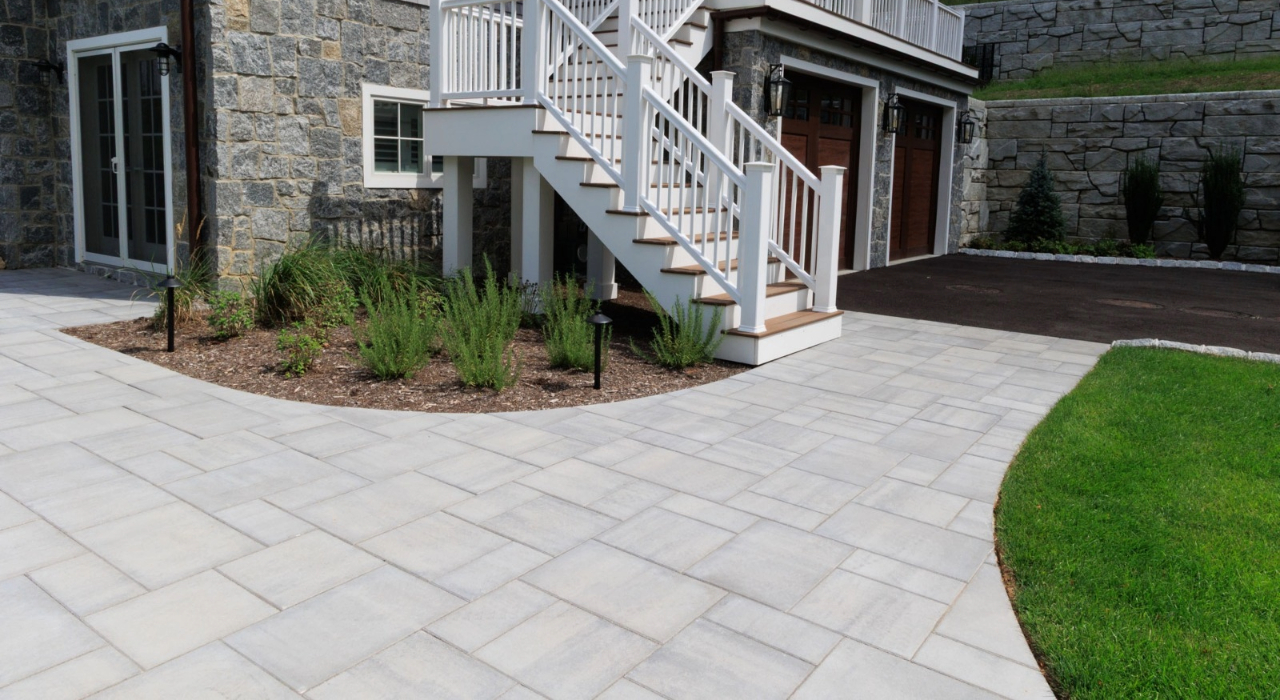
Belgard pavers represent the standard for our walkway installations, and the product line offers genuine variety in style, texture, and color. Options like Appian Stone, Heritage, and Catalina Grana each bring different aesthetics that complement different home styles. Flagstone is available for homeowners who want a more natural, organic look, though it carries a higher material cost than manufactured concrete pavers.
Borders are a design element worth considering for any walkway project. A contrasting border course in a different color from the field pavers frames the walkway visually and gives it a finished, intentional appearance. The material cost for a border is modest, and the labor is incorporated into the installation process rather than added as a separate line item. This makes borders one of the most cost-effective design upgrades available.
Why Long Island’s Climate Makes Installation Quality Critical
Suffolk County homeowners deal with genuine freeze-thaw cycling every winter. Ground that absorbs water and then freezes expands, and ground that thaws contracts. A walkway base that was not adequately compacted, not built to sufficient depth, or not properly pitched for drainage will move with these cycles in ways that crack concrete and shift pavers. Over three or four winters, a shortcut installation becomes a maintenance problem that costs more to fix than the savings on the original job were worth.
This is the practical reason why the cost to install paver walkway from a reputable contractor with a proper installation process is worth paying. The base preparation that adds time and material cost to the project is exactly what makes the surface perform for 20 years instead of five.
Combining a Walkway With a Patio Project
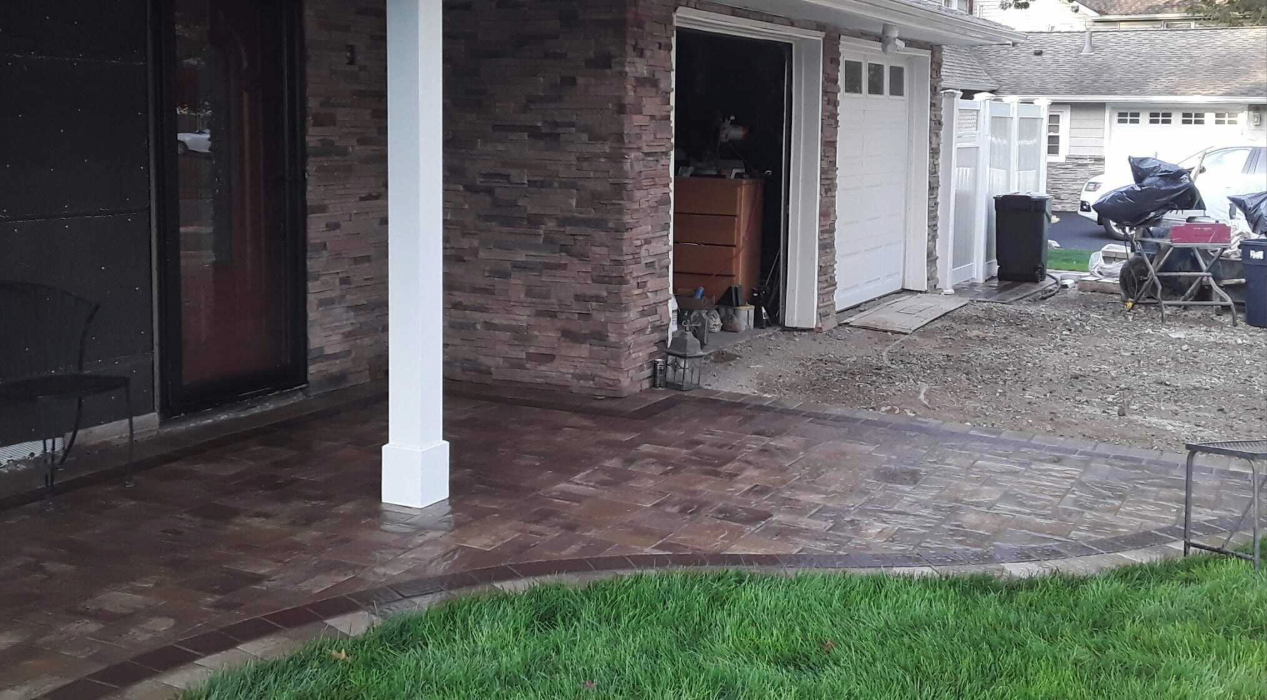
If you are considering both a walkway and a patio, installing them together is almost always the most economical approach. The mobilization costs, equipment costs, and crew time for a combined project are lower per square foot than doing two separate projects because the fixed overhead is distributed across a larger scope of work. The base preparation for a patio and an adjacent walkway shares excavation and compaction effort rather than duplicating it.
Beyond the cost efficiency, a walkway and patio designed and installed together create visual continuity that separate installations done at different times rarely achieve. The pattern alignment, material consistency, and design integration that come from a single coordinated project produce a more polished overall result.
What to Avoid When Getting Walkway Quotes
The walkway category attracts a range of contractor quality, and lower bids often reflect lower installation standards rather than genuine efficiency. A few patterns are worth watching for when you are collecting estimates.
Quotes Without a Site Visit
Any accurate estimate for the cost to install paver walkway requires a site assessment. Grade changes, access conditions, soil type, and existing obstacles all affect the real price of the job. A quote given without seeing the property is either a guess that will change when the crew arrives or a lowball designed to secure a commitment before reality intervenes.
Vague Base Preparation Descriptions
If a contractor cannot tell you specifically what base material they use, how deep they excavate, and how they compact the subbase, they are either not doing it properly or not thinking about it in the detail that quality work requires. Ask for specifics. The answers should align with manufacturer recommendations and industry standards.
No Written Contract or Warranty
Any project of this scope should be documented in a written contract that specifies the scope of work, the materials to be used, the timeline, and the payment structure. Affordable Patio sends contracts via DocuSign before any project begins, and every installation is backed by a three-year warranty covering settling or shifting pavers, broken edge restraints, and loosening borders. A contractor who does not offer a written warranty is a contractor who is not confident their work will hold up.
Get inspired for your own backyard renovation by browsing our active job sites in your area.
Frequently Asked Questions
How wide should a residential paver walkway be?
The standard width for a residential paver walkway is 4 feet, which allows two people to walk side by side comfortably and provides enough visual presence to be a design element rather than just a functional path. Entry walkways leading to front doors are sometimes widened to 5 or 6 feet to create a more generous, welcoming approach. Utility paths along the side of a home used for maintenance access can be narrower, typically 3 feet, though this is at the minimum end of practical comfort. Width decisions should account for how the walkway will be used, how prominently it features in the property’s overall design, and the scale of the home and surrounding landscaping.
How long does it take to install a paver walkway?
Most standard residential paver walkway installations are completed in a single day by an experienced crew. A straightforward 4-foot-wide walkway of typical residential length involves one day of excavation, base preparation, and paver setting. Longer walkways, those with curves requiring significant cutting, or walkways that incorporate steps or grade changes may extend into a second day. The full project timeline from initial consultation to completed installation typically runs two to four weeks, with the majority of that time in the scheduling and material delivery phase rather than the installation itself.
Can I install a paver walkway over existing concrete?
In many situations, yes. Pavers can be installed over an existing concrete walkway using a technique called an overlay, where the existing concrete serves as the base and a sand or concrete dry-pack layer is used to level the surface and establish the correct pitch before pavers are set. This approach can save demolition cost and is often a practical choice when the existing concrete is structurally sound and level. If the existing concrete is cracked, heaving, or significantly settled, removing it and starting fresh is the better approach, as the underlying problems will eventually telegraph through to the new paver surface.
What is the best paver pattern for a walkway?
The most popular paver patterns for walkways are running bond, which is a simple offset brick pattern, and herringbone, which interlocks pavers at 45-degree or 90-degree angles. Running bond is the most commonly used for walkways because it reads naturally as a directional path and is efficient to install. Herringbone is stronger structurally because the interlocking angle distributes load across more joints, making it particularly suited for driveways and high-traffic walkways. Basket weave and other decorative patterns are also available and can create visual interest, particularly at entry approaches. Pattern selection should consider both the intended aesthetic and how the pattern will interact with the border design if one is being used.
How do I maintain a paver walkway over time?
Paver walkways require minimal maintenance compared to poured concrete or wood decking, but a few habits significantly extend their life and appearance. Sweep or blow off leaves, dirt, and organic debris regularly to prevent staining and to keep weed seeds from settling in the joints. Inspect the joint sand annually and add material in areas where it has eroded, particularly after heavy rain seasons. If weeds do establish in the joints, remove them before they can set deep roots, and consider a polymeric sand refresh to re-establish the weed-resistant joint compound. For walkways with winter ice management needs, use sand or calcium chloride rather than rock salt, which can damage pavers and accelerate joint sand degradation over time.
A Walkway That Works as Hard as Your Home Does
The cost to install paver walkway in Suffolk County is an investment that pays back in both function and visual quality every time someone approaches your home. A properly built walkway handles Long Island’s weather reliably, looks great for decades, and connects the design of your outdoor spaces in a way that feels intentional and polished.
Affordable Patio has been serving Long Island homeowners in Suffolk County and Nassau County with quality masonry work built on honest pricing and a documented installation process. Every walkway we build follows the same foundation standards as our patios and driveways, because we know that the surface is only as good as what is beneath it. Our three-year warranty, flexible financing through HFS, and 24-hour estimate turnaround make getting started simple.
Contact Affordable Patio today at (631) 438-8053 or visit affordablepatio.com/new-york to get your free estimate. We are ready to design and build a walkway that your property has been missing.