
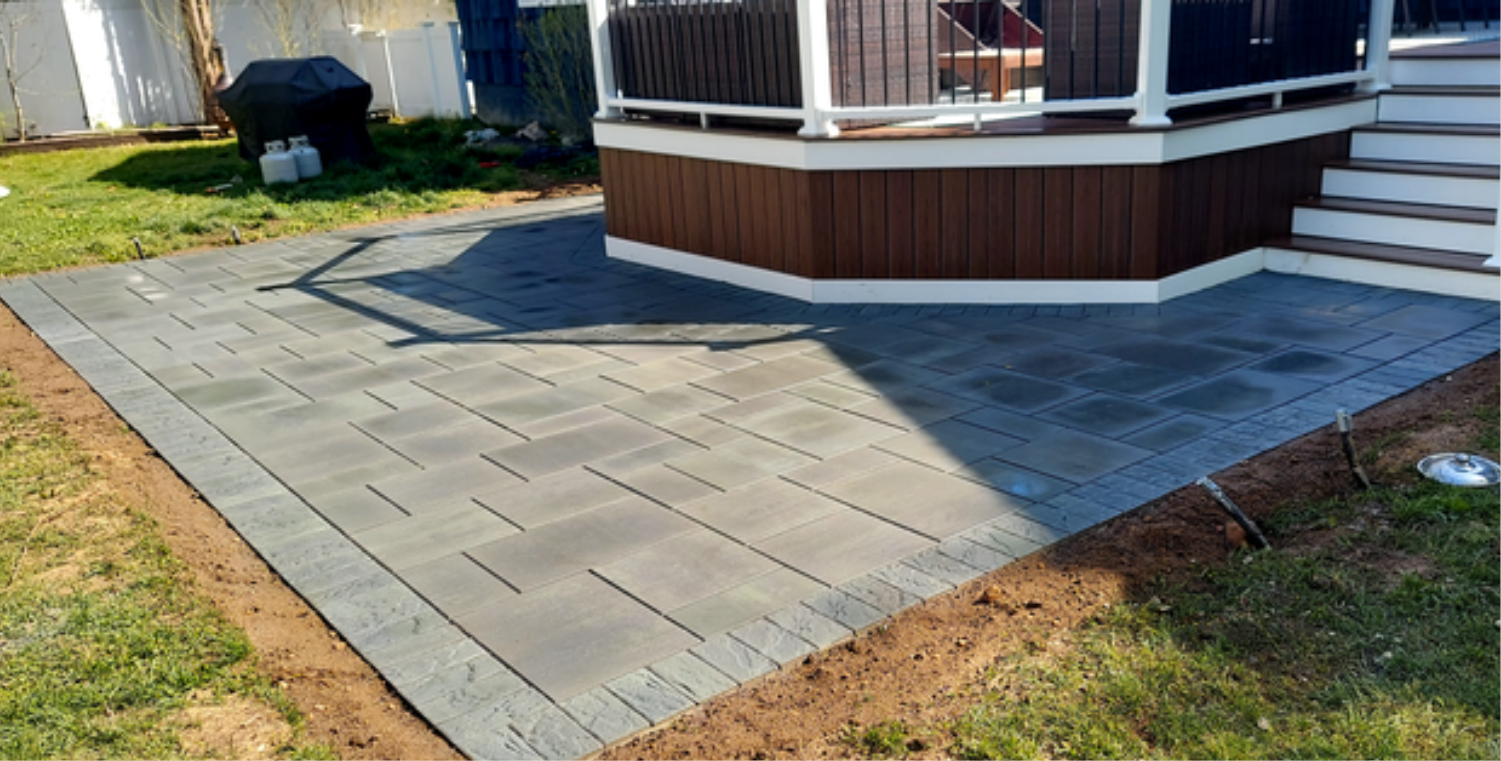
The average cost of a paver patio can feel confusing at first—especially when you see big price ranges online. If you live in Rockingham County, the good news is you can get a realistic budget by looking at a few simple factors like patio size, paver type, site prep, and any upgrades you want to include.
Table of Contents
Typical Price Range in Rockingham County
Most homeowners searching “average cost of a paver patio” are really trying to answer one thing: What will it cost for my yard? While every project is different, most pricing lands in a wide range depending on size, materials, and complexity.
In Rockingham County, your final number usually comes down to a few local realities:
- Ground conditions and drainage needs (important in New Hampshire climates)
- Access to the backyard (tight gates, slopes, landscaping obstacles)
- Material selection (standard vs. premium pavers, borders, patterns)
- Extras like steps, seating walls, lighting, or a fire pit
Bottom line: the average cost of a paver patio is a starting point, but your best plan is to price your specific layout and features.
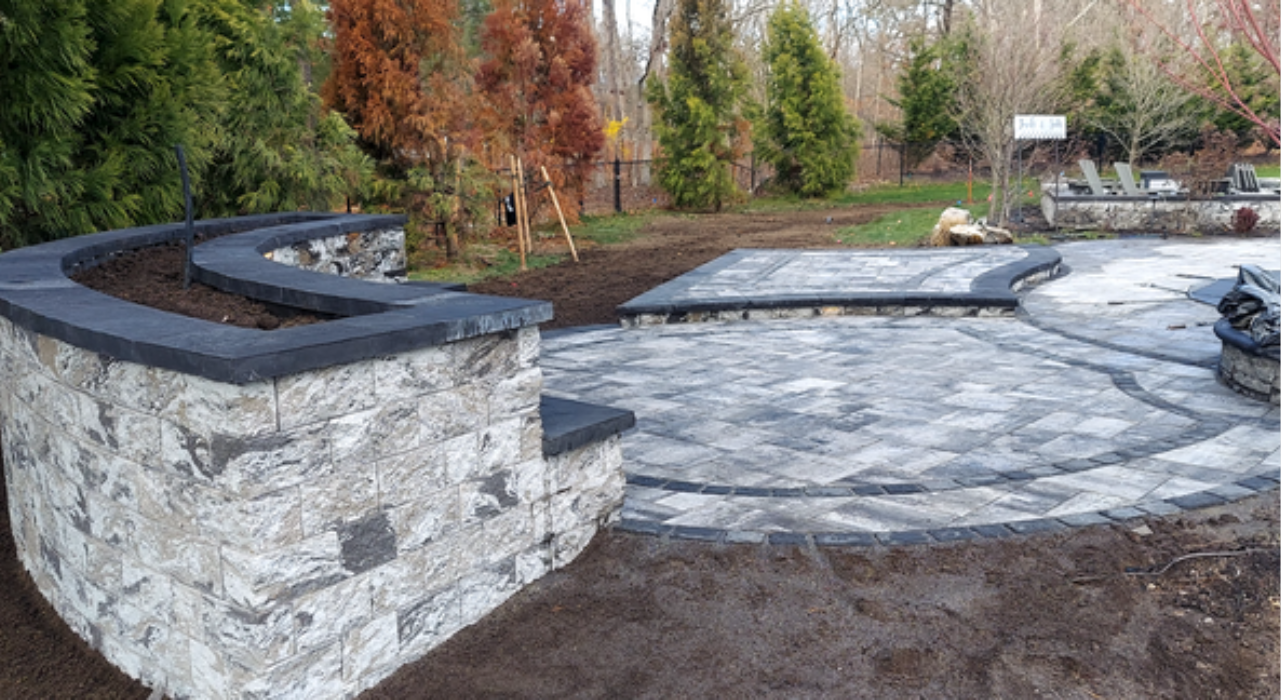
What Impacts the Price Most
If you want a budget that holds up, focus on the few items that move the price the most. Here’s what typically matters.
1) Patio size (square footage)
This is the biggest driver. A simple way to think about it: more square footage = more pavers + more base prep + more labor time. Even small size increases can add up quickly. If you’re trying to forecast the average cost of a paver patio for your home, start by measuring the space you actually want to use.
2) Base prep, grading, and drainage
In New Hampshire, proper prep is not optional. A strong paver patio depends on a solid crushed-stone base, a leveling layer, and correct grading so water moves away from the home. If your yard is uneven or holds water, more time and materials may be needed to prep it correctly.
3) Paver type, pattern, and borders
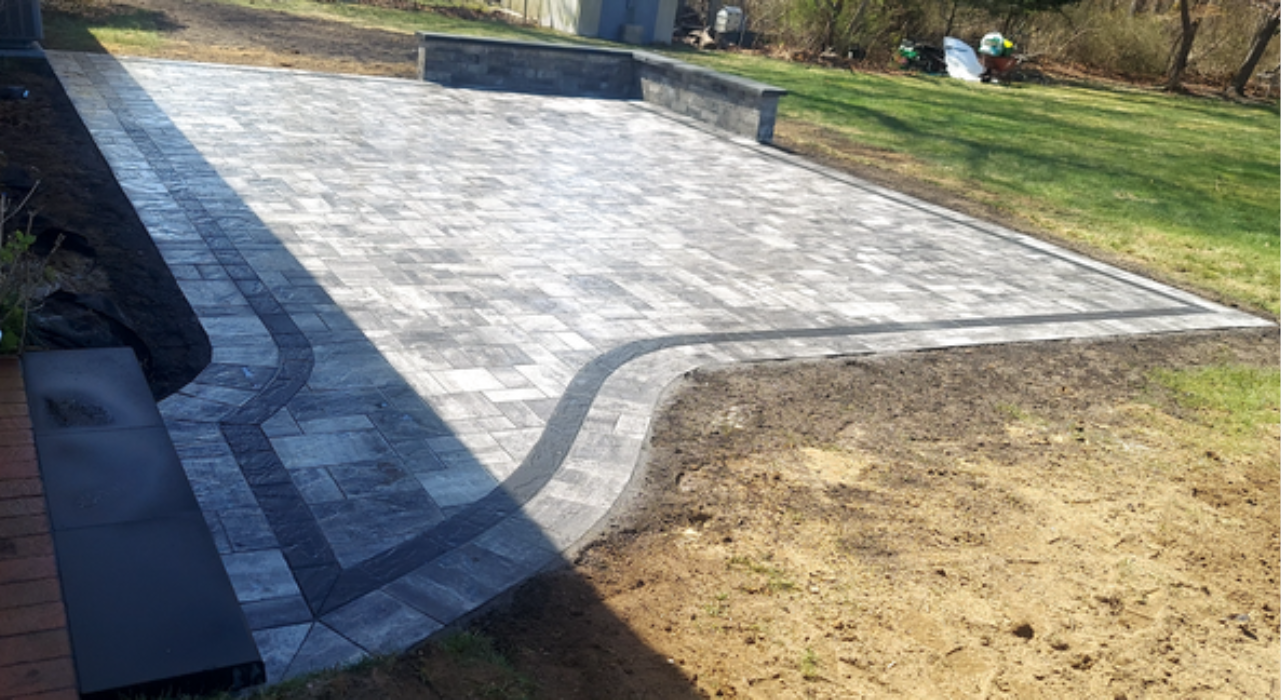
Standard pavers installed in a straightforward pattern are typically easier to install than premium stones or complex patterns. Borders also matter: adding a contrasting border can make a patio look sharper, but it adds labor and materials. If you want the look without blowing the budget, choose one “statement upgrade” and keep the rest simple.
4) Add-ons (the “wish list” items)
Many homeowners start with a patio, then decide they also want steps, a sitting wall, a fire pit, or a short walkway connecting the patio to the driveway. These add value and usability, but they also add scope. To keep the average cost of a paver patio on track, decide early what’s a must-have and what can be a phase-two upgrade later.
Common Patio Sizes & Budget Examples
Here are a few “real life” planning examples to help you estimate. (These are general budgeting scenarios—your exact pricing depends on your yard, layout, paver choice, and prep needs.)
- Small patio (around 10×12) – Great for a bistro set or a small seating area.
- Medium patio (around 15×20) – Common for dining + a grill station.
- Large patio (around 20×25 or bigger) – Best for entertaining, sections, or fire feature seating.
When homeowners in Rockingham County compare options, they usually find that the average cost of a paver patio grows fastest when:
- the patio footprint expands,
- the layout has curves or multiple levels,
- and drainage or grading needs extra work.
Tip: If you’re not sure what size fits your lifestyle, tape the outline in your yard with string or marking paint. It’s a quick way to “feel” the space before committing.
Smart Ways to Control Costs (Without Cutting Quality)
You don’t need to sacrifice a great-looking patio to stay on budget. Here are a few practical ways homeowners keep pricing under control.
Keep the layout simple
Square and rectangle patios are usually more efficient to install than curved shapes. A clean layout still looks high-end when you add a crisp border or a well-chosen paver color.
Choose one upgrade that matters most
Want a premium look? Pick one feature—like a contrasting border, a sitting wall section, or a built-in fire pit—and keep everything else straightforward. This approach helps manage the average cost of a paver patio while still giving you a “wow” factor.
Plan drainage early
If water tends to collect near the house or patio area, address it at the design stage. Fixing drainage later is usually more expensive than doing it right the first time.
Want a faster way to ballpark your project? You can get a rough estimate online using the New Hampshire build-and-price tool here: Build & price your patio project in New Hampshire.
For a general reference on how paver patio pricing is often calculated (including cost-per-square-foot ranges and common add-ons), this guide is helpful: brick paver patio cost guide.
Frequently Asked Questions
1) What is the average cost of a paver patio in Rockingham County?
The average cost of a paver patio depends on patio size, paver selection, base preparation, and layout complexity. In Rockingham County, grading, drainage, and access to the yard can also influence pricing, so accurate estimates require evaluating the specific property.
2) Why does site preparation affect patio pricing?
Site preparation is critical for long-term patio performance. Excavation depth, crushed stone base layers, compaction, and drainage all require labor and materials. In New Hampshire, proper preparation helps prevent shifting caused by freeze-thaw cycles.
3) Does patio size significantly change the total cost?
Yes. Larger patios require more materials, longer installation time, and additional base preparation. Even modest size increases can raise the overall project cost, which is why choosing the right footprint for your lifestyle is important.
4) Do borders and patterns increase the cost of a paver patio?
Borders and complex patterns can increase labor time and material waste. While they add visual appeal, homeowners can control costs by selecting a simple field pattern and adding one accent feature such as a contrasting border.
5) How can homeowners get an estimate before scheduling a consultation?
Online build-and-price tools allow homeowners to generate a rough budget based on size and features. These tools provide a helpful starting point before scheduling an in-person evaluation to finalize design and pricing details.
Ready to plan your patio budget without sacrificing a beautiful backyard?
If you’re comparing options and want a clear, honest idea of what your patio could cost in Rockingham County, we’re here to help. Call (603) 999-9696 and we’ll point you in the right direction based on your space and goals. You can also reach out through our contact page whenever you’re ready to take the next step.