
Yard drainage is one of the most overlooked problems on Long Island until water starts pooling against your foundation or washing out your landscaping after every storm. The two most common solutions are a french drain vs retaining wall drain, and choosing the wrong one wastes money while leaving the real problem unsolved. Suffolk County and Nassau County yards face unique drainage challenges because of the mix of sandy coastal soil, clay pockets, and flat terrain that covers much of the island.
This guide explains the differences between a french drain vs retaining wall drain, breaks down yard drainage solutions for Long Island properties, covers french drain installation cost, and clarifies when retaining wall weep holes are enough versus when a full drainage system is needed. Affordable Patio has solved drainage problems on more than 2,000 Long Island properties, and the answer is almost never as simple as picking one option over the other.
Quick answer: A french drain collects and redirects groundwater across open yard areas and costs $10 to $50 per linear foot installed. Retaining wall weep holes and drain pipes manage water pressure behind walls specifically. Most Long Island properties with both a retaining wall and yard flooding need both systems working together. Call Affordable Patio at (631) 275-3142 for a free drainage assessment.
Table of Contents
- What Is a French Drain and How Does It Work
- How Retaining Wall Drains and Weep Holes Work
- Key Differences Between French Drains and Retaining Wall Drains
- French Drain Installation Cost on Long Island
- When Your Yard Needs a French Drain
- When Your Retaining Wall Needs Drainage
- Why Most Long Island Properties Need Both
- Common Drainage Mistakes on Long Island
- Frequently Asked Questions
What Is a French Drain and How Does It Work
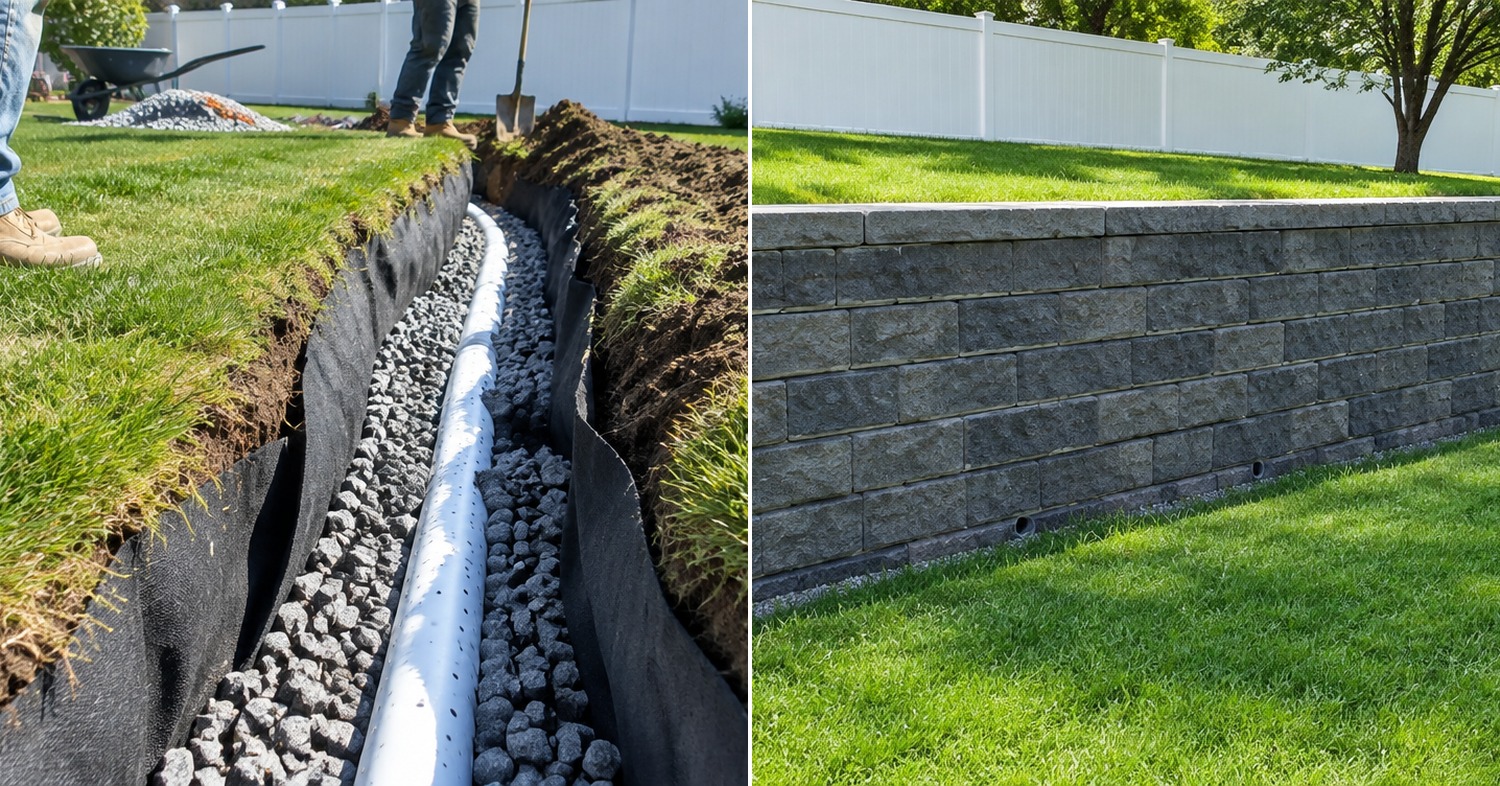
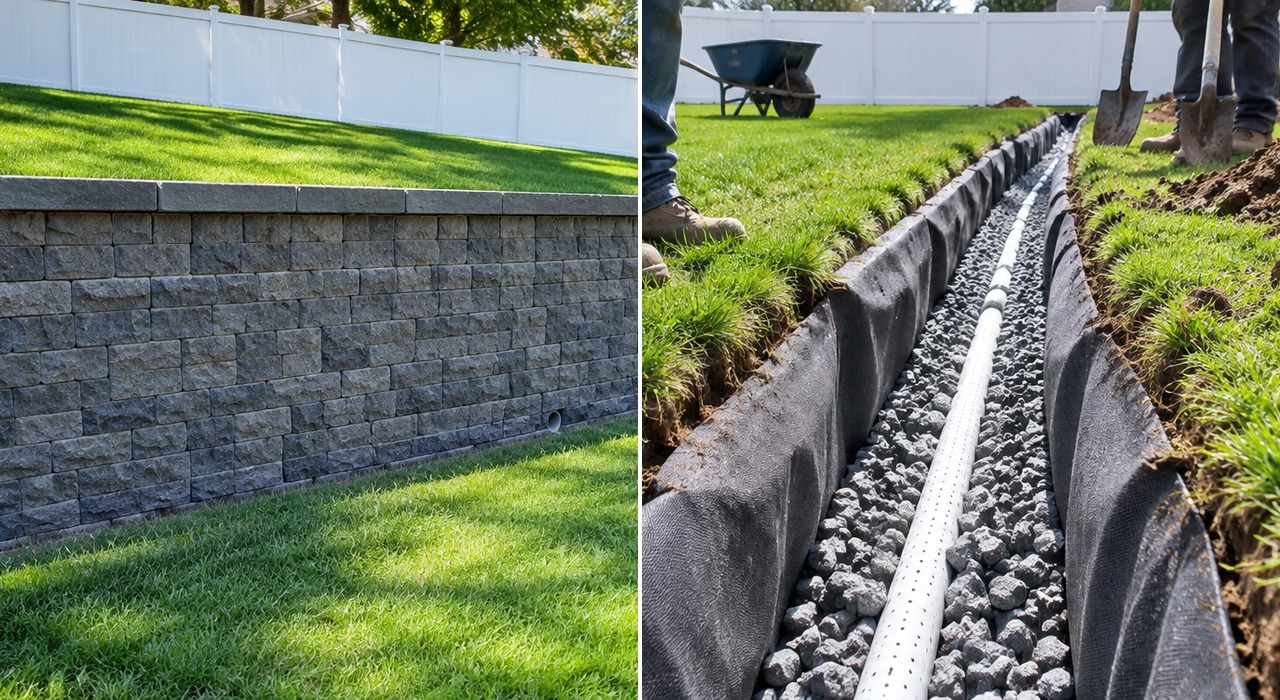
A french drain is a trench filled with gravel and a perforated pipe that collects water from the surrounding soil and redirects it to a safe discharge point. The concept is simple but effective. Water follows gravity into the gravel-filled trench, enters the perforated pipe through small holes, and flows through the pipe to a lower area of the yard, a dry well, or a storm drain connection.
The standard french drain installation on Long Island involves digging a trench 12 to 24 inches deep and 6 to 12 inches wide. The trench is lined with landscape fabric to prevent soil from clogging the gravel, then filled with 3/4-inch washed stone around a 4-inch perforated PVC or corrugated pipe. The pipe needs a minimum slope of 1 percent (1/8 inch per foot of run) to move water effectively.
French drains are yard drainage solutions designed for open areas where water collects on the surface or saturates the soil. They work well along the base of slopes, at the low point of a yard, around foundations, and along property lines where water from a neighbor’s yard enters your property. A properly installed french drain intercepts water before it reaches problem areas and moves it to where it can discharge safely.
The french drain installation cost on Long Island ranges from $10 to $50 per linear foot depending on depth, pipe diameter, soil conditions, and whether the discharge connects to a dry well or existing storm drainage. A typical residential french drain runs 50 to 150 feet, putting the total project cost at $500 to $7,500. Complex installations with deep trenching, rocky soil, or multiple drain branches fall at the higher end of that range.
How Retaining Wall Drains and Weep Holes Work
A retaining wall drain serves a different purpose than a french drain. While a french drain collects water across an open area, a retaining wall drain relieves hydrostatic pressure that builds up behind the wall structure. Without proper drainage, water-saturated soil behind a retaining wall creates enormous pressure that can push the wall forward, crack it, or cause it to fail entirely.
Retaining wall weep holes are the simplest form of wall drainage. These are small openings (typically 3 to 4 inches in diameter) built into the base of the wall at regular intervals, usually every 4 to 6 feet. Water that accumulates behind the wall seeps through these openings and drains out the front. Retaining wall weep holes work well for short walls under 3 feet and in well-draining sandy soil, which is common in many coastal areas of Long Island.
For taller walls and walls in clay-heavy soil, retaining wall weep holes alone are not enough. These walls need a full drainage system behind them. The system includes a perforated pipe laid in a gravel bed along the base of the wall (behind it, not in front), a layer of drainage aggregate 12 to 18 inches thick between the wall and the retained soil, and landscape fabric separating the aggregate from the native soil to prevent clogging.
The drainage pipe behind a retaining wall works similarly to a french drain pipe. It collects water from the saturated soil, channels it through the perforated pipe, and discharges it at the end of the wall or connects to a separate drainage system. The key difference in the french drain vs retaining wall drain comparison is that the wall drain is specifically designed to protect the structure, while a french drain protects the yard.
Key Differences Between French Drains and Retaining Wall Drains
Understanding the french drain vs retaining wall drain distinction helps you determine which yard drainage solutions your Long Island property actually needs.
| Feature | French Drain | Retaining Wall Drain |
|---|---|---|
| Primary purpose | Redirect surface and groundwater in open yard | Relieve hydrostatic pressure behind a wall |
| Location | Along slopes, foundations, low areas | Behind and at the base of retaining walls |
| Typical depth | 12 to 24 inches | Matches wall footing depth |
| Gravel backfill | 6 to 12 inches wide | 12 to 18 inches thick behind wall |
| Pipe type | 4-inch perforated PVC or corrugated | 4-inch perforated PVC |
| Cost per linear foot | $10 to $50 | Included in wall installation |
| Weep holes | Not applicable | Built into wall face every 4 to 6 feet |
The french drain vs retaining wall drain distinction matters because each system solves a different problem. A french drain cannot relieve hydrostatic pressure behind a retaining wall, and retaining wall weep holes cannot solve yard flooding 30 feet away from the wall. Choosing between them is not an either-or decision for most Long Island properties.
French Drain Installation Cost on Long Island
The french drain installation cost on Long Island varies based on several factors. Here is what drives the price and what you should expect to pay.
A basic french drain with a 4-inch perforated pipe in sandy soil costs $10 to $25 per linear foot installed. This covers excavation, landscape fabric, washed gravel, pipe, and backfill. Sandy soil is easier to dig and drains faster, which keeps labor costs down. Many south shore Long Island properties have sandy soil that falls in this price range.
A french drain in clay-heavy soil or through rocky ground costs $25 to $50 per linear foot. Clay soil requires wider trenches and more gravel to ensure water reaches the pipe. Rocky soil adds excavation time and may require a mini excavator. Parts of the North Shore and central Long Island have these soil conditions.
Additional cost factors for french drain installation cost include the discharge method (connecting to a dry well adds $1,000 to $3,000), depth (deeper drains for foundation protection cost more), access (tight side yards or backyards without equipment access increase labor), and length of the run.
For comparison, retaining wall drainage is typically included in the wall installation cost rather than priced separately. A properly built retaining wall on Long Island already includes the drainage aggregate, pipe, and retaining wall weep holes as standard components. Affordable Patio includes full drainage systems in every retaining wall installation because skipping drainage is the most common cause of wall failure on Long Island.
When Your Yard Needs a French Drain
Not every wet yard needs a french drain. Some yard drainage solutions are simpler and cheaper. But there are clear signs that a french drain is the right fix for your Long Island property.
You need a french drain if water pools in the same spot after every rain and does not drain within 24 hours. Standing water for more than a day means the soil is saturated and cannot absorb more. A french drain intercepts the water before it reaches the pooling area and redirects it.
You need a french drain if water enters your basement or crawl space during heavy rain. A perimeter french drain installed along the foundation exterior is one of the most effective yard drainage solutions for basement water problems on Long Island. The french drain installation cost for a foundation perimeter system runs $3,000 to $7,000 depending on the house size and soil conditions.
You need a french drain if a slope in your yard directs water toward your house, patio, or driveway. Installing a french drain at the base of the slope intercepts the runoff before it reaches structures. This is especially common in Long Island neighborhoods where properties sit at different elevations.
You do not need a french drain if the problem is surface water that can be fixed with regrading. Sometimes adjusting the slope of the yard by adding or removing a few inches of soil solves the issue for a fraction of the french drain installation cost. Affordable Patio assesses your yard conditions during a free estimate and recommends the most cost-effective solution.
When Your Retaining Wall Needs Drainage
Every retaining wall needs some form of drainage, but the type depends on the wall height, soil conditions, and water volume. Here is how to determine what your wall requires in the french drain vs retaining wall drain decision.
Short walls under 2 feet in sandy soil may function adequately with retaining wall weep holes alone. The sandy soil drains naturally, and the small amount of water that reaches the wall escapes through the weep holes before pressure builds. However, even short walls benefit from a gravel drainage layer behind them.
Walls 2 to 4 feet tall need retaining wall weep holes plus a drainage aggregate layer and a perforated pipe at the base. The pipe collects water before it reaches the wall face and discharges it at the ends. This is the standard drainage setup for most residential retaining walls on Long Island.
Walls over 4 feet tall require engineered drainage that is designed alongside the wall structure. These walls are subject to building permits on Long Island and the drainage design is part of the engineering documents. The drainage system may include multiple pipe runs at different heights, additional aggregate layers, and a geotextile separation system.
Signs that an existing retaining wall has inadequate drainage include water seeping through the wall face (not through weep holes), the wall leaning or tilting forward, cracks appearing in the wall, and soil erosion at the base. If your retaining wall shows any of these signs, the drainage system needs to be upgraded before the wall fails. Affordable Patio provides free assessments of existing retaining walls for homeowners across Suffolk County and Nassau County.
Why Most Long Island Properties Need Both
The french drain vs retaining wall drain question is misleading because it implies you need one or the other. In practice, most Long Island properties with both a retaining wall and a drainage problem need both systems working together as part of a comprehensive approach to yard drainage solutions.
Here is a common scenario. A Long Island homeowner has a backyard that slopes toward the house, and a retaining wall at the back of the property separates the yard from a higher neighbor’s lot. Water flows down the slope, collects behind the retaining wall during heavy rain, and eventually saturates the soil across the entire yard. The retaining wall has retaining wall weep holes but they cannot keep up with the volume of water during storms.
The solution is a two-part system. First, the retaining wall drainage gets upgraded with a proper perforated pipe and drainage aggregate behind the wall. This handles the hydrostatic pressure and prevents wall failure. Second, a french drain is installed across the yard between the wall and the house to intercept groundwater before it reaches the foundation. The french drain discharges to a dry well or daylight at the side of the property.
This combined approach addresses both the structural concern (wall drainage) and the yard flooding concern (french drain) with yard drainage solutions that work as a system. The french drain installation cost for the yard portion plus the wall drainage upgrade is typically less than the cost of repairing a failed retaining wall after the fact.
Common Drainage Mistakes on Long Island
Drainage problems on Long Island often get worse because of well-intentioned fixes that miss the root cause. These are the most common mistakes we see in the french drain vs retaining wall drain space.
Installing a french drain without enough slope is the number one failure. The pipe needs at least 1 percent slope to move water. On flat Long Island lots, achieving this slope over a long run may require the discharge end to be quite shallow, which limits the system’s capacity. A proper site survey before installation ensures the slope is achievable.
Using the wrong gravel is another frequent mistake. Round pea gravel looks nice but does not drain as well as angular 3/4-inch washed stone. The angular stone creates more air space between pieces, which allows water to flow faster toward the pipe. This applies to both french drains and the drainage aggregate behind retaining walls.
Skipping the landscape fabric lets soil migrate into the gravel over time, eventually clogging the system. Quality non-woven geotextile fabric wraps around the pipe and lines the trench to keep soil particles out while allowing water through. This is a $0.50 to $1.00 per linear foot addition that extends the drain’s functional life by 20 or more years.
Relying only on retaining wall weep holes in clay soil is a recipe for wall failure. Clay holds water and releases it slowly, which means hydrostatic pressure builds up behind the wall even between rainstorms. Retaining wall weep holes in clay soil cannot move water fast enough to prevent damage. A full drainage pipe and aggregate system is essential.
Discharging a french drain onto a neighbor’s property is a legal and practical mistake. Long Island municipalities require drainage to be managed on your own property or connected to an approved discharge point. A dry well is the most common on-site discharge solution for yard drainage solutions on Long Island.
Frequently Asked Questions
How much does a french drain cost on Long Island?
The french drain installation cost on Long Island ranges from $10 to $50 per linear foot depending on soil type, depth, and complexity. A typical 100-foot residential french drain costs $1,000 to $5,000 installed. Adding a dry well for discharge adds $1,000 to $3,000. Sandy soil installations are at the lower end, while clay or rocky soil pushes costs higher. Affordable Patio provides free estimates for all yard drainage solutions.
Do all retaining walls need weep holes?
Yes. Every retaining wall on Long Island needs some form of drainage, and retaining wall weep holes are the minimum requirement. Even short walls under 2 feet benefit from weep holes to prevent water buildup. For walls over 2 feet, retaining wall weep holes should be combined with a perforated drainage pipe and gravel backfill for adequate water management.
Can I install a french drain myself?
A DIY french drain is possible for short, shallow runs in sandy soil. However, the french drain installation cost difference between DIY and professional is typically 30 to 40 percent, and mistakes in slope, gravel type, or fabric placement can cause the system to fail within a few years. For french drains longer than 30 feet or in clay soil, professional installation is strongly recommended.
How long does a french drain last on Long Island?
A properly installed french drain lasts 20 to 40 years on Long Island. The main factor that shortens lifespan is clogging from soil intrusion, which is why landscape fabric is essential. PVC pipe lasts longer than corrugated pipe because it has a smoother interior that resists sediment buildup. Periodic flushing with a garden hose every few years helps maintain flow.
What is the difference between a french drain and a trench drain?
A french drain is a buried system that collects groundwater through a perforated pipe surrounded by gravel. A trench drain (also called a channel drain) is a surface-level system with a grated channel that collects surface water runoff. French drains handle subsurface water problems, while trench drains handle surface water. Many Long Island yard drainage solutions combine both types for complete water management.
Why is my retaining wall leaning forward?
A retaining wall leaning forward almost always indicates drainage failure behind the wall. Water-saturated soil creates hydrostatic pressure that pushes the wall outward. The fix requires excavating behind the wall, installing or upgrading the drainage system (drainage pipe, aggregate, and retaining wall weep holes), and possibly rebuilding the affected wall section. Addressing this early prevents a complete wall collapse that costs far more to repair. Call (631) 275-3142 for a free wall assessment.
Conclusion
The french drain vs retaining wall drain question does not have a one-size-fits-all answer for Long Island homeowners. French drains solve yard flooding and groundwater problems across open areas, while retaining wall weep holes and drainage pipes protect wall structures from hydrostatic pressure. Most properties with both a drainage problem and a retaining wall need both yard drainage solutions working together as a coordinated system.
Affordable Patio has over 15 years of experience solving drainage problems across Suffolk County and Nassau County. We install french drains, retaining wall drainage systems, dry wells, and complete outdoor water management solutions using quality materials and proper engineering. Every project includes a 3-year workmanship warranty and starts with a free on-site assessment. Call (631) 275-3142 or visit our contact page to schedule your consultation today.