
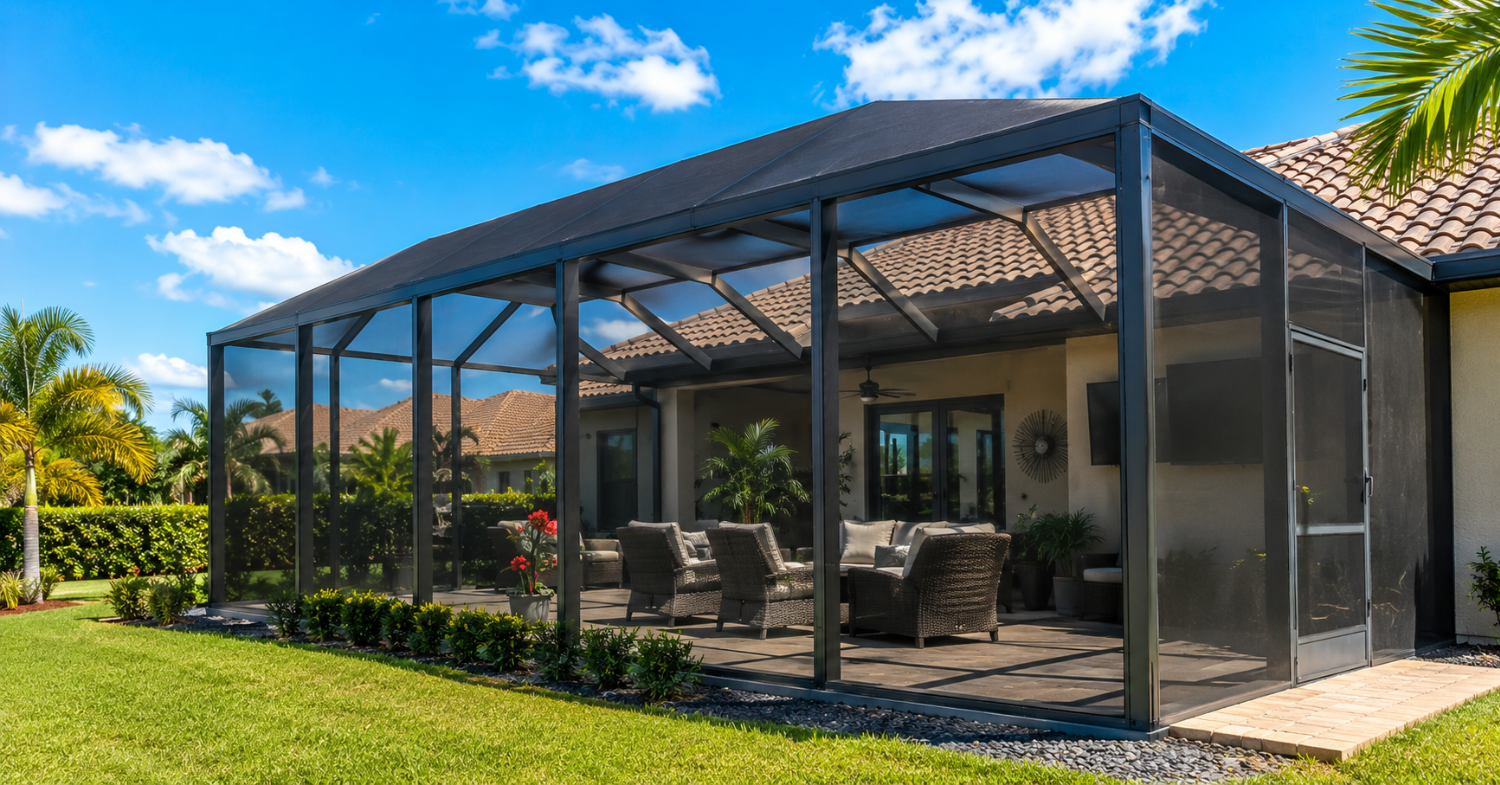
Selecting the right lanai screen types is one of the most impactful decisions in any Florida screen enclosure project, yet it is frequently treated as an afterthought. Most homeowners focus on the aluminum frame design, the paver patio inside the enclosure, or the door configuration, and choose the screen material almost at random based on price alone. In the Tampa Bay area, where no-see-um gnats are a year-round problem and summer afternoon sun on a west-facing enclosure can make it unusable without UV control, lanai screen types selection meaningfully affects how much you actually enjoy the space.
This guide explains what each of the major lanai screen types actually does, how the different materials perform under Florida’s specific climate conditions, and what the tradeoffs are in terms of airflow, visibility, insect control, and cost. Understanding these differences before your enclosure is installed is important because retrofitting the wrong screen type after installation is an avoidable expense that comes up regularly in the Tampa Bay market.
Why Lanai Screen Type Selection Matters in Florida
Florida’s climate creates specific performance demands for all lanai screen types that do not apply in most other states. The combination of intense UV radiation, year-round insect pressure from mosquitoes and no-see-um gnats, high humidity, and seasonal storm activity means that screen mesh selection is both a comfort decision and a durability decision.
UV degradation is the primary failure mechanism for all fiberglass and polyester screen materials in Florida. Standard fiberglass mesh in direct Florida sun typically shows brittleness and color fading within 7 to 10 years. Higher-grade materials with UV stabilizers last longer. Pet screen, with its heavier vinyl or polyester construction, is generally the most UV-resistant of the common lanai screen types. Solar screen, while effective at reducing UV entering the enclosure, itself degrades under prolonged sun exposure and has a typical service life of 10 to 15 years in Florida before replacement is recommended.
Standard Fiberglass Screen: The Baseline
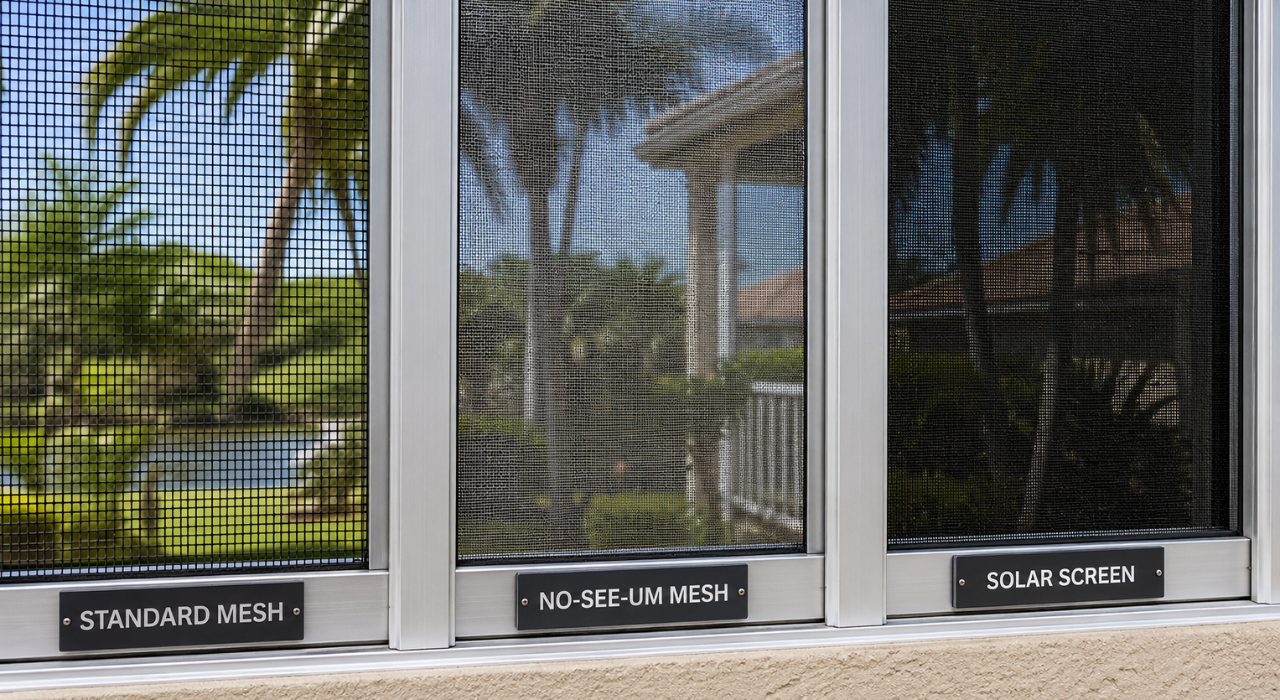
Standard fiberglass screen at an 18×14 thread-per-inch weave is the baseline for all lanai screen types comparisons. At 18 threads per inch horizontally and 14 vertically, this mesh has openings large enough to allow excellent airflow, clear outward visibility, and minimal visual interference from inside the enclosure.
For mosquito control, standard 18×14 fiberglass is effective: mosquitoes are too large to pass through the openings. For no-see-ums (biting midges), which are the most complained-about insect in coastal and near-coastal areas of Hillsborough and Manatee counties, standard 18×14 provides no protection at all. No-see-ums are smaller than the mesh opening and pass through freely.
Standard screen is the least expensive of the lanai screen types and is appropriate for enclosures where no-see-um pressure is low, the enclosure faces north or east (limiting direct sun exposure), and there are no pets that will contact the screen.
No-See-Um Screen: Fine Mesh for Florida Insects
No-see-um screen at a 20×20 or 20×30 weave (threads per inch) is the most popular upgrade lanai screen type in the Tampa Bay market. The finer weave closes the mesh opening enough to block biting midges and most small flying insects while remaining transparent enough to maintain reasonable outward views.
The tradeoff with no-see-um screen is airflow. A 20×20 weave reduces airflow through the screen by approximately 30 to 40 percent compared to standard 18×14. In a fully enclosed lanai, this means the space may feel less breezy on mild evenings, and ceiling fans become more important for comfort during warmer months. The airflow reduction also affects how quickly humidity dissipates inside the enclosure after rain, which can contribute to mildew on furniture if ventilation is not managed.
According to the University of Florida IFAS Extension, no-see-um gnats (Culicoides spp.) are active year-round in Florida’s coastal areas and are most intense at dawn and dusk. For enclosures within a mile of water or wetlands in Hillsborough and Manatee counties, no-see-um screen is generally the minimum recommended specification. The cost premium over standard screen is typically $1.50 to $3.00 per linear foot of screen panel, making it a modest upgrade relative to the total enclosure cost.
Pet Resistant Screen: Durability for Households with Animals
Pet resistant screen is a fundamentally different material category from the fiberglass lanai screen types described above. Pet screen is typically made from heavy-gauge vinyl-coated polyester and has a much coarser weave (around 9×9 threads per inch) that provides significantly higher tear and puncture resistance than standard or no-see-um fiberglass mesh.
The durability advantage of pet screen is substantial: it resists pawing, scratching, and impact from dogs or cats far better than any fiberglass option. A standard fiberglass screen panel will tear with minimal dog pressure. A pet screen panel typically withstands repeated dog contact without tearing for years under normal conditions.
The tradeoffs are significant. Pet screen has the lowest airflow of all common lanai screen types: the heavier vinyl construction and coarser weave creates more resistance to air movement. Pet screen also has the lowest visual clarity and the highest cost, running approximately $3.00 to $5.00 per linear foot more than standard fiberglass. For households where dogs or cats have regular access to the enclosure, pet screen is the only practical choice. For households where animal contact with the screen is occasional and controlled, standard or no-see-um fiberglass may perform adequately for several years before requiring panel replacement.
Solar Screen Mesh: Heat and UV Control
Solar screen mesh is the most specialized of the main lanai screen types. It is a tightly woven, typically charcoal or bronze mesh made from vinyl-coated polyester that blocks 80 to 90 percent of the sun’s direct radiation. The primary benefit is heat and UV reduction inside the enclosure.
For west-facing enclosures in Hillsborough and Manatee counties, where afternoon sun exposure is most intense from May through September, solar screen can meaningfully reduce the surface temperature of furniture, flooring, and occupants inside the enclosure. It also blocks most UV radiation, which extends the service life of furniture fabrics and pavers inside the enclosure.
The visual tradeoffs of solar screen are the most significant of any lanai screen type. Solar screen is dark (charcoal or bronze is standard), which reduces outward visibility significantly, especially in low-light conditions. Looking out through 80 percent solar screen at dusk is like looking through very dark sunglasses. From outside the enclosure, solar screen makes the interior contents nearly invisible, which some homeowners value for privacy and others find disorienting.
Solar screen reduces airflow by 40 to 50 percent compared to standard 18×14 mesh, making it the lowest-airflow option of all the major lanai screen types. Ceiling fans are strongly recommended in any enclosure using solar screen.
Ask Affordable Patio Which Screen Type Is Right for Your Enclosure
We install all major lanai screen types across Hillsborough and Manatee counties. Call (813) 777-5665 or contact us online for a free enclosure consultation.
Lanai Screen Types Comparison Table
| Screen Type | Weave | Insect Control | Airflow | UV Block | Cost Premium |
|---|---|---|---|---|---|
| Standard fiberglass | 18×14 | Mosquitoes only | Excellent | Minimal | Baseline |
| No-see-um screen | 20×20 / 20×30 | All small insects | Good (30-40% less) | Minimal | +$1.50-$3/lf |
| Pet resistant screen | ~9×9 | Mosquitoes (large mesh) | Low | Minimal | +$3-$5/lf |
| Solar screen mesh | Tight vinyl | Mosquitoes | Low (40-50% less) | 80-90% | +$2-$4/lf |
How to Choose the Right Screen for Your Enclosure
Choosing among the available lanai screen types starts with three questions specific to your property and lifestyle. First, is the enclosure location near water, wetlands, or an area with known no-see-um activity? If yes, no-see-um screen or finer is the minimum. Second, do you have dogs or cats that will have regular access to the enclosure? If yes, pet screen is the only durable option. Third, does the enclosure face west or southwest, with significant afternoon sun exposure in summer? If yes, solar screen or a combination approach (solar on the west-facing panels, standard or no-see-um on other exposures) is worth considering.
Many homeowners in Tampa, Brandon, Riverview, Apollo Beach, Bradenton, and Lakewood Ranch use a hybrid approach: no-see-um screen on the majority of enclosure panels for insect control, with solar screen on the west-facing panels for heat and UV control. This combination addresses Florida’s primary comfort challenges without sacrificing airflow on the more favorably oriented sides of the enclosure.
It is also important to note that different lanai screen types can be mixed within a single enclosure. There is no requirement to use a single screen material throughout. Affordable Patio installs hybrid screen specifications on request, and we discuss screen type options on every enclosure estimate.
How Affordable Patio Specifies Screen Material
Affordable Patio’s Florida team discusses lanai screen types on every screen enclosure project across Hillsborough and Manatee counties. We do not default to the cheapest mesh without a conversation about what the homeowner actually needs from the enclosure. Our on-site estimate process includes a discussion of the enclosure’s orientation, the proximity to water or wetland areas, pet access, and sun exposure timing before we recommend a specific screen type.
We supply and install all four major lanai screen types: standard fiberglass, no-see-um screen, pet resistant screen, and solar screen. All screen materials we use meet Florida’s UV stability requirements for enclosure applications. Our lanai screen enclosure page includes portfolio photos of completed enclosure projects across Tampa Bay, and our 3-year warranty covers all screen panel installations. Visit our Florida services page to learn more about our full outdoor living offerings.
Frequently Asked Questions
Can I mix different screen types in the same enclosure?
Yes. Mixing lanai screen types within a single enclosure is common and practical in Florida. The most typical combination is no-see-um screen on most panels for insect control and solar screen on the west-facing panels for afternoon sun and UV management. Different screen types require no special framing modification and can be installed in the same job. Affordable Patio installs hybrid screen specifications on request across all enclosure projects in Hillsborough and Manatee counties.
How long does no-see-um screen last in Florida’s climate?
No-see-um screen in a Florida enclosure typically lasts 8 to 12 years before UV degradation causes brittleness and color fading. The exact service life depends on direct sun exposure, storm frequency, and whether pets or debris contact the screen. No-see-um screen on south or west-facing panels degrades faster than on north or east-facing panels. Rescreening individual panels as they show wear is more cost-effective than waiting for the entire enclosure to need replacement.
Does solar screen block enough UV to protect furniture inside the lanai?
An 80 to 90 percent solar screen mesh blocks the majority of UV radiation and significantly slows the fading and degradation of furniture fabrics, cushion materials, and paver surfaces inside the enclosure. It does not provide 100 percent UV blocking, so some fading will still occur over time. Solar screen is the most effective of the common lanai screen types for UV protection of interior contents, and it also reduces the surface temperature of furniture significantly on west-facing enclosures during summer afternoons in Tampa Bay.
Is pet screen available in no-see-um weave sizes?
Standard pet resistant screen is typically woven at approximately 9×9 threads per inch, which is too coarse to block no-see-um gnats. Some manufacturers produce a “super screen” product that combines heavier-gauge fiberglass construction with a finer weave (around 18×14), offering better tear resistance than standard fiberglass while maintaining more airflow than true pet vinyl screen. However, this material is not as tear-resistant as heavy vinyl pet screen. Households that need both no-see-um control and pet resistance typically use a separate solution for each: pet screen on low panels where animals contact the mesh, no-see-um screen on upper panels.
What screen type is most common in new lanai installations in the Tampa Bay area?
Based on our installation experience across Hillsborough and Manatee counties, no-see-um screen at 20×20 weave is the most frequently specified upgrade from standard fiberglass in new Florida enclosures. The no-see-um gnat problem in coastal and near-coastal areas of Tampa Bay is significant enough that most homeowners who have lived in the area for more than one summer understand the need for finer mesh. Standard 18×14 fiberglass is most common in budget builds and in inland locations with lower insect pressure.
Conclusion: Match Your Screen to Your Florida Enclosure
The right lanai screen types for your enclosure depend on where your property sits relative to water, what direction the enclosure faces, whether you have pets, and how you prioritize airflow versus insect control versus UV protection. None of the four major lanai screen types is universally superior: each makes a specific set of tradeoffs that match different homeowner situations.
For most Tampa Bay homeowners near the bay or wetlands, no-see-um screen is the minimum for comfortable insect-free use. For west-facing enclosures, solar screen on the sun-exposed panels meaningfully extends the usable hours in summer. For pet owners, pet resistant screen is the only material that survives regular animal contact. Standard fiberglass is appropriate where insect pressure is low and budget is the primary driver.
Affordable Patio’s Florida team specifies and installs all major lanai screen types and will discuss your specific enclosure orientation, insect environment, and use case on every free estimate. Call (813) 777-5665 or visit our enclosure page to get started.
Get a Free Lanai Screen Enclosure Estimate Across Tampa Bay
Affordable Patio serves Hillsborough and Manatee counties including Tampa, Brandon, Riverview, Apollo Beach, Ruskin, Bradenton, Lakewood Ranch, Palmetto, and Parrish. Call (813) 777-5665 or contact us online.