
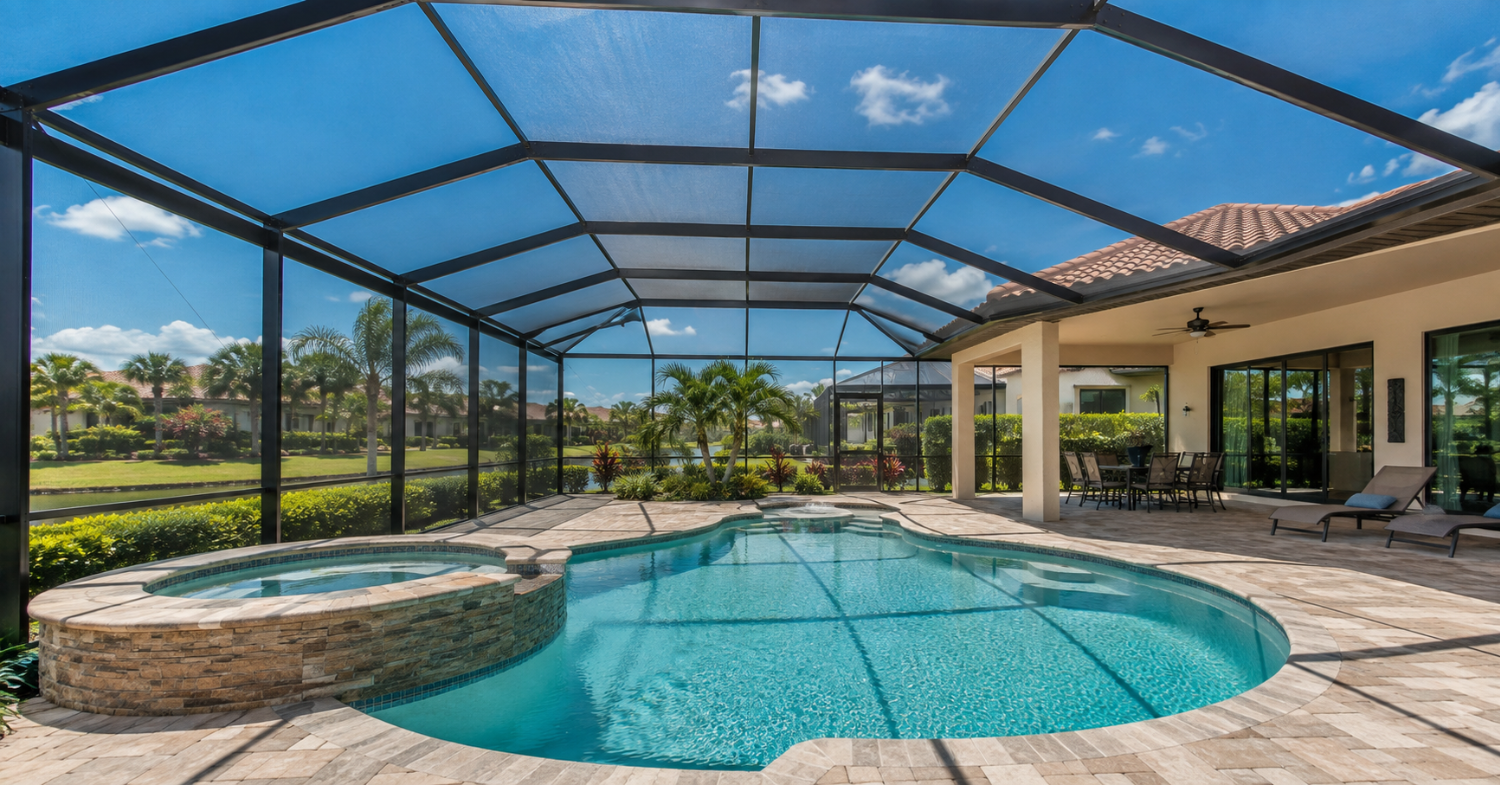
The hurricane rated screen enclosure is the highest-trust topic in Florida’s outdoor living market, and it is also one of the most misrepresented. In the Tampa Bay area, almost every screen enclosure contractor describes their product as “hurricane rated” in some form. The problem is that this phrase means different things depending on the frame gauge, the wind zone, the footer design, and whether the product has actually received a Florida product approval. For a Tampa Bay homeowner signing a contract for a screen enclosure addition, understanding what hurricane rated really means is the single most important piece of due diligence before the job starts.
This guide explains the Florida Building Code framework for screen enclosure wind loads, what frame specifications actually determine whether a hurricane rated screen enclosure designation is legitimate, and how to verify any contractor’s claims before you commit. Every detail here is grounded in Florida’s publicly available wind code documents and product approval database, not in marketing claims.
What Hurricane Rated Actually Means
A hurricane rated screen enclosure claim is only meaningful when it references a specific wind load design pressure. Wind load is measured in pounds per square foot (psf) and calculated based on the building’s exposure category, height, and the local design wind speed. In the Tampa Bay area, the Florida Building Code 7th Edition sets a basic wind speed of 130 mph for most of Hillsborough County and 140 mph for coastal areas and much of Manatee County.
A hurricane rated screen enclosure must be engineered, or use a pre-engineered product approval system, to resist the design pressures associated with those wind speeds. This means the frame members, the anchor bolts into the concrete footer, the screen mesh tension, and the connection point to the home’s structure all need to perform under the calculated design load. The “hurricane rated” label without specific psf values and a product approval number is a marketing phrase, not an engineering designation.
Florida Wind Zones and Your County
Florida is divided into wind speed zones under the Florida Building Code. Hillsborough County falls primarily in the 130 mph basic wind speed zone for inland areas, with some coastal areas (Tampa Bay shoreline, Apollo Beach) closer to the 140 mph zone. Manatee County, with its Gulf Coast exposure, falls largely in the 140 to 150 mph range for most residential areas.
These wind speed designations directly control what qualifies as a hurricane rated screen enclosure in your specific ZIP code. A product approval rated for 130 mph is compliant in inland Hillsborough County but may not meet the design requirement in coastal Manatee County. Contractors operating across Hillsborough and Manatee counties need to use the correct wind zone specification for each job location, which is verified during the permit review process.
According to the Florida Building Commission’s product approval database, aluminum enclosure systems are listed by product approval number with specific wind load ratings. Homeowners can search this database by product approval number to verify that the system their contractor proposes is actually listed for the required design pressure in their wind zone.
Frame Specifications That Drive Wind Ratings
The aluminum frame is the structural backbone of any hurricane rated screen enclosure. Frame performance varies significantly based on two factors: wall thickness (gauge) and alloy series.
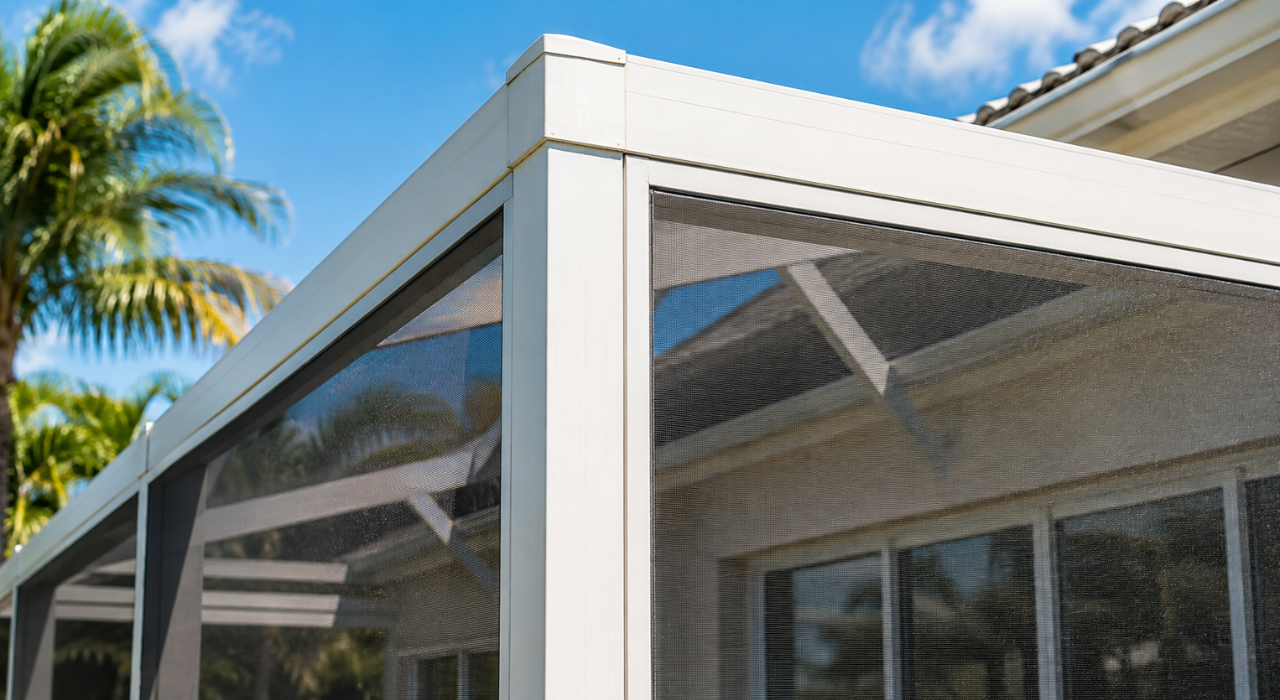
Gauge: Standard residential screen enclosures use aluminum extrusions in the 0.040 to 0.050-inch wall thickness range. A hurricane rated screen enclosure system designed for 130 to 150 mph wind loads typically uses 0.050 to 0.080-inch wall thickness depending on member span and load path. Thicker wall extrusions cost more but carry higher product approval wind ratings. When a contractor quotes a screen enclosure frame, ask for the specific extrusion specification, not just “heavy gauge” or “commercial grade.”
Alloy: Most commercial aluminum enclosure systems use 6063-T5 or 6061-T6 alloy. The T6 temper designation provides significantly higher tensile strength than T5 and is preferred in hurricane rated screen enclosure applications designed for the highest wind load zones.
Footer depth and anchor pattern: The aluminum upright posts of any hurricane rated screen enclosure must be anchored to a concrete footer or stem wall that meets the design’s uplift and lateral load requirements. In Florida’s sandy soils, footer embedment depth matters enormously. A 12-inch footer in sandy Hillsborough County soil provides far less resistance than a footer embedded to the engineered depth with the correct anchor bolt pattern.
Florida Building Code Requirements for Screen Enclosures
The Florida Building Code (FBC) 7th Edition governs screen enclosure construction through Chapter 16 (Structural Design) and Chapter 20 (Aluminum). All screen enclosures in Florida require a building permit, and the permit submittal must include either a product approval system documentation package or engineer-of-record stamped drawings that demonstrate compliance with the applicable wind load requirements.
The FBC allows two compliance paths for screen enclosures. The first is a manufacturer’s product approval: the aluminum framing system has been tested and approved by the Florida Building Commission for specific wind load conditions, and the permit submittal references the approval number and installation instructions. The second path is site-specific engineering: a licensed Florida structural engineer designs the enclosure for the specific site conditions and stamps the drawings.
A hurricane rated screen enclosure built without a permit, or built using a product approval system installed in conditions outside its approved parameters (incorrect wind zone, modified footer specifications), does not meet the Florida Building Code regardless of what the sales material says. This matters for both safety and insurance: Florida homeowners’ insurers increasingly require documentation of permit completion and product compliance for hurricane coverage on screen enclosure additions.
Wind Rating Comparison Table
| Frame Type | Typical Wall Thickness | Wind Load Rating | Code Application |
|---|---|---|---|
| Standard residential | 0.040 in | Up to 110 mph (varies) | Older code / grandfathered |
| Heavy residential | 0.050 in | Up to 130 mph (with approval) | Inland Hillsborough County |
| Commercial / hurricane rated | 0.060 to 0.080 in | 130 to 150+ mph | Coastal and Manatee County |
| Engineer-of-record system | Varies by design | Site-specific | Any wind zone |
Ask Us for Our Product Approval Documentation
Affordable Patio uses permitted, code-compliant aluminum enclosure systems for every project across Hillsborough and Manatee counties. Call (813) 777-5665 or contact us online to request product approval documentation before you sign.
How to Verify a Hurricane Rated Screen Enclosure Claim
Before signing any screen enclosure contract in Florida, ask the contractor for three specific pieces of information:
1. The product approval number. Look it up in the Florida Building Commission’s product approval database at floridabuilding.org. Confirm that the system is approved for your wind zone’s design pressure, not just for a lower-pressure zone.
2. The permit number or permit application confirmation. A legitimate hurricane rated screen enclosure contractor pulls a permit before work begins. If a contractor proposes to build without a permit, or “handle it after,” walk away.
3. The footer specification. Ask for the footer depth, diameter, and anchor bolt pattern specified for your project. This should match the product approval installation instructions or the engineer’s drawings, not a generic “standard footer.”
The permit documentation for a hurricane rated screen enclosure project is a public record in Florida. After the project is completed, the inspection record and permit close-out are accessible through your municipality’s building department portal and serve as documentation for your homeowners’ insurance carrier.
How Affordable Patio Documents Wind Compliance
Affordable Patio pulls permits for every screen enclosure project across Hillsborough and Manatee counties. We use aluminum framing systems with current Florida product approvals appropriate for the wind zone at each job site location, and we provide customers with the product approval documentation and permit number at project kickoff, not after completion.
Our hurricane rated screen enclosure installations are designed to meet or exceed the FBC requirements for each specific ZIP code, whether that is 130 mph inland Tampa or 140 mph coastal Apollo Beach or Palmetto. If you have been quoted a screen enclosure by another contractor and want a second opinion on the wind rating claims or product specifications, our lanai and enclosure team is available for a free on-site review.
Every Affordable Patio screen enclosure comes with our 3-year warranty on materials and workmanship, and with complete permit and product documentation in the project file. Visit our Florida services page to learn more about our enclosure and lanai work across the Tampa Bay service area.
Frequently Asked Questions
Does a hurricane rated screen enclosure protect my home during a hurricane?
A hurricane rated screen enclosure is designed to remain structurally intact under the design wind loads for your wind zone, not to act as a storm shelter for people. The structure is engineered to resist uplift, racking, and connection failure at the design wind speed. In practice, screen mesh panels will blow out or tear in extreme winds above the design pressure, but a properly rated aluminum frame should remain connected to its footers and to the home. The enclosure does not provide hurricane impact protection for the home’s walls or windows.
What wind speed does a standard screen enclosure in Hillsborough County need to handle?
Most inland Hillsborough County residential areas fall in the 130 mph basic wind speed zone under the Florida Building Code 7th Edition. Coastal areas along the Tampa Bay shoreline may require 140 mph compliance. The applicable design pressure in pounds per square foot (psf) depends on the structure’s height, exposure category, and location within the county. The permit review process confirms which wind speed applies to your specific address.
Can my homeowners insurance require documentation of a hurricane rated screen enclosure?
Yes. Florida insurers increasingly require documentation of permitted construction for structures added to a home. A screen enclosure built without a permit, or one that does not have a completed inspection record, may be excluded from coverage or complicate a claim. Obtaining a permit and retaining the inspection completion record and product approval documentation is the correct approach for any hurricane rated screen enclosure addition in Florida.
How do I find a contractor who actually builds hurricane rated screen enclosures to code?
Ask any prospective contractor for the product approval number for the framing system they plan to use, confirm it is listed on the Florida Building Commission’s database, and ask for a copy of the permit application. Legitimate contractors who build hurricane rated screen enclosures pull permits before work starts and can provide product documentation on request. Contractors who resist these questions or propose building without permits should be disqualified.
Does a hurricane rated screen enclosure cost more than a standard enclosure?
Yes, typically 15 to 30 percent more depending on the wind zone and the frame specification required. In Manatee County’s higher wind exposure zones, the premium is at the higher end because heavier extrusions, deeper footers, and more robust anchor patterns are required. In inland Hillsborough County, the cost premium for a fully code-compliant hurricane rated screen enclosure over a non-permitted standard enclosure is meaningful but represents the difference between a structure that holds and one that may not when it matters most.
Conclusion: Wind Rating Is a Document, Not a Promise
A hurricane rated screen enclosure is only as good as its product approval number, its permit record, and its installed footer specification. In the Tampa Bay market, the phrase “hurricane rated” appears in nearly every screen enclosure advertisement. The homeowners who get the actual protection are the ones who ask for documentation before signing.
Florida Building Code compliance for screen enclosures is not complicated to verify. The product approval database is public. The permit record is public. The footer specification should be in the contractor’s drawings. Any contractor who builds hurricane rated screen enclosures to code will answer these questions without hesitation and provide documentation proactively.
Affordable Patio builds every screen enclosure in Hillsborough and Manatee counties with full permits, product-approved aluminum systems, and documented wind compliance. Call (813) 777-5665 or visit our lanai enclosure page to get a code-compliant estimate for your project.
Get a Permitted, Code-Compliant Screen Enclosure Estimate
Affordable Patio serves Tampa, Brandon, Riverview, Apollo Beach, Ruskin, Sun City Center, Bradenton, Lakewood Ranch, and all of Hillsborough and Manatee counties. Call (813) 777-5665 or contact us online for your free estimate.