
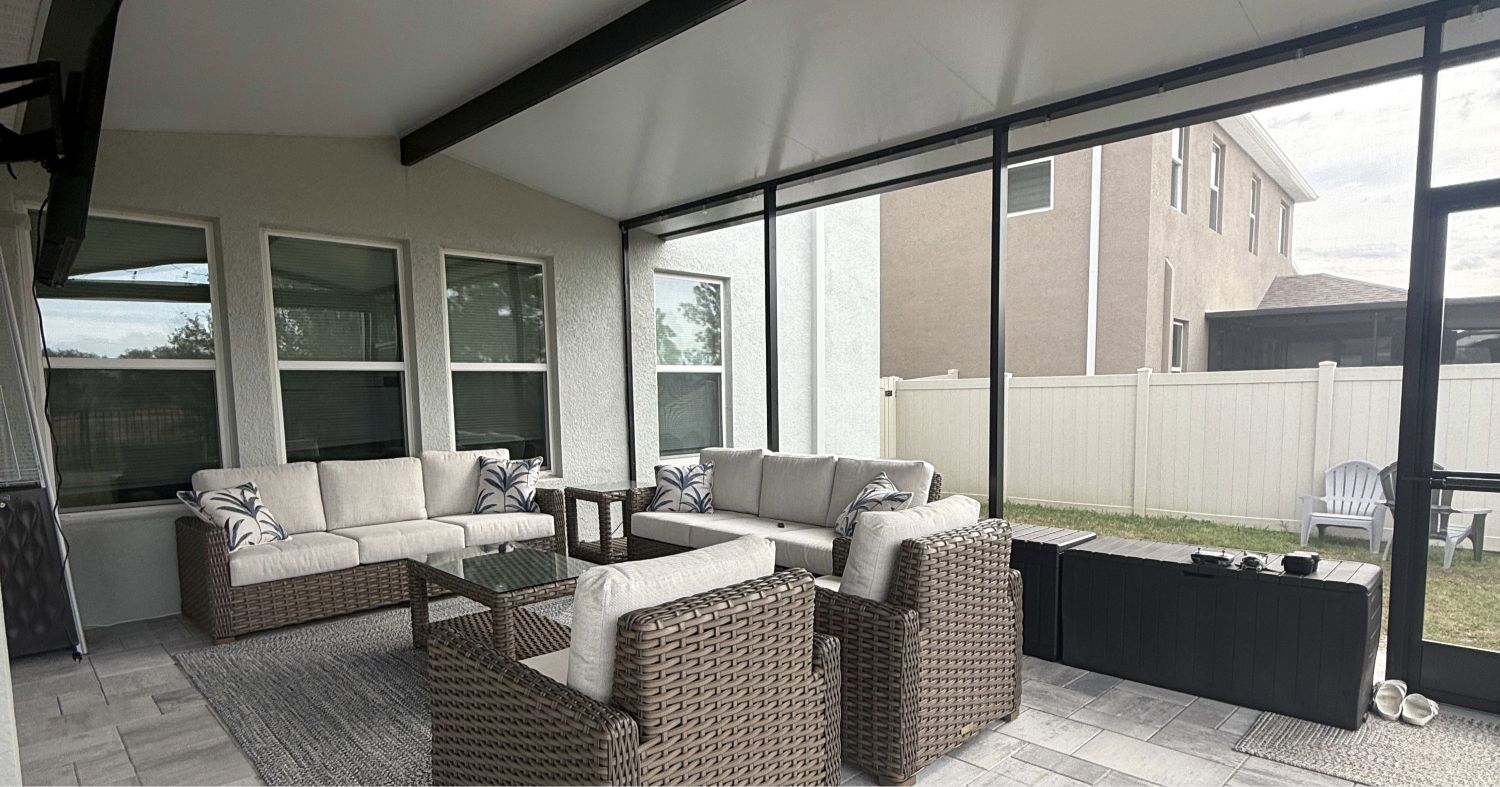
Lanai enclosure kits are the starting point for Florida homeowners who want to build their own screened outdoor space without sourcing every component individually — but what a kit actually includes, what it leaves out, and how well it holds up to Florida’s wind and weather conditions varies significantly between suppliers and product lines. A kit that looks complete in an online listing may arrive missing engineering documentation required for the permit, or with frame components rated for a lower wind zone than your Hillsborough or Manatee County property requires. With over 15 years of lanai enclosure experience across the Tampa Bay and Bradenton areas, we know exactly what separates a quality kit from one that will cost more to correct than it saved. This guide covers what lanai enclosure kits typically include, what they consistently leave out, the major suppliers serving Florida, and the questions to ask before you purchase.
Table of Contents
Quick Answer: Lanai Enclosure KitsLanai enclosure kits are pre-packaged aluminum frame systems that include structural components, connectors, and usually screen material for a specified enclosure footprint. Quality kits from reputable Florida suppliers cost $1,500 to $5,000 for the materials alone on a standard residential lanai. Key factors to verify before purchase: wind load rating (must meet your county’s building code), whether engineering documentation is included for the permit, and what foundation anchoring hardware is provided. Many kits look complete online but arrive without the permit-ready documentation or site-specific anchoring components your Florida county requires.
What Lanai Enclosure Kits Typically Include
Lanai enclosure kits from established Florida suppliers typically bundle the core structural components into a single purchase. Understanding exactly what is in the package before ordering prevents the most common kit purchase problem: discovering missing components after materials are delivered and the project is ready to begin.
A complete kit from a quality Florida supplier generally includes: aluminum frame extrusions cut to the specified dimensions of your enclosure (vertical posts, horizontal beams, and diagonal bracing where required by the design), aluminum frame connectors and corner pieces with appropriate fasteners, screen spline channel integrated into the frame extrusions, screen material in the specified mesh type for the purchased kit, a spline to secure the screen in the channel, and door frame components with hinges and a latch for the pass-through entry. Some kits also include a basic roof panel or shade structure for covered lanai designs, though open-top screen enclosures are more common in Florida’s residential market.
Higher-quality options marketed specifically to the Florida market distinguish themselves with documentation. A kit that includes the manufacturer’s wind load certification, fastener specifications, and an installation manual that references Florida Building Code sections is significantly more useful for the permit process than one that provides only component diagrams. When comparing kits, the documentation package is as important as the physical components. Our Florida lanai screen enclosures service page details the installation standards and structural specifications we follow on every professional enclosure we build.
What Lanai Enclosure Kits Consistently Leave Out
Even well-specified kits consistently exclude the components and documentation that are specific to your site rather than the kit’s standard configuration. These exclusions are not flaws in the kits themselves — they reflect the reality that site-specific elements cannot be pre-packaged for a property the manufacturer has never seen. Understanding these exclusions upfront prevents the budget shock that comes with discovering them mid-project.
- Foundation and anchoring hardware: Most kits do not include the concrete anchors, base plates, or hold-down hardware required to attach the frame to your specific slab or footing. Florida Building Code requires anchoring systems rated to resist wind uplift, and the correct anchoring hardware depends on your slab’s composition and thickness — information the kit manufacturer does not have. Expect to source anchoring hardware separately, typically $150 to $400 depending on the frame size and local code requirements.
- Permit-ready engineering plans: A building permit in Hillsborough or Manatee County requires submitted plans that include the enclosure’s structural layout, connection details, and wind load compliance documentation. Most kits provide manufacturer wind load certifications, but converting those into permit-ready drawings for your specific property typically requires either your own drafting work or a paid engineering consultation. Some premium kit suppliers offer engineering plan services for an additional $400 to $1,200.
- Site preparation and concrete work: If your lanai does not already have a suitable concrete slab, installing one is a prerequisite that is never included in a kit. A new slab for a standard 300 to 400 square foot lanai area in Florida typically costs $1,500 to $3,500 installed by a concrete contractor. Even an existing slab may need edge repairs or surface leveling before the kit frame can be properly anchored.
- Specialty tools: Screen rolling tools, spline insertion tools, and concrete anchor drill bits are required for installation but are never included in a kit purchase. Budget $200 to $600 for tool acquisition if you do not already own appropriate equipment.
- Permit fees: Building permit fees in Hillsborough and Manatee County typically run $200 to $500 for residential screen enclosure applications and are paid directly to the county, not included in any kit pricing.
Types of Lanai Enclosure Kits Available in Florida
These products are not a single product category. Florida homeowners encounter several distinct formats when researching suppliers, and each format carries different trade-offs in cost, installation complexity, and code compliance.
Standard Modular Frame Kits
The most common option is a standard modular frame system where the aluminum extrusions are pre-cut to standard bay widths and heights. These kits work well for enclosures with rectangular footprints and standard ceiling heights (typically 8 to 9 feet). The modular format limits custom sizing but reduces cost because the components are manufactured in standardized runs. Standard modular kits are the most likely to have Florida-specific wind load certifications because manufacturers invest in code compliance documentation for their highest-volume products.
Custom-Cut Frame Kits
Custom-cut kits are ordered with frame extrusions cut to the specific dimensions of your enclosure. These are appropriate for non-standard enclosure sizes, irregular footprints, or projects where the standard bay widths of modular kits do not fit the property. Custom-cut kits cost more than modular alternatives but reduce on-site cutting and waste. Lead times for custom-cut kits from Florida suppliers typically run two to four weeks versus one to two weeks for standard modular kits in stock.
Screen Room Kits (with Roof Structure)
Screen room products include both the screen wall system and a roof structure — typically aluminum with a translucent or opaque panel system. These are more complex to install than open-top screen enclosures and have more demanding permit requirements because the roof adds structural load. In Florida, screen room kits with attached roofs must meet additional wind uplift requirements under the Florida Building Code. These kits are the most expensive category, typically $4,000 to $12,000 for materials alone on a standard residential size.
| Kit Type | Material Cost Range | Installation Complexity | FL Code Docs Typically Included | Best For |
|---|---|---|---|---|
| Standard Modular Frame | $1,500 – $3,500 | Moderate | Often yes — verify before purchase | Standard rectangular lanais, first-time builders |
| Custom-Cut Frame | $2,500 – $5,000 | Moderate – High | Varies by supplier | Non-standard dimensions, irregular footprints |
| Screen Room (with roof) | $4,000 – $12,000 | High | Often requires supplemental engineering | Fully covered outdoor rooms, premium installations |
| Replacement Screen Kit | $200 – $800 | Low | N/A — no structural change | Replacing damaged screen on existing frame |
Not sure which kit type is right for your lanai? Contact Affordable Patio Florida — we assess your space, explain what Florida Building Code requires for your specific property, and give you a professional installation estimate for comparison.
Where to Find Lanai Enclosure Kits in Florida
These products are available from several categories of supplier that serve the Florida market. Each channel has trade-offs in pricing, documentation quality, and customer support for the permitting process.
Florida-Specific Screen Enclosure Suppliers
The best source for enclosure kits intended for Florida use is a supplier who specifically services the Florida market and understands the state’s wind load requirements. Florida-based aluminum enclosure suppliers — including national companies with Florida distribution — stock products with wind load certifications appropriate for Hillsborough and Manatee County designations. These suppliers are familiar with what building departments in Tampa, Brandon, Bradenton, and surrounding municipalities require for permit submissions and can advise on documentation before you order. Prices from Florida-specific suppliers are typically higher than generic online alternatives, but the code compliance documentation justifies the premium for any project that requires a permit.
Online National Suppliers
National online suppliers sell aluminum enclosure systems at competitive prices, but their documentation and code compliance support for Florida-specific requirements varies widely. Before ordering from an online supplier for use in Hillsborough or Manatee County, confirm that the wind load rating matches your property’s designated wind zone, that the manufacturer provides a signed letter or data sheet certifying the rating, and that the supplier can assist with any additional documentation your building department requests during permit review. Products from general online suppliers that lack Florida wind load certification will need supplemental engineering review to obtain a permit, adding $500 to $1,500 to the project cost.
Home Improvement Stores
Big-box home improvement stores carry replacement screen materials and basic screen door kits but do not typically stock complete structural enclosure systems for residential installation. They are a useful source for screen mesh, spline, and basic installation tools, but the frame systems and structural components required for a full enclosure are not their core product. For screen material and hand tools, big-box stores offer competitive pricing and immediate availability. For the structural frame kit, a dedicated enclosure supplier is the appropriate source. See our pool screen installation overview for a detailed breakdown of the components and process involved in a full Florida enclosure project.
Already comparing kit costs to professional installation pricing? Use our Florida Build and Price tool to get a ballpark estimate for professional lanai enclosure installation and compare it against the full cost of kit materials, tools, permits, and your time.
Florida-Specific Requirements Lanai Enclosure Kits Must Meet
Any enclosure kit for Florida use must satisfy the Florida Building Code’s requirements for wind resistance, anchoring, and structural connections. These requirements are not optional — they are verified during the permit inspection process and a non-compliant installation must be corrected before the permit can be closed. According to the National Association of Home Builders, Florida’s screen enclosure code requirements are among the most specific in the country because of the documented relationship between improperly built enclosures and storm damage during tropical weather events.
The key Florida-specific requirements these kits must satisfy include: a wind load rating appropriate for the property’s wind zone designation (most of Hillsborough County inland areas are designated 130 mph; coastal and peninsula locations may require higher ratings), aluminum frame gauge specifications that match or exceed the required structural strength for the rated wind load, connection details between frame members that meet the code’s fastener and joint requirements, and anchoring specifications for attaching the frame to the foundation slab that meet the uplift resistance requirements for the wind zone. A product that does not come with documentation certifying compliance with these requirements will require supplemental engineering before the permit can be issued.
HOA requirements represent a second layer of compliance that operates alongside the county building permit. Many Hillsborough and Manatee County residential communities have architectural guidelines that specify permissible frame colors (typically bronze, white, or mill/silver), screen mesh type and color (charcoal is almost universally permitted; some HOAs restrict colored screens), and minimum setback distances from property boundaries. Confirm HOA requirements before purchasing any kit so that the frame color and screen type you order are compliant. Our Florida installation process overview covers how we manage permitting and HOA coordination on every professional enclosure project.
Lanai Enclosure Kits vs. Professional Custom Installation
These products position themselves as the cost-effective alternative to professional installation, and the material cost comparison is real. But the full cost comparison needs to account for what kits provide versus what professional installation delivers as a complete service.
A professional enclosure installation in Hillsborough or Manatee County includes site evaluation, permit application and management, custom framing to the exact dimensions of the space, Florida Building Code-compliant anchoring with the appropriate engineer certifications, screen installation to professional tension standards, final inspection scheduling and attendance, and a workmanship warranty that covers defects in installation. None of these service elements are included in a kit purchase — they represent the labor and expertise value that professional installation prices reflect.
The homeowner who purchases one of these kits and successfully builds their own enclosure saves the labor cost. The homeowner who encounters a permit complication, a failed inspection, or a structural issue that requires professional correction often spends more in total than a professional installation would have cost originally. The right choice between lanai enclosure kits and professional work depends on the specific project, the homeowner’s construction experience, and an honest assessment of the risks and time commitment involved. View completed professional lanai enclosure projects on our Florida jobs in progress page to see the finished quality our installations deliver.
Frequently Asked Questions
What do lanai enclosure kits typically cost in Florida?
Standard residential lanai enclosure kits in Florida typically cost $1,500 to $5,000 for materials depending on kit type, enclosure size, and supplier. Standard modular frame kits for a 300 to 400 square foot lanai run $1,500 to $3,500. Custom-cut frame kits for non-standard dimensions run $2,500 to $5,000. Screen room kits with attached roof structures run $4,000 to $12,000. These material costs do not include permit fees, anchoring hardware, tools, concrete work, or any engineering documentation services needed for the permit process.
Are lanai enclosure kits rated for Florida wind load requirements?
Some are and some are not. Products marketed specifically to the Florida market by Florida-based suppliers typically include wind load certifications appropriate for Hillsborough and Manatee County’s designated wind zones. Generic national kits sold online may carry a general wind load rating that does not align with Florida’s specific county designations. Before purchasing any kit for use in Florida, confirm that the manufacturer provides a signed certification letter stating the kit’s wind load rating and that the rating meets or exceeds your county’s building code requirement for the designated wind zone where your property is located.
Can I get a building permit using a lanai enclosure kit in Hillsborough County?
Yes, if the product includes appropriate documentation. Hillsborough County building permits for screen enclosures require submitted plans that show the enclosure’s structural layout, dimensions, connection details, and wind load compliance. A kit that comes with manufacturer certification of the wind load rating, fastener specifications, and installation details that reference Florida Building Code provides the basis for a permit application. If the kit’s documentation is insufficient, the permit review process will pause until supplemental engineering documentation is provided, which typically costs $500 to $1,500 from a Florida-licensed structural engineer.
How long does it take to install lanai enclosure kits?
For a homeowner with construction experience working with a helper, a standard modular kit for a 300 to 400 square foot enclosure typically takes five to eight days of physical installation work. This does not include the two to four week permit processing period in Hillsborough County or the time required for site preparation if the concrete slab needs work. Total project timeline from permit application to final inspection typically runs six to ten weeks. First-time builders should plan for additional time for learning curve and any permit revisions required during review.
What is the difference between lanai enclosure kits and a screen room kit?
These kits typically refer to open-top screen wall systems — aluminum frame sides with screen panels but no roof structure. Screen room kits include both the screen wall system and a roof structure, typically with aluminum framing and translucent or opaque panel inserts. Screen room kits are more complex to install, have more demanding permit requirements because the roof adds structural load and wind uplift forces, and cost significantly more — $4,000 to $12,000 versus $1,500 to $5,000 for an open-top kit. In Florida, most residential lanai enclosures are attached to an existing covered structure, so the open-top screen wall kit is the more common purchase.
Get the Full Picture Before You Buy Lanai Enclosure Kits
These kits are a legitimate path to building your own Florida screen enclosure when you select the right product, verify Florida wind load certification, budget for the permit and site-specific components that no kit includes, and have the construction experience to complete the project to code. Affordable Patio has installed hundreds of lanai screen enclosures across Hillsborough and Manatee County over 15+ years — and we are happy to give any homeowner an honest professional estimate to compare against the full true cost of the kit route. Contact us today for a free on-site evaluation and written quote, so you can make an informed decision with real numbers on both sides.