
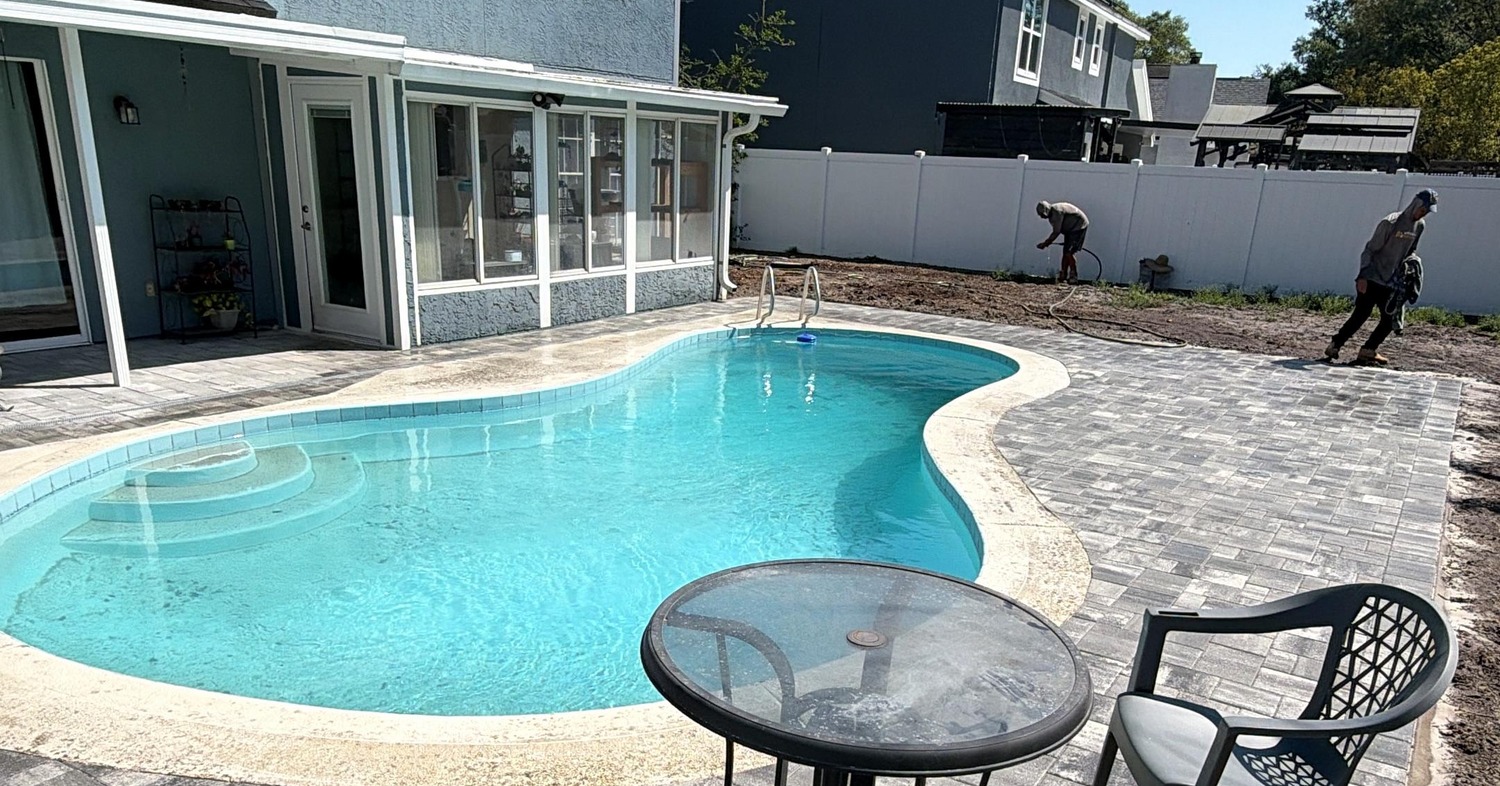
The paver patio vs stamped concrete debate comes up in nearly every backyard project consultation we hold with Florida homeowners. Both options look appealing in photos, both cost more than plain poured concrete, and both have passionate advocates. But the choice is not a close call once you understand how each material performs in Florida’s specific climate conditions — UV intensity, frequent afternoon rain, sandy soil movement, and temperature swings that stress rigid surfaces. This guide gives you an honest side-by-side comparison so you can make the right call for your budget, your yard, and your timeline.
In the paver patio vs stamped concrete comparison, pavers cost more upfront — $8 to $20 per square foot installed versus $6 to $12 for stamped concrete — but outperform stamped concrete significantly in Florida’s climate. Pavers allow individual unit replacement, flex without cracking under soil movement, and don’t require full resurfacing when damaged. Stamped concrete looks great initially but is prone to cracking and color fading in intense UV conditions, and repairs are almost impossible to make invisibly.
Paver Patio vs Stamped Concrete: Upfront Cost
The first thing most homeowners want to know is price. Here’s an honest breakdown for Florida residential projects:
| Category | Paver Patio | Stamped Concrete |
|---|---|---|
| Installed cost (per sq ft) | $8 – $20 | $6 – $12 |
| 300 sq ft project | $2,400 – $6,000 | $1,800 – $3,600 |
| Reseal frequency | Every 3-5 years (optional) | Every 1-3 years (required) |
| Crack repair cost | $50 – $200 per unit replaced | $500 – $3,000+ (visible seam) |
| Full replacement lifespan | 25-50+ years | 10-20 years |
Stamped concrete wins the paver patio vs stamped concrete upfront cost comparison for most project sizes. The gap narrows when you factor in reseal costs over time — stamped concrete requires mandatory resealing every one to three years to protect the color and stamp pattern, while paver sealing is optional and less frequent.
Paver Patio vs Stamped Concrete: Durability in Florida’s Climate
This is where the comparison shifts dramatically in pavers’ favor for Florida installations. Florida’s combination of UV intensity, high heat, frequent rain, and sandy soil creates conditions that accelerate concrete deterioration at rates northern installers may not account for.
How Stamped Concrete Handles Florida Conditions
Stamped concrete is a monolithic slab. When any part of it cracks — and in Florida’s shifting sandy soil, cracks eventually occur — the damage is visible across the entire surface. Color sealers fade significantly faster in intense Florida UV than in northern climates, often requiring recoating within 18 months rather than the 3-year cycle advertised on product labels. Once the sealer degrades, the stamped pattern absorbs stains from sunscreen, pool chemicals, and organic debris at an accelerated rate.
How Pavers Handle Florida Conditions
Performance diverges most clearly when soil movement occurs. Individual pavers flex and shift independently rather than cracking as a single rigid unit. If a section settles or heaves, that section can be lifted, the base releveled, and the same pavers reset — often without the repair being detectable afterward. This is impossible with stamped concrete, where any patch creates a visible color and texture mismatch.
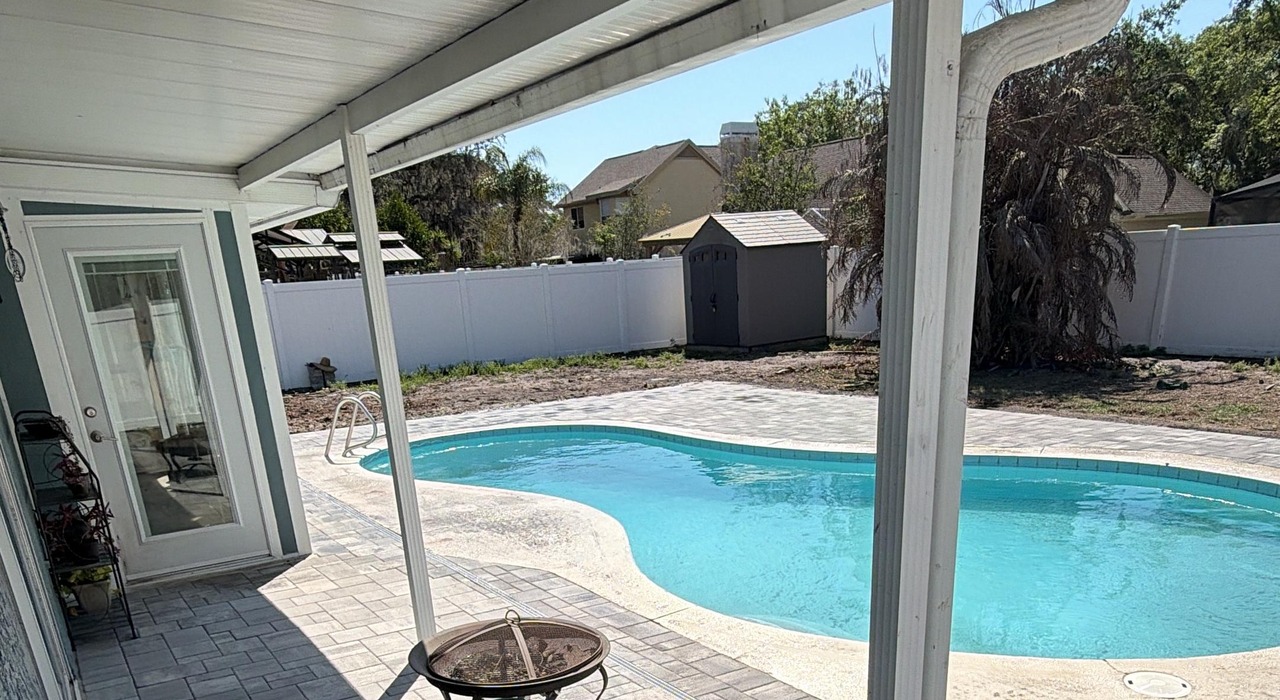
For pool surrounds specifically, the choice is even clearer. Pool chemicals and the perpetual wet-dry cycle degrade stamped concrete sealer rapidly. Travertine and Belgard pavers are designed for continuous moisture exposure and maintain their appearance for decades around pool decks.
Paver Patio vs Stamped Concrete: Aesthetics and Design Flexibility
Stamped concrete has one genuine aesthetic advantage: seamless appearance. There are no visible joints, so stamped concrete can mimic large-format stone or wood plank looks that are difficult to replicate with standard paver sizes. For very contemporary or minimalist design aesthetics, stamped concrete can be the right call if longevity concerns are acceptable.
Pavers win the design flexibility category in every other dimension. Dozens of colors, textures, and sizes can be mixed within a single project. Borders, inlays, patterns, and accent bands are straightforward to execute. As design preferences evolve over time, paver surfaces can be reconfigured — border colors changed, sections extended, patterns modified — because individual units are removable. Stamped concrete is permanent once poured.
Paver Patio vs Stamped Concrete: Repair and Long-Term Costs
The lifetime cost comparison almost always favors pavers once you account for long-term maintenance. Here’s how repair scenarios play out differently for each material:
- Tree root intrusion: Pavers can be lifted, root trimmed, base repaired, and pavers reset invisibly. Stamped concrete requires full section demo and repour with inevitable color mismatch.
- Settlement: Paver sections can be releveled and reset. Stamped concrete requires grinding or resurfacing over settled areas.
- Stain damage: Individual pavers with deep stains can be flipped or replaced for $50 to $200. Stamped concrete stains require chemical treatment or full resurfacing.
- Utility access: Plumbers and electricians can lift and reset pavers above buried lines cleanly. Concrete must be jackhammered and repoured.
The National Association of Home Builders consistently ranks paver installation among the highest-ROI outdoor improvement projects for homeowners, specifically because of the combination of durability and repairability that tips the paver patio vs stamped concrete long-term value calculation in pavers’ favor.
Still weighing paver patio vs stamped concrete for your specific project? Contact our Florida team for a free consultation — we’ll walk you through both options honestly and show you comparable completed projects.
When Stamped Concrete Makes Sense
Honest guidance requires acknowledging the cases where stamped concrete is the better call. If your budget is firm and the upfront cost difference is the deciding factor, stamped concrete delivers a more attractive result than plain poured concrete at a lower cost than pavers. For interior transitional spaces like covered lanais where UV exposure is minimal and foot traffic is light, stamped concrete holds up reasonably well. Projects where seamless monolithic appearance is architecturally required — such as certain contemporary pool decks with large-format stone looks — may also favor stamped concrete’s seamless surface.
Frequently Asked Questions: Paver Patio vs Stamped Concrete
Which lasts longer — paver patio vs stamped concrete in Florida?
Pavers last 25 to 50+ years with proper base installation and minimal maintenance. Stamped concrete typically lasts 10 to 20 years before cracking and color degradation require major intervention. In Florida’s climate specifically, that lifespan gap is wider than in northern states due to UV intensity and soil movement.
Does paver patio vs stamped concrete affect home resale value differently?
Paver patios generally contribute more positively to resale value because buyers can see the quality of materials and understand their longevity. Stamped concrete that has faded or cracked is often viewed as a deferred maintenance item by buyers and home inspectors rather than an asset.
Can stamped concrete be installed over an existing slab?
A thin stamped concrete overlay can be applied over existing concrete, but this adds another layer of complexity and failure risk. Overlays are typically 1/4 to 1/2 inch thick and are more susceptible to delamination than fresh pours. Most professionals recommend fresh pours rather than overlays for durability.
Is paver patio vs stamped concrete a harder DIY project?
Stamped concrete is nearly impossible for DIY installation because the timing window for stamping and coloring is extremely narrow — stamping must be done before the concrete sets, which requires experience and speed. Pavers are more forgiving because each unit is set individually and corrections can be made at any point during installation.
How do I maintain a paver patio vs stamped concrete over time?
Paver maintenance involves periodic joint sand reapplication and optional sealing every 3 to 5 years. Stamped concrete requires mandatory resealing every 1 to 3 years to preserve color and pattern protection, plus crack monitoring and prompt repair to prevent water infiltration and expansion damage.
Conclusion: The Paver Patio vs Stamped Concrete Verdict
For Florida homeowners weighing this decision, the evidence points clearly toward pavers as the superior long-term investment — particularly in Hillsborough and Manatee County where UV intensity, sandy soil, and frequent rain accelerate the weaknesses of rigid concrete surfaces. The upfront cost difference is real, but it’s offset by pavers’ significantly longer lifespan, repairability, and the fact that they return an average of 80 cents per dollar at resale. Affordable Patio has installed over 1,000 paver projects across Florida in 15 years, and we’re confident in what we recommend when the paver patio vs stamped concrete question comes up. Pavers win in this climate — we’ve seen both options age over time and the difference is undeniable. When homeowners revisit the paver patio vs stamped concrete question five years after installation, those who chose pavers are always glad they did.
Ready to get started on your Florida patio project? Contact Affordable Patio or call (813) 777-5665. Use our instant Build and Price tool for a ballpark estimate now, and our team will follow up with a full on-site evaluation within 24 hours.