
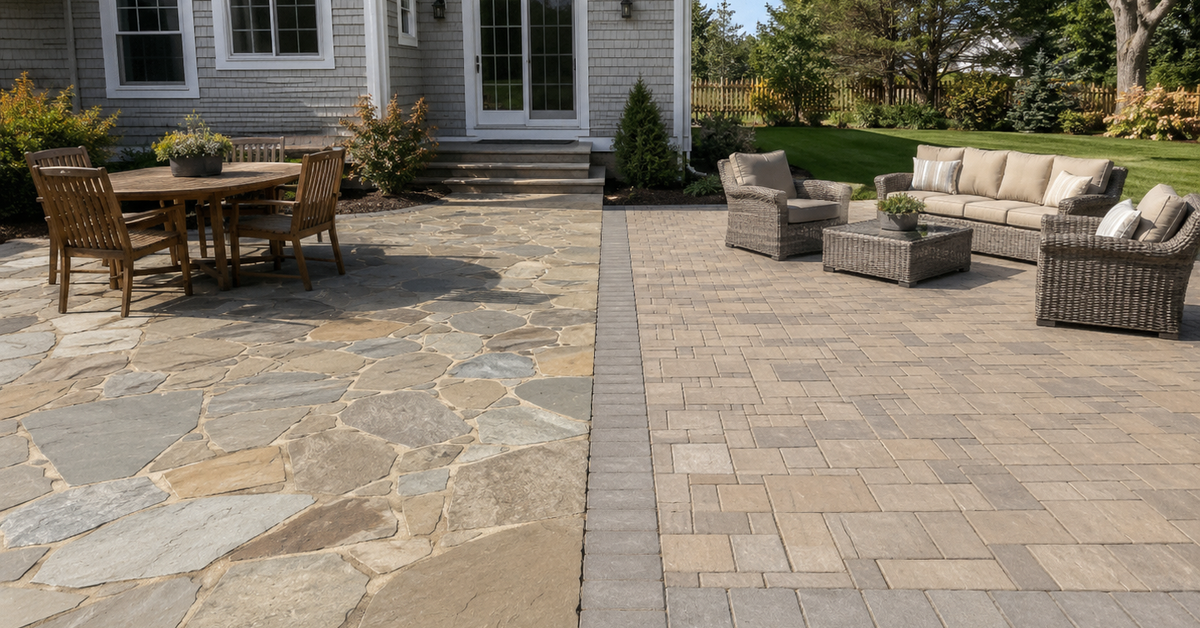
Flagstone patio installation can create a natural, high-end look, but it is not always the best fit for every Suffolk County backyard. Pavers and flagstone both work for patios, but they behave differently in cost, drainage, maintenance, freeze-thaw weather, and design flexibility. Affordable Patio has installed paver patios across Suffolk County for 15+ years and completed more than 2,000 patios, so we often help homeowners compare materials before they choose a direction. This guide explains flagstone patio vs pavers so you can decide the best patio material for your yard, budget, and long-term use.
Table of Contents
Quick Answer
Flagstone patio installation works best for homeowners who want a natural stone look, while pavers are usually better for predictable durability, easier repairs, and everyday use. In Suffolk County, the better choice depends on drainage, freeze-thaw exposure, furniture needs, maintenance expectations, and how the patio connects to the rest of the backyard.
Flagstone patio installation vs pavers: the real difference
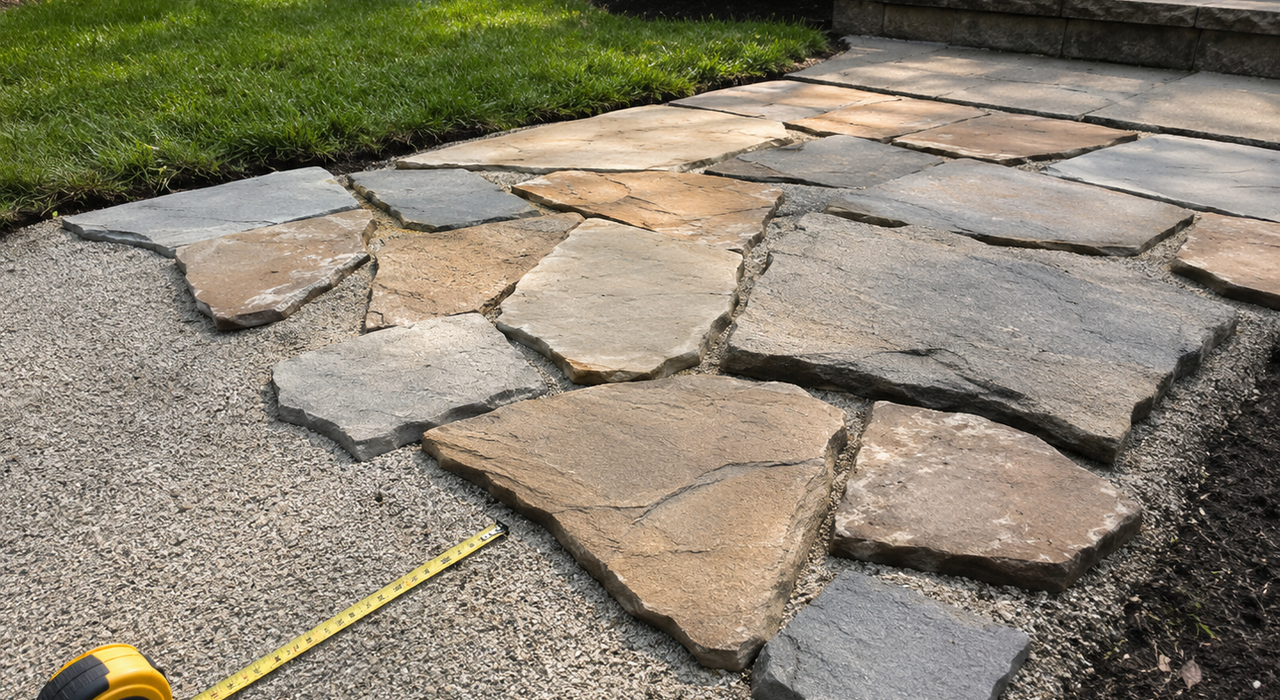
The biggest difference is consistency. Flagstone patio installation uses natural stone pieces that vary in shape, thickness, color, and texture. That variation can look beautiful, but it can also make installation slower and more sensitive to the installer’s skill. Pavers are manufactured units, so size, thickness, and surface are more consistent.
For paver patio installation, Affordable Patio uses a compacted crushed concrete base, fine mason sand leveling, concrete edge restraint, and polymeric sand joints. That system gives the patio predictable support. With flagstone, the base and setting method can vary by stone thickness, joint width, and whether the patio is dry-laid or mortared.
When homeowners ask about flagstone patio vs pavers, we start with the property. A formal backyard, pool patio, or outdoor kitchen area may benefit from the clean pattern control of pavers. A garden path or rustic sitting area may fit flagstone patio installation better.
Durability and freeze-thaw performance in Suffolk County
Durability depends on the material, base, drainage, and daily use. Flagstone patio installation can last when the stone is thick enough, the base is prepared correctly, and water is managed well. The concern is that thinner or uneven stones can rock, crack, or settle if the base is weak.
Pavers are designed as a flexible system. During paver patio installation, the joints and base allow small movement without one solid slab cracking across the surface. This matters in Suffolk County because freeze-thaw cycles, coastal moisture, and changing soil conditions can affect patios over time.
South Shore yards may have sandier soils, North Shore properties may include clay pockets or rock, and East End homes may deal with salt-air exposure. These differences make patio installation Suffolk County planning more site-specific than a simple material choice. The best patio material is the one that fits the soil, slope, water flow, and use.
Cost range and installation complexity
Flagstone patio installation is often priced higher than standard paver patio installation because the pieces require more sorting, cutting, leveling, and hand fitting. Natural stone can also vary in availability, thickness, and freight cost. A simple paver patio may be easier to estimate because the material units are consistent and the process is more repeatable.
That does not mean pavers are always cheap or flagstone is always expensive. Large-format pavers, premium borders, curved layouts, and complex patterns can raise paver patio installation cost. A small flagstone seating area may be manageable when access is good.
| Factor | Flagstone | Pavers |
|---|---|---|
| Typical look | Natural, irregular, rustic, organic | Clean, patterned, consistent, customizable |
| Installation complexity | Higher because pieces vary | More predictable because units are uniform |
| Repair process | Can be harder to match and reset | Individual pavers can often be lifted and replaced |
| Drainage planning | Depends heavily on setting method and joints | Works well with planned pitch and joint sand |
| Best fit | Garden areas, natural landscapes, rustic patios | Family patios, pool patios, dining areas, outdoor kitchens |
Before choosing based on looks alone, compare flagstone patio installation with pavers by cost, base prep, drainage, and long-term maintenance. Contact Affordable Patio to review which option fits your Suffolk County backyard.
Maintenance, drainage, and everyday use
Maintenance is where flagstone patio vs pavers becomes practical. Flagstone joints can be wider and more irregular, which may allow more weeds, washout, or joint material movement if the patio is not maintained. The uneven surface can also be less ideal for dining chairs, rolling coolers, or furniture with narrow legs.
Pavers are usually easier for daily use because the surface is more uniform. Paver patio installation can include borders, tight joints, and polymeric sand that helps stabilize the joint area. Pavers can still stain, settle, or need cleaning, but repairs are often more straightforward because individual units can be adjusted.
Drainage should be reviewed before any patio material is chosen. The Department of Energy explains that managing moisture includes using drainage methods that move water and reduce pressure near building areas. A good patio installation Suffolk County plan should move water away from the house, prevent low spots, and avoid trapping moisture near steps, walls, or pool areas.
Design flexibility and backyard style
Flagstone patio installation works well when the homeowner wants a natural look that blends into planting beds, gardens, trees, and informal seating areas. The irregular shapes can soften a yard and make the patio feel like part of the landscape. The tradeoff is that the surface and joint lines are less controlled.
Pavers offer more control over paver patio installation patterns, borders, inlays, color blends, and transitions. If the patio connects to a walkway, pool patio, sitting wall, fire pit, or outdoor kitchen, pavers can make the full backyard feel more organized.
For homeowners choosing the best patio material, use comes before style. Dining areas need flatter surfaces, pool areas need safe routes, and garden patios can use more natural texture.
When pavers are better for patio installation Suffolk County projects
Pavers are often better for patio installation Suffolk County projects when the patio needs predictable performance, clean furniture placement, easier repairs, and wide design options. Paver patio installation is also useful when the project includes borders, steps, a pool patio, or a connected walkway.
Affordable Patio’s Suffolk County patio installation service focuses on base construction, paver installation, edge restraint, and joint finishing. Homeowners can also use the Build & Price tool before an estimate.
For many families, pavers are the best patio material because they balance appearance, function, and long-term serviceability. That does not make flagstone wrong. It means flagstone patio installation should be chosen for the right setting, not just because it looks good in photos.
When flagstone patio installation may still make sense
Flagstone patio installation can work for homeowners who want a natural stone look and understand the tradeoffs. Flagstone patio installation fits informal gardens, quiet sitting areas, stepping-stone paths, and rustic yards.
For high-use patios with dining tables, outdoor kitchens, pool furniture, or frequent gatherings, paver patio installation may give a more stable surface.
Review Affordable Patio’s step-by-step process to understand planning, estimate, scheduling, installation, cleanup, and walkthrough.
If you are deciding between flagstone patio installation and pavers, ask for a site review before locking in the material. Soil, drainage, access, and furniture plans can change the best answer.
Frequently Asked Questions
Is flagstone patio installation more expensive than pavers?
Flagstone patio installation is often more expensive because natural stone pieces may need more sorting, cutting, and leveling. Pavers can also become more expensive with premium patterns, borders, and complex designs.
Which lasts longer in Suffolk County, flagstone or pavers?
Both can last when installed correctly, but pavers usually offer more predictable performance in freeze-thaw weather. Base, drainage, soil, and maintenance matter as much as material.
What is better for drainage, flagstone patio vs pavers?
Flagstone patio vs pavers depends on setting method, pitch, and flagstone patio installation quality. Pavers often provide a more predictable system because base, joints, edge restraint, and surface pattern can be planned together.
What is the best patio material for a dining area?
The best patio material for a dining area is usually a flatter, more consistent surface. Pavers often work better for tables, chairs, grills, and everyday movement.
Can I use flagstone with paver patio installation features?
You can mix natural stone accents with paver patio installation features in some designs, but transitions need careful planning. Thickness, edges, drainage, and movement should be reviewed first.
Conclusion
Flagstone patio installation can create a beautiful natural look, while pavers offer consistency, easier repairs, and strong design control. For many Suffolk County homes, pavers are more practical for dining, pool areas, outdoor kitchens, and high-use family patios. With 15+ years of Suffolk County experience and more than 2,000 patios installed, Affordable Patio helps homeowners compare flagstone patio vs pavers with real site conditions in mind.
To compare flagstone patio installation with pavers for your Suffolk County home, contact Affordable Patio today and choose a patio material that fits your yard, drainage, budget, and everyday use.