
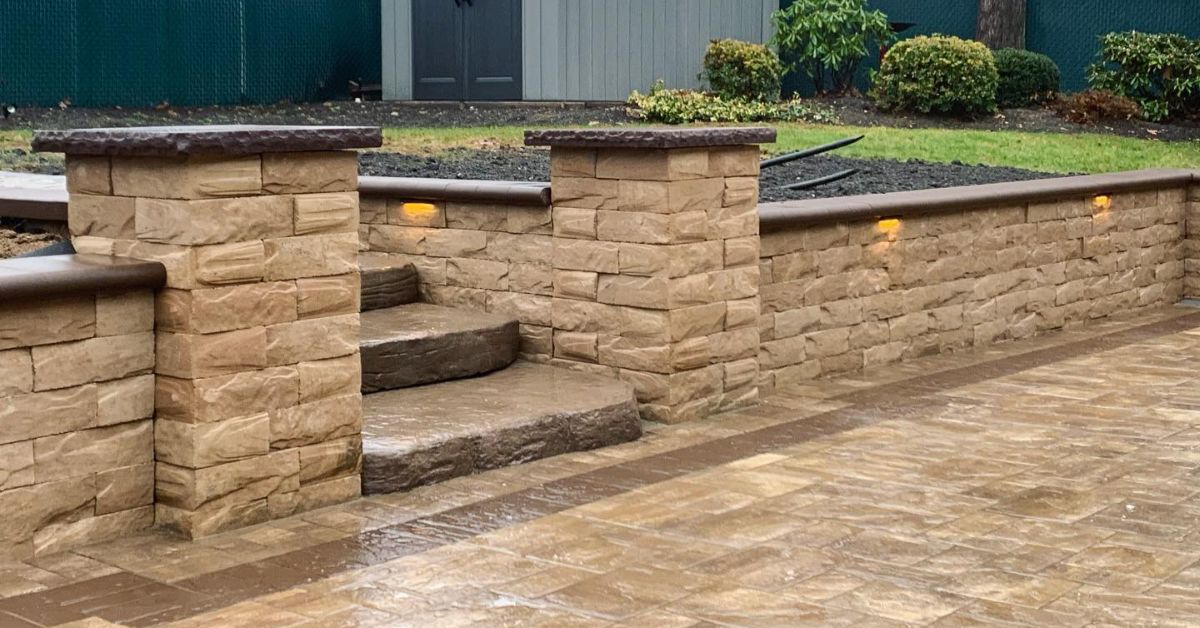
Residential retaining wall contractor planning should start before a Suffolk County yard is excavated. A retaining wall is not just a row of block. It has to hold soil, manage water, handle grade changes, and connect with patios, steps, planting beds, or driveways. With 15+ years serving Suffolk County homeowners, we have seen how wall height, access, footing depth, drainage, and Long Island soil conditions can change the project. This guide explains retaining wall installation, retaining wall drainage, retaining wall cost, and when a Suffolk County retaining wall contractor should review the site before work begins.
A residential retaining wall contractor should review wall height, soil pressure, drainage, access, footing needs, and whether an engineer or permit may be needed. For planning, smaller landscape walls often cost less than tall structural walls, while drainage, concrete footing, poor access, and multi-tier layouts can raise the budget.
Table of Contents
When a residential retaining wall contractor should review your yard
For residential retaining wall contractor planning, a short decorative wall around a planting bed is different from a wall holding back a slope. The more soil a wall retains, the more planning it needs. A residential retaining wall contractor should inspect the grade, water movement, nearby structures, soil type, and access before quoting the job.
Affordable Patio’s Long Island retaining wall service explains that retaining walls can make uneven land more usable while managing sloped terrain. Their process also notes that Long Island walls commonly use concrete footing, filter fabric, drainage rock, drainage pipe, and exit spouts when the wall is built upward.
Call a Suffolk County retaining wall contractor before work starts if the yard is washing out, the slope is pushing toward a patio, or an old wall is leaning. You should also get help when the wall sits near a driveway, pool, house foundation, property line, or steep elevation change.
Residential retaining wall contractor cost factors in Suffolk County
Retaining wall cost depends on more than the stone. Wall height, length, access, footing type, drainage, demolition, soil removal, and wall material all affect the final number. A residential retaining wall contractor also has to think about labor, equipment access, delivery space, and whether the first course will be buried below grade.
A residential retaining wall contractor will usually organize the first planning conversation around three tiers. A small garden or flower bed wall may be the simplest. A medium wall that creates a flatter lawn or patio edge needs more base and drainage planning. A tall wall, tiered wall, or wall supporting heavy soil may need engineering, deeper footing, and a more detailed retaining wall installation plan.
| Wall type | Typical use | Budget impact | Main cost drivers |
|---|---|---|---|
| Small landscape wall | Flower beds, small grade changes, short lawn edges | Lower | Length, block choice, access, and simple grading |
| Medium retaining wall | Patio edge, yard leveling, pool area support | Medium | Drainage stone, footing, excavation, and soil hauling |
| Tall or tiered wall | Steep slopes, major grade changes, structural support | Higher | Engineering, deeper footing, drainage pipe, and limited access |
Before comparing retaining wall cost, ask what is included in the footing, drainage, excavation, backfill, cleanup, and warranty. A low price can become expensive if drainage is missing.
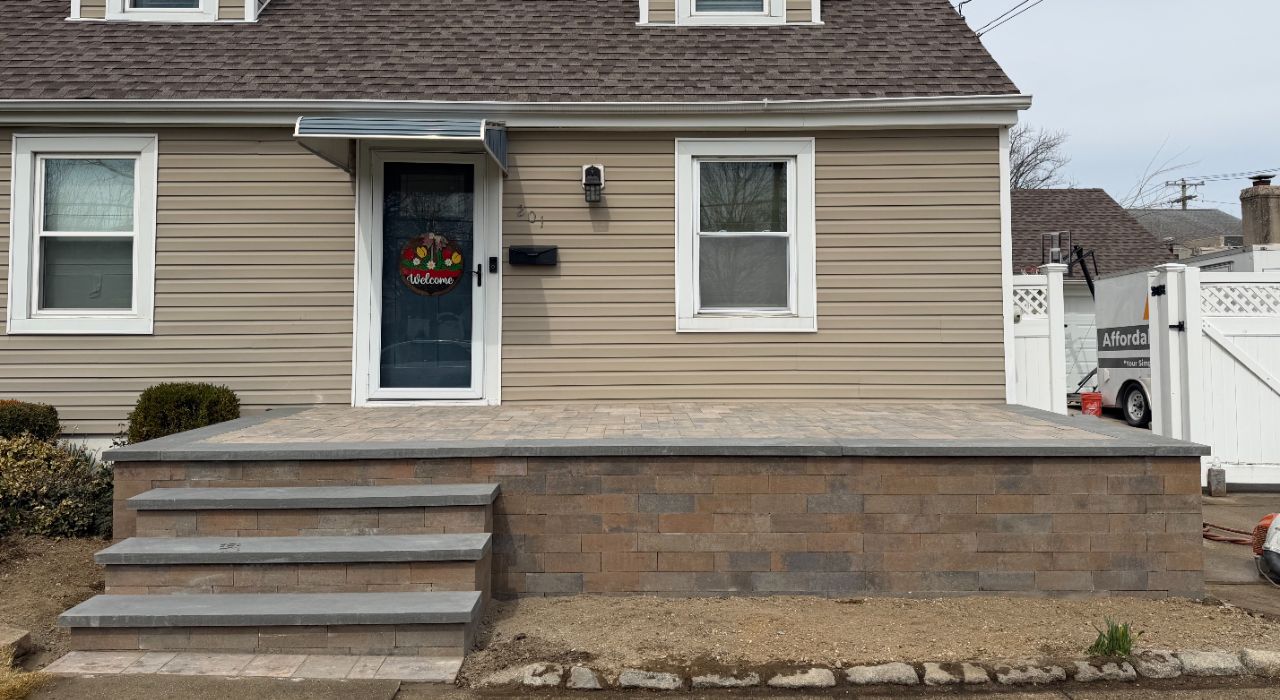
Why retaining wall drainage matters as much as the wall stone
retaining wall drainage is one of the biggest reasons walls last or fail. Water trapped behind a wall adds pressure. In Suffolk County, storms, freeze-thaw cycles, pool runoff, downspouts, and clay pockets can all add stress behind the wall.
Affordable Patio explains that drainage rocks, drainage pipe, exit spouts, and filter fabric help prevent wall failure by keeping soil out of the drainage stone. The U.S. Department of Energy also notes that moisture control starts with managing water around below-grade building areas, which is why site drainage should be part of outdoor masonry planning.
A residential retaining wall contractor should explain where the water will go, not just where the wall will sit. That includes checking whether runoff moves toward the house, a patio, a pool, or a neighbor’s property. Good retaining wall installation should control water before it creates pressure.
Concrete footing, filter fabric, and Long Island soil conditions
A residential retaining wall contractor also has to account for soil because Long Island soil can change from one property to the next. South Shore yards may have sandier soil. North Shore properties may have more clay, rock, or uneven grade. East End properties may deal with sandy loam, coastal moisture, and salt-air exposure. This is why a Suffolk County retaining wall contractor should look at the site rather than quoting from photos alone.
Affordable Patio states that some retaining walls use stone footing and some use concrete footing, with concrete footing being common on Long Island. On larger walls, their team may dig footings around 3 feet deep and mix concrete on site, then set the first course into the footing. Filter fabric helps separate the footing and soil, and it also keeps soil from mixing into the drainage stone.
A residential retaining wall contractor should also review existing roots, irrigation, buried lines, old wall material, and where removed soil will go. Poor access can raise labor time because materials may need to be moved by hand instead of machine.
How retaining wall installation fits with patios, steps, and outdoor living areas
A retaining wall often connects to another project. It may hold the edge of a paver patio, frame a fire pit area, support steps, border a pool patio, or create a flatter yard. When retaining wall installation is planned with the rest of the backyard, the finished space usually feels cleaner and works better.
If a patio is part of the project, review Affordable Patio’s paver patio service while planning the wall. If the wall is part of a larger project, the Build & Price tool can help organize early ideas before an estimate. A residential retaining wall contractor can then review grade, wall height, drainage, and access in person.
Permits, engineers, and when a wall becomes structural
During residential retaining wall contractor planning, permit requirements can vary by town, village, wall height, slope, location, and whether the wall affects drainage or nearby structures. Some larger retaining walls may need an engineer to review the design for strength and stability. A residential retaining wall contractor should tell you when the project may need extra review.
A residential retaining wall contractor should not guess on tall walls. A wall over 4 feet, a wall near a driveway, a wall holding a steep slope, or a wall close to a structure should be treated carefully. Retaining wall cost may be higher when engineering is needed, but the review can protect the property.
If you are unsure whether your wall is decorative or structural, schedule a site visit with a Suffolk County retaining wall contractor before removing soil or old wall material.
Frequently Asked Questions
How much does retaining wall installation cost?
Retaining wall installation cost depends on wall height, length, material, access, footing, drainage, demolition, and soil removal. Small garden walls usually cost less than tall structural walls with deeper footing and engineered drainage.
Why is retaining wall drainage so important?
Retaining wall drainage helps relieve water pressure behind the wall. Drainage stone, pipe, exit spouts, and filter fabric help move water out while keeping soil from clogging the system.
When should I hire a residential retaining wall contractor?
Hire a residential retaining wall contractor when the wall holds back soil, supports a patio, sits near a pool or driveway, or replaces a leaning wall. A site visit helps check drainage, grade, footing, and access.
Can a Suffolk County retaining wall contractor build around an existing patio?
A Suffolk County retaining wall contractor can often work near an existing patio, but the grade, base, drainage, and edge conditions must be reviewed first. Some patios may need repair or adjustment where the wall connects.
What affects retaining wall cost the most?
Retaining wall cost is most affected by height, length, soil conditions, footing depth, drainage needs, wall material, access, and whether engineering or permits are needed.
Conclusion
A residential retaining wall contractor should help homeowners understand more than wall appearance. The real planning happens below and behind the wall, where footing, soil pressure, retaining wall drainage, filter fabric, and backfill decide how the project performs. With 15+ years serving Suffolk County, Affordable Patio helps homeowners plan retaining walls that create usable space and support the yard correctly. For help from a residential retaining wall contractor in Suffolk County, contact Affordable Patio today and get clear next steps before the wall problem gets worse.