
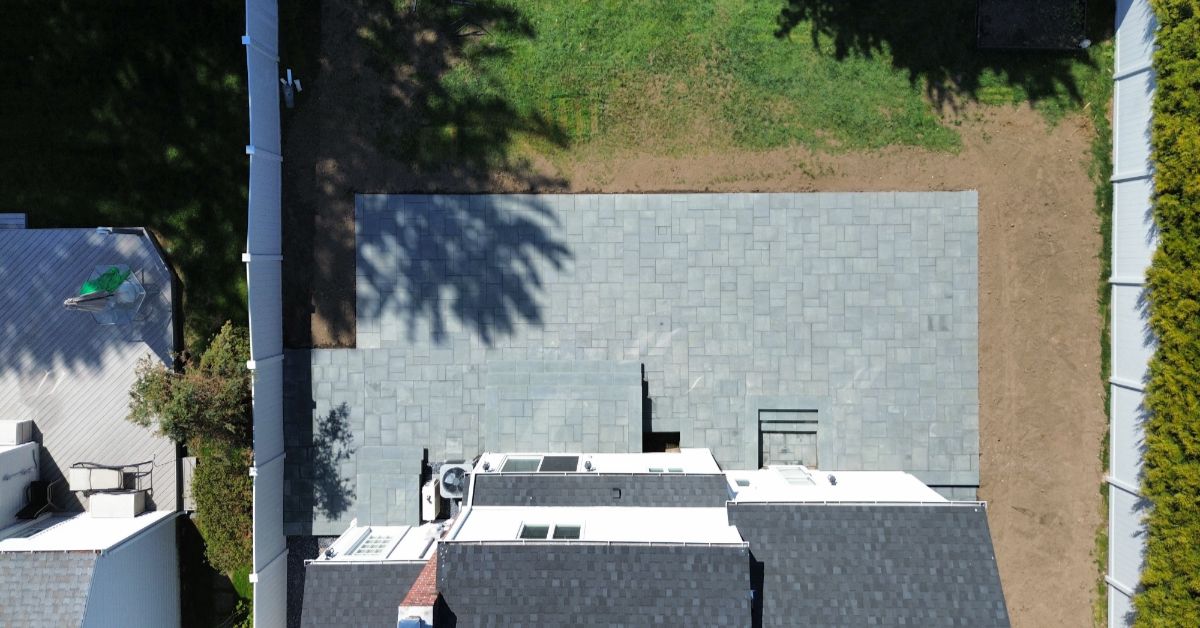
Custom paver patio installation gives Suffolk County homeowners a better way to plan a backyard around daily use, not just square footage. A 250-square-foot patio can feel generous when the layout is right, while a 700-square-foot patio can feel awkward if the grill, table, fire pit, and walkways fight each other. With 15+ years serving Suffolk County and more than 2,000 patios installed, we look at how people move, cook, sit, and gather before recommending a design. This guide breaks down paver patio designs for small, medium, and large yards so you can think through your backyard patio layout before the estimate.
Custom paver patio installation should start with use zones, furniture clearances, drainage, access, and local soil conditions. Small yards need efficient seating and grilling space, medium yards can usually support dining and a fire feature, and large yards can handle multiple outdoor rooms when the layout stays connected.
Table of Contents
Why custom paver patio installation depends on layout, not just size
The right patio is not always the biggest patio. A strong backyard patio layout connects doors, steps, lawn areas, pool gates, grill zones, and seating areas without wasting space. This is why paver patio designs should begin with how the family actually plans to use the yard.
Affordable Patio’s Suffolk County patio installation team builds patios with a compacted crushed concrete base, fine mason sand leveling, concrete edge restraint, and polymeric sand joints. That construction matters, but the layout comes first because paver placement, borders, curves, and transitions all depend on the plan.
A good paver patio install and design process also accounts for drainage. In Suffolk County, South Shore sandy soils, North Shore clay pockets, coastal moisture, and freeze-thaw cycles can affect how a patio should pitch. National Association of Home Builders guidance also treats outdoor living spaces as extensions of the home, which is why flow from inside to outside matters.
Small backyard custom paver patio installation ideas
Small yards need clear priorities. For many homes, a small patio should support one primary activity and one secondary activity. That might mean a grill plus two lounge chairs, a bistro table plus a small planting border, or a narrow dining area connected to a walkway. Trying to force every feature into a small space usually makes the patio feel crowded.
For small-yard custom paver patio installation, we usually look at door location, fence lines, air-conditioning units, basement entries, and where water exits the yard. Straight edges can save usable space, while a soft curve can make the area feel less boxy. Border pavers can define the patio without taking away too much room. In a tight yard, custom paver patio installation should protect every usable foot.
- Best use: grilling, two to four seats, small dining, or a quiet morning coffee area.
- Smart layout move: keep furniture against the longest edge and preserve one clean walking path.
- Common mistake: choosing oversized furniture before confirming the patio footprint.
Medium backyard paver patio designs for dining, grilling, and fire pits
Medium yards give homeowners more flexibility, but they still need structure. This is where paver patio designs can separate cooking, dining, and relaxing without making the yard feel split apart. A dining table often works best closest to the house, while a fire pit zone may sit slightly farther out to create a gathering point.
For a medium backyard patio layout, we often plan sight lines from the kitchen, traffic from the door, and access to the lawn. If the patio will include a grill island, the BBQ installation area should have enough prep room and safe clearance. If the homeowner wants a fire feature, the fire pit installation plan should leave space for seating circulation.
Custom paver patio installation in a medium yard can also include contrasting borders, soldier course edges, or inlay patterns that define each area. custom paver patio installation should feel planned, not patched together.
If you are planning custom paver patio installation for a medium Suffolk County yard, sketch your grill, table, and seating first. Then use that layout to guide your estimate, not the other way around.
Large backyard outdoor patio designs with multiple zones
Large backyards can support more complete outdoor patio designs, but bigger spaces need connection. A patio with a kitchen, dining area, pool access, lounge zone, and fire feature should still feel like one outdoor living area. Without transitions, a large patio can feel empty in the middle or disconnected at the edges.
The best large-yard paver patio install and design plans use zones. One area may handle cooking, another may support dining, and another may create a relaxed evening space. Walkways, borders, sitting walls, and changes in paver pattern can guide movement without using too many materials.
For poolside yards, custom paver patio installation should also consider bare feet, splash zones, furniture movement, and the route from house to pool. Learn more about related pool patio planning when the patio connects to a swimming area.
| Backyard size | Best patio zones | Design priority | Planning concern |
|---|---|---|---|
| Small | Grill area, bistro table, compact lounge | Space efficiency and clean traffic flow | Furniture scale, fence lines, and access |
| Medium | Dining area, grill zone, fire pit seating | Clear separation without wasted space | Circulation, drainage, and sight lines |
| Large | Outdoor kitchen, dining, pool access, lounge, fire feature | Connected outdoor rooms | Transitions, grading, and material balance |
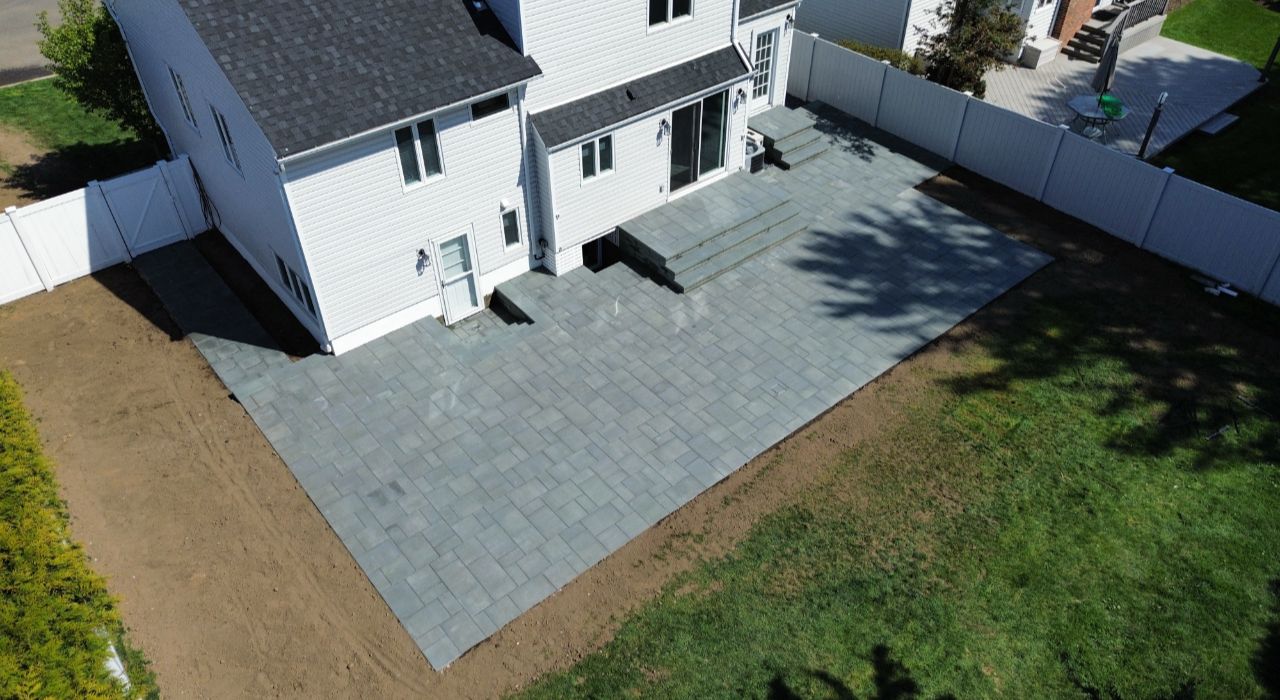
Seasonal planning for custom paver patio installation in Suffolk County
Seasonal timing can change how homeowners should plan. Spring is popular because families want the patio ready for summer, but it can also bring wet ground and tight schedules. Summer works well for immediate use, while fall is useful for homeowners who want the yard ready before the next warm season.
A spring custom paver patio installation should be planned before peak demand if the project needs to be finished for a graduation party, pool opening, holiday weekend, or family gathering. Material choices, access limits, weather delays, and project size can all affect the schedule.
Use the online Build & Price tool to create a starting point for your backyard patio layout. Then review project steps through Affordable Patio’s simple patio installation process before finalizing timing.
Maintenance-minded custom paver patio installation choices during paver patio install and design
Maintenance should be part of the design conversation. Some outdoor patio designs look great on paper but create tight corners, awkward gaps, or difficult furniture placement. A practical layout makes sweeping, rinsing, furniture moving, and future joint sand care easier.
During custom paver patio installation, the border, pattern, edge restraint, drainage pitch, and transition points all affect long-term upkeep. A patio that sheds water properly and avoids cramped corners is easier to care for. A patio installer should also explain polymeric sand joints, stain awareness, and how trees or planting beds may affect cleanup.
Before approving final paver patio designs, ask how the layout will drain, how furniture will move, and how the surface will be cleaned after everyday use.
Frequently Asked Questions
What is the best backyard size for custom paver patio installation?
custom paver patio installation can work in small, medium, or large yards. The best size depends on use. A small yard may need one main seating area, while a large yard may need several connected zones.
How do I choose between different paver patio designs?
Choose paver patio designs based on use, traffic flow, home style, and drainage. Color and pattern matter, but the layout should first support dining, grilling, relaxing, and safe walking paths.
What should a backyard patio layout include?
A backyard patio layout should include furniture space, door access, walking paths, drainage pitch, grill clearance, and any future features. Planning these items early helps avoid changes after work begins.
Are outdoor patio designs different for pool areas?
Outdoor patio designs for pool areas should account for wet surfaces, walking routes, furniture, drainage, and pool equipment access. The patio should connect the house and pool without creating cramped traffic paths.
What is included in paver patio install and design?
Paver patio install and design usually includes layout planning, material selection, excavation, compacted base prep, sand leveling, paver installation, edge restraint, joint sand, cleanup, and a final walkthrough.
Conclusion
Custom paver patio installation works best when the design starts with how the yard will be used. Small backyards need efficiency, medium backyards need balance, and large backyards need connected zones. With 15+ years of Suffolk County experience and more than 2,000 patios installed, Affordable Patio can help homeowners plan paver patio designs that fit the property, the soil, the drainage, and everyday family life. For custom paver patio installation in Suffolk County, contact Affordable Patio today and start planning a backyard patio layout that fits your home before the busy season fills the schedule.