
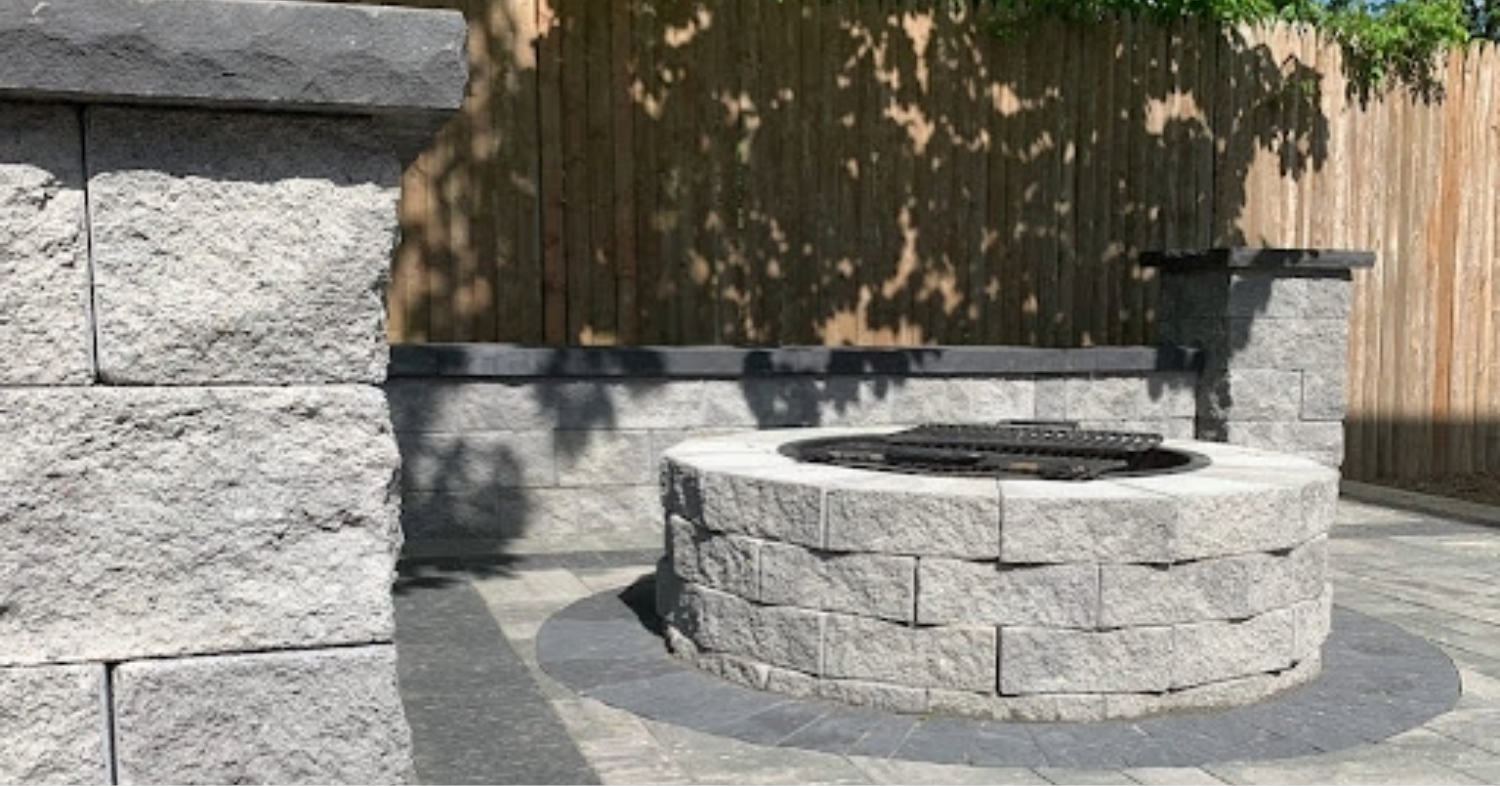
Fire pit installation can completely change how a New Hampshire backyard is used. A patio may be comfortable during warm afternoons, but a fire pit makes the space more useful in the evening, in early spring, and into the fall. It gives people a place to gather, adds warmth, and creates a natural center point for outdoor living.
A good fire pit is not just a ring of block placed on the ground. Safe and long-lasting fire pit installation depends on the right location, clearances, fuel choice, masonry materials, footing, heat protection, drainage, and local rules. New Hampshire homeowners also need to think about freeze-thaw weather, open burning rules, and whether they want a wood-burning or gas fire feature. This guide explains what to know before building a fire pit and how Affordable Patio helps homeowners plan backyard fire features built for real use.
Quick Answer
Fire pit installation in New Hampshire should include a safe location with proper clearance, durable wallstone, a stable footing, heat protection, structural adhesive, and code-aware planning. Wood-burning fire pits are simpler to install, while gas fire pits require a licensed plumber for the gas line and permits.
Why Fire Pits Work Well in New Hampshire
Fire pit installation is especially useful in New Hampshire because spring and fall evenings can be cool even when the days are comfortable. A fire pit adds warmth and helps people stay outside longer. It also gives the patio a reason to be used after dinner, after sunset, and during cooler seasons.
Without a fire feature, many patios become daytime-only spaces. A fire pit changes that. It gives family and guests a place to sit, talk, roast marshmallows, and enjoy the backyard without feeling like the evening has to end when the temperature drops.
A fire pit also adds structure to the patio layout. It can anchor a seating area, define one side of a patio, or become the central feature in a larger outdoor living space.
Affordable Patio provides fire pit installation in New Hampshire for homeowners who want a safe masonry fire feature built for the local climate.
Wood-Burning vs. Gas Fire Pits
The first major fire pit installation decision is fuel type. Wood-burning fire pits give a traditional outdoor fire experience. They provide the sound, smell, and flame movement many homeowners want. They are also usually simpler to install because they do not need a gas line.
The trade-off is maintenance. Wood-burning fire pits require firewood storage, ash cleanup, and more attention during use. Homeowners also need to follow local open-burning rules and safe use practices.
Gas fire pits are cleaner and easier to use. They turn on with a valve or ignition system, produce a consistent flame, and leave no ash behind. They are popular with homeowners who want convenience and less cleanup. The trade-off is cost and planning. A gas fire pit needs a gas line, burner kit, ventilation, and work by a licensed plumber.
| Factor | Wood-Burning | Gas |
|---|---|---|
| Installation complexity | Lower | Higher |
| Maintenance | Wood and ash cleanup | Low maintenance |
| Ambiance | Classic crackling fire | Clean, steady flame |
| Upfront cost | Lower | Higher because of gas infrastructure |
| Best for | Traditional backyard gatherings | Easy daily use and cleaner operation |
Choosing the Right Location
Location is one of the most important fire pit installation decisions. Once a masonry fire pit is built, moving it is difficult. The fire pit should be placed where it feels connected to the patio but still has safe clearance from structures, trees, fences, furniture, and overhead features.
The fire pit should also support a comfortable seating layout. A fire pit placed too close to the house may feel cramped. A fire pit placed too far away may feel disconnected from the patio. The best location allows people to gather comfortably while still leaving space to walk around chairs.
Wind direction matters too. If smoke often blows toward the main seating area, the fire pit may become uncomfortable. For wood-burning fire pits, wind exposure should be considered before choosing the final location.
Clearance and Safety Planning
A common planning minimum is at least 10 feet between a fire pit and the home, fences, trees, sheds, pergolas, and combustible materials. More space is better when possible. The exact requirement can vary by town, fire code, and fire pit type.
Seating clearance also matters. A fire pit needs enough room for chairs and movement. For many homeowners, a 15 by 15 foot clear area is a good starting point for the fire pit and seating zone. Larger layouts feel more comfortable for groups.
Overhead clearance is critical. Avoid placing fire pits under low tree limbs, roof overhangs, fabric canopies, or covered structures unless the fire feature is specifically designed and approved for that use.
Permits and Local Regulations
Fire pit installation in New Hampshire may involve both construction rules and open-burning rules. A basic masonry fire pit may not need a building permit in some towns, but gas line work almost always needs a licensed professional and proper permit handling.
Wood-burning use is separate from installation. New Hampshire outdoor fire rules can vary by town, season, and weather conditions. Homeowners should review New Hampshire fire permit guidance and confirm local requirements before burning.
Local fire departments may also have rules about fire pit size, fuel type, distance from structures, and permitted burn times. Checking first helps avoid fines, safety issues, or future changes after the fire pit is already built.
Fire Pit Materials
Fire pit materials should be built for heat, outdoor exposure, and freeze-thaw conditions. Manufactured wallstone systems are common because they offer consistent size, shape, color, and compatible caps. Fire pit kits can create round, square, or rectangular designs.
Wood-burning fire pits often need a metal ring or liner to protect the wallstone from direct flame and heat. Gas fire pits need the correct burner system, ventilation, and interior setup based on manufacturer requirements.
Materials should also match the rest of the patio. A fire pit made from wallstone that complements the pavers, sitting walls, steps, or borders will look more planned than one that feels separate from the rest of the outdoor space.
Footing and Base Preparation
The base below the fire pit is one of the most important parts of long-term performance. New Hampshire freeze-thaw cycles can move masonry features that are not supported correctly. A fire pit should be built on a stable base or footing suited to the project size and site conditions.
If the fire pit is built on a paver patio, the patio base must be strong enough to support the added weight. If the fire pit is built separately, the base or footing should be prepared specifically for the fire pit. Soil conditions, drainage, and frost movement should all be considered.
A fire pit that settles unevenly can look poor and become unsafe. Proper base preparation helps prevent that problem.
Fire Pit Installation Process
The fire pit installation process begins with planning. The contractor reviews the location, size, shape, fuel type, clearance, patio connection, and material choice. Once the layout is confirmed, the base or footing is prepared.
Wallstone courses are set in place and bonded with structural masonry adhesive. If the fire pit is wood-burning, a metal liner or ring is installed where needed. If the fire pit is gas, the burner system and gas connection planning must match the gas professional’s work.
The fire pit is finished with cap stones, checked for level, and cleaned. If it is part of a larger patio project, the surrounding paver layout, seating area, and walkway connections are completed so the full outdoor space works together.
Building a Fire Pit Into a Patio
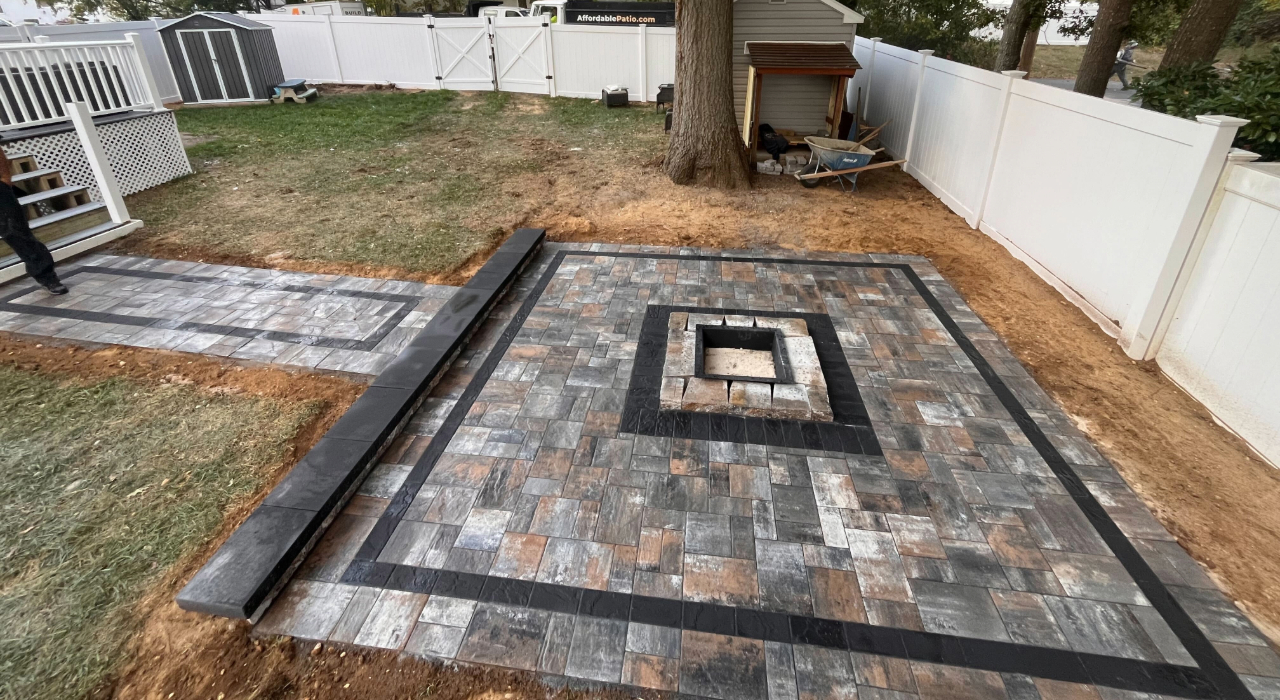
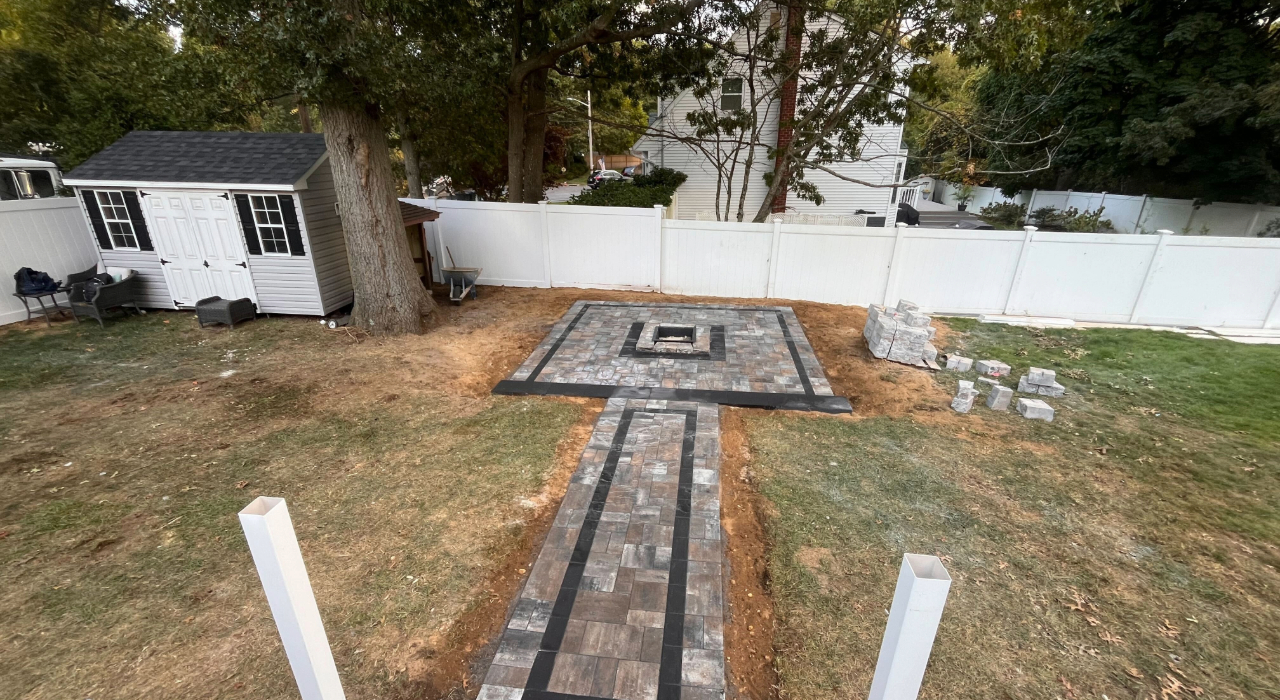
A fire pit works best when it is planned as part of the patio layout. It should not feel like an afterthought. The paver pattern, borders, seating space, and walkway connection should all support the fire pit zone.
A round fire pit can create a casual gathering point. A square fire pit can match a more modern or geometric patio layout. A rectangular gas fire feature can work well with lounge seating or a more structured outdoor room design.
When the fire pit is part of a new patio, the installer can plan the base, spacing, furniture zones, and drainage together. When it is added to an existing patio, the contractor should check whether the patio can support the fire pit and whether the location has enough clearance.
Adding Sitting Walls Around a Fire Pit
Sitting walls are a strong upgrade for fire pit areas. They provide built-in seating, define the space, and make the fire pit zone feel more finished. They can also help block wind and create a sense of enclosure.
A sitting wall does not need to wrap fully around the fire pit. One curved wall or two side walls can be enough. The goal is to add structure without making the area feel too crowded.
When planning sitting walls, leave enough room for chairs. Many homeowners still want movable seating around the fire pit. The wall can provide extra seating without replacing furniture completely.
Gas Fire Pit Line Requirements
Gas fire pit installation requires careful coordination. The masonry contractor can build the fire pit structure, but a licensed plumber must handle the gas line. The gas line should be planned before masonry work begins so the connection point is in the right location.
Natural gas may be available if the home already has service. Propane may be another option, but tank placement and line routing must be planned safely. The gas professional should confirm sizing, permits, shutoff location, and connection details.
Trying to add a gas line after the fire pit is finished can create extra cost and disruption. It is much better to plan gas needs early.
Fire Pit Installation Pricing
Fire pit installation pricing depends on size, material, shape, fuel type, base needs, and whether it is built with a new patio or added to an existing one. Gas fire pits cost more because gas line work and burner systems are separate from the masonry structure.
| Fire Pit Type | Estimated Price | Notes |
|---|---|---|
| Garden wall round fire pit kit | $1,586 | Wood-burning, standard round design |
| Matrix square fire pit kit | $1,794 | Wood-burning, square design |
| Pyzique round gas fire pit kit | $2,819 | Gas burner included; gas line priced separately |
These are planning examples. Final pricing should come after a property review because site conditions, layout, gas needs, and patio integration can change the total.
Maintenance and Care
Fire pits need basic maintenance to stay safe and clean. Wood-burning fire pits should have ash removed after use once everything is fully cool. The metal ring or liner should be checked for wear. Cap stones and joints should be inspected for movement or damage.
Gas fire pits need burner maintenance. Debris, insects, or dust can affect burner ports. If the flame looks uneven or ignition becomes difficult, the burner should be checked by a qualified professional.
In winter, fire pits can be covered to reduce moisture exposure. Covers should allow airflow where needed so moisture does not stay trapped against the masonry.
Why Affordable Patio
Affordable Patio builds fire pits, patios, walkways, sitting walls, steps, and outdoor masonry features for New Hampshire homeowners. The team helps homeowners choose the right fire pit size, shape, fuel type, and patio layout before installation begins.
The process includes an on-site evaluation, layout planning, material review, and a written estimate. Installations are built with attention to base preparation, wallstone placement, heat protection, and clean finishing details.
To request a fire pit estimate, visit the Affordable Patio New Hampshire contact page.
Frequently Asked Questions
Do I need a burn permit to use a fire pit in New Hampshire?
Often, yes. New Hampshire fire permits are generally required for outdoor fires when the ground is not covered with snow. Always confirm with your local fire department before burning.
How far should a fire pit be from my home?
A common planning minimum is at least 10 feet from structures, fences, overhead features, and combustible materials, though local rules may require more.
What type of wood is best for a backyard fire pit?
Seasoned hardwood such as oak, maple, birch, or ash is a good choice because it burns hotter and cleaner than wet or soft wood.
Can a fire pit be added to an existing patio?
Yes. A fire pit can often be added to an existing paver patio, but gas fire pits require additional planning for the gas line route.
How long does a properly built fire pit last?
A masonry fire pit built with proper footing, wallstone, adhesive, and heat protection can last for many years with basic care.
Conclusion
Fire pit installation is one of the best ways to make a New Hampshire backyard more useful through spring, summer, and fall. The key is planning the location, clearance, fuel type, materials, footing, permits, and patio layout before construction begins.
Affordable Patio helps New Hampshire homeowners build fire pits, paver patios, sitting walls, walkways, steps, and outdoor masonry projects. To request your free estimate, visit the New Hampshire contact page or call (603) 999-9696.