
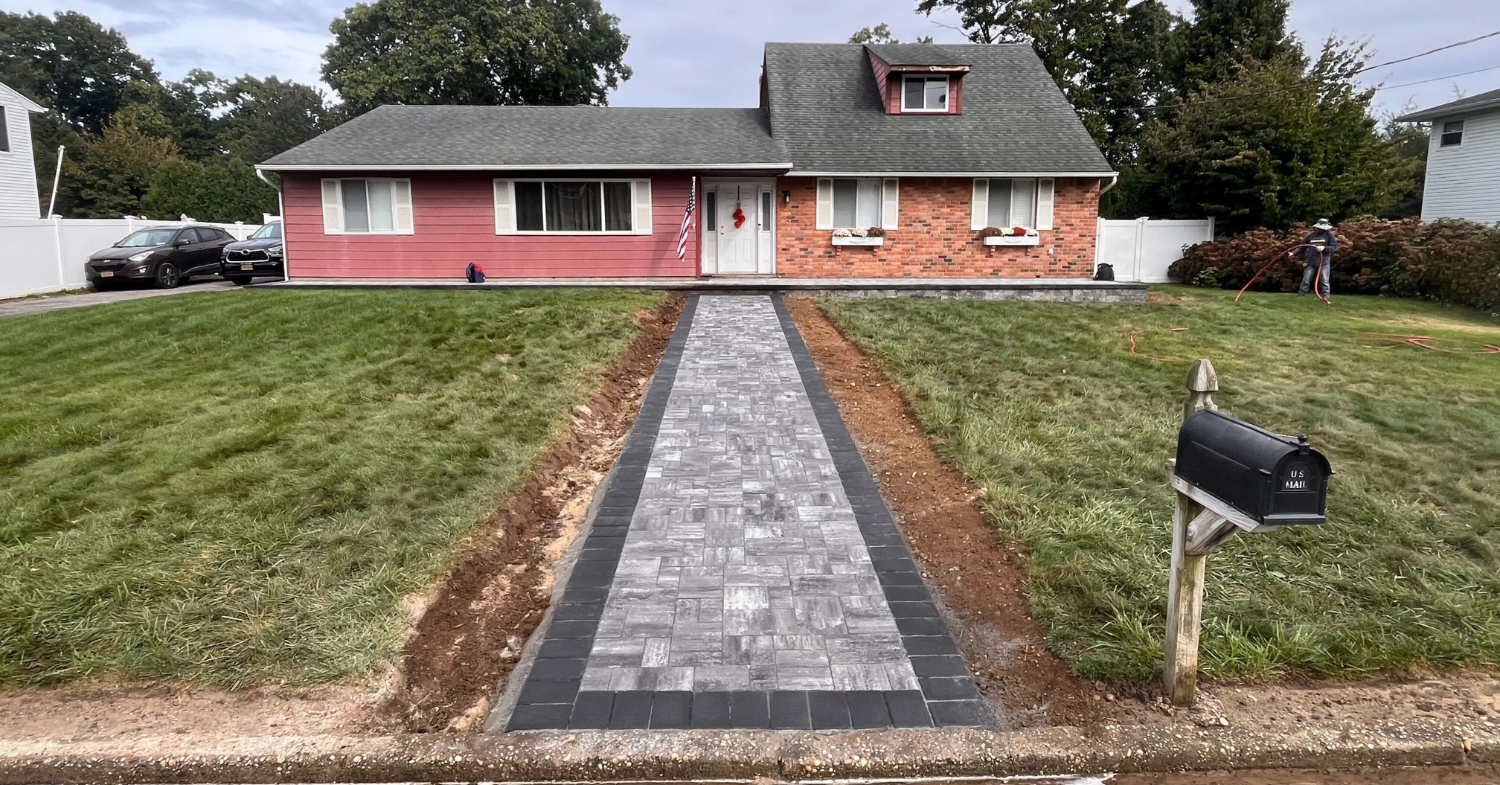
Walkway installation is one of the most practical upgrades for a New Hampshire home. A well-built walkway improves curb appeal, creates safer daily access, protects the lawn from foot traffic, and gives the property a more finished look. It also makes movement around the home easier during wet spring weather, muddy fall days, and icy winter conditions.
Many homeowners focus first on the paver style, but the visible pavers are only one part of the project. A walkway that stays level and safe depends on route planning, drainage, excavation depth, base material, compaction, edge restraints, and polymeric sand. If those details are skipped, the walkway can sink, spread, hold water, or become uneven. This guide explains what New Hampshire homeowners should know before planning walkway installation and how Affordable Patio builds walkways for long-term performance.
Quick Answer
Walkway installation in New Hampshire should include a planned route, proper width, drainage pitch, 7 to 8 inches of excavation, compacted crushed stone base, a thin leveling layer, concrete edge restraints, pavers, and polymeric sand. Strong base work is what helps the walkway resist frost movement and stay safe.
Why Walkway Installation Matters
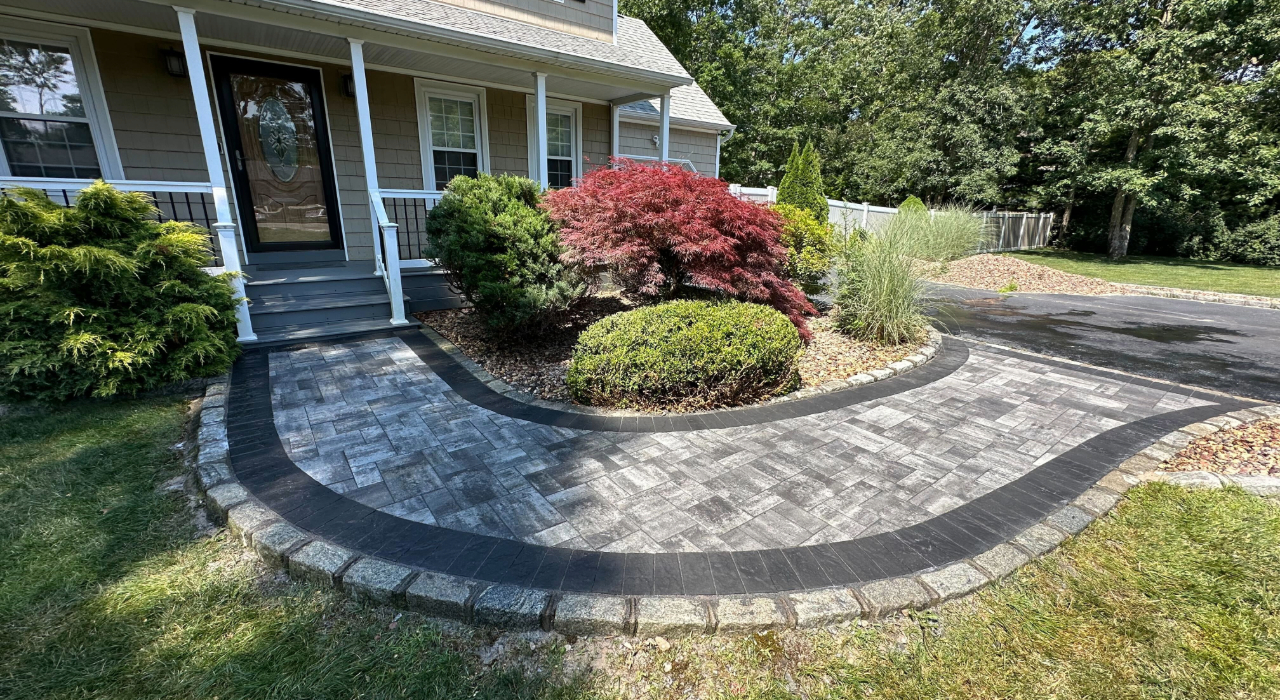
Walkway installation does more than create a path. It improves how the home looks from the street, guides guests to the entrance, protects grass from foot traffic, and helps prevent people from walking across wet or uneven ground. A walkway can also connect the driveway, patio, garden, fire pit, pool area, or side yard into one planned outdoor layout.
New Hampshire weather makes walkways even more important. Snow, rain, frost, mud, and seasonal ground movement can make informal paths uncomfortable and unsafe. A properly installed paver walkway gives people a clean, stable walking surface through more of the year.
Affordable Patio provides walkway installation in New Hampshire using Cambridge Pavingstones, proper base preparation, edge restraints, and polymeric sand.
Plan the Route First
Before choosing pavers, plan where the walkway should go. The route should match how people naturally move through the property. A front walkway should feel welcoming and direct. A backyard walkway can be more relaxed and curved. A side-yard walkway should be practical, especially if it connects a driveway to a patio or backyard entrance.
Many walkways fail visually because the route feels awkward. A path that curves for no reason may look forced. A path that cuts too sharply may feel uncomfortable to walk. A path that ignores the natural entry point may encourage people to step off the walkway and create a worn path through the lawn.
Good route planning also considers snow removal, drainage, tree roots, lawn care, and nearby planting beds. The best walkway should feel natural in daily use.
Choose the Right Walkway Width
Walkway width affects comfort. A narrow path may save space, but it can feel cramped. A wider path feels more welcoming and makes it easier for two people to walk side by side.
For basic side-yard access, 36 inches may be enough. For front entry walkways, 42 to 48 inches often feels better. For walkways leading to patios, pool areas, or gathering spaces, wider designs can feel more balanced.
Width should also match the surrounding features. A walkway that leads to a wide front stoop should not feel too narrow. A walkway that connects to a patio should land naturally into the patio layout instead of creating a small awkward transition.
Drainage and Pitch
Drainage is one of the most important parts of walkway installation. A walkway should not hold water, drain toward the home, or create icy patches in winter. Proper pitch helps water move off the surface and away from structures.
A common target is about 1 to 1.5 inches of pitch for every 10 feet, depending on the site. The exact slope depends on the walkway location, surrounding grade, soil conditions, and where water can safely drain.
Drainage planning is especially important near steps, doors, garage entries, and foundation walls. If the walkway is pitched wrong, water may collect where people walk or move toward the home. Fixing drainage after installation is much harder than planning it correctly from the start.
Best Walkway Materials for New Hampshire
Walkway installation can use several materials, including concrete, natural stone, clay brick, gravel, and concrete pavers. Each option has a different look, cost, and maintenance level.
Concrete pavers are often the best balance for New Hampshire homes. They are durable, available in many colors and patterns, and easier to repair than poured concrete. If a section settles, the pavers can often be lifted, the base corrected, and the same pavers reset.
Natural stone can look beautiful, but it often costs more and may require more careful installation. Clay brick can fit older home styles, but it can be more porous and may need more maintenance. Poured concrete is simple, but cracks can be difficult to repair cleanly.
| Material | Freeze-Thaw Performance | Maintenance | Best Fit |
|---|---|---|---|
| Concrete pavers | Excellent | Low | Most New Hampshire walkways |
| Natural stone | Good to excellent | Moderate | Premium natural appearance |
| Clay brick | Good with maintenance | Moderate | Traditional home styles |
| Poured concrete | Moderate | Repairs can show | Basic budget paths |
Base Preparation
Base preparation is what determines how well the walkway performs over time. The pavers may be the visible surface, but the base is what supports them. A weak base can cause the walkway to settle, shift, dip, or spread at the edges.
For many residential paver walkways, the area is excavated about 7 to 8 inches below the finished surface height. The exposed soil is compacted. A crushed stone base is installed in layers and compacted after each layer. A thin leveling layer is added before the pavers are set.
Base material should never be dumped in one thick layer and lightly tamped. Proper compaction in lifts is important because it reduces future movement. This is especially important in New Hampshire where freeze-thaw cycles can stress hardscape surfaces.
Before digging, use New Hampshire 811 Dig Safe so underground utilities can be marked.
Walkway Installation Process
A professional walkway installation starts with layout. The installer marks the route, checks measurements, confirms the finished height, and reviews the drainage direction. Once the layout is approved, excavation begins.
After excavation, the native soil is compacted. Crushed stone is added in compacted layers. The base is checked for height and pitch. Then a thin leveling layer is placed and screeded smooth. Pavers are installed from a square reference line so the joints and borders stay clean.
After the pavers are set, edge restraints are installed to stop the walkway from spreading outward. Polymeric sand is swept into the joints and activated with water. The final step is cleanup and inspection.
Pattern and Border Options
Pattern choice affects how the walkway looks and feels. A running bond pattern creates a clean, traditional look. Herringbone feels more detailed and adds strong interlock. Basketweave can work well with older homes or classic exterior styles. Random or mixed-size patterns can feel more relaxed.
Borders make a walkway look finished. A single border can define the edge and help connect the walkway to a patio or entry steps. A contrasting border color can add detail without making the design too busy.
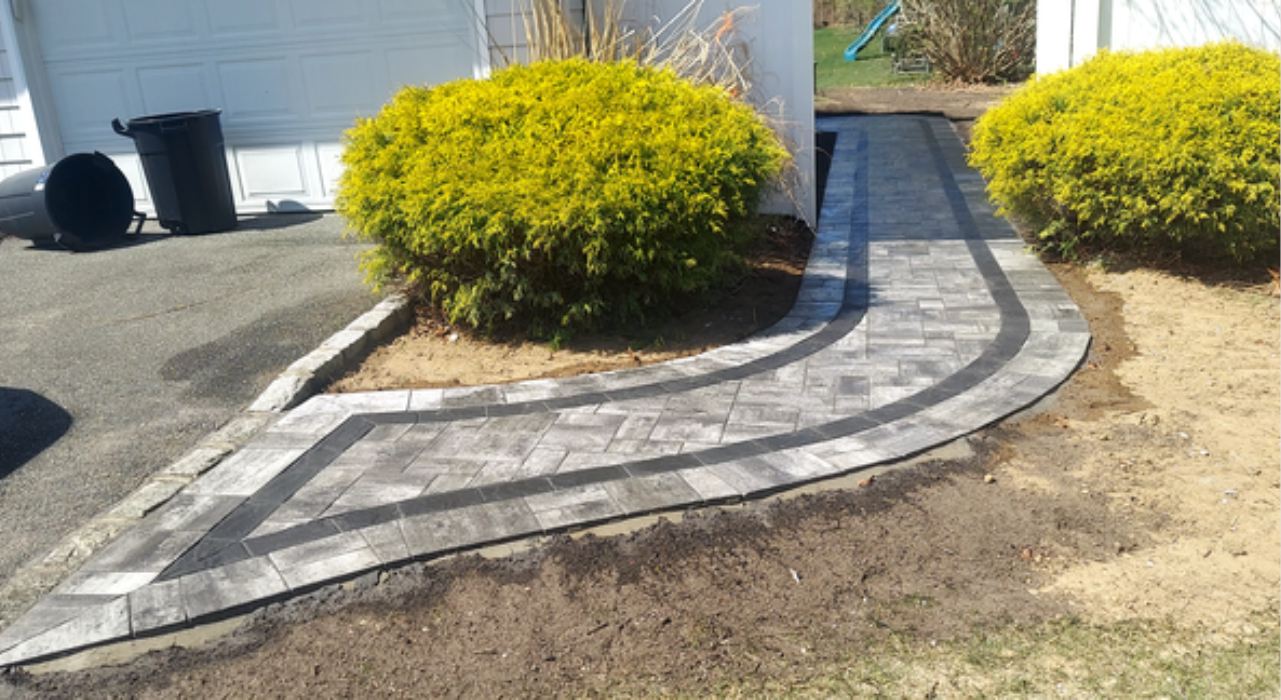
For curved walkways, the border and paver cuts should be planned carefully. Poor cuts can make a curved walkway look uneven. A professional installer should be able to keep curves smooth and joints clean.
Front Entry Walkways
Front walkway installation has a big effect on curb appeal. The walkway is often the first hardscape feature guests see. It should look welcoming, feel safe, and guide people naturally to the front door.
A front walkway should usually be wider than a side path. It should connect cleanly to the driveway, sidewalk, or front steps. If the home has a formal entry, a straight walkway may fit best. If the home has gardens or a more relaxed landscape, a gentle curve may feel more natural.
Lighting can make a front walkway safer and more attractive at night. Step lighting, low-voltage path lights, or soft landscape lighting can all improve the entry experience.
Backyard and Patio Walkways
Backyard walkways are more flexible. They may connect the patio to a fire pit, garden, pool area, shed, side yard, or driveway. The design can be more relaxed, but it still needs proper base preparation and drainage.
A backyard walkway should match the way the yard is used. If people often walk from the driveway to the patio, the path should be direct. If the walkway is for garden access, a softer curve may work well.
When a walkway connects to a patio, matching or complementary materials create a cleaner outdoor design. Using the same border style can also make separate areas feel connected.
Winter Maintenance Tips
New Hampshire walkways need winter care. Snow should be removed carefully so the surface stays safe. A plastic shovel or rubber-edged snow tool is usually better than a sharp metal shovel that can scrape pavers.
Ice melt should be chosen carefully. Some products can be harsh on concrete pavers or nearby plants. Homeowners should use paver-safe ice melt and follow product directions. Sand can improve traction but may need cleanup in spring.
Good drainage also helps reduce winter problems. A walkway that drains well is less likely to develop standing water that freezes into slick patches.
Walkway Installation Pricing
Walkway installation pricing depends on length, width, paver choice, access, curves, borders, steps, and site conditions. A straight walkway with easy access usually costs less than a curved walkway with multiple cuts and elevation changes.
| Walkway Size | Estimated Price |
|---|---|
| 20 ft x 4 ft | $2,099 |
| 25 ft x 4 ft | $3,599 |
| 35 ft x 4 ft | $3,899 |
| 45 ft x 4 ft | $5,599 |
These are planning examples. A final price should come after a site evaluation because grade, drainage, access, and material choices can change the total.
Common Walkway Installation Mistakes
One common mistake is making the walkway too narrow. A path that feels tight may not match the home’s entry or daily use. Another mistake is ignoring drainage, which can lead to puddles, ice, and water moving toward the home.
Weak base preparation is one of the biggest problems. If the base is not deep enough or compacted correctly, the pavers can settle. Skipping edge restraints can also allow the walkway to spread over time.
Another mistake is choosing materials only by appearance. The paver should look good, but it also needs to handle foot traffic, snow, ice, and freeze-thaw movement.
Why Affordable Patio
Affordable Patio has experience building paver walkways for New Hampshire homes, including front entries, backyard paths, patio connections, and side-yard walkways. The team uses proper base preparation, Cambridge Pavingstones, concrete edge restraints, polymeric sand, and clean finishing details.
Every project begins with a property review. The team checks route, width, grade, access, drainage, and material choices before preparing a formal estimate.
To request a walkway estimate, visit the Affordable Patio New Hampshire contact page.
Frequently Asked Questions
How long does walkway installation take?
Most standard residential walkway projects can be completed in one day. Larger, curved, or more complex layouts may take longer.
Can a walkway be installed in spring or fall in New Hampshire?
Yes. Walkways can often be installed from spring through fall as long as the ground is workable and weather conditions allow proper base preparation.
What is polymeric sand?
Polymeric sand is joint sand with binding agents that activate with water. It helps lock paver joints, reduce weed growth, and keep the surface more stable.
How do I maintain a paver walkway in winter?
Use a plastic shovel or rubber-edged snow tool when possible. Use ice melt products that are safe for concrete pavers and avoid harsh products that can damage the surface.
Should my walkway match my patio?
It does not have to match exactly, but using the same or complementary pavers creates a cleaner, more connected outdoor design.
Conclusion
Walkway installation is one of the best ways to improve curb appeal, safety, and daily movement around a New Hampshire home. The long-term result depends on route planning, width, drainage, excavation, base preparation, edge restraints, paver choice, and polymeric sand.
Affordable Patio builds paver walkways, patios, fire pits, sitting walls, steps, and outdoor masonry projects across New Hampshire. To request your free estimate, visit the New Hampshire contact page or call (603) 999-9696.